Table of Contents
- What changes when a pan replaces direct belt receiving?
- When is an undercrusher pan worth evaluating?
- Where will the pan discharge and bypass fines go?
- What must the quotation include for a fair comparison?
- What makes either proposal unsuitable?
- Frequently asked questions
- Does every impact crusher need an undercrusher pan feeder?
- Does the pan replace the main discharge conveyor?
- Is an undercrusher pan the same as a prescreen?
- Will a pan prevent all belt damage from reinforced concrete?
- Can I add an underpan to an existing mobile impact crusher?
- What information is needed to compare the two discharge options?
- Choose the complete receiving arrangement
- Sources and technical references
Does an Impact Crusher Need an Undercrusher Pan Feeder?
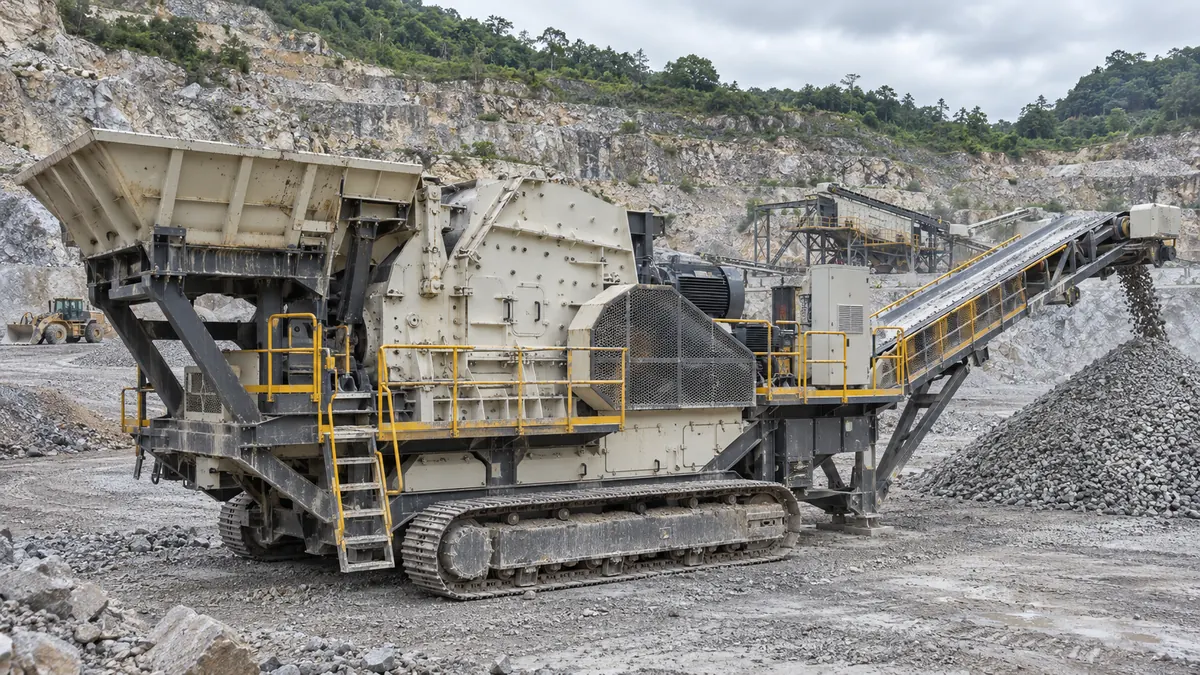
An impact crusher does not automatically need an undercrusher pan feeder. Compare a supported belt receiving the crusher discharge directly with a lined vibrating pan that transfers material onto a downstream belt. The decision turns on the proposed discharge arrangement, accepted feed, wear exposure and maintenance access. Request a layout showing the first receiving surface and every following transfer before comparing prices. A pan changes where material first lands; it does not remove the conveyor or its maintenance requirements. Confirm that the exact machine supplier offers and approves the arrangement for your application.
By MVSI Company. Published 2026-11-24.
What changes when a pan replaces direct belt receiving?
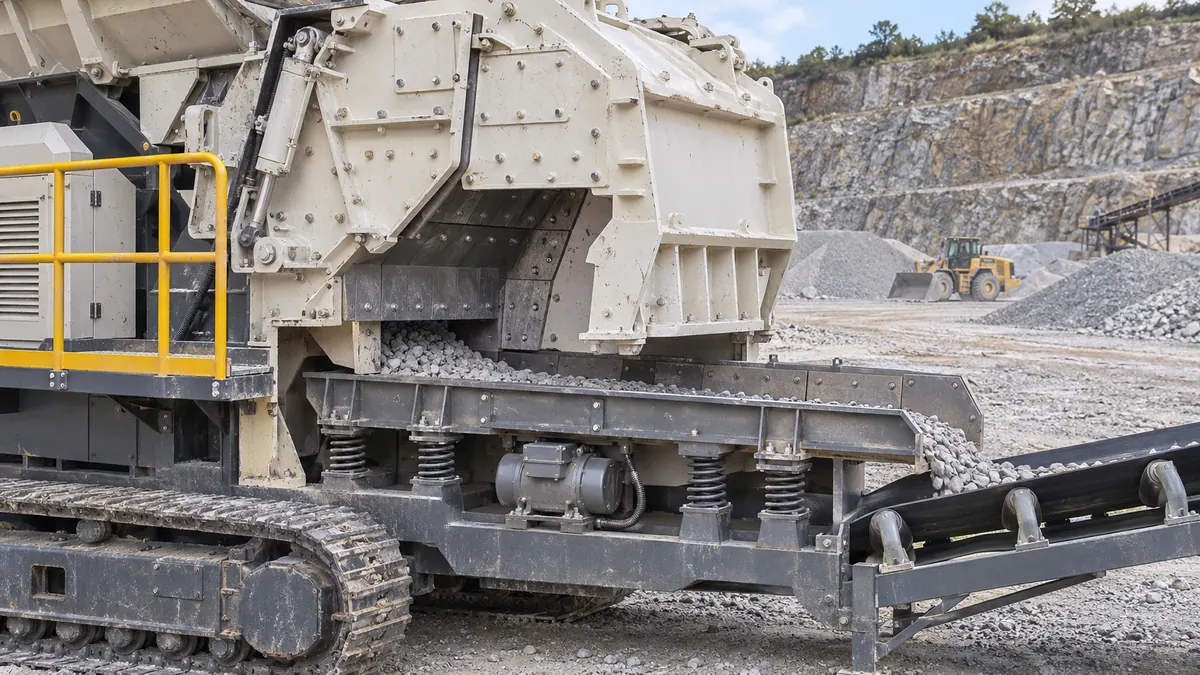
The first receiving surface changes from the supported conveyor belt to a separate steel pan. Compare the complete path through the next transfer, rather than treating the pan as an isolated accessory.
| Decision fact | Direct receiving belt | Vibrating undercrusher pan |
|---|---|---|
| First receiving surface | Belt at the crusher discharge, with specified support | Lined pan below the chamber, followed by a belt transfer |
| Documented example | Finlay I-140RS lists a full-length belt with impact bars | Its alternative uses a lined vibrating feeder and shorter main conveyor |
| Items to define | Belt, impact support, chute, skirts and receiving geometry | Pan, liners, suspension, drive, discharge lip and belt receiving geometry |
| Bypass-fines interface | Identify where any accepted bypass stream rejoins | Identify whether fines enter the pan or another transfer |
| Purchase boundary | Supplier must accept the proposed feed and layout | Supplier must confirm availability and suitability of this exact option |
The Finlay I-140RS specification documents both arrangements on one product family. That example establishes that a pan is a configuration choice, not a universal impact-crusher requirement. It does not establish the options or dimensions available from another supplier.
The MVSI mobile secondary crushing plant page describes an impact-crushing route for aggregate and recycling applications. Use it to begin the equipment enquiry; its public description does not confirm an undercrusher pan or retrofit. Request the offered machine’s discharge drawing and written scope before naming that option in an order.
When is an undercrusher pan worth evaluating?
Evaluate it when the proposed application raises a specific concern about the material landing on the belt. Ask the bidder to explain which exposure the pan addresses and how the following transfer is designed.
EvoQuip’s Cobra range description presents a conveyor-versus-underpan choice in a heavy-duty recycling context. This is a useful reason to ask about the option for an accepted recycling feed; it is not evidence that any reinforced or mixed demolition material can be fed without preparation.
Record the actual material condition, typical and maximum pieces, reinforcement where relevant, moisture and contamination. For a quarry, include rock characteristics and discharge photographs if an existing plant has a recurring problem. For recycling, retain the wider concrete-impact feed and procurement checks. A receiving pan does not determine whether the material is acceptable to the crusher.
A direct-belt proposal remains a candidate when its supplier documents suitable receiving support, material clearance and service access for the intended duty. A pan proposal remains incomplete when it merely promises belt protection without showing the downstream receiving point. Neither label is sufficient to approve the purchase.
Where will the pan discharge and bypass fines go?
Trace the pan outlet to the belt, and identify every stream entering that point. An undercrusher pan is downstream of crushing; it is not the upstream feeder or a prescreen that removes material before the chamber.
The Cedarapids CRH1313R specification describes an optional pan receiving crusher discharge and grizzly fines, with conveyor-maintenance reduction as its stated purpose. This shows why a buyer should check converging streams, while leaving the actual benefit and routing to the offered design.
The separate decision about recombining or removing prescreen undersize concerns product acceptance. Specify that route first. Then ask the discharge-system supplier to show where the approved streams join, how material reaches the belt and what remains accessible for inspection. Do not assume that selecting a pan cleans fines, improves grading or removes steel.
What must the quotation include for a fair comparison?
Require a separate scope record for each arrangement on the same feed and production basis. Compare the components that remain to be maintained, along with the parts added or removed.
| Quotation item | Record to request |
|---|---|
| Receiving and transfer drawing | Chamber outlet, first receiving surface, pan lip if present, next belt loading point and all converging streams |
| Wear and support parts | Belt and support specification; pan liner material and fixing if offered; part references and replacement scope |
| Drive and suspension | Pan drive, mounts and controls where applicable; responsibility for integration and documentation |
| Service access | Supplier’s inspection and replacement method, necessary access space, lifting needs and isolation procedure |
| Commercial inclusions | Initial spares, installation items, documentation, commissioning responsibilities and stated exclusions |
| Acceptance basis | Representative feed conditions, agreed observation points and who resolves an unsuitable transfer |
Illustrative bid comparison, not a customer case: Offer A includes a direct receiving belt and its impact support. Offer B includes a pan but leaves the belt transition and first replacement liners undefined. Do not conclude that B is the more complete discharge package from the word pan. Ask both bidders to close their exclusions before comparing the accepted scope; the example supplies no price, capacity or wear-life assumption.
Use the mobile plant operating-cost worksheet to record separately quoted belt work, liner work, added components and downtime assumptions. Obtain actual part quotations and maintenance information before assigning a saving. A pan price premium or maintenance reduction cannot be calculated from the equipment name.
What makes either proposal unsuitable?
Hold either offer when the supplier cannot connect the accepted feed to a documented discharge layout and service method. A component described as protective is not a substitute for those records.
- Do not approve a retrofit from a photograph alone; ask the machine supplier to confirm the exact interface, support and controls.
- Do not accept an unspecified belt receiving point after the pan or an unexplained bypass-fines connection.
- Do not use the pan as permission to feed excluded metal or other contamination. Keep feed preparation and any metal-removal scope explicit.
- Do not assume a pan guarantees less blockage, longer belt life or higher throughput. Request application-specific evidence for any promised result.
- Require access and isolation instructions from the responsible supplier; this comparison is not a procedure for clearing or servicing equipment.
Frequently asked questions
These answers address the discharge-system purchase decision. The exact offered machine and accepted material determine whether either arrangement is suitable.
Does every impact crusher need an undercrusher pan feeder?
No. Documented equipment examples include direct receiving belts and vibrating underpan alternatives. Select from the accepted feed, discharge layout and maintenance scope, with approval for the exact machine.
Does the pan replace the main discharge conveyor?
It replaces the first receiving surface in the arrangement discussed here. Material still transfers onto a downstream conveyor, so its loading point and maintenance scope must remain in the quotation.
Is an undercrusher pan the same as a prescreen?
No. The undercrusher pan receives material below the crushing chamber. A prescreen separates material before crushing; its bypass stream may join the discharge system or follow a separate route.
Will a pan prevent all belt damage from reinforced concrete?
Do not accept an absolute protection claim. Confirm the permitted feed, reinforcement preparation, transfer clearances and metal-removal arrangement with the machine supplier; the downstream belt remains part of the system.
Can I add an underpan to an existing mobile impact crusher?
Only after the responsible supplier confirms compatibility and defines the required mechanical and control scope. An option on another product or brand does not establish retrofit suitability.
What information is needed to compare the two discharge options?
Provide material and reinforcement details, feed sizes, target output and capacity, existing discharge photographs if available, proposed fines routing and service-access constraints. Ask for the complete receiving-to-belt layout and a comparable parts and responsibility record.
Choose the complete receiving arrangement
Keep a direct-belt option when its documented receiving design suits the accepted duty. Evaluate a lined pan when the supplier identifies a discharge exposure it addresses, then check the next belt transfer and maintenance scope. Hold either option until those boundaries are explicit.
For an equipment assessment, contact MVSI through its listed WhatsApp or email route. Send raw material, maximum and typical feed size, output size, capacity in t/h, project country, site photos and budget range. Add reinforcement or contamination details, moisture condition, current discharge photos, proposed bypass-fines routing, access constraints and any direct-belt or pan-feeder quotation already received.
Sources and technical references
Retrieved 2026-11-24. The OEM examples support general configuration distinctions and do not establish an offered MVSI underpan, retrofit or performance result.
- MVSI Mobile Secondary Crushing Plant, linked above: relevant impact-crushing product-family scope.
- Finlay I-140RS product specification, linked above: direct receiving belt with impact support and optional lined feeder arrangement.
- Cedarapids CRH1313R specification, linked above: optional pan receiving crusher discharge and grizzly fines; stated maintenance purpose.
- EvoQuip The Cobra Range, linked above: historical conveyor-versus-underpan choice in recycling applications.