Table of Contents
- Information Gain: Turn a Wear-Life Promise into a Shared Test Basis
- Separate Measured Feed Data from the Word “Limestone”
- Compare Blow Bar Metallurgy with Breakage Risk, Not Hardness Alone
- Define the Wear-Life Denominator Before Comparing Cost
- Inspect the Complete Impact-Crusher Circuit
- Put Wear Claims into the Quotation and Acceptance Record
- Buyer Checklist Before Accepting a Blow-Bar Claim
- Frequently Asked Questions
- Can a supplier guarantee impact crusher blow bar life in hours?
- What data affect blow bar life most?
- Is high-chrome always better than martensitic steel?
- Should buyers compare hours or processed tonnes?
- How can prescreening affect blow bar wear?
- What should an impact crusher blow-bar quotation include?
- What should I send for an impact crusher quotation?
- Sources and Evidence Boundary
How Should Buyers Compare Impact Crusher Blow Bar Wear-Life Claims?
Buyers should compare impact-crusher blow-bar wear-life claims only after every supplier uses the same feed and measurement basis. A promise in hours is not comparable if the limestone source, abrasiveness, maximum feed size, fines or moisture, tramp-metal risk, rotor speed, reduction ratio, bar metallurgy, usable wear limit, processed tonnes and downtime rules differ. Require each bidder to state the assumptions, bar mass and alloy, turning method, rejection limit, inspection interval and whether the result is a forecast, test or documented site record. Then compare usable tonnes per set and cost per processed tonne; do not treat one headline service-life number as a warranty.
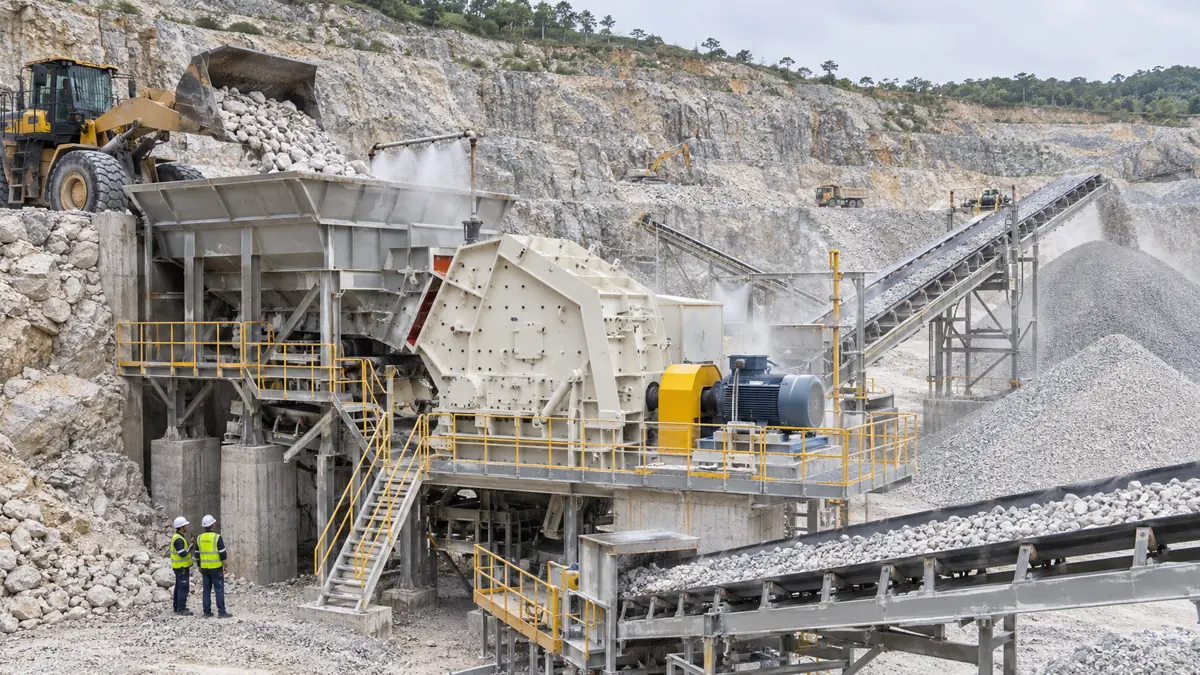
Information Gain: Turn a Wear-Life Promise into a Shared Test Basis
“Long life,” “high chrome” and “1,000 hours” sound precise, but none is a valid comparison without a common operating boundary. One supplier may count engine hours, another rotor-running hours and another calendar time. One site may process clean, prescreened limestone while another sends wet fines, oversize or occasional steel into the chamber. A bar can also remain installed after its useful crushing profile has already deteriorated.
The Kleemann crushing-tools guide identifies feed material, rotor speed, moisture, feed size and crushing ratio among the factors that influence blow-bar use. The Metso NP application guide likewise treats rotor speed, abrasiveness, settings, wear profile and material selection as application variables. These sources support a comparison method; they do not supply a universal life for a particular quarry.
Ask each bidder to return the same one-page wear basis:
| Comparison field | What must be recorded | Why the field changes the claim |
|---|---|---|
| Material identity | Quarry source, rock description and representative sample or test evidence | The word “limestone” does not define abrasiveness, inclusions or variability |
| Feed presentation | Grading, typical and maximum lump size, fines, moisture, clay and whether material is prescreened | Feed size and unnecessary fines change impact duty and wear exposure |
| Contamination | Tramp-steel history, protection and safe response procedure | A wear-resistant but brittle bar may fail under a condition excluded from the claim |
| Crusher duty | Exact crusher model, rotor speed, gap/settings, reduction target and operating hours | A life observed under one energy input and reduction duty cannot be transferred silently to another |
| Bar identity | Part reference, nominal mass, alloy family, heat/batch traceability and usable faces | “Chrome” or “martensitic” alone is not a complete supplied-part definition |
| End-of-life rule | Minimum usable profile, turning point, rejection limit and inspection interval | A supplier can report a longer life simply by using a different discard rule |
| Measurement | Rotor-running hours, processed feed tonnes, saleable tonnes and scale/record source | A common denominator is required before cost or life can be compared |
| Evidence class | Forecast, lab/material data, comparable site record or witnessed trial | The buyer can see whether the number is an estimate, an observation or an acceptance commitment |
Separate Measured Feed Data from the Word “Limestone”
Two limestone feeds can place different loads on the same impact crusher. Buyers should release available quarry records to all bidders rather than asking each supplier to imagine “normal limestone.” If laboratory abrasion data are not available, state that clearly and provide representative samples, photographs, feed gradation, oversize history, moisture and fines observations, and recent wear records. Unknowns should remain labelled as unknowns.
Record both typical and adverse conditions. A proposal based only on the clean, dry feed seen during a short visit may not cover wet-season fines, variable benches or recycled steel contamination. Conversely, a supplier should not assume an extreme condition the quarry has never observed merely to justify a different alloy. The purpose is a shared, auditable basis.
For a broader machine-selection boundary, compare the jaw crusher and impact crusher roles in limestone. That comparison helps decide where impact crushing belongs; it does not predict the life of a specific blow bar.
Compare Blow Bar Metallurgy with Breakage Risk, Not Hardness Alone
Metallurgy is a trade-off, not a ladder on which the hardest option is always best. The Kleemann, Metso and Terex EvoQuip wear-parts guide distinguish alloy families by wear resistance and ability to tolerate impact. Their common purchasing lesson is that the material must be selected for the actual feed and uncrushable risk.
| Alloy family to discuss | Conditional purchasing interpretation | Evidence to request |
|---|---|---|
| Manganese steel | Can suit high-impact duties where toughness is important; wear life remains application-dependent | Exact grade and part, feed and duty assumptions, prior evidence boundary and rejection profile |
| Martensitic steel | Often considered where a balance between hardness and impact resistance is needed | Heat/batch identification, expected feed limit and protection assumptions |
| High-chrome iron | May offer strong abrasion resistance in a prepared, controlled feed, but impact and tramp-metal risk require explicit review | Maximum feed condition, prescreening, metal protection and written breakage exclusions |
| Ceramic-composite option | May increase local wear resistance in a suitable base material, but it is not evidence of universal life | Construction description, supported application range, usable wear limit and comparable records |
Do not convert this table into a substitute specification. The final selection must come from the proposed part, the crusher manufacturer’s current documentation, the supplier’s declared application boundary and the quarry’s actual feed evidence.
Define the Wear-Life Denominator Before Comparing Cost
Hours alone can conceal different throughputs, stoppages and counting rules. Ask for at least processed feed tonnes per usable set and retain rotor-running hours as a secondary operating measure. Where the business value depends on saleable product, also record saleable tonnes, but do not confuse yield losses elsewhere in the circuit with blow-bar wear.
Wear cost per processed tonne = (delivered set cost + planned turning/change labour + attributed change downtime) ÷ verified processed feed tonnes to the agreed rejection limit.
The equation is a comparison structure, not a promise that all downtime can be assigned to the bars. State the local labour basis, downtime valuation and excluded events. If one bidder includes a complete set while another prices one bar, normalize the supplied quantity. If a bar is turned to use a second face, document when and how that work is counted.
The mobile crusher operating-cost guide explains the wider cost-per-tonne method. Use the same discipline here while keeping fuel, screen media, transport and unrelated plant stoppages outside the blow-bar line.
Inspect the Complete Impact-Crusher Circuit
A wear claim can be undermined by the circuit around the crusher. Feed regulation, prescreening, metal protection, chamber condition, rotor speed, gap control and product recirculation can change both load and the number of impacts applied to each tonne.
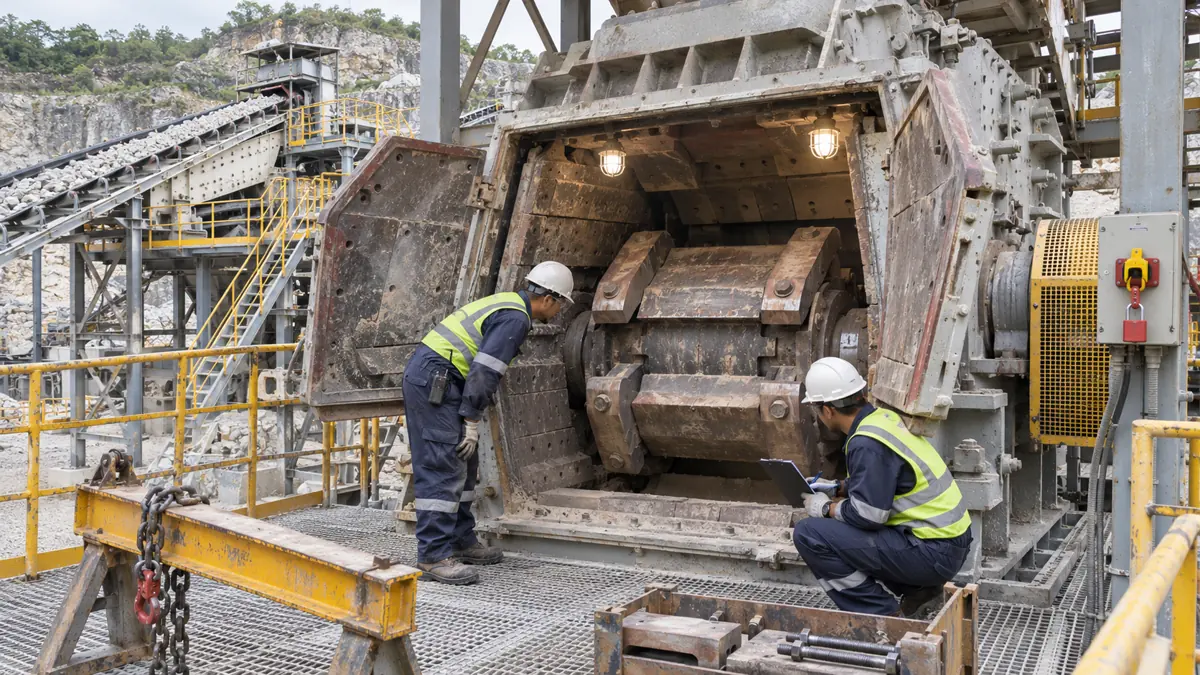
The Kleemann prescreening guidance explains that diverting medium and fine material before the chamber can reduce wear and support output and product quality. Whether that is appropriate depends on the desired final product and the actual feed. It should not be added merely to improve a wear number while losing a required fraction.
Review these circuit conditions with every quotation:
- how the feeder maintains a consistent, full-width feed rather than surging one side of the rotor;
- which fines are bypassed and where the bypassed material rejoins the product;
- how oversize and tramp metal are detected, removed and recorded;
- which rotor speed and gap/settings form the quoted operating basis;
- whether recirculating load is included in reported tonnes;
- how wear profile, apron/liner condition and bar turning are inspected;
- which shutdown, isolation, access and lifting provisions are supplied.
For the wider equipment sequence, use the quarry feeder, crusher, screen and conveyor guide and the daily stone-crusher maintenance checklist. Both provide system context; neither establishes a bar-life guarantee.
Put Wear Claims into the Quotation and Acceptance Record
The commercial document should show what the number means before the order is placed. A supplier can responsibly provide an estimate with exclusions. The buyer’s risk begins when an estimate, an unrelated site record or a marketing phrase is treated as a guaranteed result.
| Supplier statement | Minimum supporting record | Buyer treatment |
|---|---|---|
| “Expected life” | Feed and duty assumptions, alloy and part identity, end-of-life rule and calculation basis | Treat as a forecast until actual site records exist |
| “Achieved at another quarry” | Comparable material and crusher duty, dated measurement method and permission to rely on the record | Use as context, not automatic proof for this site |
| “Guaranteed life” | Exact guaranteed metric, test period, site preconditions, exclusions, remedies and responsible parties | Review as a contract term, not a headline in a brochure |
| “Lower cost per tonne” | Delivered quantity and cost, processed-tonne record, labour/downtime treatment and excluded events | Recalculate all bidders on the buyer’s common basis |
| “Improved alloy” | Current part specification, change from the baseline, traceability and supported application boundary | Verify the supplied part rather than relying on the alloy label |
If a site trial is agreed, define the starting inspection, scale or production-record source, allowed settings, operator responsibilities, contamination events, bar turning, rejection profile and who signs the final record. A trial that permits uncontrolled changes cannot isolate the reason for a different result.
The same evidence discipline applies when comparing impact crusher proposals for reclaimed asphalt pavement, although RAP contamination and product objectives differ from a limestone quarry.
Buyer Checklist Before Accepting a Blow-Bar Claim

- Release the same material, feed, contamination and duty record to every bidder.
- Require an exact part reference, alloy family, supplied quantity, mass and usable faces.
- Define whether life means rotor-running hours, processed feed tonnes or saleable tonnes.
- Agree the turning point, usable profile and final rejection limit before comparing numbers.
- Separate a forecast, prior site record, witnessed trial and contractual guarantee.
- Record prescreening, rotor speed, gaps/settings, recirculation and metal protection.
- Include delivered cost, labour and attributed change downtime on one cost-per-tonne sheet.
- State the trial preconditions, exclusions, inspection method, sign-off and remedy in writing.
To request a defensible impact-crusher and wear-parts discussion, send the raw material description and representative samples, feed size grading and maximum lump size, moisture/fines condition, contamination history, required output, capacity and operating basis, crusher model and settings if existing, current wear records, site photos and layout, delivery boundary and budget range. MVSI can then respond within the evidence available; final wear performance still depends on the confirmed application and operating record.
Frequently Asked Questions
Can a supplier guarantee impact crusher blow bar life in hours?
A meaningful guarantee must define the crusher, feed, duty, rotor-running-hour method, usable wear limit, exclusions, test period and remedy. Without those terms, an hour figure is an estimate or marketing claim rather than a comparable contractual commitment.
What data affect blow bar life most?
Important inputs include material abrasiveness and variability, feed size and shape, fines and moisture, tramp metal, rotor speed, reduction duty, crusher settings, feed distribution, bar metallurgy and the agreed discard profile. The actual record should determine which factor is dominant.
Is high-chrome always better than martensitic steel?
No. High-chrome material can offer high abrasion resistance in a suitable controlled feed, while martensitic material may provide a different balance of hardness and impact resistance. Feed size, impact severity and uncrushable risk must be reviewed before selection.
Should buyers compare hours or processed tonnes?
Use processed feed tonnes to compare wear consumption, supported by rotor-running hours and a documented production-record source. Hours alone do not show how much material passed through the crusher, while saleable tonnes can also reflect screening and circuit decisions outside the bars.
How can prescreening affect blow bar wear?
Prescreening can divert material that does not need impact crushing, reducing unnecessary chamber loading and wear. Its suitability depends on the feed grading and desired product, and the bypassed stream must have a defined route.
What should an impact crusher blow-bar quotation include?
It should identify the exact part, alloy or construction, quantity, mass, compatible crusher, feed and duty assumptions, expected evidence class, usable wear limit, turning method, price boundary, delivery term, exclusions and trial or acceptance method if offered.
What should I send for an impact crusher quotation?
Send the material source and representative evidence, typical and maximum feed size, fines and moisture, contamination history, required product, capacity and operating basis, existing crusher and settings where relevant, current wear and downtime records, site layout, power and installation boundary.
Sources and Evidence Boundary
- Kleemann crushing tools for impact crushers
- Metso Nordberg NP application guide
- Kleemann primary screening
- Terex EvoQuip wear-parts guide
These public sources explain general wear factors and material-selection boundaries. They do not verify a specific MVSI part, quarry, service-life result or guarantee. Project decisions require the selected supplier’s current documentation, the quarry’s actual feed and operating records, and the responsible site’s engineering and safety review.