Table of Contents
- Information Gain: Compare the Beneficiation Handover, Not Just the Crusher List
- Issue One Material Record to Every Bidder
- Draw the Physical Boundary From ROM Receiving to Beneficiation Handover
- Compare Offers With a Scope-and-Evidence Matrix
- Treat Fines, Moisture, and Sampling as Commercial Risks
- Separate Operating-Cost Inputs From a Headline Price
- Buyer Checklist Before Requesting Final Iron Ore Offers
- Send a Controlled Iron Ore Enquiry Before Comparing Prices
- Frequently Asked Questions
- What information should be in an iron ore crushing and screening enquiry?
- Is an iron ore assay enough to select a crushing and screening circuit?
- Why must the beneficiation handover be defined before comparing crusher offers?
- Does a crusher quotation automatically include screening and conveyors?
- How should a buyer compare iron ore capacity claims?
- What should be checked when iron ore contains fines or moisture?
- When is a preliminary crushing and screening quotation useful?
What Should an Iron Ore Buyer Define Before Requesting Crushing and Screening Quotations?
An iron ore buyer should request crushing-and-screening quotations only after issuing one shared basis that defines ROM material domains, typical and maximum feed size, fines, moisture or clay observations, target screen products, downstream beneficiation handover, operating basis, site interfaces, and acceptance boundary. A jaw, cone, screen, or conveyor list is not a comparable proposal if suppliers assume different ore variability or different points where their scope ends. The right circuit depends on the actual ore and downstream route; the practical first step is to make each bidder repeat the same released material-and-process record, identify exclusions, and state what needs confirmation before final selection.
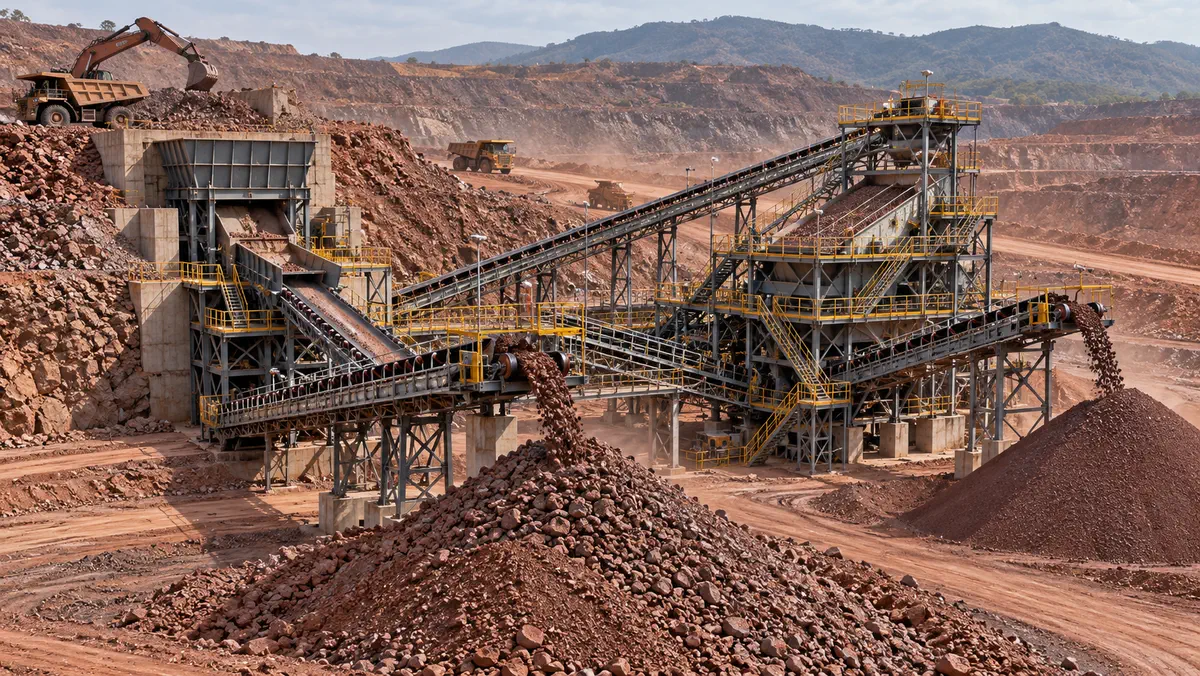
Information Gain: Compare the Beneficiation Handover, Not Just the Crusher List
Most iron ore equipment pages describe a familiar sequence of feeder, primary crusher, secondary crusher, screen, conveyor, and stockpile. That sequence is helpful, but it does not tell a buyer whether competing quotations were prepared for the same ROM ore, the same fines load, the same product sizes, or the same handover to beneficiation.
The useful decision boundary is a released material-to-beneficiation quotation basis. It makes the buyer define what reaches the crushing circuit, which fractions move through or around it, what the screen products are expected to feed next, and which party owns each physical and commercial interface. This is distinct from the existing iron ore crushing plant guide, which explains a typical configuration. Here, the purpose is to make proposals comparable before a machine or a price is selected.
Issue One Material Record to Every Bidder
An iron ore name or assay headline is not a complete design basis. The U.S. EPA’s taconite-processing background document describes crushing and grinding as preparation for liberation and shows screening as an intermediate process in a specific taconite context. It does not select equipment for a different mine. Its practical lesson for an enquiry is simple: the required handover to downstream processing has to be named before upstream crushing and screening can be compared.
| Record to release | What the buyer should define | What each supplier should state |
|---|---|---|
| Material domains | Mine bench, stockpile, blend, weathered zone, or other source identity; which sources may be combined; available photos | Which material variation the offer covers and which variation requires a review |
| ROM size distribution | Typical and maximum lumps, oversize observations, percentage or observations of fines, and truck or loader feed pattern | Assumed hopper, grizzly, primary-crusher opening, protection arrangement, and excluded oversize handling |
| Physical behavior | Moisture, clay or sticky fines observations, abrasion or hardness data if available, tramp-material risk, and seasonal change | Feed-control, scalping, screen, chute, belt-cleaning, and maintenance assumptions tied to the stated condition |
| Product and handover | Required size fractions, stockpile or bin destination, next process step, and who accepts the feed at that point | Which streams are qualified product, bypass, return, reject, or site-supplied handover |
| Operating basis | Target rate, operating-hours definition, shift pattern, and blending or surge expectation | The calculation basis, stated constraints, and items that must be confirmed before a final duty is offered |
| Evidence status | What is measured, what comes from laboratory or mine records, and what is only provisional | Which parts of the offer use evidence and which parts are preliminary assumptions |
This record should not be used to force an early process guarantee. It separates verified facts from provisional assumptions, allowing the buyer to ask for a preliminary scope without confusing it with an accepted operating result. The guide to crushing and screening before beneficiation provides related feed-preparation context; this enquiry record adds ownership and comparison discipline.
Draw the Physical Boundary From ROM Receiving to Beneficiation Handover
Every proposal should trace the physical route from the truck or loader feed to the named downstream handover. A circuit is comparable only if it identifies all major streams, including natural fines or scalped material, crusher product, screen undersize, oversize return, reject or bypass material, and stockpile transfer. A screen is not merely an accessory if it controls what reaches a mill, magnetic separator, dry-sorting stage, stockpile, or another agreed destination.
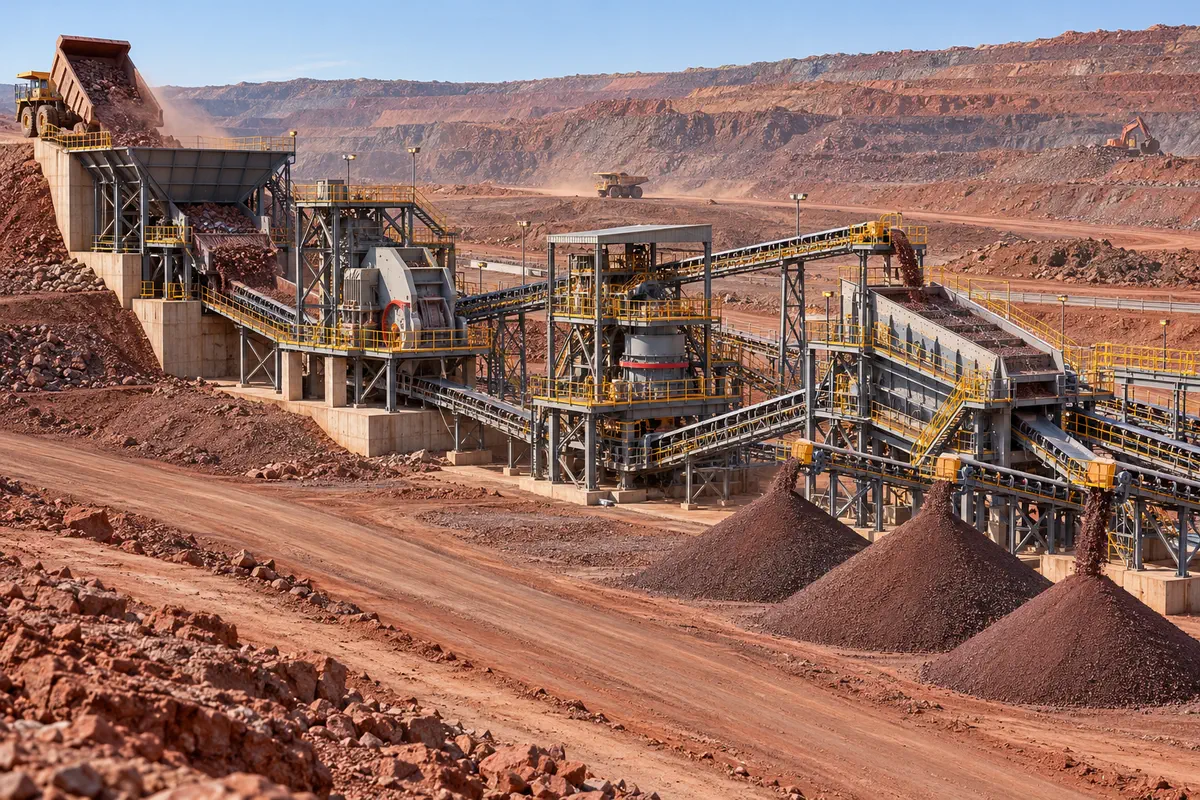
| Process boundary | Buyer question | Evidence to request in the offer |
|---|---|---|
| ROM receiving | What truck, loader, maximum lump, fines condition, and surge allowance does the hopper and feeder assume? | Layout, feed basis, and a list of excluded or site-provided receiving work |
| Primary reduction | Is a jaw, gyratory, or other primary stage proposed for the supplied condition, and what protection or scalping is assumed? | Data sheet, opening and setting basis, access arrangement, and stated material restrictions |
| Secondary or tertiary reduction | Is additional crushing needed before the stated screen products or downstream handover? | Circuit description that marks open/closed operation, return flow, and the reason for each stage |
| Screening | Which deck arrangement, apertures, feed distribution, and moisture/fines condition define the screen duty? | Screen schedule and material-flow drawing that identifies every undersize, oversize, and bypass stream |
| Transfer and storage | Which conveyors, chutes, bins, stockpiles, dust interfaces, and belt-cleaning provisions are in scope? | General arrangement plus inclusion/exclusion schedule, not only a machine list |
| Beneficiation handover | At what physical point does crushing-and-screening scope end, and what size or material record is handed over? | Named battery limit, discharge point, controls or utility interface, and acceptance responsibility |
The EPA’s metallic-mineral-processing NSPS summary identifies crushers, screens, conveyor transfer points, storage, and loading as relevant facilities under a United States rule. That page is not international design or legal guidance. It does reinforce a procurement point: transfer and storage locations should be visible in the scope because they are real operating and environmental interfaces, not blank space between named machines.
Compare Offers With a Scope-and-Evidence Matrix
Prices should be compared only after the material record and physical boundary are aligned. A lower total can exclude a grizzly, scalper, screen, return conveyor, stockpile conveyor, liner set, access platform, controls integration, field cable, dust interface, commissioning visit, or acceptance activity that another quotation includes.
| Commercial line | Align before comparing price | Evidence that reduces ambiguity |
|---|---|---|
| Material basis | Same material domains, ROM size record, fines and moisture observations, product schedule, and stated gaps | Dated technical offer that repeats the released record and flags provisional assumptions |
| Equipment package | Feed equipment, crushers, screens, conveyors, tramp protection if proposed, access, guards, and initial wear parts | Itemized inclusion/exclusion schedule and layout with material streams |
| Civil and installation interfaces | Excavation, foundations or pads, structural steel, drainage, unloading, erection, field wiring, and interconnecting work | Responsibility matrix naming buyer, supplier, and third-party scope |
| Utilities and controls | Power or generator boundary, water or dust-control interface, panels, cables, interlocks, emergency stops, and local controls | Single-line or controls boundary plus site connection list |
| Spares and maintenance | Liners, screens, belts, fasteners, lubrication, tools, lifting, storage, inspection access, and service assumptions | Start-up spares list and maintenance-access drawing with exclusions clearly marked |
| Commissioning and acceptance | Test-material identity, preconditions, operating team, measurement method, documents, training, punch list, and resolution route | Written start-up and handover plan rather than a broad promise of support |
The gold ore crushing and grinding quotation comparison applies the same commercial discipline farther downstream. It does not establish that an iron ore will follow a gold route. For iron ore, the buyer should first make the crushing-screening handover explicit, then ask the downstream process owner whether further size reduction, classification, separation, blending, or storage requirements change the upstream duty.
Treat Fines, Moisture, and Sampling as Commercial Risks
Fines and moisture do not automatically make a proposal unsuitable. They do make feed preparation, screen duty, chutes, transfer points, cleaning, water or dust interfaces, and stockpile behavior items that must be written down. A crusher-only offer can appear less expensive because it assumes that another party has already controlled the material condition.
- What happens if the maximum ROM lump is higher than the released record?
- What happens if natural fines or sticky material are greater than the proposal assumes?
- What happens if a screen fraction that was expected to bypass crushing must instead be reduced or handled separately?
- What happens if the downstream recipient changes the required feed size, storage method, or blending requirement?
- What happens if the site can supply less power, water, drainage, access clearance, or loader support than the layout assumes?
- What happens if a representative sample, test result, or production record is still pending when a preliminary price is issued?
This is why the hard-ore and abrasive-rock crusher selection guide should be read as a conditional selection aid, not a model recommendation. It helps identify technical questions; the quotation record makes suppliers show which answer they have actually priced.
Separate Operating-Cost Inputs From a Headline Price
No article can calculate an iron ore project’s cost per tonne without site-specific operating and maintenance records. Before using price as a decision shortcut, ask which inputs the supplier has included or left to the buyer. This separates a transparent preliminary budget from an incomplete scope.
| Cost driver | Buyer check before relying on a quotation |
|---|---|
| Wear | Are liner, screen-media, belt, chute, and maintenance assumptions connected to the stated material condition? |
| Power and fuel | Which motors, generator package if any, transformers, cables, and connection work are included or excluded? |
| Civil and site work | Who owns foundations, drainage, roads, unloading area, stockpile pads, structural support, and local permits? |
| Labour and access | Does the layout show maintenance access, lifting needs, operator work areas, and site-provided handling equipment? |
| Downtime risk | What inspection, spare-parts, cleaning, isolation, and change-out activities are assumed in the operating basis? |
| Change control | If the material record or downstream handover changes, how will the supplier revise technical scope, price, and schedule? |
The beneficiation plant cost guide is useful for identifying broader project cost categories. It does not provide a price for this circuit or validate an offer. Use actual supplier documentation and site responsibilities to evaluate the specific project.
Buyer Checklist Before Requesting Final Iron Ore Offers

- Identify each ROM material domain or stockpile, representative photos, typical and maximum feed size, fines and moisture observations, and known tramp-material risk.
- Name the required screen products and the physical handover point to the next stockpile, bin, transport, grinding, or beneficiation stage.
- Give every bidder the same target capacity, operating-hours basis, site photos, layout constraints, available utilities, access conditions, and budget range.
- Request a material-flow layout that shows receiving, scalping, crushing, screening, return flow, bypass or reject streams, stockpiles, and every transfer interface.
- Separate equipment supply from civil, drainage, power, controls, dust or water, unloading, erection, and local site-work responsibilities.
- Ask for access, guarding, initial wear and spares, lifting, documentation, training, commissioning, test-material, and acceptance scope in writing.
- Record what is measured, what is provisional, who must confirm it, and how a change will be controlled before order release.
Send a Controlled Iron Ore Enquiry Before Comparing Prices
MVSI can review the information needed to compare iron ore crushing and screening routes on a like-for-like basis. Send the raw material description and photos, typical and maximum feed size, fines, moisture, clay or abrasion observations, required output sizes and downstream handover, target capacity and operating hours, site photos and layout constraints, available power or fuel arrangement, civil and installation boundary, commissioning expectations, and budget range. Those inputs make the technical assumptions visible before a supplier proposal is evaluated.
Frequently Asked Questions
What information should be in an iron ore crushing and screening enquiry?
Include material-domain or stockpile identity, representative photos, typical and maximum feed size, fines and moisture observations, known physical risks, required screen products, downstream handover, target capacity and operating basis, site layout, utilities, responsibility boundary, commissioning expectations, and budget range.
Is an iron ore assay enough to select a crushing and screening circuit?
No. An assay can be relevant to downstream processing, but it does not by itself define maximum feed size, fines behavior, moisture, abrasiveness, screen duty, material handling, or the physical handover. Use it as one item in a broader material record.
Why must the beneficiation handover be defined before comparing crusher offers?
The next process step affects which crushed and screened fractions must be produced, bypassed, stored, or controlled. If suppliers assume different destinations or acceptance points, their offers are not scoped to the same duty.
Does a crusher quotation automatically include screening and conveyors?
Not necessarily. A crusher-only package can exclude grizzlies, screens, return conveyors, product conveyors, stockpiling equipment, access, controls, and site connections. Require an itemized scope and layout that traces every stream.
How should a buyer compare iron ore capacity claims?
Compare capacity only when the proposals use the same ROM size record, material condition, feed arrangement, crushing stages, screen products, recirculation, operating-hours basis, downstream handover, and stated constraints. A nominal figure without those conditions is not comparable.
What should be checked when iron ore contains fines or moisture?
Record the observed fines, moisture, clay or sticky behavior, and seasonal variation. Ask suppliers to state the assumed scalping, screen, chute, cleaning, stockpile, and water or dust-control interfaces, plus the action required if the condition differs.
When is a preliminary crushing and screening quotation useful?
It is useful when it clearly labels provisional material and site assumptions, names the physical scope boundary, and identifies the data needed for revision. It should not be treated as a final performance or acceptance commitment before those inputs are confirmed.