Table of Contents
- Information Gain: Compare One Defined Duty, Not a Plant Name
- Give Every Bidder the Same Ore and Testwork Basis
- Draw the Physical Boundary From Run-of-Mine Feed to the Grinding Discharge
- Put Throughput, Utilities, Site Work, and Acceptance on the Same Sheet
- Compare Evidence and Handover Responsibilities Alongside Price
- Buyer Checklist Before Selecting a Gold Ore Plant Quotation
- Send a Gold Ore Project Brief Before Requesting Comparable Offers
- Frequently Asked Questions
- Why are gold ore crushing and grinding quotations often difficult to compare?
- What ore information should I send before asking for a quotation?
- Can a supplier guarantee capacity from a few ore photos?
- Does a gold ore grinding quotation always include classification equipment?
- What should be in a gold ore plant scope drawing?
- How should I compare a direct manufacturer and an EPC-style supplier?
- What should happen before commissioning a gold ore crushing and grinding plant?
- What is the most important question to ask before comparing price?
How to Compare Gold Ore Crushing and Grinding Plant Quotations
Gold ore crushing and grinding plant quotations are comparable only when every supplier answers the same representative ore and testwork record, design duty, process boundary, and handover scope. Before reading a headline capacity or total price, issue a shared quotation pack that states the material domains, typical and maximum feed size, intended downstream basis, throughput and operating-hours definition, utilities, site restrictions, and acceptance method. Ask each bidder to show where its package begins and ends: receiving, crushing, screening, stockpiling, grinding, classification, controls, civil interfaces, commissioning, spares, and training. A lower total does not mean a lower project cost if it removes a transfer point, test assumption, or responsibility.
Information Gain: Compare One Defined Duty, Not a Plant Name
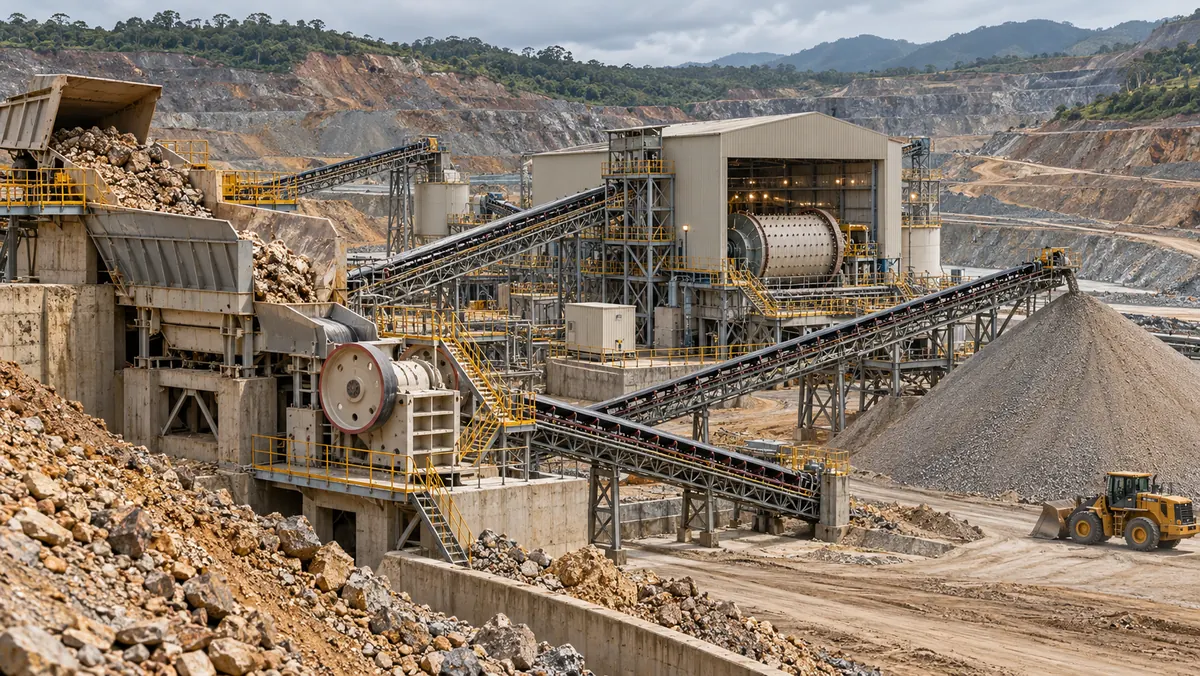
Many gold ore equipment pages correctly explain that crushing and grinding prepare ore for a downstream recovery route. Many quotations, however, still arrive as a model list, a throughput headline, and a commercial total. Those documents can look comparable while assuming different ore variability, feed preparation, storage, grinding target, classification loop, utility supply, site work, and commissioning conditions.
The useful comparison boundary is a shared plant-duty dossier. It is not a promise that one generic flow sheet suits every gold ore. It is a buyer-controlled record that makes each supplier state what evidence it used, what equipment and interfaces it includes, what it excludes, and what will count as a completed handover. The existing gold ore crushing and grinding equipment selection guide explains the technical sequence; this page explains how to compare the commercial offers for that sequence.
Give Every Bidder the Same Ore and Testwork Basis
Gold-bearing ore is not a complete design basis on its own. Public technical reports for gold projects commonly distinguish mineralogy, grindability, variability, and downstream response as separate evaluation topics. That does not mean a buyer must complete every possible study before seeking an initial proposal. It does mean the quotation request should separate verified information from provisional assumptions, so a preliminary offer is not mistaken for a final process guarantee.
| Input record | Give every supplier | Ask each supplier to state |
|---|---|---|
| Material domains | Source location or stockpile identity, known oxide/sulfide/weathered domains, blending expectation, and photos | Which material variation the proposal covers and what different domain would require review |
| Representative samples | Sample identity, date, chain of custody where available, assay/mineralogy or testwork summary, and known gaps | Whether the proposed crushing and grinding duty uses the supplied evidence or a stated provisional assumption |
| Feed condition | Typical and maximum lump size, fines, moisture, clay or sticky behavior, tramp-material risk, and feed-rate pattern | Receiving, grizzly, feeder, crusher-protection, screening, and storage assumptions |
| Downstream basis | Intended gravity, flotation, leach, or another route; planned testwork target where known; product or slurry-handling constraints | The proposed discharge or classification boundary and any missing work needed before a final target is selected |
| Operating basis | Target throughput, operating hours, maintenance philosophy, startup sequence, and expected ore variability | The exact duty point and whether it is an equipment rating, an engineering estimate, or an agreed acceptance condition |
The U.S. EPA notes that the degree of milling depends on factors including mineralogy, hardness, capacity, and the next planned processing step. That is a practical reason to make input assumptions visible instead of treating the phrase “gold ore plant” as a universal mill specification. Use the crushing and screening before beneficiation guide when the feed-size and storage boundary needs more definition.
Draw the Physical Boundary From Run-of-Mine Feed to the Grinding Discharge
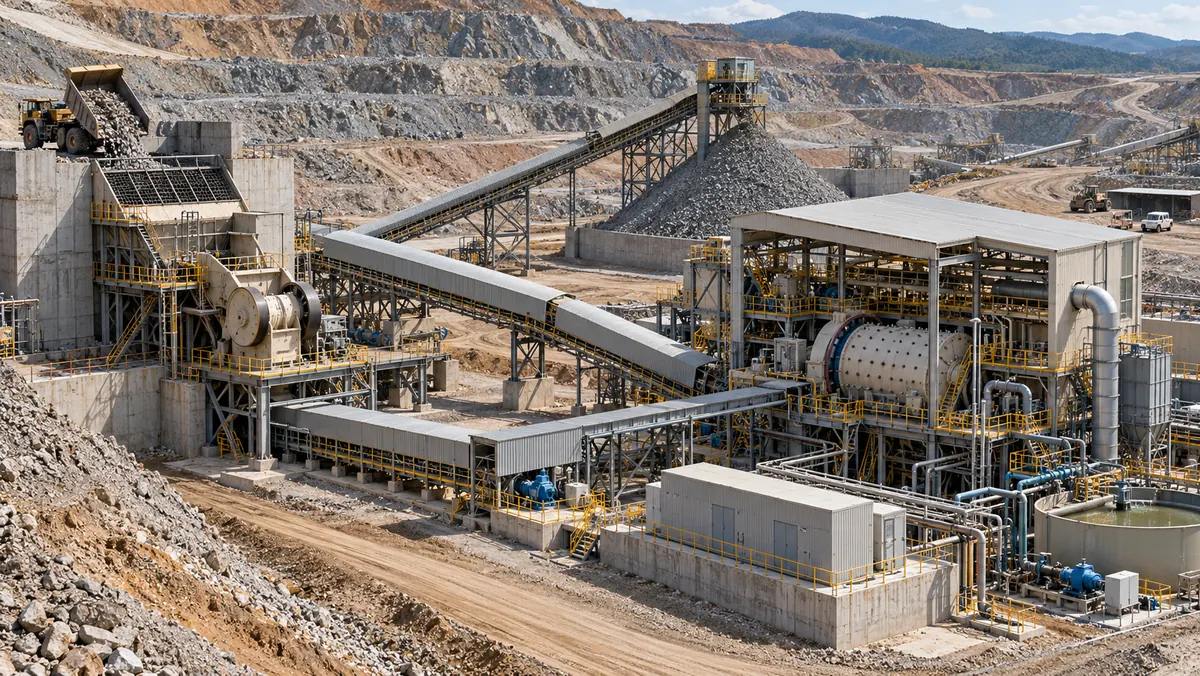
A quotation should show the actual handoff points. A crusher-only offer, a crushing-and-stockpile offer, and a feed-to-classification offer are not interchangeable simply because each uses the word “plant.” A general arrangement or clearly labelled scope drawing is often more useful than a long equipment catalogue because it exposes missing transfer points, storage, access, instrumentation, and utility interfaces.
| Physical area | Clarify before comparing totals | Typical gap to expose |
|---|---|---|
| ROM receiving | Dump pocket, grizzly, apron or vibrating feeder, oversize handling, wear protection, and operator access | A primary crusher is priced without the receiving arrangement required to feed it safely and consistently |
| Primary and secondary crushing | Crusher duties, screen/return path, tramp-metal or protection method, dust-collection boundary, and transfer chutes | The quoted capacity is separated from the actual closed-circuit or fines-management arrangement |
| Crushed-ore buffer | Stockpile or bin capacity, reclaim method, surge logic, sampling point, and interface with the grinding feed | Crushing and grinding are priced as independent islands with no agreed stabilizing buffer |
| Grinding and classification | Mill feed arrangement, mill, pumps, classification equipment, water addition, density/control instruments, and discharge point | A mill is offered without the loop or process-control components needed to define its duty |
| Services and access | Platforms, guardrails, lifting and maintenance access, drains, lighting, cable routes, and control-room boundary | Essential site work is assumed to belong to another party without a named interface |
Do not ask a supplier to turn this table into a universal process design. Ask it to declare its scope boundary around the buyer’s actual evidence. If the grinding route itself is still open, the ball mill versus Raymond mill comparison can help frame a preliminary discussion; it cannot replace representative ore evaluation or process engineering.
Put Throughput, Utilities, Site Work, and Acceptance on the Same Sheet
A stated tonnes-per-hour figure has limited value unless the quotation names the feed condition, operating-time basis, feed and discharge points, and responsibilities that support it. The same is true of a power load, water figure, or commissioning period. These can be useful design inputs, but they should not become inferred guarantees when the ore, site, and process route remain unresolved.
| Comparison line | Require a written response | Buyer action |
|---|---|---|
| Design duty | Feed and product boundary, material assumption, operating-hours basis, stated capacity point, and factors outside the duty | Compare like-for-like definitions rather than isolated tonnes-per-hour numbers |
| Power and controls | Supply voltage/frequency assumption, motor and drive list, control-panel scope, cabling boundary, and automation interfaces | Assign electrical engineering, protection, earthing, and cable installation to a named party |
| Water and slurry services | Water-quality assumption, consumption basis if provided, pumps, sumps, pipework, drainage, and return-water boundary | Confirm who provides the source, storage, treatment, drainage, and site connections |
| Civil and structural work | Foundations, steel, platforms, access, lifting, grouting, buildings, and geotechnical inputs | Mark the design, supply, construction, and approval responsibilities separately |
| Dust, noise, and safety interfaces | Collection/suppression boundary, guards, interlocks, emergency stops, access rules, and local site requirements | Have the responsible project parties check the selected solution against the actual site and regulatory obligations |
| Acceptance and handover | Permitted test material, preconditions, test duration, observations, documents, training, punch-list process, and exceptions path | Agree a written procedure before shipment or site work, not after equipment is installed |
The IFC Mining EHS Guidelines are a useful reminder that mining-project risks are site-specific. They do not prescribe a quotation template or certify a plant. They do support a disciplined approach: record the local water, power, drainage, access, safety, and environmental interfaces instead of leaving them inside a generic “by buyer” or “by supplier” label.
Compare Evidence and Handover Responsibilities Alongside Price
Price comparison becomes more defensible when technical evidence and handover work are placed beside each scope line. The purpose is not to demand a particular supplier route. A direct manufacturer, a process integrator, and a local contractor may each have different responsibilities. The buyer should ask every party to identify its own evidence, exclusions, and coordination points instead of inferring them from a company label.
| Commercial and delivery item | Evidence or wording to request | Why it matters |
|---|---|---|
| Proposal basis | A document that repeats the ore record, duty definition, assumptions, exclusions, and revision date | Prevents a later model list from silently replacing the submitted project basis |
| Equipment list and drawings | Itemized equipment, layout/process description, included auxiliaries, and named battery limits | Reveals whether bins, feeders, screens, pumps, controls, platforms, or instruments were omitted |
| Testwork and process support | Identification of the testwork relied on, unresolved questions, and responsible engineering party | Keeps a preliminary recommendation from being read as a recovery, capacity, or grind-size promise |
| Factory evidence | Current and relevant factory, inspection, quality, or reference evidence within the supplier’s authority | Allows a buyer to verify capability without assuming unverified projects or certifications |
| Transport and delivery | Delivery term, packing, shipment documentation, unloading and inland-handling boundary | Separates equipment value from logistics, lifting, and site-placement responsibility |
| Commissioning and training | Preconditions, personnel, duration, documentation, operator training, spares/tools, and handover records | Shows whether the total includes a machine delivery or a defined startup scope |
| Post-handover route | Manuals, parts identification, warranty wording, response process, and contact path | Avoids inferring local service coverage from an unverified sales statement |
The Chinese manufacturer comparison for copper beneficiation equipment uses a related responsibility-map method. Its copper context must not be transferred to a gold ore proposal; the shared principle is to compare what each party can document. The beneficiation plant cost guide is also useful for identifying cost areas that a machine total may exclude.
Buyer Checklist Before Selecting a Gold Ore Plant Quotation
- Issued the same ore description, representative-sample record, testwork summary or gaps, feed-size range, moisture/fines conditions, target operating basis, and site photos to every bidder.
- Separated confirmed inputs from provisional assumptions and asked each supplier to show where an assumption changes equipment selection, scope, or price.
- Requested a physical scope map from receiving through crushing, buffer storage, grinding, classification, and the stated handover point.
- Compared the included feeder, crusher, screen, stockpile/bin, conveyors, mill, pumps, classification equipment, instruments, controls, access structures, and excluded interfaces line by line.
- Named the power, water, drainage, dust-control, civil, steel, lifting, packing, delivery, installation, and local approval responsibilities.
- Obtained a written commissioning and acceptance procedure based on permitted test material and actual site prerequisites, not a generic performance statement.
- Compared documentation, critical spares, tools, training, warranty wording, and the post-handover support path separately from the equipment total.
Send a Gold Ore Project Brief Before Requesting Comparable Offers
MVSI can review the information needed to put gold ore crushing and grinding quotations onto a like-for-like basis. Send the raw material description and representative-sample or available testwork record, typical and maximum feed size, target downstream route or output basis, required capacity and operating-hours definition, site photos and layout constraints, water and power conditions, preferred delivery boundary, and budget range. Those inputs make the assumptions, interfaces, and next engineering questions visible before a supplier proposal is compared.
Frequently Asked Questions
Why are gold ore crushing and grinding quotations often difficult to compare?
Quotations can use the same equipment names while assuming different ore records, feed preparation, operating basis, grinding/classification scope, utilities, site work, commissioning tasks, and exclusions. Put those items on one shared comparison sheet before interpreting the total price.
What ore information should I send before asking for a quotation?
Send the material source and photos, representative sample or testwork information if available, typical and maximum feed size, fines, moisture or sticky behavior, expected ore variability, intended downstream route, capacity basis, operating hours, site photos, utilities, delivery boundary, and budget range.
Can a supplier guarantee capacity from a few ore photos?
Photos can help describe visible lump size and material condition, but they do not replace a representative record, stated assumptions, engineering evaluation, or an agreed acceptance method. Ask the supplier to identify what is known, what is assumed, and what additional work would be needed to refine the duty.
Does a gold ore grinding quotation always include classification equipment?
No. An offer may cover a mill only or a broader grinding-and-classification loop. Require a scope drawing and itemized list that state the mill feed, pumps, classifier or hydrocyclone, instrumentation, and discharge boundary before comparing offers.
What should be in a gold ore plant scope drawing?
The drawing should show where the package starts and ends, along with receiving, feeders, crushers, screens, conveyors, stockpiles or bins, grinding, classification, relevant utilities, access, control, and handover points. It should also state which work belongs to another party.
How should I compare a direct manufacturer and an EPC-style supplier?
Use the same ore and site brief, then compare written responsibilities for process definition, equipment, drawings, civil and utility interfaces, procurement, delivery, installation, commissioning, training, documentation, spares, and post-handover support. Do not treat either label as proof of included scope.
What should happen before commissioning a gold ore crushing and grinding plant?
The responsible parties should agree site readiness, permitted test material, guarding and safety checks, utilities, water and drainage, documents, personnel, test sequence, observation and sampling method, acceptance criteria, punch-list process, and exception handling. The actual project and supplier instructions govern the final procedure.
What is the most important question to ask before comparing price?
Ask every bidder: “Which ore evidence, operating duty, physical scope, site interfaces, and handover responsibilities are included in this total, and which ones are excluded or provisional?” A clear written answer is more useful than a headline price alone.