Table of Contents
- Information Gain: Compare the Same Process Duty, Not Manufacturer Claims
- Start With Ore Evidence and the Process Route
- Require One Physical Scope Map
- Verify Factory Capability With Order-Specific Evidence
- Compare Commercial Terms Only After the Scope Is Aligned
- Buyer Checklist Before Shortlisting a Copper Plant Manufacturer
- Send a Comparable Copper Beneficiation Brief
- Frequently Asked Questions
- What should I send to Chinese manufacturers for a copper beneficiation plant quotation?
- Can I compare copper plant quotations by tonnes per hour?
- Is flotation equipment always needed for copper ore?
- How do I verify that a Chinese supplier is a manufacturer?
- What can a factory acceptance inspection prove?
- Why are two copper beneficiation offers priced so differently?
- Should commissioning be included in the equipment contract?
- What is the most important risk before selecting a manufacturer?
How to Compare Chinese Manufacturers for Copper Ore Beneficiation Plant Equipment
To compare Chinese manufacturers for copper ore beneficiation plant equipment, issue one written request that fixes the ore evidence, production basis, process boundary, and handover duties before looking at price. Every bidder should respond to the same representative sample or testwork record, feed size and variability, target concentrate or product basis, capacity and operating-hours definition, water and power interfaces, included equipment, drawings, factory inspection, shipping, site assembly, commissioning, spares, and warranty path. Copper processing can follow different routes depending on the ore and test results, so a supplier that simply lists crushers, mills, and flotation cells has not yet made a comparable proposal. The useful comparison is documented scope and assumptions, not a factory label or headline capacity.
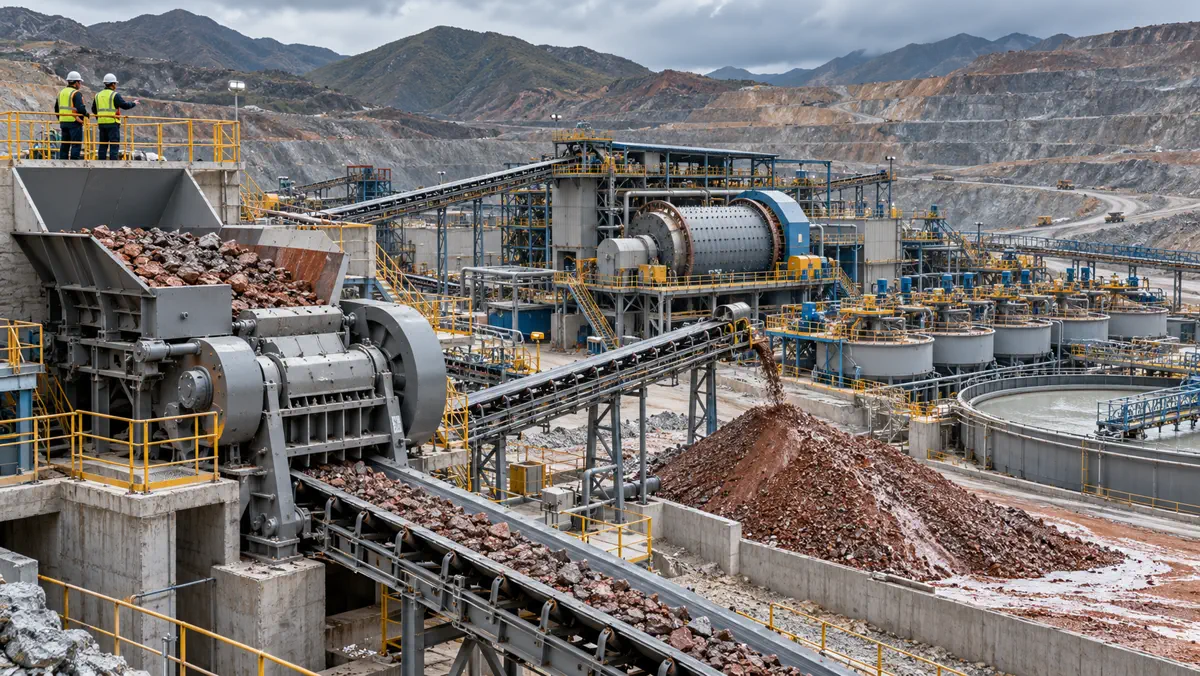
Information Gain: Compare the Same Process Duty, Not Manufacturer Claims
Searches for copper beneficiation equipment can return machinery catalogues, EPC-style offers, and factory-direct sales pages that appear comparable but address different projects. One offer may stop at crushing and grinding; another may include flotation, thickening, filtration, electrical control, piping, and commissioning guidance. Neither the phrase “manufacturer” nor a low ex-works price establishes what will arrive, who selected the process, or who owns the interfaces after shipment.
The buyer-controlled boundary is a shared plant-duty dossier. It gives every bidder the same technical facts and asks each one to put its inclusions, assumptions, limitations, and responsibility path in writing. The aim is not to prescribe a universal copper flow sheet. It is to make each alternative visible enough to compare.
Start With Ore Evidence and the Process Route
Copper ore does not identify one fixed equipment package. The US EPA’s Technical Resource Document for Copper Extraction and Beneficiation describes a range of extraction and beneficiation practices, including conventional milling and flotation. That is a useful commercial warning: a quotation should name the process route it assumes rather than treating every copper-bearing material as an identical flotation feed.
Before contacting manufacturers, distinguish what is known from what is still a testwork or engineering question. An oxide, sulfide, mixed, weathered, clay-bearing, or variable ore may require a different process decision. A proposed crushing, grinding, flotation, thickening, filtration, or tailings scope should therefore state the actual evidence it relies on.
| Project input | What every manufacturer should receive | What the buyer should ask it to confirm |
|---|---|---|
| Ore and sample record | Source, mineralogical or testwork information if available, sample date, variability, moisture, clay, and photos | Which process route and equipment assumptions the offer relies on; what missing tests could change the recommendation |
| Feed basis | Typical and maximum feed size, ROM condition, fines, contaminants, and feed-rate pattern | Required receiving, crushing, screening, storage, and protection scope |
| Product or concentrate basis | Intended downstream route, target concentrate or product requirement where available, and known penalty elements | What is inside the supplier’s separation and dewatering scope, and what outcome is not being promised |
| Production basis | Target capacity, operating hours, availability planning assumptions, and expansion expectation | The exact duty point, design margin assumptions, and whether figures are equipment ratings or an acceptance basis |
| Site interfaces | Site photos, elevation/layout constraints, water source and treatment, power, access, lifting, tailings, and safety requirements | Civil, structural, utility, pipework, control, drainage, and site-work items included or excluded |
The existing copper ore processing plant guide explains why crushing, grinding, flotation, and dewatering are a connected sequence. This page addresses the next commercial question: how to compare the people proposing that sequence.
Require One Physical Scope Map
Every proposal should show where the proposed package begins and ends. A simple general arrangement or process description is often more valuable than a model list because it reveals which transfer points, bins, conveyors, pumps, piping, platforms, controls, and utility connections are assumed.
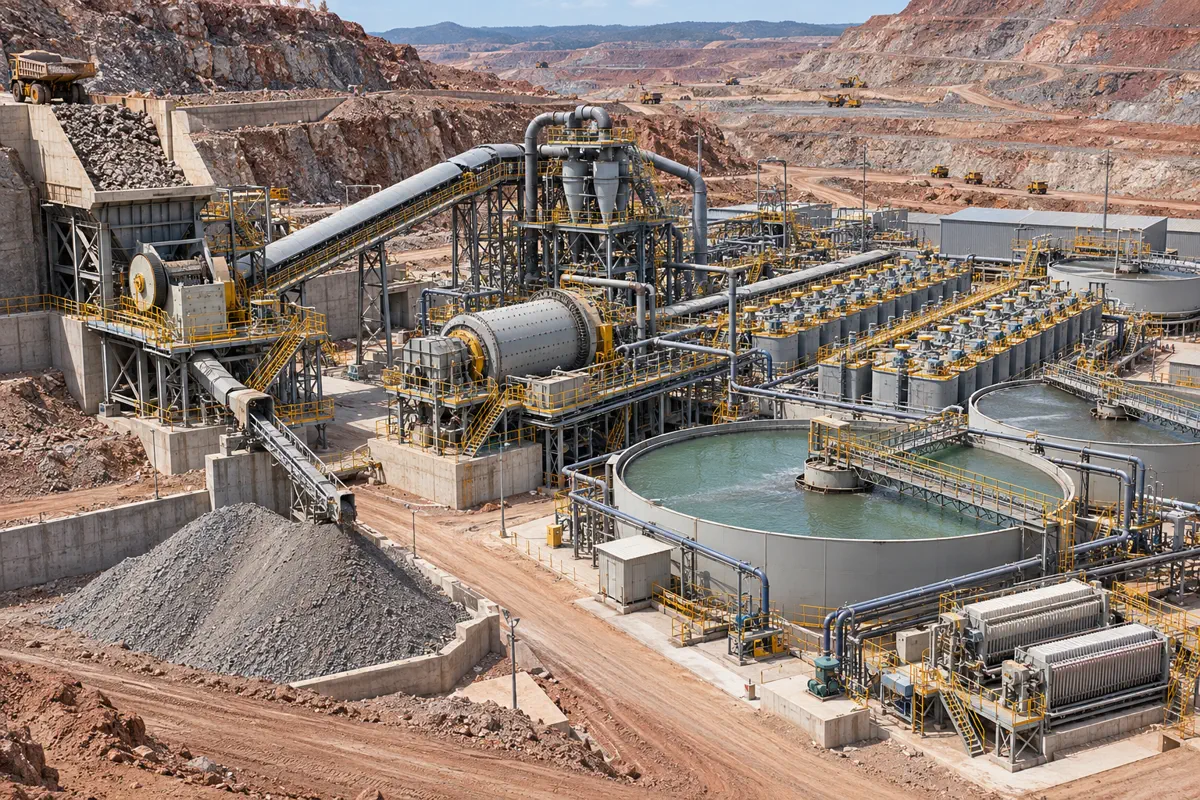
| Plant area | Ask each manufacturer to state | Common comparison risk |
|---|---|---|
| Receiving and crushing | Feed condition, hopper/feeder assumptions, crusher duty, screening, dust and tramp-material boundary | A crusher-only number is compared with an installed receiving circuit |
| Grinding and classification | Mill type, transfer arrangement, classification loop, slurry-density or water assumptions, and drive/control scope | Grinding capacity is quoted without the classification, pumps, cyclones, or instruments that govern it |
| Flotation and reagent area | Cell arrangement, conditioning, reagent and air interfaces, launders, pumps, and any testwork assumptions | A cell volume or cell count is read as a recovery or grade commitment without a stated basis |
| Thickening, filtration, and concentrate handling | Thickener, filter, pumps, storage, water return, concentrate dispatch, and moisture/handling interfaces | Dewatering is priced separately or left between mechanical and civil contractors |
| Tailings and site utilities | Tailings discharge boundary, water return, drainage, power, controls, foundations, and pipework | Important environmental, safety, or site-work responsibility is left unnamed |
The crushing and screening before beneficiation guide is useful when defining the feed-preparation side of that map. For grinding-stage questions, the ball mill versus Raymond mill guide shows why mill selection must begin with material and product duty, not a nameplate comparison.
Verify Factory Capability With Order-Specific Evidence
“Factory direct” is not evidence by itself. A buyer comparing manufacturers should request material that connects the contracting party to the proposed equipment and scope. The depth of review should match the project risk and should not substitute for testwork, engineering review, or contractual acceptance conditions.
| Evidence item | Practical buyer question | What it can establish | What it cannot establish alone |
|---|---|---|---|
| Dated technical proposal | Does it repeat the ore basis, process boundary, equipment list, interfaces, exclusions, and revisions? | Whether the bidder understood the requested scope | That the plant will meet a result not defined in the offer |
| General arrangement and interface list | Are transfers, supports, foundations, utilities, controls, and site connections shown or assigned? | Whether major handovers are visible | Final site-fit without detailed engineering and field verification |
| Equipment data and manufacturing record | Which proposed machines, materials, drives, instruments, and standards are identified? | Traceability of the offered equipment package | Whole-plant performance under untested ore conditions |
| Factory inspection or acceptance plan | What is available for inspection, what documents will be reviewed, and what exceptions will be recorded? | Order-specific build, visible scope, documents, packing, and open items | Mine-site production, flotation recovery, or long-term wear life |
| Reference and service information | Who is the contracting party, who answers technical queries, and who owns parts/warranty escalation? | A named communication and responsibility path | Local presence or response time unless that commitment is written and verifiable |
The VSI crusher factory acceptance test checklist gives a transferable lesson: a factory check is a boundary-setting activity. It can confirm the order-specific machine, visible build, documents, packing, and exceptions. It is not proof of site performance unless the contract defines a relevant test using representative material and installed conditions.
Compare Commercial Terms Only After the Scope Is Aligned
The World Bank Group/IFC Mining EHS Guidelines emphasize that mining and processing projects need project-specific application of good practice. For procurement, that means no responsible party should be hidden behind a generic phrase such as “complete plant” or “technical support.” Ask each bidder to identify the actual project boundary in its offer.
Use the same responsibility matrix for every bid.
| Responsibility line | Document before comparing prices | Decision risk if left open |
|---|---|---|
| Supply package | Included models, capacities/duty basis, platforms, guards, spares, instruments, optional items, and exclusions | A lower price describes less equipment or a different duty |
| Engineering and documents | Layout level, loads/interfaces, electrical and utility lists, manuals, drawings, revision control, and languages | Civil, electrical, or process work appears late |
| Delivery and packing | Delivery term, packing, dimensions, weights, shipping documents, insurance point, and customs role | The buyer assumes transport or documentation obligations not priced |
| Site assembly | Site labor, lifting, tools, consumables, supervisors, safety coordination, and prerequisite civil/electrical work | A handover between parties delays installation |
| Commissioning and training | Preconditions, staff, test material, time allowance, sequence, acceptance record, and operator training | “Commissioning support” has no defined deliverable |
| Warranty and spares | Warranty trigger, exclusions, commissioning effect, parts identification, recommended stock, and escalation contact | A future fault or parts request has no contracted owner |
If one bidder has a direct factory relationship and another uses an export or project-supply route, compare the documents and named duties—not the route label. The broader manufacturer comparison framework and the Chinese manufacturer versus local dealer guide can help separate commercial structure from demonstrated project responsibility.
Buyer Checklist Before Shortlisting a Copper Plant Manufacturer

- Sent the same representative raw-material record, testwork status, feed condition, and source-variability note to every bidder.
- Identified the copper process route each manufacturer is assuming and the questions that still need testwork or engineering input.
- Stated the crushing, grinding, classification, flotation, dewatering, tailings, utilities, and controls boundary in an itemized scope.
- Marked every physical interface between equipment supply, civil work, electrical work, water, pipework, and site operations.
- Attached a dated proposal revision, layout or scope map, equipment data, exclusions, and an option list to the commercial amount.
- Defined what a factory inspection can review and what acceptance conditions require representative material or the installed site.
- Named the parties responsible for packing, shipping documents, assembly, commissioning, training, warranty, and critical spares.
- Compared price only after recording differences in scope, risk, and third-party work.
Send a Comparable Copper Beneficiation Brief
MVSI can review the project inputs needed to make copper ore beneficiation equipment quotations comparable. Send the raw material description and representative sample or testwork information, maximum and typical feed size, intended output or concentrate basis, target capacity and operating hours, site photos, available water and power information, layout or interface constraints, delivery boundary, and budget range. Those inputs help establish the process and responsibility questions that every supplier must answer before a proposal is compared.
Frequently Asked Questions
What should I send to Chinese manufacturers for a copper beneficiation plant quotation?
Send a representative ore and testwork record if available, feed size and variability, target product or concentrate basis, capacity and operating-hours basis, site photos, water and power information, layout constraints, requested delivery boundary, and budget range. Ask each manufacturer to repeat its assumptions, inclusions, exclusions, and unanswered questions in writing.
Can I compare copper plant quotations by tonnes per hour?
Not by tonnes per hour alone. A usable comparison also needs the ore basis, product or concentrate objective, process route, feed preparation, operating-hours assumption, equipment scope, utility interfaces, and acceptance conditions. A stated rate without those conditions may describe a different plant duty.
Is flotation equipment always needed for copper ore?
No. Copper ore routes depend on mineral type, metallurgy, and testwork. Conventional milling and flotation may be relevant for some ores, while oxide, mixed, or otherwise variable material can require a different process decision. A supplier should state the route and evidence its proposal assumes.
How do I verify that a Chinese supplier is a manufacturer?
Request order-specific evidence: a dated technical proposal, named equipment package, manufacturing or inspection record where appropriate, drawings or interface descriptions, a factory-inspection plan, and named people responsible for technical clarification, warranty, and parts. Do not rely on the label alone.
What can a factory acceptance inspection prove?
It can verify the order-specific equipment, visible build, documents, packing, and recorded exceptions within the agreed inspection scope. It cannot by itself prove site capacity, concentrate grade, recovery, wear life, or plant availability without representative material, defined testing, and installed conditions.
Why are two copper beneficiation offers priced so differently?
They may include different crushing, grinding, classification, flotation, dewatering, controls, instrumentation, platforms, spares, delivery terms, engineering documents, assembly, commissioning, training, or warranty duties. Align the itemized scope and responsibility matrix before comparing price.
Should commissioning be included in the equipment contract?
The project should at least define who is responsible for prerequisites, site readiness, technical supervision, test material, operators, safety coordination, training, documentation, acceptance records, and exceptions. Whether it is included in one contract or split between parties, the boundary must be written.
What is the most important risk before selecting a manufacturer?
Treating an incomplete machine list as a complete process plant. The practical control is one shared ore-and-scope dossier that makes process assumptions, physical interfaces, exclusions, and named handover responsibilities comparable across every bid.