Table of Contents
- Why Manganese Ore Beneficiation Needs Ore Testing
- Typical Manganese Ore Beneficiation Process
- 1. Feeding and Primary Crushing
- 2. Secondary Crushing and Screening
- 3. Washing and Clay Removal
- 4. Grinding and Classification
- 5. Gravity Separation
- 6. Magnetic Separation
- 7. Flotation for Fine or Complex Ore
- 8. Thickening, Filtering, and Tailings Handling
- Recommended Equipment Configuration
- Oxide Manganese Ore Process
- Carbonate or Fine Manganese Ore Process
- Capacity Planning and Plant Layout
- Cost Factors in a Manganese Beneficiation Plant
- Common Buyer Mistakes
- What to Send Before Asking for a Quote
- Conclusion
- FAQ
- What equipment is needed for a manganese ore beneficiation plant?
- Is jaw crusher suitable for manganese ore?
- Does manganese ore always need grinding?
- Which separation method is best for manganese ore?
- Can magnetic separation upgrade manganese ore?
- How much does a manganese ore beneficiation plant cost?
- What is the role of washing in manganese beneficiation?
- What information should I provide before asking for a quotation?
Manganese Ore Beneficiation Plant: Process and Equipment
A manganese ore beneficiation plant upgrades raw manganese ore into a cleaner concentrate for ferroalloy, battery material, chemical, or steel-related use. A practical plant usually combines crushing, screening, washing, grinding, gravity separation, magnetic separation, flotation when needed, and dewatering. The right process depends on manganese mineral type, liberation size, clay content, iron contamination, silica level, ore hardness, feed size, output size, capacity, water availability, and concentrate target. Buyers should not select one machine first; they should test the ore and design the whole crushing and beneficiation flow around recovery, grade, and operating cost.
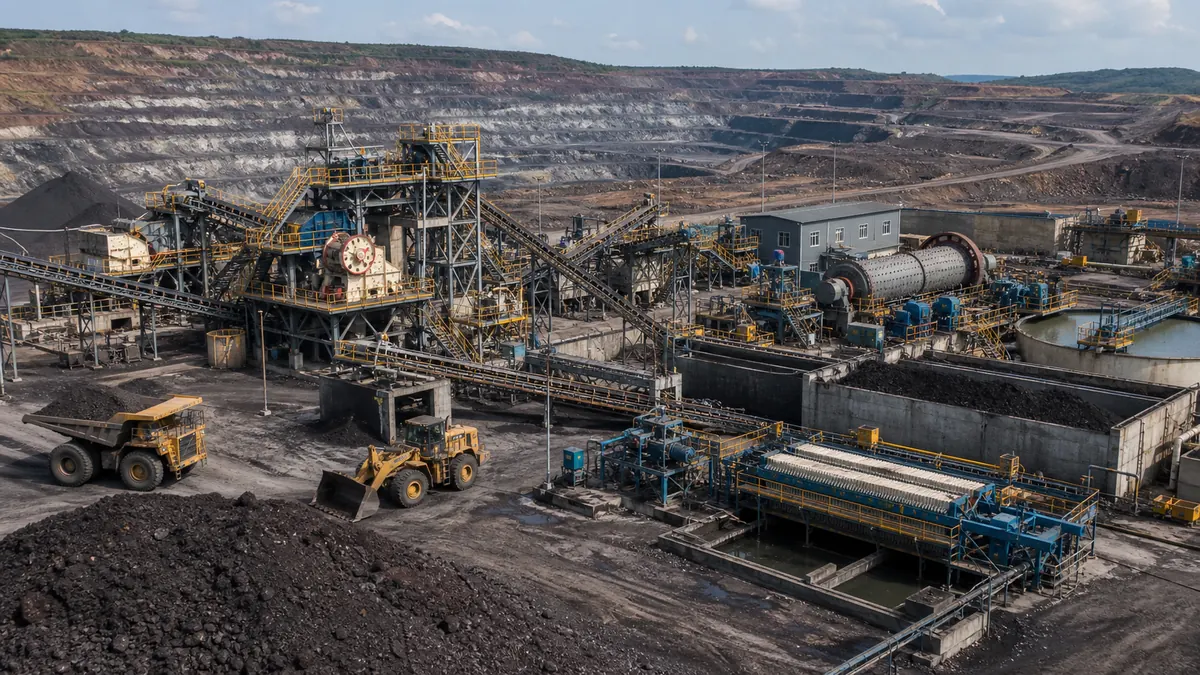
Why Manganese Ore Beneficiation Needs Ore Testing
Manganese ore is not one uniform material. Some deposits are mainly oxide manganese ore, some contain carbonate manganese minerals, and many mines include clay, silica, iron minerals, phosphorus, fines, and weathered material. Two ores with the same manganese grade can need very different equipment because the manganese minerals are locked in different particle sizes.
For this reason, the beneficiation plant should start from ore testing. A simple visual description such as “black manganese ore” is not enough for process design. The supplier needs to know mineral composition, feed grading, washability, density difference, magnetic response, liberation size, moisture, clay content, and concentrate target. Test data helps decide whether the plant should use only washing and gravity separation, or add grinding, magnetic separation, flotation, and stronger dewatering equipment.
If the crushing section also needs to be designed, compare this article with our iron ore crushing plant guide and gold ore crushing and grinding process guide. Those flows show how upstream size reduction affects the later beneficiation stage.
Typical Manganese Ore Beneficiation Process
A common manganese ore beneficiation plant is built in stages. The exact flow depends on ore test results, but the following process is a useful starting point for many small and medium mining projects.
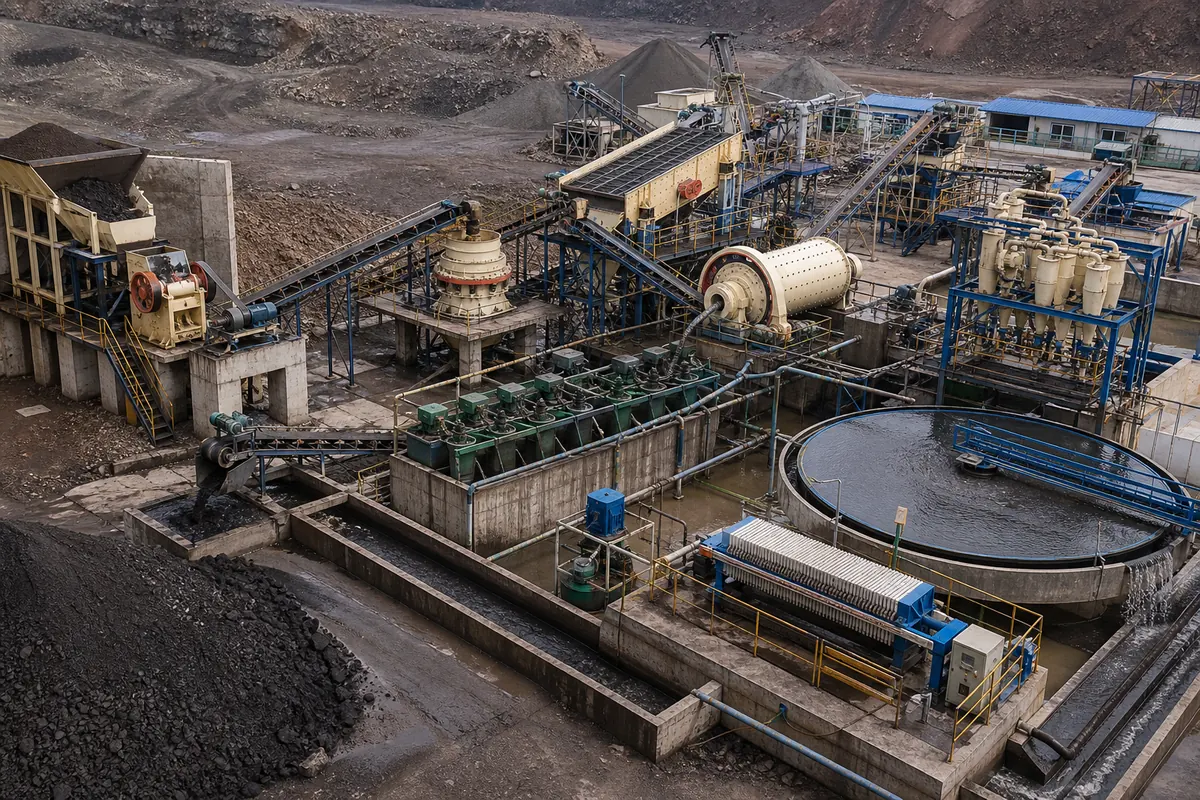
1. Feeding and Primary Crushing
Run-of-mine manganese ore is dumped into a hopper by loader or truck. A vibrating feeder sends the material evenly to the jaw crusher. When the ore contains clay, natural fines, or mixed lumps, the feeder may include a grizzly section to remove undersize before primary crushing.
The jaw crusher is usually selected by maximum feed size, ore hardness, required discharge size, capacity, jaw plate wear life, and site maintenance access. Oversized lumps, wet clay, or tramp metal should be considered before the final machine size is chosen.
2. Secondary Crushing and Screening
After primary crushing, a cone crusher or fine jaw crusher may reduce the ore further. A vibrating screen separates qualified material from oversize. Oversize returns to the crusher, while qualified material goes to washing, grinding, or direct separation.
Screening is important because many manganese processes are sensitive to particle size. If coarse and fine material enter one separator together, recovery and concentrate grade may become unstable. For general crushing circuit planning, see our crushing plant flow sheet guide.
3. Washing and Clay Removal
Some manganese ores contain sticky clay or mud that coats useful minerals. Washing can improve screening efficiency, reduce slime, and prepare the ore for gravity or magnetic separation. The plant may use a rotary scrubber, log washer, trommel screen, spiral washer, or high-pressure spray screen depending on the clay condition.
Washing is not always optional. If clay enters a jig, magnetic separator, or flotation circuit in large amounts, it can reduce separation performance and increase water treatment load. The washing stage should include enough water supply, slurry collection, and settling capacity.
4. Grinding and Classification
If manganese minerals are locked inside gangue, crushing alone may not liberate them. The plant may need a ball mill or rod mill followed by a spiral classifier or hydrocyclone. Grinding creates a smaller particle size so gravity separation, magnetic separation, or flotation can work more effectively.
Grinding should be controlled carefully. Under-grinding leaves manganese locked in waste rock. Over-grinding creates slime, raises power cost, and may make separation harder. The correct fineness should come from ore testing, not guesswork.
5. Gravity Separation
Gravity separation is common for many manganese oxide ores because manganese minerals can have a useful density difference from some gangue minerals. Jig machines, shaking tables, spiral chutes, or dense-media methods may be used depending on particle size and plant scale.
Jigging is often used for coarse and medium particles. Shaking tables are more common for finer particles or cleaner stages. The plant may separate the ore into size fractions first, then treat each fraction with a suitable gravity separator.
6. Magnetic Separation
High-intensity magnetic separation is often used when manganese minerals show magnetic response or when the plant needs to remove certain iron-bearing impurities. Dry or wet magnetic separators may be selected according to feed size, moisture, mineral response, and required concentrate quality.
Magnetic separation is not a universal fix. If the target manganese mineral is weakly responsive or finely locked with gangue, magnetic separation alone may not reach the required grade. It should be tested together with crushing, grinding, and washing conditions.
7. Flotation for Fine or Complex Ore
Some fine, carbonate, or complex manganese ores may need flotation. Flotation can help separate manganese minerals from silica, carbonate gangue, or other impurities when gravity and magnetic separation are not enough. The flotation circuit may include conditioning tanks, flotation cells, reagent dosing, pumps, and froth handling.
Because flotation performance depends strongly on mineral surface chemistry, water quality, slime content, pH, and reagent selection, it should be confirmed by beneficiation tests before plant investment.
8. Thickening, Filtering, and Tailings Handling
Wet beneficiation produces slurry. Concentrate and tailings must be settled, filtered, or otherwise dewatered before storage, transport, or disposal. A manganese plant may use a thickener, filter press, belt filter, settling pond, slurry pump, and tailings pipeline.
Dewatering is part of the process design, not only an accessory. If the filter press is too small or the thickener does not match slurry volume, the whole plant can lose capacity even when the crushers and separators are large enough.
Recommended Equipment Configuration
The right manganese beneficiation equipment depends on ore type, target concentrate grade, particle size, and available budget. The table below shows common equipment choices and the main selection focus for each plant section.
| Plant Section | Common Equipment | Selection Focus |
|---|---|---|
| Feeding | Hopper, vibrating feeder, grizzly feeder | Loader size, maximum feed size, clay content, steady crusher feed |
| Primary crushing | Jaw crusher | Feed opening, capacity, ore hardness, discharge size, jaw plate wear |
| Secondary crushing | Cone crusher, fine jaw crusher | Reduction ratio, closed-circuit control, liner wear, mill feed size |
| Screening | Vibrating screen, trommel screen | Size separation, washing support, screen area, wet fines control |
| Washing | Rotary scrubber, log washer, spiral washer | Clay removal, water supply, retention time, fines loss |
| Grinding | Ball mill, rod mill | Liberation size, power, liner wear, wet or dry operation |
| Classification | Spiral classifier, hydrocyclone | Grinding control, slurry density, cut size, circulating load |
| Gravity separation | Jig machine, shaking table, spiral chute | Particle size range, density difference, roughing and cleaning duties |
| Magnetic separation | Wet or dry high-intensity magnetic separator | Magnetic response, feed size, moisture, concentrate quality |
| Flotation | Agitation tank, flotation machine, reagent system | Fine ore recovery, impurity removal, test-confirmed reagent scheme |
| Dewatering | Thickener, filter press, slurry pump | Concentrate moisture, tailings flow, water recycling, site layout |
For buyers comparing crusher types before beneficiation, our guide to jaw crusher, cone crusher, impact crusher, or VSI selection can help match the crushing stage to manganese ore hardness and output size.
Oxide Manganese Ore Process
Many oxide manganese ores can use a relatively simple process when the mineral is coarse enough and clay is controlled. A common flow is crushing, screening, washing, size classification, jigging, magnetic separation if useful, and dewatering.
The plant designer should first check whether the manganese minerals can be liberated without fine grinding. If coarse liberation is possible, the process may save power and reduce slime. If manganese is locked in fine particles, the plant may need grinding and finer separation equipment.
Carbonate or Fine Manganese Ore Process
Carbonate manganese ore and fine-grained manganese ore can be harder to upgrade. Crushing and washing may remove some waste, but additional grinding, flotation, or combined magnetic and flotation methods may be needed to reach the target concentrate.
Fine ore also creates more dewatering and tailings challenges. The process should include slurry density control, enough pump capacity, correct classifier selection, and suitable thickener or filter press capacity. A low-cost flowsheet can become expensive if it ignores water balance and tailings handling.
Capacity Planning and Plant Layout
Capacity should be selected from the mine plan, working schedule, ore variability, and concentrate target. A plant that runs one shift per day may need a different hourly capacity than a plant feeding a continuous downstream process. Surge bins, fine ore stockpiles, and water storage help stabilize operation.
Common planning ranges include:
- 20-50 TPH for small mine development, trial operation, or local ore supply.
- 50-100 TPH for small to medium beneficiation plants with washing and separation.
- 100-200 TPH for commercial mining projects with crushing, grinding, and multiple separation stages.
- 200+ TPH for larger mines that need stronger screening, pumping, thickening, and automation.
Plant layout should leave space for maintenance, liner replacement, screen media change, pump access, tailings management, water recycling, and future expansion. Conveyors, slurry pipes, and access roads must be designed together instead of added after the main machines are selected.
Cost Factors in a Manganese Beneficiation Plant
The cost of a manganese ore beneficiation plant is driven by process complexity more than by one machine price. A simple crushing, washing, and jigging plant is very different from a plant with grinding, high-intensity magnetic separation, flotation, thickening, filtering, water recycling, and tailings infrastructure.
Major cost factors include:
- Ore hardness, abrasiveness, clay content, and moisture.
- Maximum feed size and required output size after crushing or grinding.
- Target capacity in tons per hour or tons per day.
- Required concentrate grade and recovery target.
- Number of crushing and grinding stages.
- Washing water demand and tailings water treatment.
- Separator type, quantity, and automation level.
- Steel structure, concrete foundation, power supply, pumps, pipelines, and control system.
- Spare parts, wear parts, installation, commissioning, and operator training.
For broader plant budgeting, our stone crusher plant cost guide gives a useful framework for comparing complete equipment scope instead of only unit prices.
Common Buyer Mistakes
The first mistake is asking for a manganese beneficiation plant price without ore test data. A supplier cannot responsibly size the washer, mill, jig, magnetic separator, flotation cell, thickener, and filter press from the ore name alone.
The second mistake is overusing grinding. Fine grinding may improve liberation, but it also increases power cost, slime, pump load, and dewatering difficulty. If the ore can be upgraded in coarser size fractions, the plant should take advantage of that.
The third mistake is ignoring clay and water balance. Sticky clay can reduce screen efficiency, block chutes, contaminate concentrate, and overload settling ponds. Water supply, wastewater recovery, and tailings storage should be discussed early.
The fourth mistake is comparing quotations without matching scope. One offer may include crushers, screens, separators, pumps, steel structure, electrical control, installation support, spare parts, and commissioning, while another includes only several main machines.
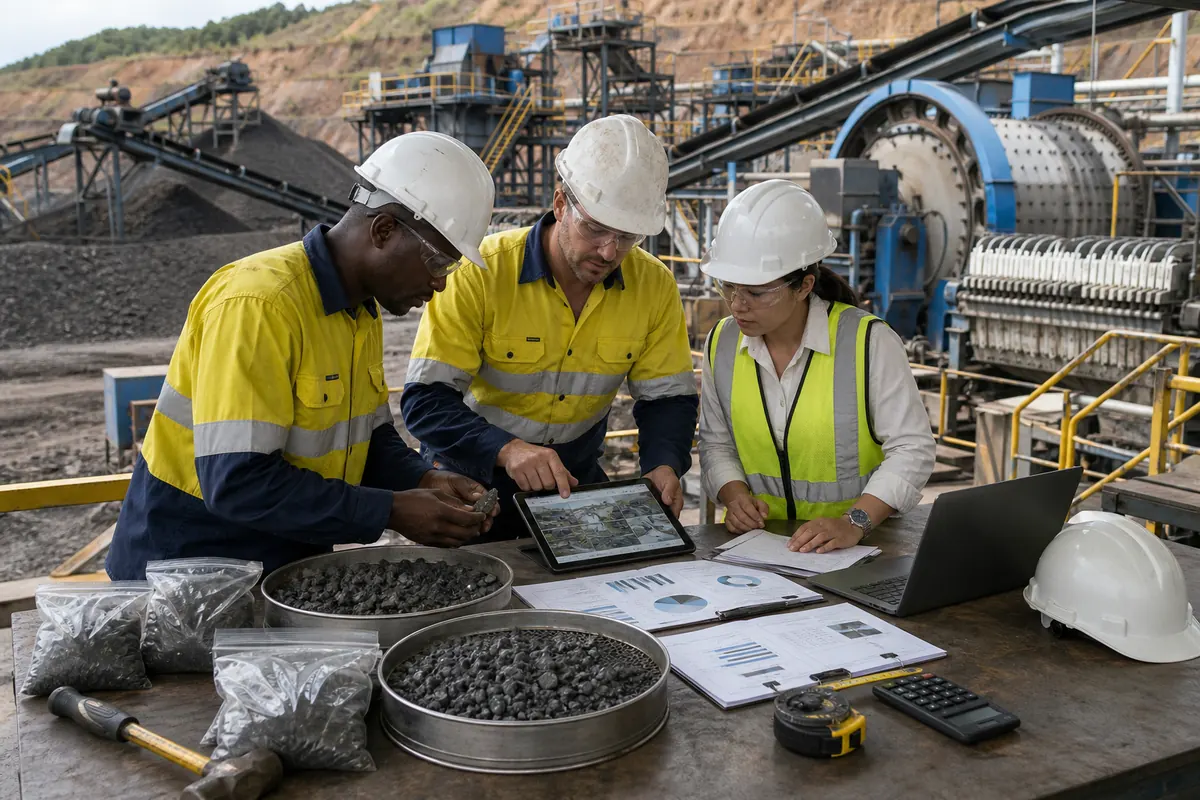
What to Send Before Asking for a Quote
To receive a useful manganese ore beneficiation plant quotation, prepare technical and commercial information before contacting the supplier.
Send these details:
- Raw material name and ore type, such as oxide manganese ore, carbonate manganese ore, mixed ore, or tailings reprocessing material.
- Chemical analysis, manganese grade, main impurities, and any existing test report.
- Maximum feed size from mine blasting, stockpile, or existing crusher.
- Required output size after crushing, grinding, screening, or final product handling.
- Target capacity in tons per hour or tons per day.
- Clay content, moisture, hardness, abrasiveness, and washability if known.
- Required concentrate grade, recovery target, and planned use of the concentrate.
- Site photos, available water, power condition, layout limits, climate, and tailings disposal plan.
- Budget range, delivery country, project schedule, and spare parts preference.
With this information, MVSI can review whether your manganese project needs a simple crushing and washing line, a gravity separation plant, a magnetic separation plant, a flotation circuit, or a combined beneficiation process.
Conclusion
A manganese ore beneficiation plant should be designed from ore test data, not from a standard equipment list. The main process may include crushing, screening, washing, grinding, classification, gravity separation, magnetic separation, flotation, thickening, filtering, and tailings handling. The best configuration depends on manganese mineral type, liberation size, clay content, impurity target, feed size, output size, capacity, water condition, site layout, and budget.
If you are planning a manganese ore project, send MVSI your raw material, feed size, output size, capacity, site photos, test report if available, and budget range. Our team can help compare process options and prepare a practical equipment configuration for crushing, grinding, separation, dewatering, and plant support systems.
FAQ
What equipment is needed for a manganese ore beneficiation plant?
A manganese ore beneficiation plant may need a hopper, vibrating feeder, jaw crusher, cone crusher, vibrating screen, washer, ball mill, classifier, jig machine, shaking table, magnetic separator, flotation machine, thickener, filter press, slurry pump, conveyors, and electrical control system.
Is jaw crusher suitable for manganese ore?
Yes. A jaw crusher is commonly used as the primary crusher for manganese ore because it can accept large feed size and hard rock. The jaw plate material, feed opening, discharge setting, and feeder design should match the ore hardness and abrasiveness.
Does manganese ore always need grinding?
No. Some manganese oxide ores can be upgraded after crushing, screening, washing, and gravity separation. Grinding is needed when manganese minerals are locked inside gangue or when fine separation is required.
Which separation method is best for manganese ore?
There is no single best method for all manganese ore. Gravity separation, magnetic separation, flotation, or a combined process may be used depending on mineral type, particle size, clay content, impurities, and concentrate target.
Can magnetic separation upgrade manganese ore?
Magnetic separation can help in some manganese ore flows, especially when test work shows useful magnetic response or when certain iron-bearing impurities must be controlled. It should be confirmed by ore testing before final process design.
How much does a manganese ore beneficiation plant cost?
Cost depends on feed size, capacity, ore hardness, clay content, grinding fineness, separation method, target concentrate grade, water system, tailings handling, civil works, power system, installation, and spare parts.
What is the role of washing in manganese beneficiation?
Washing removes clay, mud, and fine contamination from manganese ore. It can improve screening, gravity separation, magnetic separation, and flotation performance, especially when sticky clay coats useful minerals.
What information should I provide before asking for a quotation?
Provide raw material, feed size, output size, capacity, chemical analysis, ore test report, clay and moisture condition, site photos, water and power conditions, target concentrate grade, delivery country, project schedule, and budget range.