Table of Contents
- Why Mobile Crushing Makes Sense in Oman
- Common Oman Limestone Applications
- Recommended Mobile Crusher Configurations for Oman
- Configuration 1: Mobile Jaw Crusher + Mobile Impact Crusher + Screen
- Configuration 2: Mobile Jaw Crusher + Mobile Cone Crusher + Screen
- Configuration 3: Mobile Jaw Crusher + Mobile Screen Only
- Capacity Planning for Oman Quarry Projects
- Output Sizes and Screen Selection
- Track-Mounted or Tire-Mounted Mobile Plant?
- Dust, Heat, and Site Conditions in Oman
- Cost Factors Buyers Should Compare
- Common Buyer Mistakes in Oman Mobile Crusher Projects
- What to Send Before Requesting a Quote
- Conclusion
- FAQ
- What is the best mobile crusher for limestone in Oman?
- Is impact crusher suitable for Oman limestone quarry projects?
- What capacity mobile crushing plant should I choose in Oman?
- Can a mobile crushing plant produce several aggregate sizes?
- Should I choose track-mounted or tire-mounted mobile crusher in Oman?
- How much does a mobile crusher plant for Oman cost?
- What dust control options should Oman quarry buyers consider?
- What information should I send before requesting a quotation?
Mobile Crushing Plant for Oman Limestone Quarry Projects
A mobile crushing plant for Oman limestone quarry projects should be selected by raw material hardness, maximum feed size, target aggregate sizes, capacity, relocation frequency, dust control needs, and available power. For many limestone quarries and road base projects, a mobile jaw crusher plus mobile impact crusher or mobile screen is a practical starting layout. If the limestone is harder, mixed with abrasive layers, or the buyer needs multiple clean products, a jaw crusher plus cone crusher plus screen may be safer. The best choice is the complete mobile line that matches the quarry face, haulage plan, product demand, and long-term operating cost.
Why Mobile Crushing Makes Sense in Oman
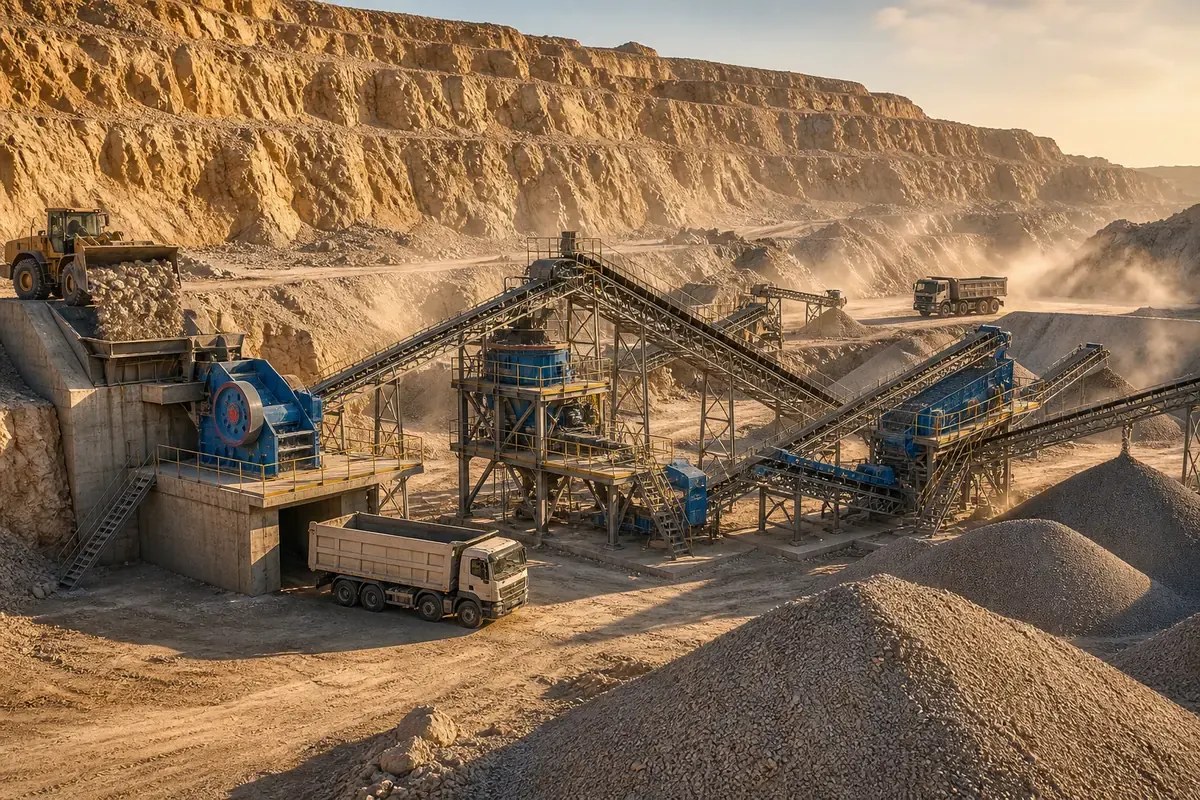
Oman has steady demand for limestone aggregate from road construction, concrete batching, industrial zones, port support, building projects, and quarry development. Many sites are located in dry, dusty, rocky areas where moving material over long distances can become expensive. A mobile crushing plant can reduce civil foundation work, shorten installation time, and move closer to the working face as the quarry advances.
For contractors, mobility is also useful when one plant must support several road sections, temporary aggregate yards, or remote job sites. The key is to compare the full production system, not only the mobile crusher price. A plant that looks cheaper can become expensive if the feeder, screen, conveyors, dust suppression, or spare parts plan is undersized.
If you are still comparing general mobile plant options, read our mobile crushing plant buying guide and our guide to 200 TPH mobile crusher plant for road construction aggregates.
Common Oman Limestone Applications
Most Oman limestone crushing projects are practical commercial operations. Buyers usually need stable aggregate sizes, reliable output, and reasonable cost per ton rather than a complicated plant on paper. Common applications include:
- Road base and sub-base aggregate for highways, access roads, and industrial zones.
- Concrete aggregate for batching plants and construction projects.
- Crushed limestone for cement-related or industrial material preparation.
- Quarry aggregate for local sales in several finished sizes.
- Temporary project crushing where the plant must move after a contract ends.
- Pre-screened material where fines, dust, or weathered layers must be managed before crushing.
Limestone is often easier to crush than granite or basalt, but the real site material still matters. Some limestone is relatively soft and clean. Other deposits contain harder bands, clay, moisture, or abrasive impurities that change the crusher selection and wear cost.
Recommended Mobile Crusher Configurations for Oman
There is no single mobile plant that fits every limestone quarry in Oman. The right configuration depends on feed size, required output sizes, capacity, mobility, and whether the buyer values lower wear cost, better shape, or simpler operation.
Configuration 1: Mobile Jaw Crusher + Mobile Impact Crusher + Screen
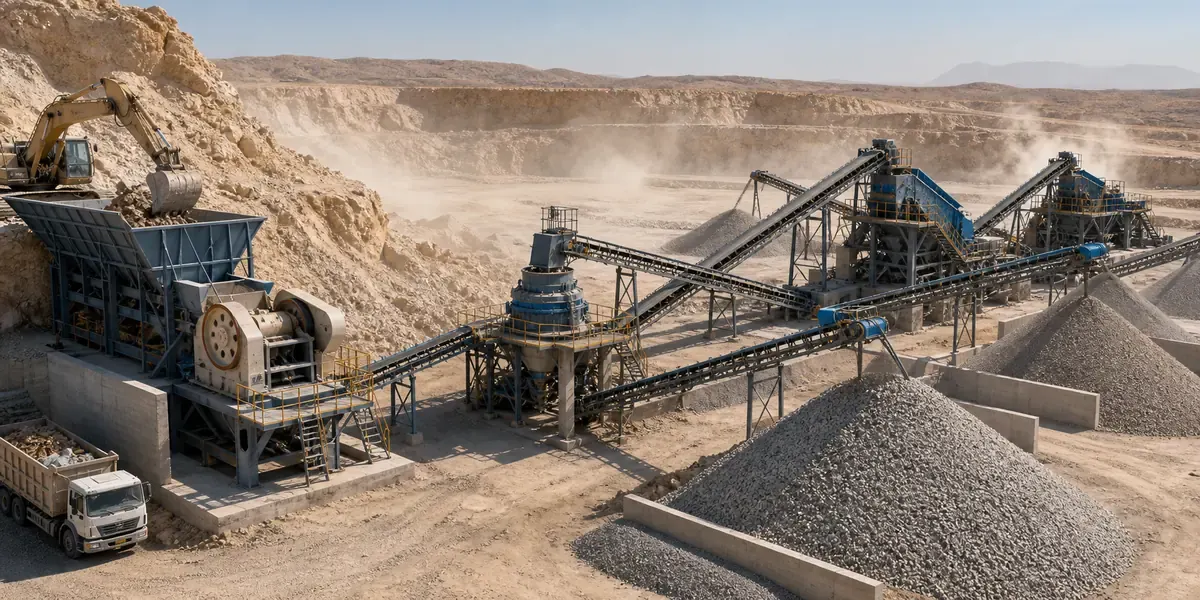
This is a common choice for medium-hard limestone where the buyer needs road base, concrete aggregate, or general quarry products. The jaw crusher handles larger feed. The impact crusher provides secondary reduction and can improve particle shape. The screen separates finished sizes and returns oversize material if the layout includes recirculation.
This setup can be economical when the limestone is not highly abrasive. It is suitable for many contractors that need a compact plant with relatively fast setup and good product shape.
Configuration 2: Mobile Jaw Crusher + Mobile Cone Crusher + Screen
If the limestone is harder, mixed with abrasive material, or the operation runs long shifts, a cone crusher may be a safer secondary stage. Cone crushing can reduce wear risk compared with impact crushing on abrasive feed and can provide stable production for long-term quarry work.
This layout is also useful when the buyer wants better control over several aggregate sizes. It may cost more at the beginning, but the wear economy can be better on tougher feed.
Configuration 3: Mobile Jaw Crusher + Mobile Screen Only
For simpler road base or temporary projects, some buyers can start with a mobile jaw crusher and mobile screen. This configuration works when the required product size is not too fine and the feed can be reduced in one main crushing stage.
It is not the best choice for every quarry. If the buyer needs 0-5 mm sand, tight grading, or better cubical shape, a second crushing stage or VSI shaping stage may be required.
Capacity Planning for Oman Quarry Projects
Capacity should be based on real market demand, operating hours, loader cycle, truck access, screen efficiency, and the number of finished products. Oversizing the plant can lock up capital. Undersizing the plant can create delivery delays, high fuel cost per ton, and pressure on operators.
| Capacity Range | Typical Oman Application | Common Mobile Configuration |
|---|---|---|
| 50-100 TPH | small quarry, temporary road work, local aggregate supply | mobile jaw crusher, mobile screen |
| 100-200 TPH | medium limestone quarry, contractor aggregate production | mobile jaw crusher, impact or cone crusher, screen |
| 200-300 TPH | larger road base project, commercial quarry | heavy mobile jaw, secondary crusher, multi-deck screen |
| 300+ TPH | long-term aggregate supply or large infrastructure support | multi-stage mobile or semi-mobile crushing and screening |
For many Oman limestone projects, 100-200 TPH is a practical starting range. Larger projects can justify 200 TPH or more if the quarry reserve, hauling system, power arrangement, and finished product demand are stable.
Output Sizes and Screen Selection
Output size planning is where many crusher quotations become inaccurate. A buyer may ask for “200 TPH mobile crusher” but later require several clean aggregate sizes. That changes screen area, return conveyor design, crusher chamber selection, and total power.
Common output targets include:
- 0-5 mm crusher fines or manufactured sand.
- 5-10 mm fine aggregate.
- 10-20 mm concrete aggregate.
- 20-40 mm road base or sub-base material.
- Larger crushed limestone for fill or industrial use.
If the project needs manufactured sand or better particle shape, a VSI stage may be added after primary and secondary crushing. For more detail, see VSI crusher vs cone crusher for manufactured sand and how to choose a VSI sand making machine.
Track-Mounted or Tire-Mounted Mobile Plant?
Track-mounted mobile crushers are useful when the plant needs to move frequently inside the quarry or across uneven ground. They can reposition close to the working face and reduce some haulage distance. They are often preferred when relocation speed matters more than road towing convenience.
Tire-mounted mobile plants can be practical when the site has better access roads, the plant moves between projects less frequently, or the buyer wants a cost-effective mobile structure for contractor work. They may need more preparation for leveling, towing, and setup, but they can still be efficient for many limestone applications.
The decision should be based on site access, relocation distance, road rules, ground condition, crane or loader availability, and expected project life. If the project is permanent and the plant rarely moves, a stationary or semi-mobile layout may also be worth comparing.
Dust, Heat, and Site Conditions in Oman
Oman quarry sites can be hot, dry, and dusty. These conditions do not automatically change the crusher model, but they do affect plant reliability and maintenance planning. Buyers should pay attention to dust suppression, sealed electrical cabinets, access platforms, conveyor covers where needed, lubrication intervals, and spare filter planning.
Dust control should be discussed early, especially if the site is close to roads, industrial facilities, or communities. Water spray points, covered transfer points, and proper material drop heights can reduce dust without making the plant overly complex.
Operators should also check power supply, diesel generator planning, fuel logistics, and maintenance access. A technically correct plant can still perform poorly if the site cannot feed it consistently or maintain it safely.
Cost Factors Buyers Should Compare
The mobile crushing plant price depends on the full equipment scope and the operating conditions. A serious quotation should show more than the main crusher model.
- Feed size, limestone hardness, abrasiveness, moisture, and clay content.
- Required tons per hour and number of finished products.
- Jaw, impact, cone, VSI, and screen configuration.
- Track-mounted, tire-mounted, semi-mobile, or stationary structure.
- Feeder size, screen decks, conveyor length, magnets if needed, and control system.
- Dust suppression, guards, walkways, and maintenance access.
- Shipping route to Oman, inland transport, installation, and commissioning.
- Spare parts package, wear-part plan, operator training, and after-sales support.
Two suppliers may quote the same capacity, but one may include only the crusher while the other includes feeder, screen, conveyors, control cabinet, dust system, and startup support. Compare the scope line by line before choosing.
Common Buyer Mistakes in Oman Mobile Crusher Projects
One common mistake is choosing an impact crusher for all limestone projects without checking abrasiveness. Impact crushing can work well on many limestone feeds, but if the rock includes hard or abrasive layers, wear cost may become higher than expected.
Another mistake is ignoring screening. If the plant must produce several sizes, the screen can become the capacity bottleneck. Screen area, mesh opening, material moisture, and return conveyor layout should be selected together with the crusher.
Buyers also sometimes underestimate dust, heat, and spare parts planning. For remote quarry sites, the practical value of a clear wear-part list, operator training, and quick support can be as important as the initial price.
What to Send Before Requesting a Quote
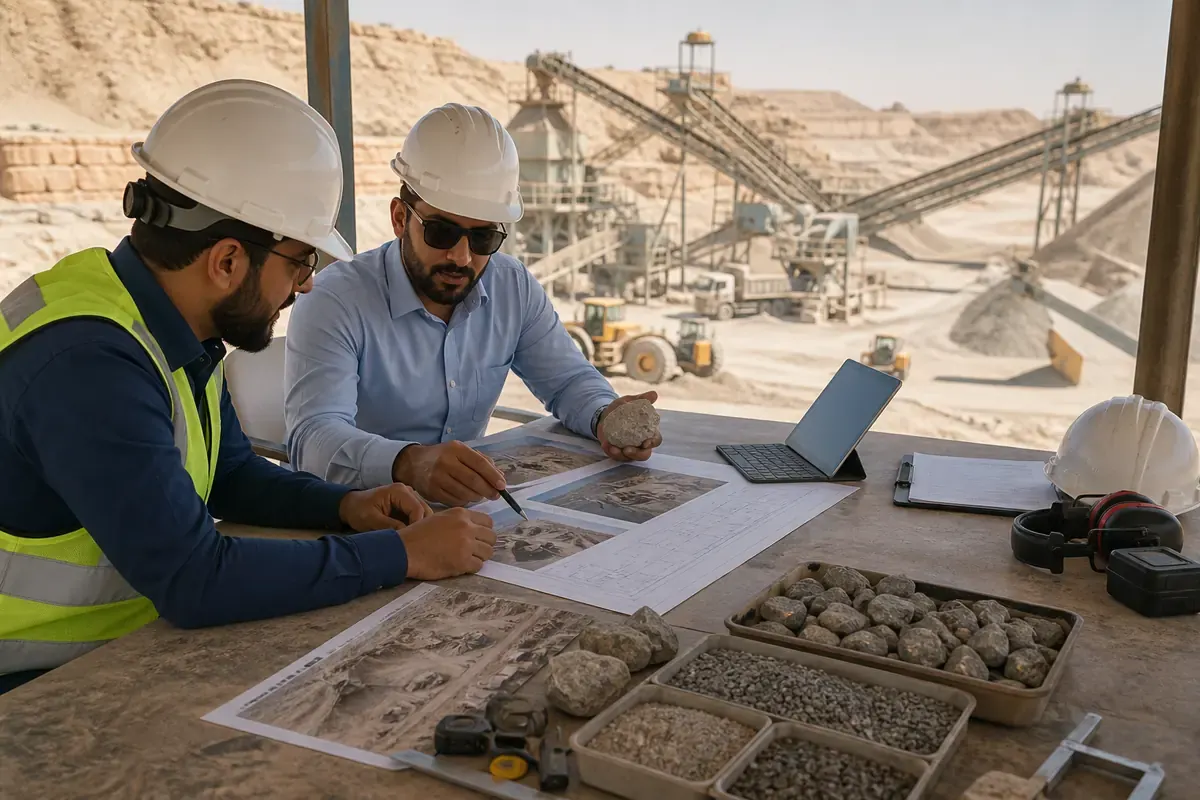
To receive a useful mobile crusher quotation for Oman, prepare the following information:
- Raw material name and clear photos of the limestone or quarry face.
- Maximum feed size before primary crushing.
- Required output sizes and number of products.
- Target capacity in tons per hour.
- Working hours per day and project duration.
- Site photos, access road condition, and relocation frequency.
- Power supply, diesel generator plan, and dust control requirements.
- Budget range, delivery schedule, and whether track or tire mobility is preferred.
With this information, MVSI can recommend a practical flow sheet, crusher model, screen size, conveyor layout, power requirement, spare parts package, and shipping plan for the project.
Conclusion
For Oman limestone quarry projects, a mobile crushing plant should be chosen according to feed size, limestone hardness, output sizes, capacity, mobility, dust control, and total cost per ton. Jaw plus impact crushing can be economical for many medium-hard limestone jobs. Jaw plus cone crushing may be safer for harder or more abrasive material. A mobile screen is essential when the buyer needs several clean aggregate sizes.
If you are planning a limestone mobile crusher project in Oman, send MVSI your raw material, feed size, output size, capacity, site photos, and budget range. We can review the site conditions and suggest a practical mobile crushing and screening solution.
FAQ
What is the best mobile crusher for limestone in Oman?
For many Oman limestone projects, a mobile jaw crusher plus mobile impact crusher and screen is practical. If the limestone is harder or more abrasive, a mobile jaw crusher plus cone crusher plus screen may provide better wear economy.
Is impact crusher suitable for Oman limestone quarry projects?
Yes, impact crusher can be suitable for medium-hard and low-abrasion limestone, especially when better aggregate shape is needed. The feed should still be checked for hard bands or abrasive impurities before final selection.
What capacity mobile crushing plant should I choose in Oman?
Choose capacity according to quarry reserve, market demand, working hours, loader cycle, truck access, and screen output. Many projects start from 100-200 TPH, while larger road base projects may need 200-300 TPH or more.
Can a mobile crushing plant produce several aggregate sizes?
Yes. A mobile crushing and screening line can produce 0-5 mm, 5-10 mm, 10-20 mm, and larger road base sizes if the crusher stages, screen decks, and conveyors are designed for those products.
Should I choose track-mounted or tire-mounted mobile crusher in Oman?
Track-mounted plants are better for frequent movement inside a quarry or rough ground. Tire-mounted plants can be practical for contractor jobs, better access roads, and less frequent relocation.
How much does a mobile crusher plant for Oman cost?
The cost depends on capacity, crusher type, screen size, mobility structure, dust control, conveyors, shipping, installation, spare parts, and after-sales scope. Buyers should compare the complete line, not only the main crusher.
What dust control options should Oman quarry buyers consider?
Useful options include water spray points, covered transfer points, lower drop heights, sealed electrical cabinets, and regular maintenance of filters and conveyor sealing. The right plan depends on site layout and local requirements.
What information should I send before requesting a quotation?
Send raw material photos, maximum feed size, output sizes, required capacity, site photos, relocation frequency, power condition, dust control needs, budget range, and delivery schedule. These details make the quotation more accurate.