Table of Contents
- Why Saudi Arabia Buyers Need Application-Based Plant Selection
- Common Materials in Saudi Arabia Projects
- Recommended Stone Crusher Plant Configurations
- Configuration 1: Jaw Crusher + Cone Crusher + Screen
- Configuration 2: Jaw Crusher + Impact Crusher + Screen
- Configuration 3: Mobile Jaw + Mobile Cone or Impact + Mobile Screen
- Capacity Planning for Saudi Quarries and Contractors
- Output Sizes for Limestone, Granite, and Road Base
- Stationary or Mobile in Saudi Arabia?
- Cost Factors Buyers Should Compare
- Common Buyer Mistakes
- What to Send Before Asking for a Quote
- Conclusion
- FAQ
- What is the best stone crusher plant for limestone in Saudi Arabia?
- Is cone crusher better than impact crusher for granite or gabbro?
- What capacity crusher plant should I choose for road base?
- Can one plant produce road base and concrete aggregate together?
- Is a mobile crusher plant suitable for Saudi Arabia projects?
- Do I need a VSI for limestone or granite aggregate?
- How much does a stone crusher plant in Saudi Arabia cost?
- What information should I provide before asking for a quotation?
Stone Crusher Plant in Saudi Arabia: Limestone, Granite, and Road Base
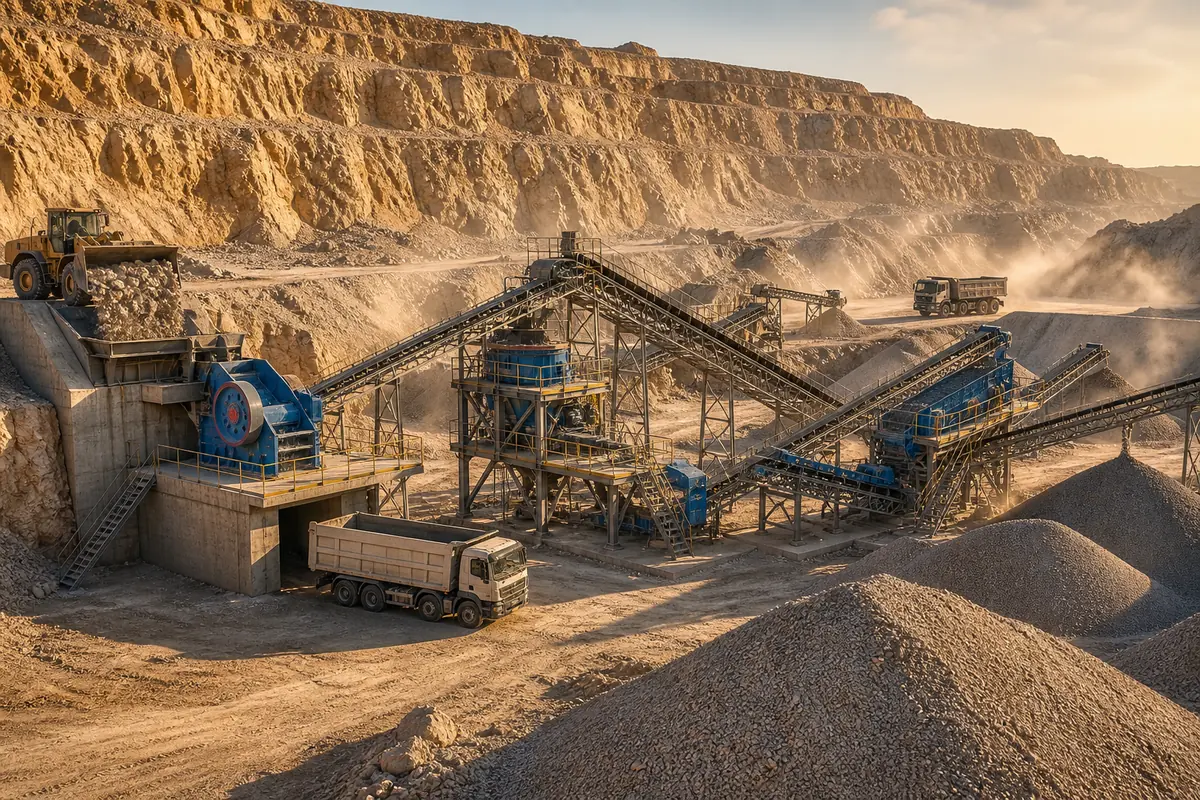
A stone crusher plant in Saudi Arabia should be chosen according to the local rock type, maximum feed size, required output sizes, tons per hour, site mobility, and operating conditions such as heat, dust, and long haul transport. In Saudi projects, limestone is common for cement, road base, and general aggregate, while granite and gabbro require heavier-duty crushing and more wear-part planning. For many fixed quarries, a jaw crusher plus cone crusher plus screen plant is the stable solution. For limestone with lower abrasiveness, jaw plus impact crushing can also work. The right choice is the complete line that produces saleable aggregate reliably, not just the lowest initial quotation.
Why Saudi Arabia Buyers Need Application-Based Plant Selection
Saudi Arabia continues to invest in highways, industrial cities, concrete supply, housing, infrastructure corridors, and quarry development. That creates steady demand for sub-base, road base, concrete aggregate, asphalt aggregate, and manufactured sand. At the same time, buyers often work in hot, dusty areas where maintenance access, wear control, and transport logistics matter as much as the crusher model itself.
The practical question is not only whether a crusher can break the rock. The better question is whether the full plant can run efficiently with the required product sizes, power arrangement, and spare-parts planning. If you are still comparing line design, see our guide to complete stone crusher plant setup and our article on stone crusher plant cost factors.
Common Materials in Saudi Arabia Projects
The most suitable plant depends on the material being processed. In Saudi Arabia, buyers commonly ask about:
- Limestone for cement plants, road base, and general aggregate production.
- Granite for durable concrete aggregate and higher-strength applications.
- Gabbro for road construction and premium aggregate where hard rock performance matters.
- Wadi gravel or mixed quarry feed where screening and shape control are important.
- Recycled concrete for demolition, industrial redevelopment, and temporary urban projects.
Limestone is generally easier to crush and may support a simpler flow sheet. Granite and gabbro are harder and more abrasive, so they usually need stronger secondary crushing, tighter chamber selection, and a better spare-parts plan. If your project includes shaping or sand production, review VSI crusher vs cone crusher for manufactured sand and how to choose a VSI sand making machine.
Recommended Stone Crusher Plant Configurations
Configuration 1: Jaw Crusher + Cone Crusher + Screen
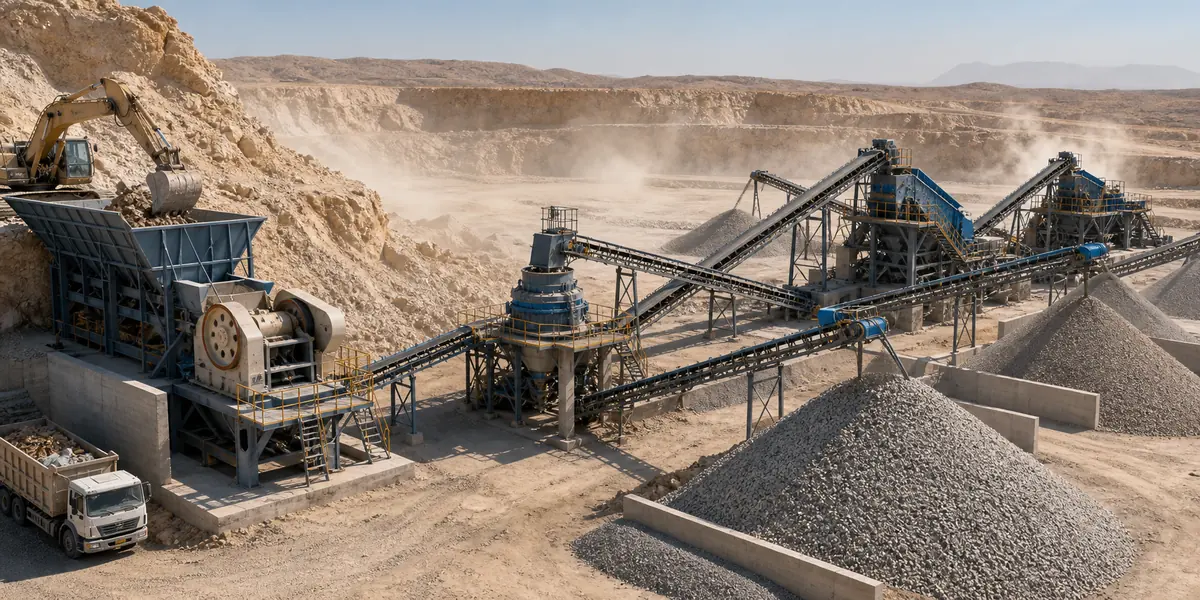
This is a common choice for granite, gabbro, and harder quarry rock. The jaw crusher handles the large feed, the cone crusher provides stable secondary or tertiary reduction, and the screen separates products such as 0-5 mm, 5-10 mm, 10-20 mm, and 20-40 mm aggregate.
This route is suitable when the project needs long-term production, better wear control, and consistent road base or concrete aggregate output.
Configuration 2: Jaw Crusher + Impact Crusher + Screen
For limestone and medium-hard stone, a jaw crusher plus impact crusher can be a cost-effective arrangement. It simplifies the line, can improve particle shape, and may reduce initial investment when the rock is not highly abrasive.
This option is often practical for road base, cement-related aggregate, and shorter-term commercial crushing where limestone is the main feed.
Configuration 3: Mobile Jaw + Mobile Cone or Impact + Mobile Screen
For contractors, temporary quarry faces, or projects that need faster relocation, a mobile setup can reduce civil works and shorten commissioning time. If mobility is a major factor, compare our mobile crushing plant buying guide and 200 TPH mobile crusher plant for road construction aggregates.
Capacity Planning for Saudi Quarries and Contractors
Capacity should be planned around saleable output, truck cycle, and stockpile management rather than only the main crusher nameplate number.
| Capacity Range | Typical Saudi Arabia Application | Common Setup |
|---|---|---|
| 50-100 TPH | small contractor job, local road maintenance, startup quarry | jaw + impact or cone + screen |
| 100-200 TPH | commercial aggregate supply, batching plant support, municipal works | jaw + cone or impact + multi-deck screen |
| 200-300 TPH | established quarry, highway aggregate, industrial project supply | heavy jaw + cone + screen + return conveyor |
| 300+ TPH | high-volume quarry or long-term infrastructure contract | multi-stage crushing with larger screening and stockpile system |
For limestone, the plant may achieve target capacity with a simpler circuit. For granite and gabbro, the upstream reduction, screen efficiency, and recirculation load have a bigger effect on final tons per hour.
Output Sizes for Limestone, Granite, and Road Base
Saudi Arabia buyers often need several final products from one line, including:
- 0-5 mm crusher fines or manufactured sand.
- 5-10 mm and 10-20 mm concrete aggregate.
- 20-40 mm drainage, sub-base, or coarse aggregate.
- road base material for highway, industrial, and municipal works.
If the project needs better shape for asphalt or concrete, a VSI can be added after cone crushing. If the main target is road base or coarse aggregate, the first stage plant may not need a VSI immediately. For shaping guidance, see how to improve cubical shape in manufactured sand with a VSI crusher.
Stationary or Mobile in Saudi Arabia?
A stationary plant is usually better for long-term quarry operation with stable reserves, larger capacity, and enough land for stockpiles and service access. It often offers lower cost per ton over time and makes it easier to design conveyors, dust suppression, and maintenance platforms.
A mobile plant is more practical when the project changes location, foundation work is difficult, or the buyer needs faster startup with less civil construction. The right choice depends on relocation frequency, capacity target, transport limits, and whether the plant serves a quarry, a contractor, or a temporary road project.
Cost Factors Buyers Should Compare
The real cost of a stone crusher plant in Saudi Arabia includes far more than the main crusher price. Buyers should compare:
- Rock hardness and abrasiveness.
- Required capacity and number of final products.
- Stationary or mobile structure.
- Feeder, crusher, screen, and conveyor scope.
- Dust suppression, control cabinet, and safety systems.
- Wear parts, spare parts, and service support.
- Transport from port to site and onsite lifting conditions.
- Installation, commissioning, and operator training.
In desert and remote-area projects, cooling, dust sealing, maintenance space, and spare-parts delivery planning can change the total operating cost significantly. Two quotations with similar crusher models may differ a lot once the complete scope is compared line by line.
Common Buyer Mistakes
Some buyers ask for a Saudi Arabia crusher plant price without sending the material, feed size, or required products. That usually leads to a rough budget number rather than a technically usable proposal.
Another mistake is treating limestone, granite, and gabbro as if they can use the same wear-parts plan. Harder rock normally changes chamber selection, liner life, and the practical tons per hour. Buyers also underestimate site heat, dust, road access, and stockpile layout, even though these factors affect the feeder, screen, and maintenance schedule.
What to Send Before Asking for a Quote
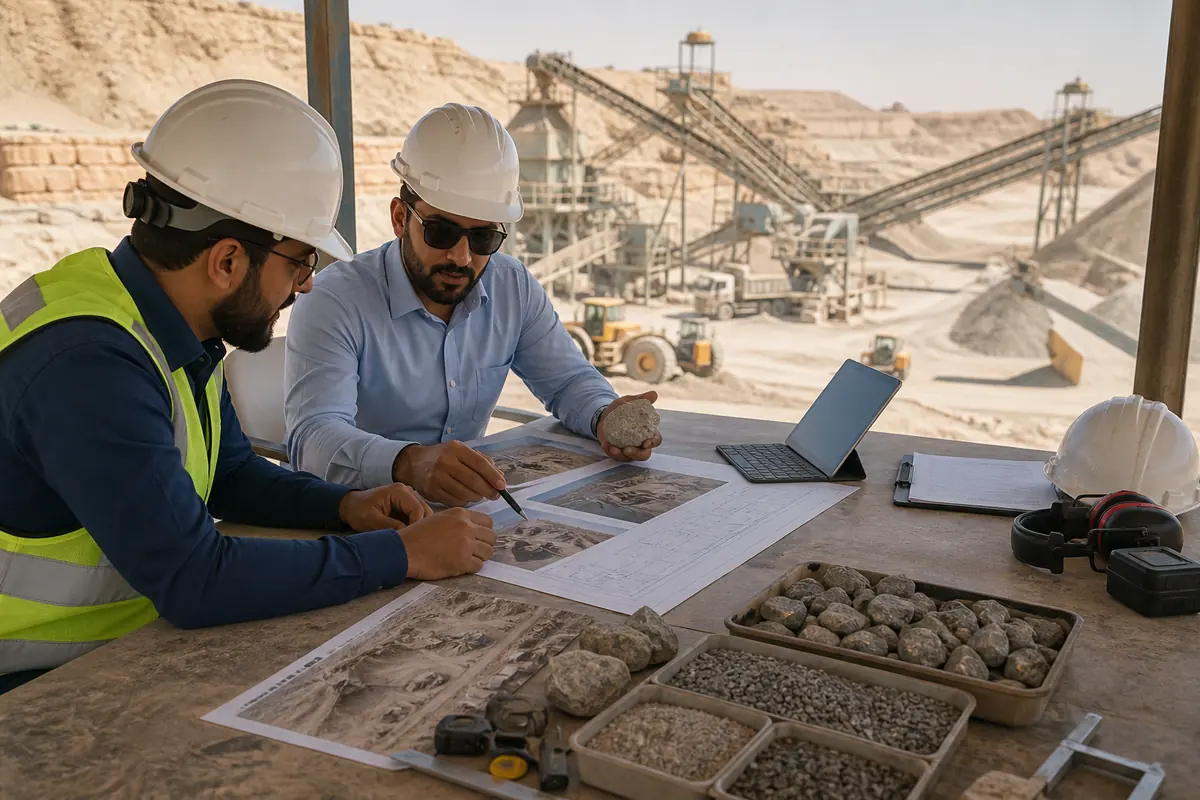
To get a useful quotation for a stone crusher plant in Saudi Arabia, prepare:
- Raw material name, such as limestone, granite, gabbro, or mixed quarry feed.
- Maximum feed size before crushing.
- Required output sizes, such as 0-5 mm, 5-10 mm, 10-20 mm, or road base.
- Capacity in tons per hour of saleable product.
- Site photos, land limits, and transport access conditions.
- Power condition, diesel plan, or generator arrangement.
- Whether the plant should be stationary or mobile.
- Budget range and expected delivery schedule.
With these details, MVSI can recommend a practical feeder, crusher, screen, and conveyor arrangement for the job.
Conclusion
For Saudi Arabia limestone, granite, and road base projects, the best stone crusher plant is the one matched to the local rock, target products, capacity, and operating environment. Limestone may allow a simpler jaw plus impact setup, while granite and gabbro usually need jaw plus cone crushing for better durability and control. The final decision should be based on the full plant scope, not only the headline crusher price.
If you are planning a stone crusher plant in Saudi Arabia, send us your raw material, feed size, output size, capacity, site photos, and budget range. MVSI can review the application and suggest a practical crushing and screening solution for quarry, road base, and concrete aggregate work.
FAQ
What is the best stone crusher plant for limestone in Saudi Arabia?
For limestone, a jaw crusher plus impact crusher plus screen is often a practical and economical option when the rock is not highly abrasive. The final choice still depends on feed size, output sizes, and capacity.
Is cone crusher better than impact crusher for granite or gabbro?
In many cases, yes. Granite and gabbro are harder and more abrasive, so cone crushing usually provides better wear control and more stable long-term operation than impact crushing.
What capacity crusher plant should I choose for road base?
Choose capacity according to saleable output demand, working hours, and truck dispatch plan. Many projects start around 100-200 TPH, while larger quarry and highway supply jobs may require 200 TPH or more.
Can one plant produce road base and concrete aggregate together?
Yes. With the right crusher settings, screen decks, and return conveyor, one plant can produce several sizes for road base, drainage, and concrete aggregate from the same feed.
Is a mobile crusher plant suitable for Saudi Arabia projects?
Yes, especially for contractors, temporary sites, and projects that need faster setup or relocation. A stationary plant is usually better for long-term quarry operation with stable reserves.
Do I need a VSI for limestone or granite aggregate?
Not always. A VSI is more useful when the project needs improved cubical shape or manufactured sand. For road base and coarse aggregate, jaw plus cone or impact crushing may already be enough.
How much does a stone crusher plant in Saudi Arabia cost?
The cost depends on material hardness, capacity, plant structure, crusher and screen scope, dust control, spare parts, shipping, and service support. A reliable quotation should compare the complete line, not only one machine.
What information should I provide before asking for a quotation?
Provide raw material, feed size, output size, capacity, site photos, power condition, plant type preference, and budget range so the supplier can prepare a more accurate configuration and quotation.