Table of Contents
- Why Stone Crusher Plant Prices Vary So Much
- Main Factors That Determine Stone Crusher Plant Cost
- 1. Plant Capacity
- 2. Raw Material Hardness and Abrasiveness
- 3. Feed Size
- 4. Final Aggregate Sizes
- 5. Crusher Type and Crushing Stages
- 6. Screen Area and Number of Decks
- 7. Conveyors, Steel Structure, and Stockpile Design
- 8. Automation and Electrical System
- 9. Dust Control and Environmental Requirements
- 10. Shipping, Installation, and Spare Parts
- Typical Cost Levels by Plant Type
- Hidden Costs Buyers Often Forget
- How to Reduce Stone Crusher Plant Cost Without Hurting Performance
- What Information Should You Prepare for a Quotation?
- Conclusion
- FAQ
- How much does a stone crusher plant cost?
- What is the biggest cost factor in a stone crusher plant?
- Is a jaw crusher and impact crusher plant cheaper than a jaw and cone plant?
- Does higher capacity always mean higher cost?
- Can I start with a small crusher plant and expand later?
- What hidden costs should I include in my budget?
- How can I reduce stone crusher plant cost?
- What information should I send before asking for a quotation?
Stone crusher plant cost depends on capacity, raw material hardness, feed size, final aggregate sizes, crusher type, screen area, conveyor length, automation level, steel structure, civil foundation, dust control, shipping, installation, and spare parts. A simple small limestone plant may need only primary crushing and screening, while a hard granite or basalt plant may require jaw crusher, cone crusher, VSI crusher, multiple screens, return conveyors, and stronger wear parts. For buyers, the real question is not only “how much is a crusher plant?” but “which complete configuration gives the lowest cost per ton for my material and product sizes?”

Why Stone Crusher Plant Prices Vary So Much
Two stone crusher plants can both be called “200 TPH” but have very different prices. One may produce one road base product from limestone. The other may process abrasive basalt into 0-5 mm sand, 5-10 mm, 10-20 mm, and 20-30 mm clean aggregates. The second plant needs more crushing stages, more screening, more conveyors, more wear protection, and often more automation.
This is why a reliable quotation should be based on raw material, feed size, output sizes, capacity, site layout, and operating target. A machine-only price may look attractive, but the missing conveyors, screens, foundations, electrical panels, dust control, and spare parts can change the real project budget.
If you are still planning the full layout, read our guide on Complete Stone Crusher Plant Setup: Equipment, Layout, and Cost.
Main Factors That Determine Stone Crusher Plant Cost
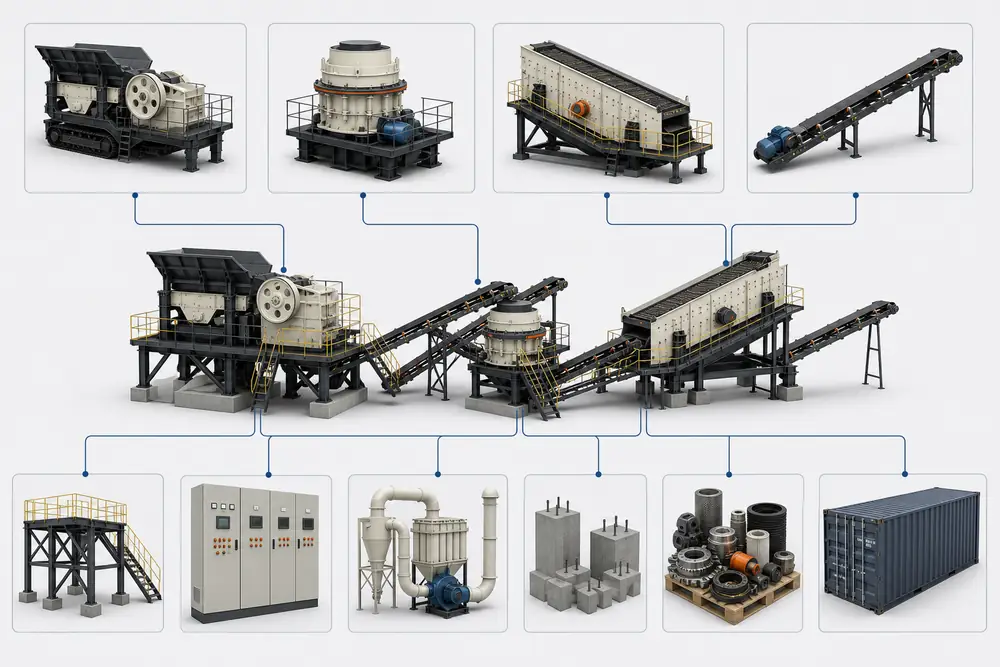
The final price is usually a combination of equipment cost and project cost. Equipment cost includes crushers, screens, conveyors, feeders, control systems, and wear parts. Project cost includes foundation, steel structure, installation, shipping, power supply, dust control, and site preparation.
1. Plant Capacity
Capacity is the first price driver. A 50 TPH plant, 100 TPH plant, 200 TPH plant, and 500 TPH plant need different crusher sizes, feeder widths, screen areas, motor power, and conveyor capacity.
However, capacity should always be discussed together with material and final product. Producing 200 TPH of 0-40 mm road base is easier than producing 200 TPH of multiple clean aggregate sizes from hard granite.
2. Raw Material Hardness and Abrasiveness
Limestone, granite, basalt, river stone, dolomite, iron ore, and recycled concrete behave differently in crushing. Hard and abrasive stone usually requires heavier crushers, better liners, stronger frames, and more wear-resistant parts.
For example, a limestone plant may use jaw crusher plus impact crusher. A granite or basalt plant often uses jaw crusher plus cone crusher, and may add VSI shaping if manufactured sand or cubical aggregate is required.
3. Feed Size
Large feed size increases the cost of the primary crusher and feeder. If the quarry blasts produce large boulders, the plant may need a bigger jaw crusher, stronger grizzly feeder, hydraulic hammer station, or pre-screening design.
Smaller and more controlled feed can reduce primary crusher size and improve stable production.
4. Final Aggregate Sizes
The more final sizes you need, the more screening and conveyor equipment the plant requires. A plant producing one mixed product is simpler than a plant producing 0-5 mm, 5-10 mm, 10-20 mm, and 20-30 mm at the same time.
Strict grading also affects return conveyor design. Oversize material may need to return to cone crusher or impact crusher, which increases conveyor cost and steel support requirements.
5. Crusher Type and Crushing Stages
Crusher type has a major effect on price and operating cost.
| Crusher Type | Common Use | Cost Influence |
|---|---|---|
| Jaw crusher | Primary crushing of large stone | Essential for most hard rock plants; size depends on feed opening. |
| Impact crusher | Limestone, recycling, medium-hard stone | Good shape, but wear cost can be high on abrasive rock. |
| Cone crusher | Secondary crushing of hard rock | Higher initial cost, often better wear economy for granite and basalt. |
| VSI crusher | Sand making and shaping | Adds cost, but improves cubical shape and manufactured sand quality. |
| Mobile crusher | Temporary or flexible sites | May reduce civil work but usually costs more per machine than fixed equipment. |
When comparing machine roles across the full plant, match the crusher to hardness, feed size, reduction ratio, final shape, and wear cost instead of choosing by initial price only.
6. Screen Area and Number of Decks
Screens are sometimes underestimated. A low-cost plant with insufficient screen area may never reach the expected output. Screen size, number of decks, mesh type, vibration strength, and moisture conditions all affect real capacity.
Wet or sticky materials may need larger screens, pre-screening, water spray, or special anti-blocking design.
7. Conveyors, Steel Structure, and Stockpile Design
Conveyors can represent a large share of the total plant cost, especially when the site requires long transfer distance, high stockpiles, multiple product piles, or return circuits.
Steel structure also matters. A compact skid-mounted layout may cost less in civil work, while a tall fixed structure can improve maintenance access and material flow but increase steel and foundation cost.
8. Automation and Electrical System
Manual control is cheaper at the beginning, but automation can reduce downtime, improve safety, and stabilize production. Common control options include central control cabinet, PLC, belt scale, metal detector, motor protection, level sensor, and remote monitoring.
The best choice depends on local labor cost, operator skill, production schedule, and how much downtime the buyer can tolerate.
9. Dust Control and Environmental Requirements
Dust suppression can include water spray, covered conveyors, sealed transfer points, bag filters, cyclone collectors, and paved roads. Environmental requirements vary by country and project type, but ignoring dust control can cause complaints, fines, or forced shutdown.
10. Shipping, Installation, and Spare Parts
International buyers should include ocean freight, inland transport, customs clearance, lifting equipment, installation labor, commissioning, operator training, and initial spare parts. A low equipment price without these items may not represent the real project budget.
Typical Cost Levels by Plant Type
Exact price should be quoted project by project, but the cost logic is usually predictable.
| Plant Type | Typical Configuration | Cost Level |
|---|---|---|
| Simple limestone plant | Feeder + jaw or impact crusher + screen + conveyors | Lower |
| Hard rock aggregate plant | Feeder + jaw + cone + screen + conveyors | Medium to high |
| Sand making plant | Jaw/cone + VSI + screen + dust control | Medium to high |
| Multi-product quarry plant | Multiple crushers, screens, stockpiles, return conveyors | High |
| Mobile crushing plant | Mobile jaw/impact/cone/screen modules | Flexible, often higher machine cost but lower civil work |
For mobile options, compare with Mobile Crushing Plant Buying Guide for Quarry and Mining Projects and 100 TPH Mobile Crushing Plant: Configuration, Cost, and Applications.
Hidden Costs Buyers Often Forget
Some buyers only compare crusher prices and miss the supporting system. These missing items can become expensive later.
Common hidden costs include:
- Foundation and concrete work.
- Steel platform, stairs, guardrails, and maintenance access.
- Electrical cables, transformer, generator, or power distribution.
- Dust control system and water supply.
- Loader, excavator, dump truck, and site road preparation.
- Wear parts package for jaw plates, cone liners, blow bars, rotor tips, screen mesh, and conveyor belts.
- Installation engineer, local labor, crane rental, and commissioning.
- Downtime cost caused by poor layout or undersized equipment.
How to Reduce Stone Crusher Plant Cost Without Hurting Performance
The cheapest plant is not always the lowest-cost plant. A better goal is to reduce unnecessary cost while keeping reliable output.
Practical ways to control budget include:
- Choose the crusher type according to material hardness instead of only initial price.
- Avoid over-complicated product sizes at the first stage of the project.
- Use a modular layout if the quarry may expand later.
- Size the screen correctly so the crusher does not become blocked by recirculating material.
- Prepare accurate feed size and product size data before quotation.
- Keep key wear parts in stock to avoid long shutdowns.
- Compare cost per ton, not only purchase price.
What Information Should You Prepare for a Quotation?
The more complete your information is, the more accurate the stone crusher plant cost estimate will be.
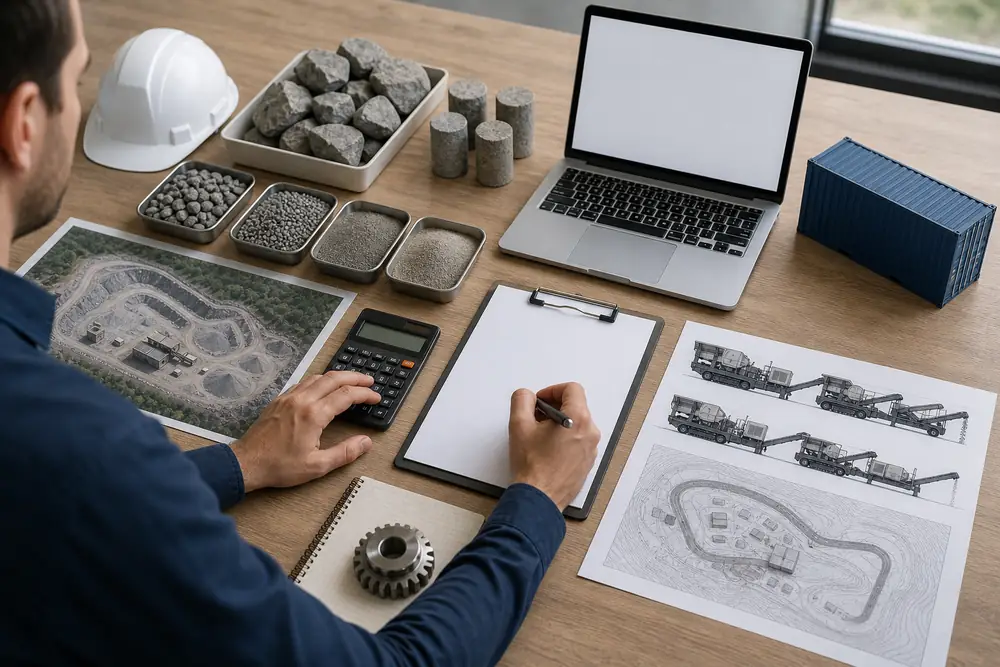
Send the following details:
- Raw material name, hardness, abrasiveness, and moisture condition.
- Maximum feed size and typical feed size after blasting or excavation.
- Required output sizes and percentage of each final product.
- Target capacity in tons per hour and working hours per day.
- Whether the plant should be stationary, skid-mounted, tire-mounted, or track-mounted.
- Site photos, available land, elevation difference, and stockpile space.
- Local power supply, voltage, and whether generator power is required.
- Environmental requirements for dust, noise, and wastewater.
- Budget range, delivery country, and expected project timeline.
With this information, MVSI can prepare a crusher plant configuration, flow sheet, equipment list, layout suggestion, and quotation range that match the real project.
Conclusion
Stone crusher plant cost is determined by the complete crushing solution, not by one crusher model. Capacity, material hardness, feed size, final aggregate sizes, crusher stages, screen area, conveyors, civil work, automation, dust control, shipping, and spare parts all affect the final price. Buyers should compare total project value and cost per ton instead of choosing the lowest machine-only offer.
FAQ
How much does a stone crusher plant cost?
The cost depends on plant capacity, material hardness, crusher configuration, screen size, conveyors, automation, civil work, shipping, installation, and spare parts. A reliable quotation requires raw material, feed size, output sizes, and site information.
What is the biggest cost factor in a stone crusher plant?
The biggest cost factors are usually crusher stages, capacity, raw material hardness, screen and conveyor system, and civil installation. Hard rock plants with multiple aggregate sizes normally cost more than simple limestone plants.
Is a jaw crusher and impact crusher plant cheaper than a jaw and cone plant?
Usually yes for medium-soft materials such as limestone. For hard and abrasive stone such as granite or basalt, a jaw and cone plant may cost more at the beginning but can reduce wear cost over time.
Does higher capacity always mean higher cost?
Higher capacity usually increases equipment size, motor power, screen area, conveyor capacity, and structural requirements. However, final product sizes and material hardness can make a lower-capacity plant more expensive than a simple higher-capacity plant.
Can I start with a small crusher plant and expand later?
Yes, if the layout is planned with future expansion in mind. A modular design can leave space for a secondary crusher, VSI crusher, larger screen, or additional conveyors.
What hidden costs should I include in my budget?
Include foundation, steel structure, electrical cables, transformer or generator, dust control, site roads, installation, commissioning, crane rental, operator training, and initial spare parts.
How can I reduce stone crusher plant cost?
Prepare accurate project data, choose the right crusher type for the material, avoid unnecessary product sizes, use a practical modular layout, and compare cost per ton instead of only machine price.
What information should I send before asking for a quotation?
Send raw material, feed size, output sizes, capacity, site photos, power conditions, environmental requirements, delivery country, project timeline, and budget range. These details help the manufacturer prepare a realistic plant design and price.