Table of Contents
- Why Indonesia Needs Practical Stone Crusher Plant Selection
- Common Raw Materials in Indonesia
- Recommended Stone Crusher Plant Configurations
- Configuration 1: Jaw Crusher + Cone Crusher + Screen
- Configuration 2: Jaw Crusher + Impact Crusher + Screen
- Configuration 3: Mobile Crushing and Screening Plant
- Capacity Options for Indonesia Projects
- Output Sizes for Road and Concrete Aggregate
- Stationary vs Mobile Stone Crusher Plant in Indonesia
- Cost Factors Buyers Should Compare
- Common Buyer Mistakes
- What to Send Before Asking for a Quote
- Conclusion
- FAQ
- What is the best stone crusher plant for andesite in Indonesia?
- Is a mobile crusher plant suitable for Indonesia road projects?
- What capacity stone crusher plant should I choose?
- Can one crusher plant produce several aggregate sizes?
- Is impact crusher suitable for basalt or andesite?
- How much does a stone crusher plant for Indonesia cost?
- What information should I provide before requesting a quotation?
- Can MVSI supply spare parts and installation guidance?
Stone Crusher Plant for Sale in Indonesia: Quarry and Road Aggregate Guide
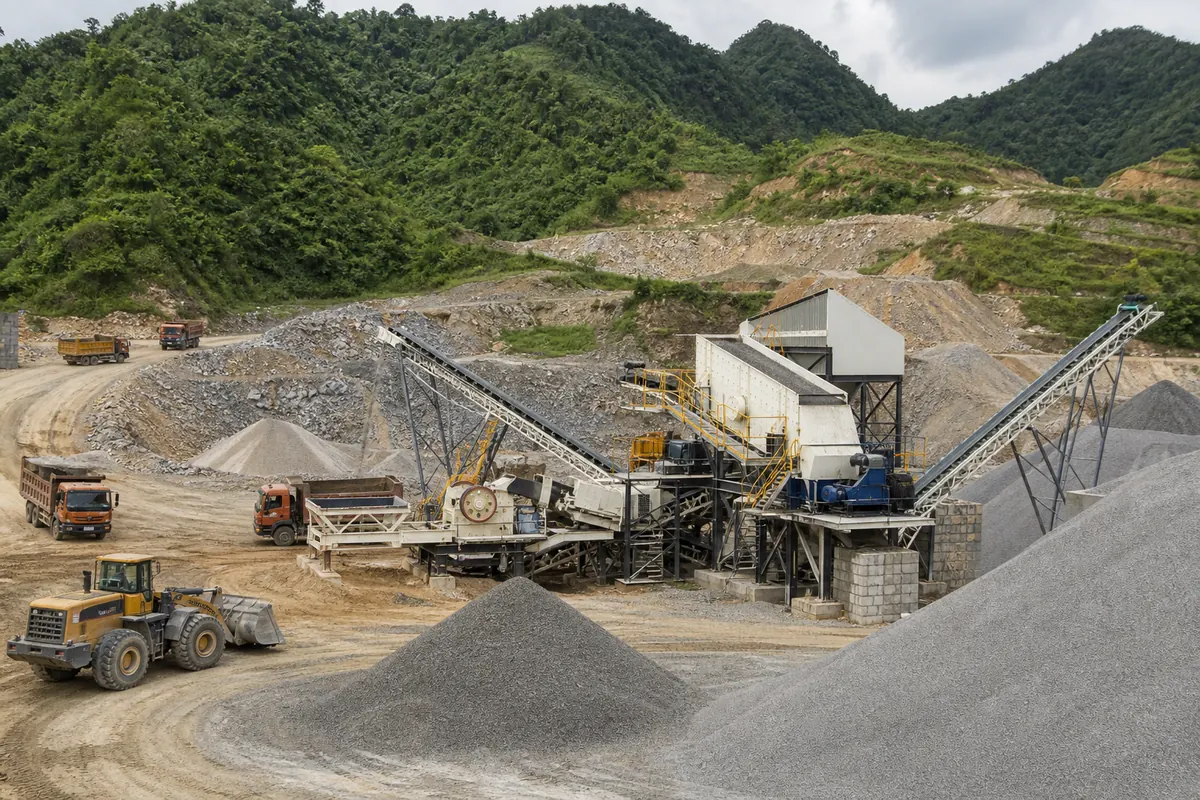
A stone crusher plant for sale in Indonesia should be selected according to local raw material, target capacity, final aggregate sizes, site mobility, power supply, and road construction demand. Common Indonesian materials include andesite, basalt, limestone, river stone, granite, and recycled concrete. For hard volcanic rock, a jaw crusher plus cone crusher plus vibrating screen plant is usually stable. For limestone or softer stone, jaw plus impact crusher may be more economical. Buyers should compare the complete crushing solution, including feeder, crusher, screen, conveyors, dust control, installation, spare parts, shipping, and after-sales support, not only the machine price.
Why Indonesia Needs Practical Stone Crusher Plant Selection
Indonesia has strong demand for road aggregate, concrete aggregate, railway ballast, port construction material, and quarry products. Many projects are located across islands, mountainous areas, coastal regions, and developing industrial zones. This makes crusher plant selection more practical than theoretical: the best solution is the one that can produce stable aggregate at the required capacity while fitting local site conditions.
For quarry owners, the plant must handle continuous production and keep wear cost under control. For road contractors, the plant must often move with the project or produce several aggregate sizes for base course, sub-base, asphalt, and concrete. For EPC buyers and procurement teams, the key question is not simply “Which crusher is cheapest?” but “Which full plant can run reliably after delivery, installation, and commissioning?”
If you are still comparing overall plant layout, see our guide to complete stone crusher plant setup and the detailed article on stone crusher plant cost factors.
Common Raw Materials in Indonesia
The raw material determines the crusher type, wear parts, motor power, reduction ratio, and final aggregate shape. In Indonesia, buyers commonly ask for crushing plants for the following materials:
- Andesite: very common in Indonesian quarry and road aggregate projects; usually hard and abrasive.
- Basalt: hard volcanic rock, suitable for high-strength aggregate but demanding on wear parts.
- Limestone: easier to crush than basalt or andesite; often suitable for impact crushing.
- River stone: rounded and hard, often needs jaw crusher primary crushing and cone crusher secondary crushing.
- Granite: hard and abrasive, normally requires jaw crusher, cone crusher, and sometimes VSI shaping.
- Recycled concrete: useful for construction waste recycling and temporary urban projects.
Before ordering equipment, send the supplier a rock photo, hardness information if available, maximum feed size, moisture condition, and whether the material contains clay. These details help prevent undersized feeders, wrong crusher chambers, poor screening efficiency, and excessive wear.
Recommended Stone Crusher Plant Configurations
There is no single crusher plant that fits every Indonesia project. A good supplier should recommend a configuration based on material, capacity, final product sizes, site layout, and operating budget.
Configuration 1: Jaw Crusher + Cone Crusher + Screen
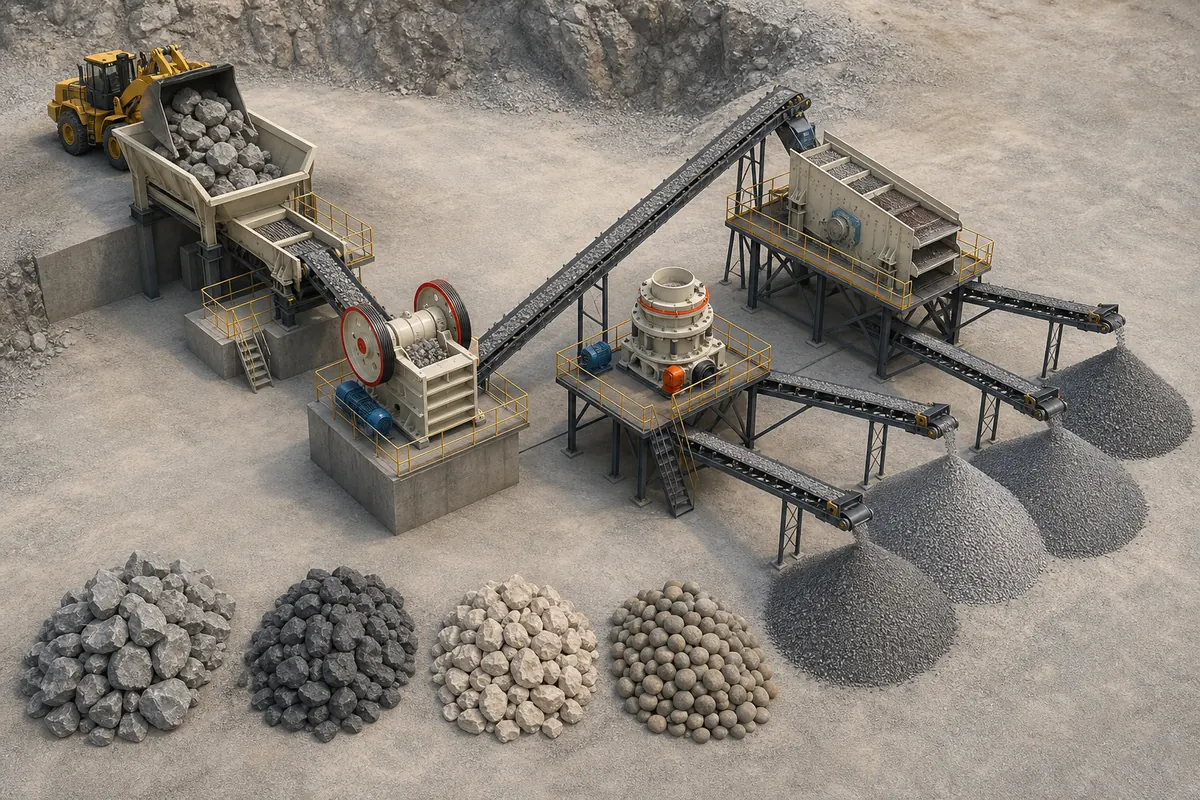
This is a common choice for andesite, basalt, granite, and river stone. The jaw crusher handles large feed material. The cone crusher provides stable secondary or tertiary reduction. The vibrating screen separates finished aggregate and returns oversized material for recirculation.
This configuration is suitable when the buyer needs durable equipment, good control of wear cost, and a steady supply of 5-10 mm, 10-20 mm, and 20-30 mm aggregate. It is often preferred for long-term quarry operation.
Configuration 2: Jaw Crusher + Impact Crusher + Screen
For limestone and medium-hard stone, a jaw crusher plus impact crusher can be cost-effective. The impact crusher can produce a more cubical product and simplify the plant flow. However, if the material is very hard or abrasive, impact crusher wear parts may become expensive.
This option can work well for road base, concrete aggregate, and commercial aggregate sales when the raw material is not too abrasive.
Configuration 3: Mobile Crushing and Screening Plant
A mobile crusher plant is useful for road contractors, island projects, temporary quarry sites, and projects where fast relocation matters. A mobile jaw crusher can handle primary crushing, while a mobile cone, impact, or screen plant can complete the final product process.
Mobile plants reduce civil foundation work and can start production faster, but the purchase price per ton of installed capacity may be higher than a stationary plant. For more detail, read our mobile crushing plant buying guide.
Capacity Options for Indonesia Projects
Capacity should be based on real market demand, working hours, truck loading plan, and required final sizes. Buying a larger plant than the market needs can waste capital. Buying too small a plant can create delivery delays and high operating pressure.
| Capacity Range | Typical Project Type | Common Configuration |
|---|---|---|
| 50-100 TPH | small quarry, local road project, startup aggregate business | feeder, jaw crusher, impact or cone crusher, screen |
| 100-200 TPH | commercial aggregate plant, road construction, concrete supply | feeder, jaw crusher, cone or impact crusher, multi-deck screen |
| 200-300 TPH | medium to large quarry, government infrastructure supply | heavy feeder, jaw crusher, cone crusher, screen, return conveyor |
| 300+ TPH | large quarry, long-term aggregate supply contract | multi-stage crushing, multiple screens, stockpile conveyors |
For a smaller road project, a 100 TPH plant may be enough. For continuous quarry sales, 150-250 TPH is often more practical. For high-demand infrastructure supply, 300 TPH or higher may be justified, but the site needs enough feed, loaders, trucks, power, and stockpile area.
Output Sizes for Road and Concrete Aggregate
Indonesian projects may require several final sizes, depending on local specifications and customer demand. Typical target products include:
- 0-5 mm manufactured sand or stone dust.
- 5-10 mm fine aggregate.
- 10-20 mm concrete and asphalt aggregate.
- 20-30 mm road base or drainage aggregate.
- Larger base course material when required by the project.
If the project needs high-quality sand, a VSI sand making machine can be added after cone crushing. This helps improve particle shape and produce more consistent manufactured sand. If the main demand is coarse road aggregate, the plant may not need VSI shaping at the beginning.
Stationary vs Mobile Stone Crusher Plant in Indonesia
A stationary stone crusher plant is usually better for long-term quarry operation with stable raw material and enough land. It can provide strong capacity, lower operating cost per ton, larger stockpile area, and easier maintenance access.
A mobile crusher plant is better when the site changes frequently, civil foundation work is difficult, or the project needs quick commissioning. This is common for road construction, temporary aggregate supply, and island projects where equipment relocation matters.
The practical decision is simple: choose stationary when the quarry is stable and long-term; choose mobile when project mobility and fast setup are more important than the lowest long-term cost per ton.
Cost Factors Buyers Should Compare
The price of a stone crusher plant in Indonesia is affected by much more than the crusher model. Buyers should compare the complete delivered and installed solution.
- Raw material hardness and abrasiveness.
- Required capacity in tons per hour.
- Number of final aggregate sizes.
- Stationary or mobile structure.
- Crusher model, screen size, conveyor length, and motor power.
- Dust control, electrical control system, and safety guards.
- Shipping route, container loading, customs documents, and local transport.
- Installation support, operator training, spare parts, and after-sales service.
Two quotes may look similar at first, but one may include only the main crusher while the other includes feeder, screen, conveyors, control cabinet, support frame, spare parts, and installation guidance. Always compare the scope of supply line by line.
Common Buyer Mistakes
The most common mistake is asking only for “the price of stone crusher plant” without providing material and output requirements. Without these details, the supplier can only guess. This often leads to wrong crusher selection or a quote that changes later.
Another mistake is ignoring screen capacity. A crusher may produce enough material, but if the screen is undersized or the return conveyor is not designed properly, the whole plant capacity will drop.
Some buyers also forget local operating conditions: rainy season, clay in feed material, unstable power supply, difficult access roads, and limited foundation area. These factors can change the feeder, screen, conveyor, and support structure design.
What to Send Before Asking for a Quote
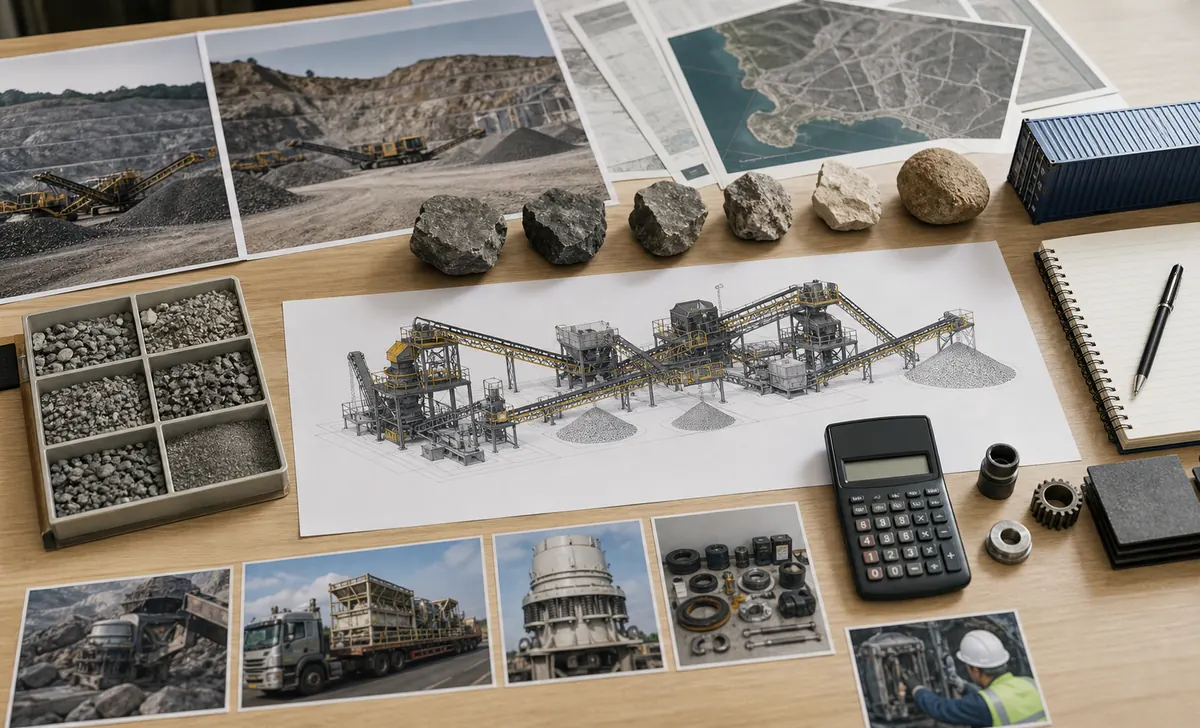
To get a useful stone crusher plant quotation for Indonesia, prepare the following information:
- Raw material name, such as andesite, basalt, limestone, river stone, granite, or concrete waste.
- Maximum feed size before crushing.
- Required final output sizes, such as 0-5 mm, 5-10 mm, 10-20 mm, or 20-30 mm.
- Target capacity in tons per hour.
- Working hours per day and expected production days per year.
- Site photos, available land size, and whether the plant should be stationary or mobile.
- Local power condition, diesel requirement, or generator plan.
- Budget range and expected delivery schedule.
With these details, the supplier can recommend a more accurate plant flow, motor power, foundation layout, spare parts package, and shipping plan.
Conclusion
For Indonesia quarry and road aggregate projects, the right stone crusher plant depends on raw material, output sizes, capacity, site mobility, and long-term operating cost. Hard volcanic rock such as andesite and basalt usually needs jaw plus cone crushing. Softer limestone can often use jaw plus impact crushing. Mobile plants are useful for temporary and island projects, while stationary plants are stronger for long-term quarry production.
If you are planning a stone crusher plant in Indonesia, send us your raw material, feed size, output size, capacity, site photos, and budget range. MVSI can help review the application and suggest a practical crushing and screening configuration.
FAQ
What is the best stone crusher plant for andesite in Indonesia?
For andesite, a jaw crusher plus cone crusher plus vibrating screen is usually a reliable choice. Andesite is commonly hard and abrasive, so cone crushing often gives better wear control than impact crushing.
Is a mobile crusher plant suitable for Indonesia road projects?
Yes. A mobile crusher plant is suitable for road projects, temporary aggregate supply, and sites that need fast relocation. It can reduce foundation work and shorten the time from delivery to production.
What capacity stone crusher plant should I choose?
Choose capacity based on sales demand, project schedule, working hours, and truck loading plan. Small projects may use 50-100 TPH, while commercial quarries often choose 150-250 TPH or higher.
Can one crusher plant produce several aggregate sizes?
Yes. A vibrating screen and return conveyor can separate several products such as 0-5 mm, 5-10 mm, 10-20 mm, and 20-30 mm. The final design depends on screen decks and crusher discharge setting.
Is impact crusher suitable for basalt or andesite?
Impact crusher can crush hard rock, but wear parts may be expensive when the material is highly abrasive. For basalt and andesite, cone crusher is often more economical for secondary crushing.
How much does a stone crusher plant for Indonesia cost?
The cost depends on capacity, material hardness, crusher type, screen size, conveyors, steel structure, control system, shipping, and installation support. A reliable quotation should include the full plant scope, not only the main crusher.
What information should I provide before requesting a quotation?
Provide raw material, maximum feed size, final output sizes, target capacity, site photos, power condition, stationary or mobile preference, and budget range. These details make the configuration and price more accurate.
Can MVSI supply spare parts and installation guidance?
Yes. For overseas projects, spare parts planning, installation guidance, commissioning support, and operator training should be discussed before order confirmation so the plant can start production smoothly.