Table of Contents
- Why South African Buyers Compare Crusher Prices from China
- Main Factors That Affect Stone Crusher Machine Price
- 1. Raw Material Hardness and Abrasiveness
- 2. Feed Size and Required Output Size
- 3. Capacity Range
- 4. Fixed Plant or Mobile Crusher
- Common Price Ranges by Configuration
- What Should Be Included in a Reliable Quotation
- Shipping, Import, and Local Site Costs
- How to Avoid Common Buying Mistakes
- Practical Buying Checklist for South Africa
- FAQ
- How much does a stone crusher machine cost in South Africa?
- Which crusher is best for hard rock in South Africa?
- Is a mobile crusher better than a stationary crusher?
- What information should I send before asking for a crusher quotation?
- Can a Chinese supplier provide a complete crushing plant for South Africa?
- Why are two crusher quotations so different?
- How can I reduce the long-term cost per ton?
- Request a Stone Crusher Quotation for South Africa
Stone Crusher Machine Price in South Africa: Buying Guide from China
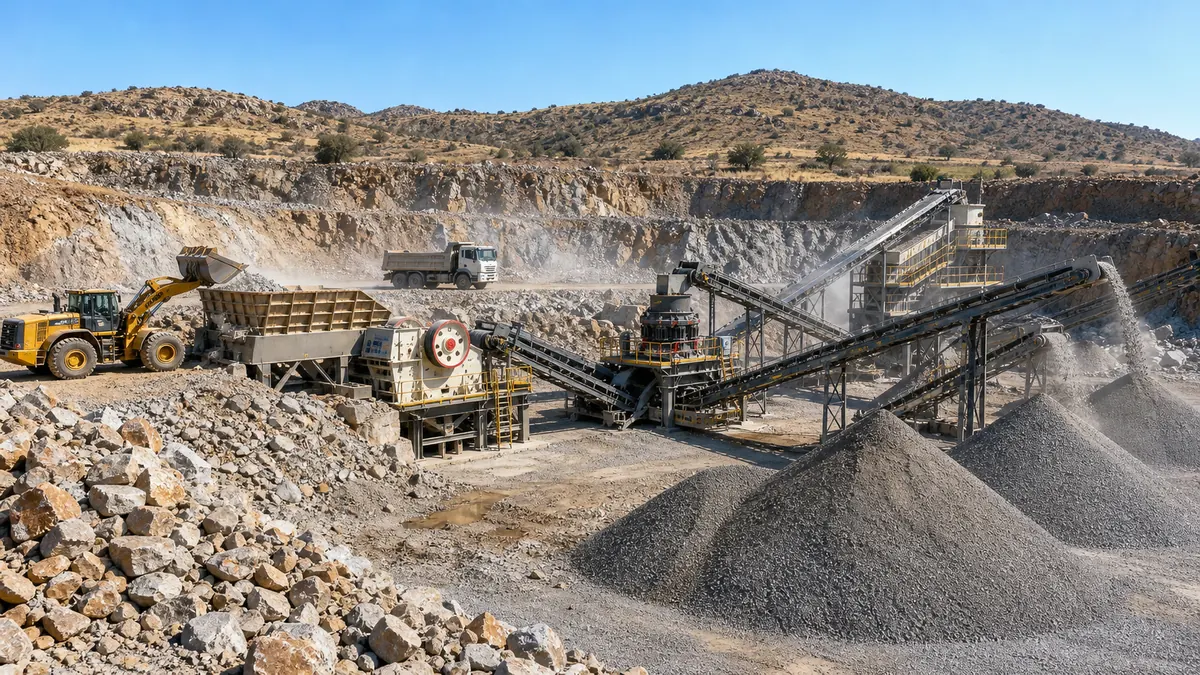
Stone crusher machine price in South Africa depends less on a single machine quote and more on the complete crushing duty: raw material, maximum feed size, target output sizes, capacity, mobility, automation level, wear parts, shipping scope, and site service. A small jaw crusher for a startup quarry is priced very differently from a 150-200 TPH jaw, cone, screen, and conveyor line for hard rock aggregate. Buyers comparing Chinese suppliers should ask for a full technical proposal, not only a low crusher price, because the wrong chamber, motor power, screen area, or spare parts package can raise the real cost per ton after installation.
Why South African Buyers Compare Crusher Prices from China
South Africa has strong demand for crushed stone from road construction, concrete batching, housing, mining support, and commercial quarry operations. Many buyers need reliable aggregate sizes such as 0-5 mm, 5-10 mm, 10-20 mm, 20-40 mm, or road base material. Others need primary crushing before screening, stockpiling, or further processing.
Chinese crusher manufacturers are often considered because they can supply complete lines, not only individual machines. A buyer can request a feeder, jaw crusher, cone crusher, vibrating screen, belt conveyors, control cabinet, wear parts, and drawings in one package. That can simplify procurement, but only if the quotation scope is clear.
If you are still comparing plant planning basics, read our guide to complete stone crusher plant setup and our article on stone crusher plant cost factors.
Main Factors That Affect Stone Crusher Machine Price
The same model name can hide very different prices. Before comparing offers, South African buyers should check the technical scope behind each quotation.
1. Raw Material Hardness and Abrasiveness
Granite, basalt, quartzite, dolerite, and hard river stone usually need stronger crushing chambers and better wear protection than soft limestone. For abrasive rock, a jaw crusher plus cone crusher is often safer than relying too heavily on impact crushing. The purchase price may be higher, but the wear cost can be lower over time.
For softer limestone or less abrasive material, a jaw crusher plus impact crusher may give good shape with simpler operation. The key is to match the crusher type to the rock, not to choose only by the cheapest quotation.
2. Feed Size and Required Output Size
A machine that can accept 500 mm feed is not the same as a machine designed for 150 mm feed. Larger feed openings, heavier frames, bigger motors, and stronger feeders all add cost. The required output size also matters. Producing 20-40 mm road base is simpler than producing several clean aggregate sizes plus 0-5 mm manufactured sand.
If the final product includes sand or strict shape requirements, the line may need a cone crusher, VSI crusher, or recirculating screen. For shape improvement, see our guide on improving cubical aggregate with a VSI crusher.
3. Capacity Range
Crusher price changes sharply with capacity. A 50 TPH setup may use a compact jaw crusher and simple screen. A 100-200 TPH quarry line usually needs a heavier feeder, primary jaw crusher, secondary cone or impact crusher, multi-deck screen, several conveyors, and a stronger control system.
The right capacity should be based on real shift hours, truck loading, blasting size, loader capacity, and local aggregate sales. Oversizing ties up capital. Undersizing causes bottlenecks, high overtime, and unstable delivery.
4. Fixed Plant or Mobile Crusher
A stationary stone crusher plant is usually better for long-term quarry production where civil works, foundations, stockpile layout, and power supply are stable. A mobile crusher can be more attractive for contractors, temporary road projects, or sites that must move with the quarry face.
Mobile equipment often has a higher purchase price for the same crushing stage because it includes tracks or tires, onboard conveyors, hydraulic systems, and integrated controls. However, it may reduce installation time and civil work. For a broader comparison, read our mobile crushing plant buying guide.
Common Price Ranges by Configuration
The table below is a planning framework, not a fixed quotation. Final pricing depends on model, steel cost, motor brand, automation, shipping terms, spare parts, and site requirements.
| Configuration | Typical Use in South Africa | Main Price Drivers |
|---|---|---|
| Small jaw crusher + screen | startup quarry, local contractor, simple road base | feed opening, motor power, screen size, spare jaws |
| Jaw crusher + impact crusher + screen | limestone or medium-hard aggregate | impact rotor size, blow bar material, dust control, return conveyor |
| Jaw crusher + cone crusher + screen | granite, basalt, hard rock aggregate | cone chamber, hydraulic system, liner package, recirculation |
| Mobile jaw or mobile impact crusher | road contractor, temporary crushing, site relocation | chassis, hydraulic system, onboard conveyor, generator or external power |
| Full 100-200 TPH crushing plant | commercial quarry, concrete aggregate, road base supply | complete line scope, installation drawings, stockpile conveyors, controls |
What Should Be Included in a Reliable Quotation
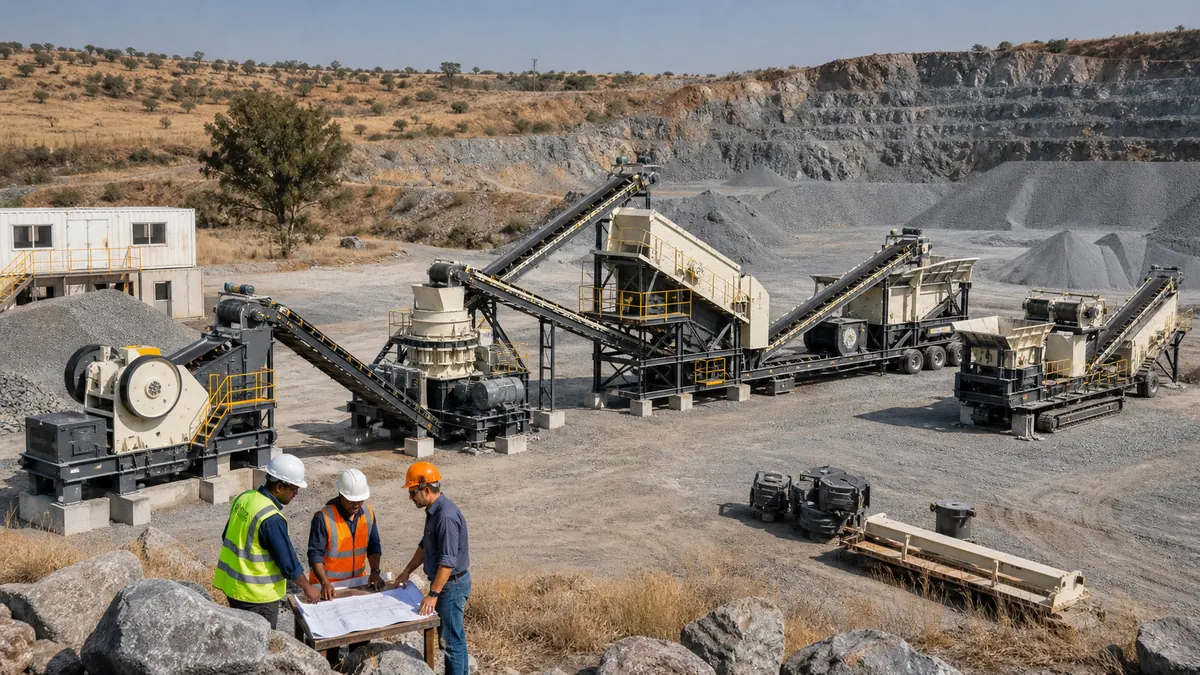
A useful quotation from China should show more than the main crusher model. South African buyers should ask for:
- Raw material assumption, maximum feed size, moisture and clay assumptions.
- Process flow with feeder, crusher stages, screen decks, conveyors, and recirculation.
- Capacity estimate for each finished size, not only total tons per hour.
- Main motor power, control cabinet scope, and power supply requirements.
- Wear parts list, recommended spare parts for commissioning, and replacement interval guidance.
- Foundation or mobile chassis information, installation drawings, and layout dimensions.
- Shipping dimensions, container or break-bulk plan, delivery terms, and estimated lead time.
- Installation support, remote commissioning support, and operation training scope.
When two prices look very different, the first question should be whether the two suppliers are quoting the same scope. One offer may include conveyors, screen, control cabinet, and wear parts, while another offer may only include the bare crusher.
Shipping, Import, and Local Site Costs
For South African projects, the delivered cost includes more than factory price. Buyers should consider ocean freight, port charges, inland transport, lifting equipment, civil works, electrical connection, installation labor, and spare parts stock. These items can change the real budget more than the difference between two similar crusher models.
Ask the supplier to separate EXW, FOB, CIF, and optional site-service items. This makes it easier to compare offers and decide which work should be handled locally. If the project is remote, also check road access, crane availability, generator capacity, water for dust suppression, and space for stockpiles.
How to Avoid Common Buying Mistakes
The cheapest stone crusher machine is not always the lowest-cost plant. Common mistakes include buying a crusher that is too small for the real feed size, using impact crushing on highly abrasive rock, ignoring screen area, forgetting return conveyors, underestimating dust control, or not ordering enough wear parts for startup.
Another frequent mistake is asking only for “a stone crusher price” without sending material and product details. A good supplier cannot design a reliable line from the rock name alone. Photos, feed size, output size, and capacity target are what turn a rough price into a usable proposal.
Practical Buying Checklist for South Africa
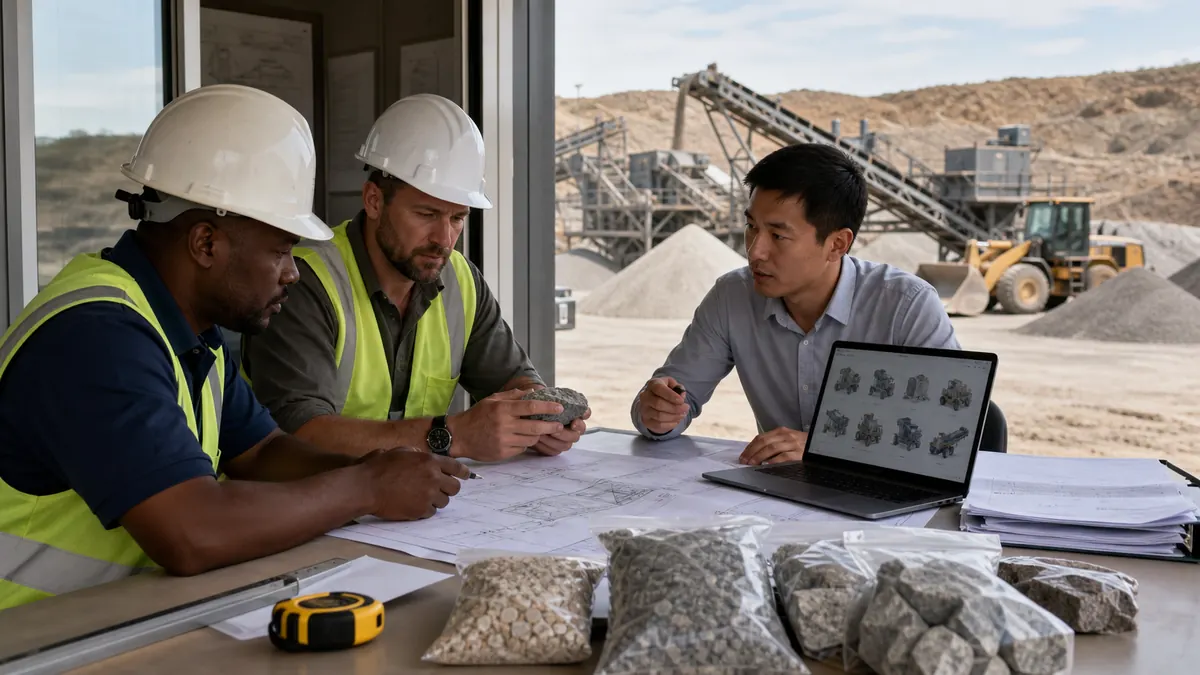
Before requesting a quotation, prepare a simple buyer file. It does not need to be perfect, but it should give the supplier enough information to size the machines correctly.
- Raw material: granite, basalt, limestone, dolerite, river stone, recycled concrete, or mixed rock.
- Maximum feed size after blasting or excavation.
- Required output sizes and the percentage needed for each size.
- Target capacity in tons per hour and daily working hours.
- Fixed plant or mobile plant preference.
- Available power, generator plan, and site voltage.
- Site photos, quarry face photos, and stockpile area photos.
- Budget range, expected delivery time, and preferred shipping terms.
FAQ
How much does a stone crusher machine cost in South Africa?
There is no reliable single price without the crushing duty. A small jaw crusher costs much less than a complete 100-200 TPH plant with feeder, cone crusher, screen, conveyors, controls, and spare parts. Ask for a technical quotation based on material, feed size, output size, and capacity.
Which crusher is best for hard rock in South Africa?
For hard and abrasive rock such as granite, basalt, quartzite, or dolerite, a jaw crusher for primary crushing and a cone crusher for secondary crushing is often a safe configuration. A VSI crusher may be added when better cubical shape or manufactured sand is required.
Is a mobile crusher better than a stationary crusher?
A mobile crusher is better when the project moves often, needs fast setup, or has limited civil work. A stationary plant is usually better for long-term quarry production with stable power, fixed stockpiles, and higher continuous output.
What information should I send before asking for a crusher quotation?
Send raw material, maximum feed size, required output sizes, target capacity, site photos, available power, mobility preference, and budget range. Rock photos and sample information are especially useful for choosing the crusher chamber and wear parts.
Can a Chinese supplier provide a complete crushing plant for South Africa?
Yes. A Chinese manufacturer can usually supply the feeder, jaw crusher, cone crusher or impact crusher, vibrating screen, conveyors, control cabinet, wear parts, layout drawings, and shipping documents. The buyer should confirm exactly what is included.
Why are two crusher quotations so different?
They may not include the same scope. One quote may include a complete line with conveyors, screen, controls, spare parts, and shipping support. Another may include only the crusher body. Capacity, motor brand, wear material, automation, and warranty scope also affect price.
How can I reduce the long-term cost per ton?
Match the crusher to the rock hardness, size the screen correctly, avoid overloaded conveyors, keep spare wear parts on site, train operators, and maintain a stable feed. A slightly higher purchase price can be cheaper if it reduces downtime and wear cost.
Request a Stone Crusher Quotation for South Africa
If you are comparing stone crusher machine prices in South Africa, send MVSI Crusher your raw material, maximum feed size, required output sizes, target capacity, site photos, mobility preference, available power, delivery destination, and budget range. With those details, we can recommend a jaw crusher, cone crusher, impact crusher, VSI crusher, mobile crusher, or complete crushing plant configuration that matches your project instead of giving a generic machine price.