Table of Contents
- What does each protection function actually do?
- Why does the proposed chamber matter to tramp release?
- What should the detector proposal prove separately?
- How should two quotations be compared?
- When should a buyer retain detection in the comparison?
- Frequently asked questions
- Is hydraulic tramp release a substitute for a metal detector?
- Can CSS tell me the largest metal object the cone can pass?
- Does changing the chamber affect the protection review?
- Will any conveyor metal detector find every type of metal?
- Is a detector alarm enough to accept the package?
- Should buyers prove tramp release by feeding scrap into the crusher?
- Keep the relief claim and detection scope separate
- Sources and technical references
Can Tramp Release Replace a Cone Crusher Metal Detector?
Do not omit a cone crusher metal detector simply because the quotation includes hydraulic tramp release. Detection acts before suspect material enters the chamber; release responds to an overload inside the crusher and has limits defined by the actual design and configuration. Compare them as separate protection functions. Ask the supplier to document the proposed chamber, operating setting, available release movement and exclusions, then define the detector coverage and controlled response. A hydraulic protection feature alone is not evidence that every foreign object can pass without damage or that upstream detection is unnecessary.
By MVSI Company. Published 2026-11-21.
What does each protection function actually do?
Upstream detection and in-chamber relief act at different points in the event. A purchasing comparison should keep their functions and limits separate.
| Decision fact | Function to verify | Boundary before ordering |
|---|---|---|
| Metal detection | Identify specified unwanted metal in the conveyed feed and initiate the agreed response | Detection capability and stop or diversion integration belong to the exact installation |
| Hydraulic tramp release | Provide the designed overload response inside the cone | Available movement and permitted conditions require the actual cone documentation |
| Magnetic separation | Remove susceptible magnetic contaminants upstream | A magnet does not demonstrate removal of every metal object |
| Acceptance evidence | Document both prevention and the cone response separately | Neither a detector alarm nor a hydraulic feature proves the entire protection package |
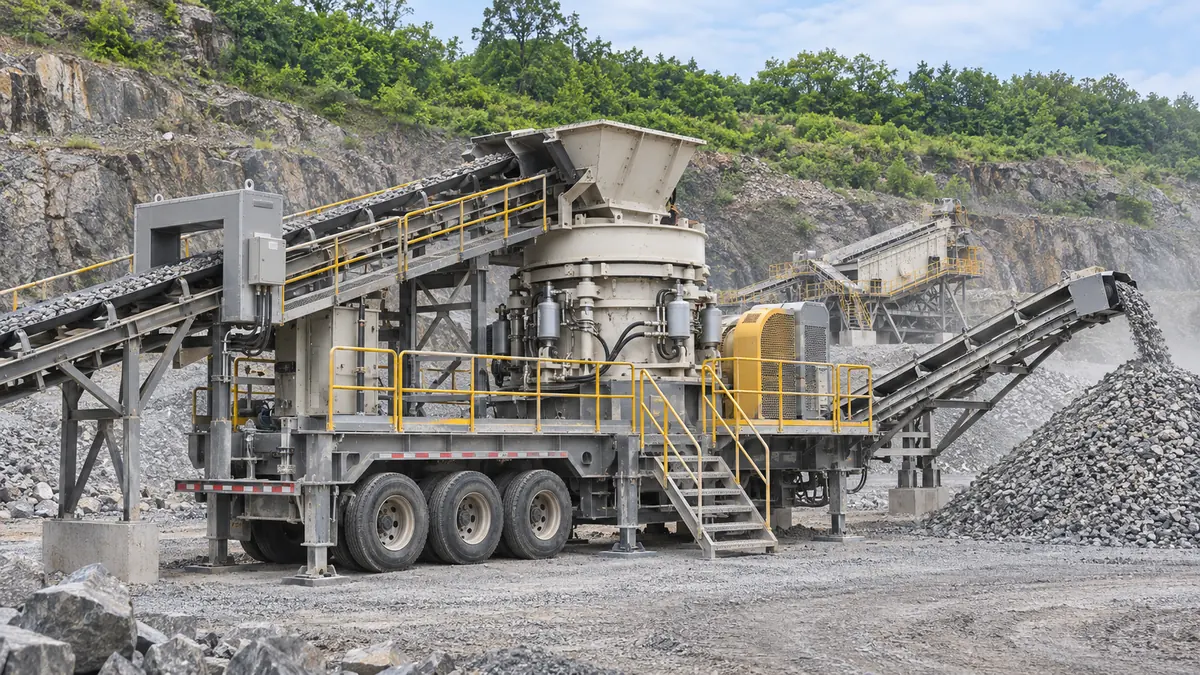
The MVSI mobile secondary crushing plant includes a cone-crushing route relevant to this purchase. Request the exact proposed protection scope in writing. The family page does not establish which detector, separator, hydraulic arrangement or controls are included in an individual offer.
Why does the proposed chamber matter to tramp release?
A release feature needs available movement in the installed configuration. Its presence on a specification list does not define a universal size of metal that can pass through.
Metso’s GP chamber guidance describes an example where the selected chamber and operating position leave limited tramp-release distance. A different chamber profile changes the available movement in that example. The useful buying lesson is to request configuration-specific evidence; its dimensions and mechanism are not specifications for another cone design.
Ask the cone supplier to identify the exact chamber and liner part numbers, intended closed-side setting (CSS), permitted setting range and the documented basis for available release movement. Have the supplier state which operating conditions and foreign-object risks remain outside the protection claim. Do not calculate an allowable metal size from CSS alone or assume a maximum feed-size rating is a tramp-metal rating.
If chamber selection changes during quotation review, ask whether the protection statement needs revision. The cone chamber selection guide addresses feed and product matching; the extra question here is whether the relief claim still applies to that selected configuration.
What should the detector proposal prove separately?
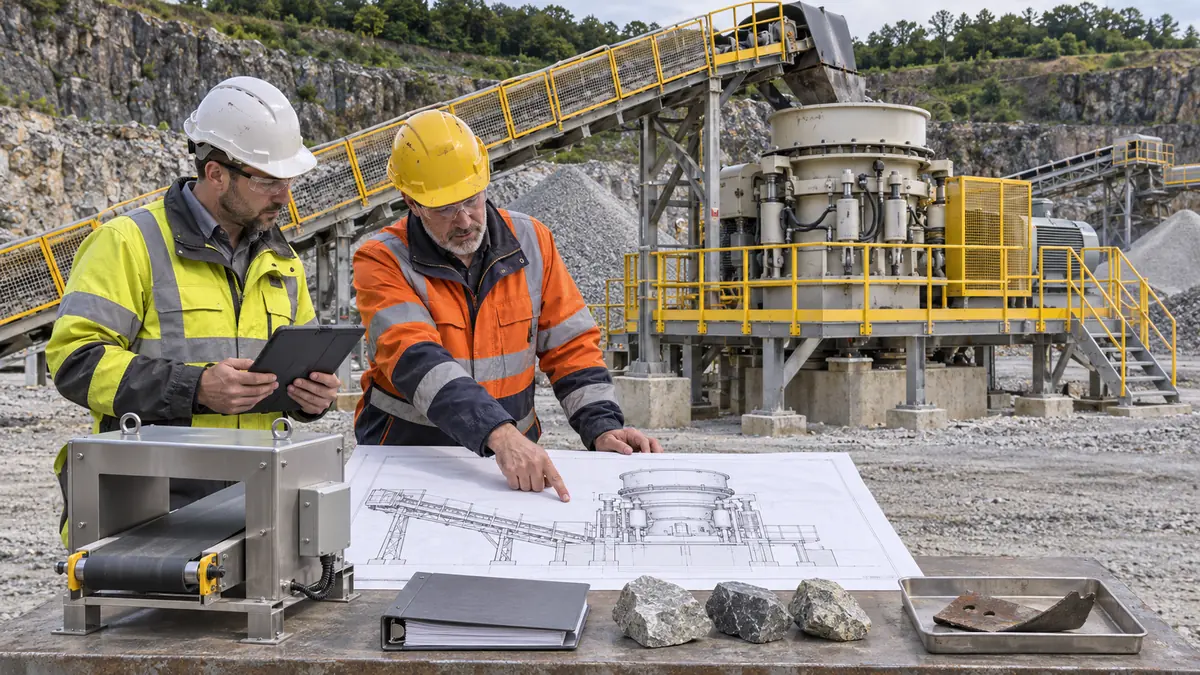
Require a stated detection envelope and a defined plant response. The word detector does not establish which objects will be found or what the plant will do after a signal.
Bunting’s TN77 documentation specifies ferrous tramp and manganese steel detection and describes outputs that can initiate an alarm, belt stop or rejection mechanism. It also identifies belt components the model can ignore. This illustrates why a buyer should name the target contaminants and expected exclusions rather than assume every detector responds to every metal.
Sandvik’s QS332 page separately lists a metal detector on a mobile cone crusher. That is an example of documented upstream protection, not evidence of the same feature on an MVSI offer. Require the proposed machine supplier and controls integrator to identify the actual device, material conditions, installation location and response responsibility.
For the broader difference between magnetic removal and detection, use the existing magnet and detector selection discussion. This purchase decision turns on whether the cone’s relief specification is being used to delete a separate upstream function.
How should two quotations be compared?
Normalize both offers to the same cone duty and protection obligations before comparing price. An included hydraulic system should not silently remove detector hardware or integration from the comparison.
| Quotation item | Evidence to request | Unresolved scope to price or clarify |
|---|---|---|
| Cone relief configuration | Exact cone, chamber, liner condition basis, intended CSS and OEM protection limits | Unspecified relief claim or a statement copied from another configuration |
| Detector package | Target objects, applicable feed/belt conditions, device identity and exclusions | Sensor only, with mounting or integration left to others |
| Control response | Agreed signal, feeder/belt response, suspect-material location and authorized reset responsibilities | Alarm without an agreed effective response |
| Recovery and access | Supplier-approved recovery concept, isolation provisions and site responsibilities | Removal access or retained-material handling outside the offer |
| Acceptance and support | Approved functional checks, records, responsible parties and written warranty exclusions | Undefined demonstration, documentation or later configuration changes |
Illustrative quotation scenario, not a customer project: Offer A lists hydraulic tramp release and no detector. Offer B adds a detector but excludes controls integration. Neither is a complete equivalent to a package with documented relief limits and an agreed upstream response. Ask both bidders to identify the missing scope and its responsible party. This comparison establishes what is being bought; it does not establish a damage-free operating guarantee.
Compare the costs of hardware, support frames, electrical integration, approved commissioning checks, access provisions, maintenance and interruption recovery. Request project quotations for those items. There is no defensible universal detector payback or repair-cost allowance without site records and comparable prices.
When should a buyer retain detection in the comparison?
Retain a documented upstream detection proposal when foreign-metal exposure remains credible and the cone’s relief limits do not establish an equivalent preventive function. The actual risk assessment and OEM requirements govern the final arrangement.
This review is especially relevant when the buyer is offered a cost reduction by deleting a detector, changes the chamber or operating setting, or has a recorded source of unwanted metal. A different feed source or a modified protection arrangement deserves review against the same documented duty, rather than approval by analogy.
The comparison is unsuitable as a method for deciding a live clearing procedure, changing hydraulic settings or proving that an object is safe to crush. Do not throw metal into a running cone to demonstrate protection. Require the actual OEM and integrator to define approved checks and competent personnel; leave hydraulic settings and recovery procedures to the applicable manuals and site controls. Link the agreed records to the broader cone-circuit commissioning plan.
Frequently asked questions
These answers distinguish purchase-scope evidence from a machine-specific protection guarantee.
Is hydraulic tramp release a substitute for a metal detector?
Do not treat it as one merely because it is included in a quotation. Release responds inside the cone, while detection supports an upstream response. Require the supplier to document the separate functions and any proposed change in protection scope.
Can CSS tell me the largest metal object the cone can pass?
No. CSS is an operating setting, not a universal foreign-object passage rating. Ask for the actual cone configuration and documented protection limits; do not infer a safe object size from the setting alone.
Does changing the chamber affect the protection review?
It can. Metso documents a GP example in which chamber and operating position affect available release distance. Ask the supplier whether the protection statement remains valid for the newly proposed configuration; do not transfer another model’s dimensions.
Will any conveyor metal detector find every type of metal?
Do not assume so. Specify the target contaminants, feed and belt conditions, detection limits and expected exclusions for the proposed model. Agree how its signal is integrated into the plant response.
Is a detector alarm enough to accept the package?
An alarm proves only part of the required function. Acceptance should address the agreed detection conditions, control response, recovery responsibilities and documentation under the approved supplier procedure.
Should buyers prove tramp release by feeding scrap into the crusher?
No. Do not introduce metal into a running crusher as a buyer demonstration. Ask the OEM and integrator for an approved verification plan that does not turn an assumed protection limit into an uncontrolled crushing test.
Keep the relief claim and detection scope separate
Choose a proposal that documents the actual cone configuration and upstream protection responsibilities. If a bidder proposes deleting detection, require the technical basis and remaining risk to be resolved before treating that offer as equivalent.
For an equipment-scope review, contact MVSI through the listed WhatsApp or email route. Send raw material, maximum and typical feed size, output size, capacity in t/h, project country, site photos and budget range. Include the proposed cone and chamber, intended CSS, feed-conveyor arrangement, known metal contaminants and the protection items included or excluded from the quotation.
Sources and technical references
Sources retrieved 2026-11-21. Other OEM examples support the comparison method and do not establish MVSI options or performance.
- MVSI Mobile Secondary Crushing Plant, linked above: documented mobile-cone product-family fit.
- Metso GP chamber guidance, linked above: configuration-specific available release distance in its stated example.
- Bunting TN77 product documentation, linked above: defined detection scope, exclusions and control outputs.
- Sandvik QS332 product documentation, linked above: separately specified detector on a mobile cone.