Table of Contents
- What decides whether one bar, a pair or a set is needed?
- Why is there no universal acceptable weight difference?
- When should a partial replacement remain a candidate?
- What should the replacement quotation contain?
- Frequently asked questions
- Can I buy one blow bar as an emergency spare?
- Does the same part number prove the bars are a suitable pair?
- Should I apply a 2% or a 0.5 kg difference limit?
- Can new and worn bars be used together?
- Should the quote include fixing wedges?
- What if the rotor version or manual is missing?
- Choose the documented arrangement before choosing the price
- Sources and technical references
Can You Replace Just One Impact Crusher Blow Bar?
Do not approve a single replacement blow bar solely because only one bar looks damaged. First obtain the replacement arrangement permitted for the exact impact-crusher rotor, then check the proposed bars and any retained bars against its part, condition and mass requirements. A matched pair or complete set may be required; a unit price is not installation approval. Ask the supplier to identify each rotor position and the supporting manual or drawing before releasing the order. If the applicable instructions or retained-bar condition are unknown, keep the replacement quantity provisional.
By MVSI Company. Published 2026-11-19.
What decides whether one bar, a pair or a set is needed?
The deciding evidence is the exact rotor documentation and the condition of the complete installed arrangement. Use the following checks to define a replacement enquiry before comparing prices.
| Decision fact | Buyer check | Hold point |
|---|---|---|
| Equipment identity | Crusher serial number, rotor version and current part references | A similar-looking bar or model name alone does not close fit |
| Permitted arrangement | Current manufacturer instructions for replacement quantity and positions | Do not infer approval for a single-bar change |
| Mass and condition | Individual records for proposed and retained bars | Unknown retained-bar condition leaves the proposal incomplete |
| Mounting scope | Condition review and required associated parts | A bar-only price may omit needed mounting items |
| Release record | Supplier response tied to drawings and inspection findings | Resolve exceptions before order release |
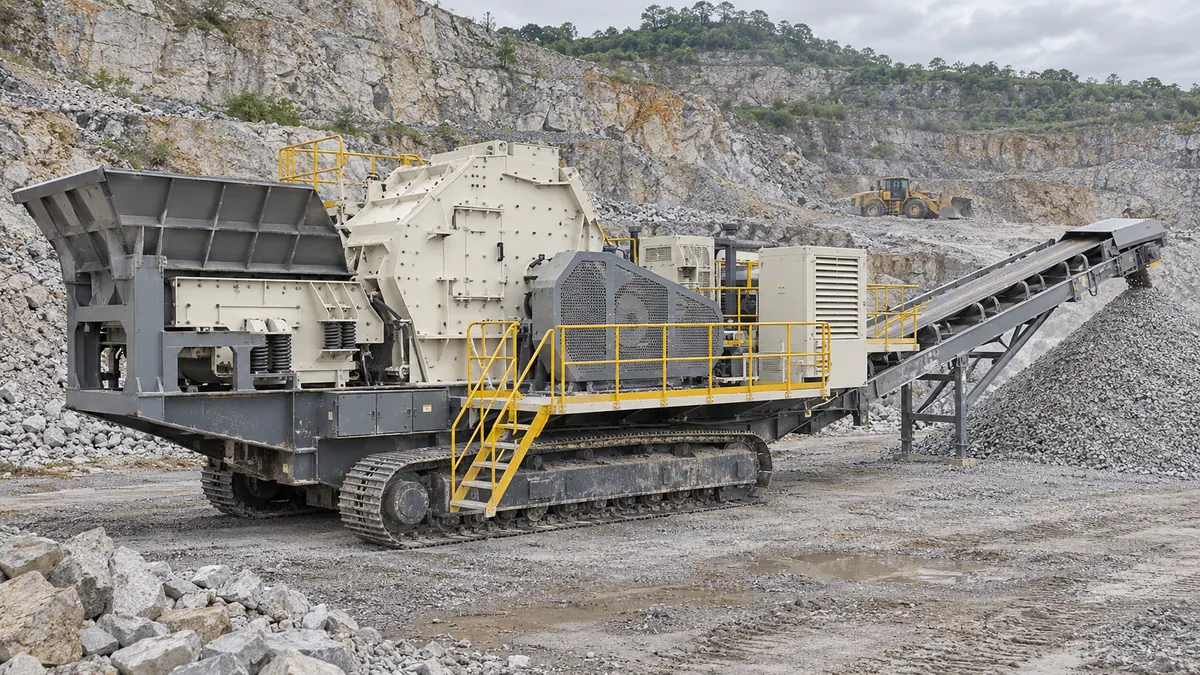
This question concerns horizontal shaft impact (HSI) crusher blow bars. The MVSI mobile secondary crushing plant page describes an impact route for aggregate and recycling alongside a separate cone route. Confirm the actual impact machine and rotor before requesting parts; that family page does not establish cross-brand compatibility or a replacement tolerance.
Why is there no universal acceptable weight difference?
Use the mass criterion issued for the exact equipment. Public OEM documents demonstrate why a rule copied from another crusher is insufficient.
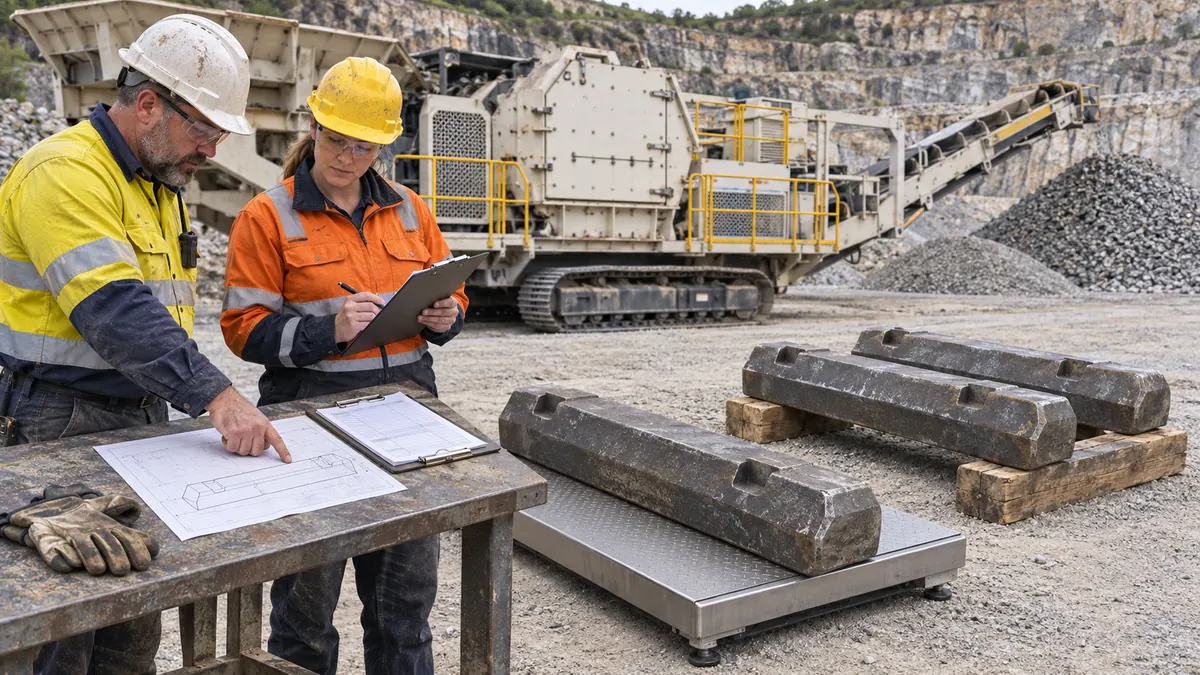
Metso’s NP service tip discusses opposed bars and states a 2% mass-difference limit. The Terex EvoQuip wear-parts guide, printed pages 36–37, specifies matched opposite pairs and a maximum difference of 0.5 kg. These are attributed document examples, not alternative limits from which an MVSI owner may choose.
A percentage and an absolute mass require different interpretation. Ask which document applies, how its comparison is calculated, which masses are used and who records acceptance. Do not convert an online percentage into kilograms and treat the result as permission for another rotor. If the applicable instructions do not resolve the question, request a written technical clarification rather than choosing the looser number.
When should a partial replacement remain a candidate?
Keep partial replacement under consideration only when the manufacturer’s applicable arrangement and inspection findings support it. A complete-set recommendation also needs to identify what the set contains.
For example, Metso’s NP application guide, printed page 12, recommends replacing all four bars while also describing a particular mixed new/worn arrangement for some applications. That exception belongs to the documented design and duty; it is not general permission to mix bars on another machine.
- For a proposed partial renewal, request a position-by-position schedule showing which bars are retained, turned or replaced, with the technical basis for that arrangement.
- For a proposed complete renewal, request the supplied quantity, part references and any position-specific differences, rather than assuming every bar is identical.
- Where a bar has broken or an inspection identifies an unresolved defect, have the responsible maintenance party define the repair findings before purchasing to an assumed bar-only scope.
The blow-bar wear-life comparison guide addresses alloy, feed and useful-life evidence. Those questions complement this order-quantity check; a longer predicted life does not demonstrate that a proposed arrangement is acceptable.
What should the replacement quotation contain?
Ask bidders to price the same documented replacement scope, including associated items identified by inspection. This makes a one-bar offer and a set offer intelligible without assuming they are technically interchangeable.
| Quotation line | Record to request |
|---|---|
| Identification | Machine/rotor references, bar part number, drawing revision and declared material |
| Quantity and positions | One bar, matched pair or full set, with retained/new positions identified |
| Mass evidence | Individual bar IDs and masses, applicable criterion and checking record |
| Mounting items | Required wedges, locating or fixing components, quantities and exclusions |
| Work and handover | Responsibility for inspection, approved installation work and required release records |
Metso’s NP service tip specifically highlights checking fixing wedges and replacing worn ones. Terex’s guide also addresses mounting-surface condition. These examples justify including mounting findings in the enquiry; use the actual machine instructions for the repair method, limits, fastening and lifting requirements.
Illustrative buying scenario, not a customer case: Offer A prices one bar against a photograph. Offer B identifies the rotor and proposed replacement positions, lists the mass records needed and separates any inspection-dependent mounting items. Offer B provides a clearer decision basis, but its quantity still needs acceptance against the applicable instructions. No bar mass, cost saving or operating result is assumed.
Compare delivered parts, required associated items, inspection and agreed labour on the same scope. Use the mobile-crusher operating-cost guide for the wider cost framework. The lowest unit price cannot resolve an incomplete technical release. For routine inspection records, use the stone-crusher maintenance checklist; it does not replace the rotor-specific repair instructions.
Frequently asked questions
Use these questions to close the replacement order, while leaving installation to the approved machine-specific procedure.
Can I buy one blow bar as an emergency spare?
You can ask for a single-item quotation, but confirm how it would be used in the approved replacement arrangement. Purchasing one spare does not establish that it may be installed alone with the existing bars.
Does the same part number prove the bars are a suitable pair?
It is an identification check, not the complete acceptance record. Request the applicable mass and condition checks and the approved positions for both proposed and retained bars.
Should I apply a 2% or a 0.5 kg difference limit?
Neither should be selected from a general article. Those figures appear in different OEM documents. Obtain the criterion and interpretation for the exact rotor from its current instructions or a written technical clarification.
Can new and worn bars be used together?
Only retain that proposal when the applicable manufacturer documentation and inspection support the specific arrangement. An exception described for another crusher does not approve the combination on yours.
Should the quote include fixing wedges?
Ask the inspection party to identify the required mounting items and have the supplier price them or state the exclusions. New bars do not resolve an outstanding mounting-condition finding.
What if the rotor version or manual is missing?
Send the machine identification, available part references, drawings and inspection photos to the responsible supplier. Keep quantity and compatibility unresolved until the correct documentation and technical response are obtained.
Choose the documented arrangement before choosing the price
Release the order when the machine identity, proposed positions, bar records and inspection scope agree. A partial order suits a documented partial-renewal plan; it is unsuitable as a shortcut around missing rotor information or unresolved damage.
To discuss an MVSI mobile impact application, contact MVSI through its listed WhatsApp or email route. Send raw material, maximum and typical feed size, output size, capacity in t/h, project country, site photos and budget range. For replacement review, add machine and rotor identification, current part numbers, available manual/drawing revisions, individual bar records and inspection photos. Request confirmation of the applicable replacement scope and parts availability before ordering.
Sources and technical references
Sources retrieved 2026-11-19. Other OEM documents illustrate why model-specific instructions matter; they do not establish MVSI part fit, stock, tolerances or supplied maintenance services.
- MVSI Mobile Secondary Crushing Plant, linked above: impact product-family connection for aggregate and recycling.
- Metso NP replacement service tip, published September 16, 2021, linked above: NP mass comparison and fixing-wedge condition.
- Terex EvoQuip Wear Parts Guide, printed pages 36–37, linked above: matched-pair mass rule and mounting checks.
- Metso Nordberg NP application guide, printed page 12, linked above: complete renewal and a design-specific partial arrangement.