Table of Contents
- The Short Answer: Match the Mill to the Process, Not the Nameplate
- How the Two Grinding Systems Work
- Ball mill: impact, attrition, and wet-circuit flexibility
- Raymond mill: dry roller grinding with air classification
- Where Each Mill Usually Fits
- Selection Factors That Change the Answer
- 1. Mineralogy and liberation size
- 2. Feed size and upstream crushing
- 3. Moisture, water, and dust control
- 4. Capacity is a circuit number, not just a mill number
- 5. Wear, maintenance, and site support
- Typical Configurations
- Ball-mill route for metal-ore beneficiation
- Raymond-mill route for dry fine powder
- Cost and Operating Questions Buyers Should Ask
- Common Buyer Mistakes
- What to Send Before Asking for a Mill Quotation
- Conclusion
- FAQ
- What is the main difference between a ball mill and a Raymond mill?
- Is a ball mill better for hard ore?
- Can a Raymond mill grind metal ore?
- What feed size is needed for a grinding mill?
- Does a ball mill need water?
- How do I choose grinding capacity?
- What information is needed for a ball mill or Raymond mill quotation?
Ball Mill vs Raymond Mill: Which Grinding Mill Is Right for Your Ore?
A ball mill is usually the stronger choice for hard, abrasive ore that must be ground in a wet circuit before flotation, magnetic separation, gravity recovery, or leaching. A Raymond mill is usually better suited to dry, relatively low-moisture feed that needs fine powder for industrial-mineral, filler, or similar applications. Neither machine is automatically “better.” The correct choice depends on mineralogy, feed size, hardness, abrasiveness, moisture, required product size, downstream process, capacity, water and power availability, site conditions, and budget. Start by defining the whole process route; then select a mill that can deliver the required product consistently and be maintained at the site.
The Short Answer: Match the Mill to the Process, Not the Nameplate
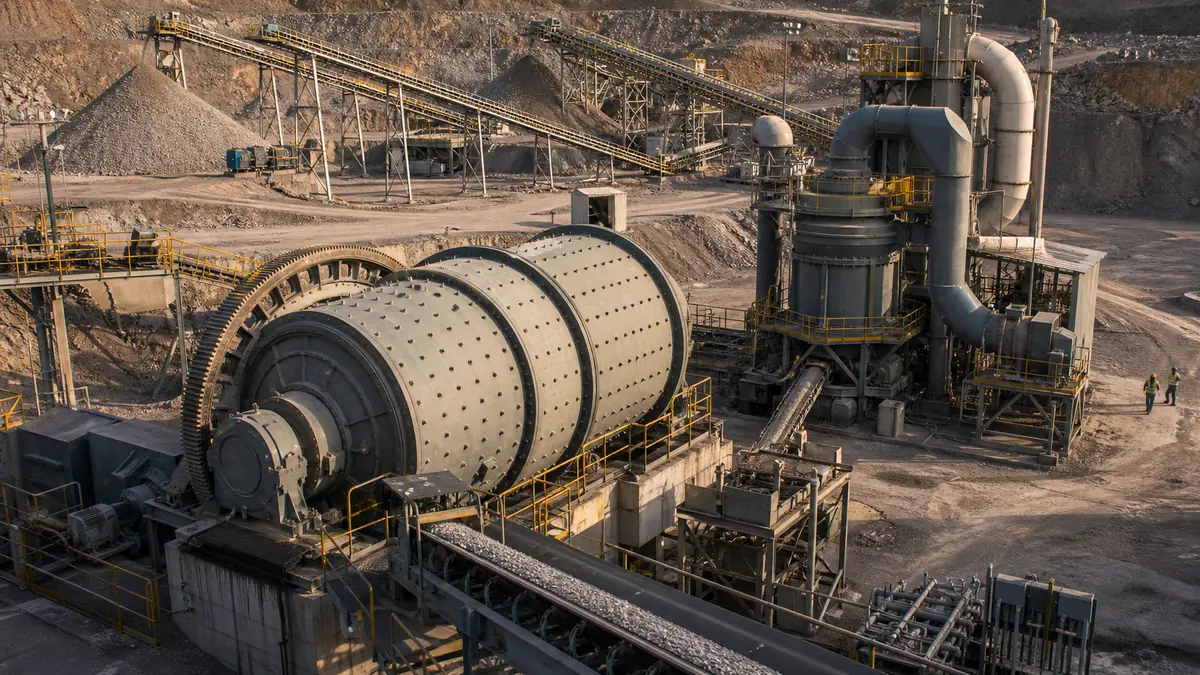
Ball mills reduce material by impact and attrition as grinding media tumble inside a rotating shell. They are widely used after crushing when a mineral must be liberated at a controlled fine size. They can operate in wet circuits, work with cyclones and pumps, and fit naturally into many metal-ore beneficiation flows. Their operating cost must include grinding media, liners, mill drive power, slurry handling, and maintenance access.
A Raymond mill is a roller-and-ring grinding system with an air classifier. It is commonly applied to dry powder production from prepared, relatively dry feed. It can be an efficient route where the objective is a dry, fine, classified product and the material is compatible with the mill’s feed and wear limits. It is not a direct substitute for a wet ball-mill circuit just because both machines make material smaller.
For the crushing front end that prepares either route, see our iron ore crushing plant guide and crusher selection guide.
How the Two Grinding Systems Work
Ball mill: impact, attrition, and wet-circuit flexibility
In a ball mill, a motor rotates a horizontal steel shell partially filled with grinding media. Feed enters at one end, the media lifts and tumbles, and the ore breaks through repeated impact and abrasion. The discharge may be screened, classified in a hydrocyclone, or returned to the mill as circulating load until the required size is reached.
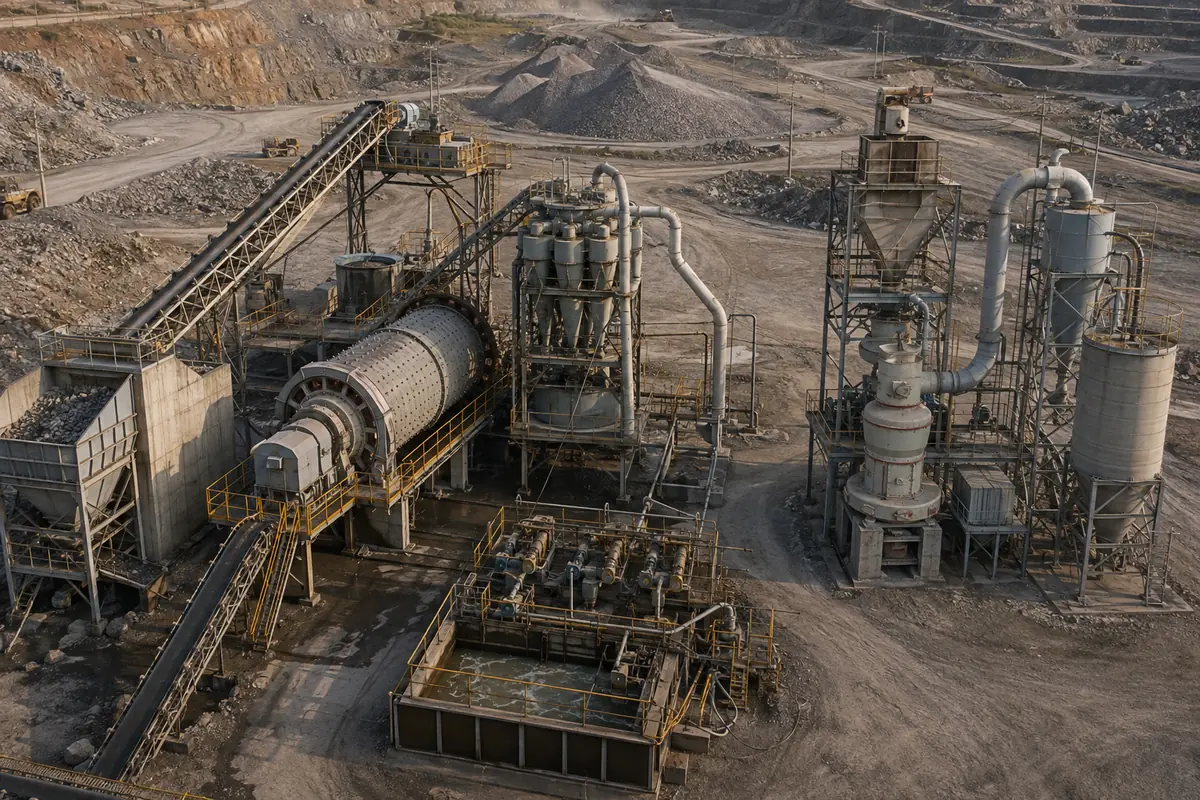
This route is practical when liberation must be controlled before a separation stage. A typical metal-ore circuit may include crushing, a fine-ore bin, ball mill, pump box, cyclone cluster, flotation or magnetic separation, thickener, and filter press. The mill is one part of a connected water, material, and maintenance system.
Raymond mill: dry roller grinding with air classification
A Raymond mill feeds prepared material between grinding rollers and a ring. Air carries fine particles to a classifier; suitable fines move to collection equipment, while coarse particles return for more grinding. The route typically includes a feed hopper, feeder, elevator, mill, classifier, cyclone or dust collector, fan, ducts, and finished-product silo.
The system is most logical where a dry fine powder is the saleable product or is the next process feed. Material moisture, feed-size control, abrasiveness, dust collection, and the desired powder specification matter. Sticky or wet feed can reduce stable airflow and increase buildup risk, so moisture control and upstream preparation should be evaluated early.
Where Each Mill Usually Fits
| Project condition | Usually the better starting point | Why |
|---|---|---|
| Hard metallic ore feeding flotation, magnetic separation, or gravity recovery | Ball mill | Fits a wet grinding and classification circuit that targets mineral liberation. |
| Prepared dry industrial mineral requiring a fine, air-classified powder | Raymond mill | Produces a dry fine product in an integrated roller, classifier, and collector route. |
| High moisture, clayey, or slurry-based downstream process | Ball mill or another wet-circuit mill | Wet handling can be more practical than trying to maintain a dry airflow system. |
| Coarse run-of-mine rock from the quarry or mine | Neither as the first machine | Use crushing and screening first to create a controlled mill feed. |
| Highly abrasive feed with uncertain wear behavior | Test before selection | Liner, roller, ring, classifier, and media wear must be checked against actual ore data. |
Selection Factors That Change the Answer
1. Mineralogy and liberation size
For a metal ore, the question is not simply “How fine can the mill grind?” It is “At what size do valuable minerals separate from gangue well enough for recovery?” A metallurgical test or representative sample can identify a practical liberation target. Grinding much coarser can leave valuable minerals locked together; grinding much finer can waste energy, create difficult slimes, and complicate dewatering or flotation.
For an industrial-mineral powder, the product specification may focus on a particle-size distribution, brightness, surface area, or a maximum oversize limit. A dry classified mill can be attractive when it reaches that specification without adding water that later must be removed.
2. Feed size and upstream crushing
Neither a ball mill nor a Raymond mill should be selected from the mine’s maximum blasted-rock size. A jaw crusher, cone crusher, screen, and fine-ore storage usually prepare a predictable feed. Large variation in feed top size, large tramp metal, or uncontrolled fines can reduce throughput and increase wear.
The supplier should receive the maximum feed size, typical feed-size distribution, bulk density, moisture, and any information about clay. If crushing has not been finalized, use a crushing plant flow sheet as a planning reference before setting the grinding section.
3. Moisture, water, and dust control
Ball mills often operate with water and slurry. That can support a downstream wet-separation process, but it creates requirements for pumps, pipes, sumps, cyclone feed, water balance, tailings handling, and corrosion-aware maintenance.
Raymond mills use air transport and dry collection. They need appropriate dust control, ducting, fans, filters or collectors, and stable feed moisture. A dry route can avoid slurry handling, but it is not automatically lower-risk: dust management, airflow balance, and fire or explosion controls must be designed for the actual material and local regulations.
4. Capacity is a circuit number, not just a mill number
Capacity depends on ore competency, feed size, final size, circulating load, moisture, mill availability, classifier setting, and operator practice. A catalog capacity assumes defined material conditions. A proposal should state what material assumptions it uses and how the feeder, crusher, bins, conveyors, pumps, classifier, and collection system are sized around the mill.
Plan capacity from annual production target, operating days, shifts, realistic availability, and a maintenance allowance. It is safer to discuss a throughput range tied to test data than to select a machine only from a maximum nameplate number.
5. Wear, maintenance, and site support
Ball-mill wear items can include liners, grinding media, trunnion components, bearings, seals, and drive parts. Service planning needs lifting access, liner-handling procedures, a media supply plan, lubrication, and an inventory of critical spares.
Raymond-mill service commonly focuses on grinding rollers, rings, classifier components, fan and duct wear, bearings, seals, filter elements, and dust-collection equipment. Abrasive material can shorten wear life quickly. Ask how inspection is performed, what tools are required, what parts are locally stocked, and how the proposed layout keeps maintenance areas accessible.
Typical Configurations
Ball-mill route for metal-ore beneficiation
- Hopper, vibrating feeder, and primary crushing.
- Secondary or tertiary crushing and screening to create controlled mill feed.
- Fine-ore bin and feeder for stable mill loading.
- Ball mill, pump box, hydrocyclone cluster, and circulating-load return.
- Flotation, gravity recovery, magnetic separation, leaching, or another downstream stage based on ore testing.
- Thickening, filtration, tailings handling, process-water recovery, and concentrate handling.
For a metal-ore example, compare the equipment sequence with our copper ore processing plant guide.
Raymond-mill route for dry fine powder
- Crushing and screening to deliver a stable, within-specification feed.
- Feed hopper, feeder, and elevator or conveyor.
- Raymond mill with rollers, grinding ring, air stream, and classifier.
- Cyclone, bag filter or another suitable collection stage, fan, and ductwork.
- Finished powder silo, packing or bulk-loading point, and controlled dust-management system.
This route still needs practical material handling. A mill that produces a suitable fine powder is not complete until the feed, collection, storage, packing, and operator access are specified.
Cost and Operating Questions Buyers Should Ask
The right comparison is installed cost per usable tonne or per tonne of saleable product—not only the bare mill price. Ask for a scope that separates equipment supply, structural steel, motors and controls, conveyors, pumps or fans, dust collection, power distribution, water systems, spares, commissioning, civil works, and installation support.
Then compare recurring cost factors: energy, grinding media or roller-and-ring wear, liners, filter consumables, water, pumping, operator labor, maintenance hours, and unplanned downtime. A lower purchase price can become expensive if the circuit has poor availability, an unsuitable product size, or an impractical spare-parts plan.
Common Buyer Mistakes
- Treating the ball mill and Raymond mill as interchangeable machines because both are called grinding mills.
- Choosing from ore name alone without a sample, mineralogy, hardness, abrasiveness, or liberation information.
- Sending the maximum blasted-rock size instead of the prepared feed size to the mill.
- Ignoring moisture, clay, dust collection, water recovery, and local environmental requirements.
- Comparing a bare mill price against another supplier’s complete system scope.
- Selecting a final size without confirming what flotation, magnetic separation, leaching, or the final customer actually needs.
- Omitting lifting access, service space, spare parts, power quality, and operator training from the layout.
What to Send Before Asking for a Mill Quotation
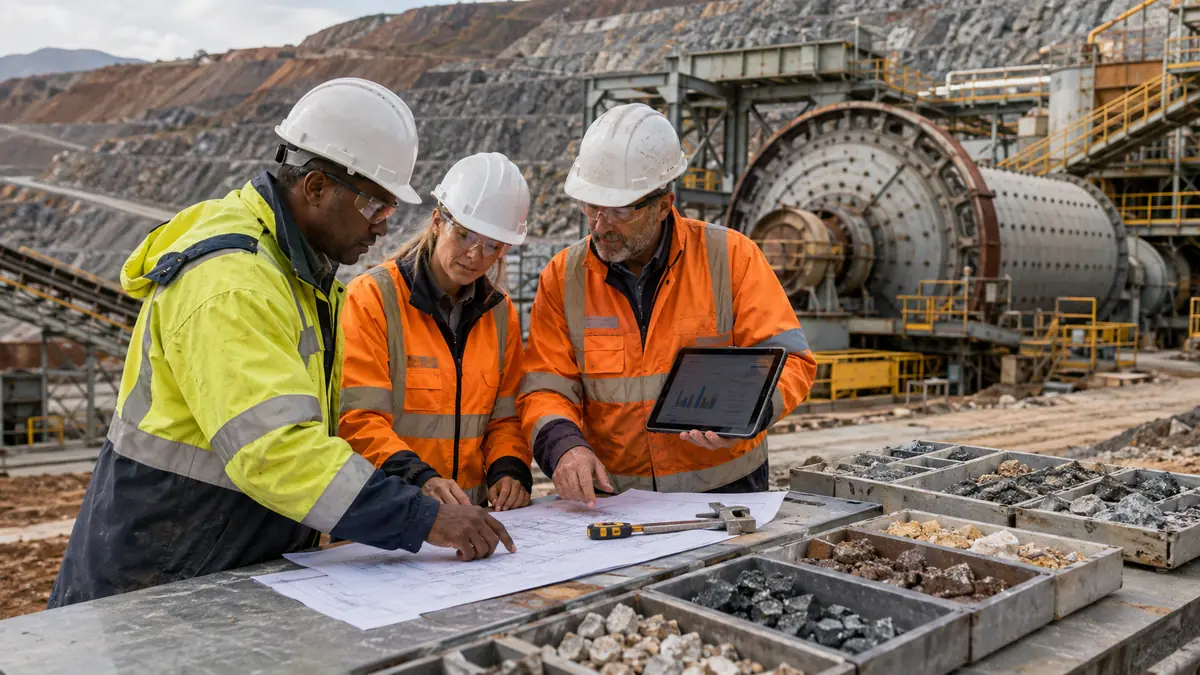
Send a supplier enough information to size the route, not just the machine:
- Raw material or ore name, representative sample results, mineralogy if available, hardness, abrasiveness, bulk density, moisture, and clay content.
- Maximum and typical feed size, including a screen analysis when possible.
- Required output size or particle-size distribution, plus the downstream process or end use.
- Required capacity in TPH, annual target, planned shifts, operating days, and availability expectation.
- Existing crushing equipment, water availability, power supply, dust-control requirement, and planned site layout.
- Site photos, elevation, climate, delivery country, access limitations, and installation conditions.
- Required scope for feeders, conveyors, classifier, cyclones, pumps, filters, controls, spares, and commissioning.
- Delivery schedule and budget range.
With your raw material, feed size, output size, capacity, site photos, and budget range, MVSI can help compare a wet ball-mill circuit with a dry Raymond-mill route and define the upstream and downstream equipment that each option needs.
Conclusion
Use a ball mill when the ore, liberation target, and downstream process require a controlled wet grinding circuit. Consider a Raymond mill when prepared, dry material must become a fine, air-classified powder and the feed properties suit a roller-and-ring system. The best decision starts with representative ore data and a process objective. It ends with a connected plant design that includes crushing, feed control, grinding, classification or collection, handling, maintenance, utilities, and the data required for a dependable quotation.
FAQ
What is the main difference between a ball mill and a Raymond mill?
A ball mill uses tumbling grinding media in a rotating shell and commonly fits wet mineral-processing circuits. A Raymond mill uses rollers, a grinding ring, and air classification to make dry fine powder from prepared feed.
Is a ball mill better for hard ore?
A ball mill is often the more suitable starting point for hard ore that must be ground before flotation, magnetic separation, gravity recovery, or leaching. Final selection still depends on test data, feed size, target size, and the complete circuit.
Can a Raymond mill grind metal ore?
It can process compatible dry material, but it is not automatically the right replacement for a wet ball-mill circuit used to liberate metal minerals. Check mineralogy, moisture, abrasiveness, desired product, and downstream separation method first.
What feed size is needed for a grinding mill?
The acceptable feed size depends on the selected mill and material. The mill supplier needs the maximum and typical prepared feed size after crushing and screening, rather than only the size of run-of-mine rock.
Does a ball mill need water?
Many ball mills used for beneficiation operate in a wet slurry circuit, so they need water, pumps, classification, and water-management planning. Some ball-mill arrangements can operate differently, so define the downstream process before choosing the route.
How do I choose grinding capacity?
Start with annual tonnage, operating days, shifts, availability, ore hardness, feed size, desired output size, and circuit configuration. Use test data and whole-plant capacity assumptions instead of a nameplate figure alone.
What information is needed for a ball mill or Raymond mill quotation?
Provide raw material, mineralogy or sample data, feed size, output size, capacity, moisture, hardness, abrasiveness, downstream process, available power and water, site photos, delivery location, desired scope, and budget range.