Table of Contents
- Start With Ore Testwork, Not a Machine List
- Typical Sulfide Copper Ore Processing Flow
- 1. Receiving, Feeding, and Primary Crushing
- 2. Secondary Crushing, Screening, and Fine Ore Storage
- 3. Grinding and Classification
- 4. Copper Flotation
- 5. Concentrate Dewatering and Tailings
- Recommended Equipment Configuration
- How Sulfide and Oxide Copper Routes Differ
- Capacity and Cost Factors
- Common Buyer Mistakes
- What to Send Before Asking for a Quote
- FAQ
- What equipment is used in a copper ore processing plant?
- What is the usual process for sulfide copper ore?
- Is flotation suitable for oxide copper ore?
- Why is grinding important before copper flotation?
- How fine should copper ore be ground?
- How much does a copper ore processing plant cost?
- What information is needed for a copper plant quotation?
Copper Ore Processing Plant: Crushing, Grinding, Flotation, and Dewatering
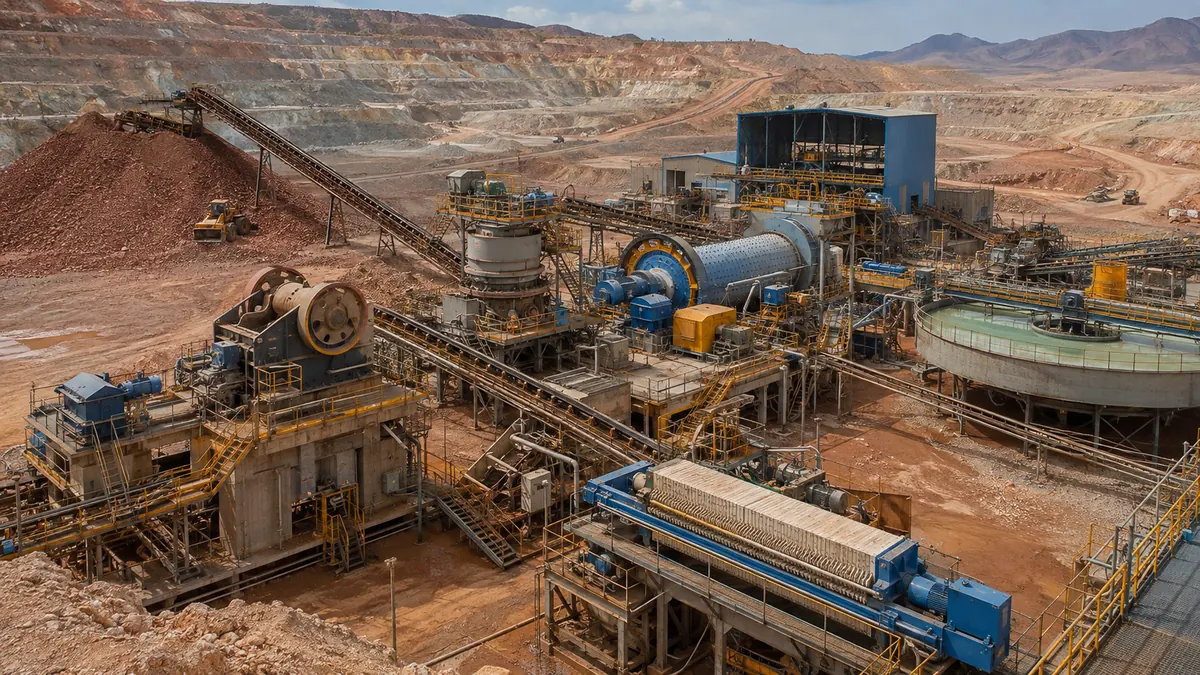
A copper ore processing plant turns run-of-mine ore into a saleable copper concentrate by controlling size reduction, mineral liberation, separation, and water removal. For most sulfide copper ores, the practical route is crushing, grinding, flotation, concentrate thickening, filtration, and tailings management. Oxide copper ore can need washing, scrubbing, heap leaching, agitation leaching, solvent extraction, or electrowinning instead, so no supplier should select equipment from ore name alone. The right plant depends on copper mineral type, grade, liberation size, clay, moisture, hardness, sulfide oxidation, gangue minerals, throughput, water, power, concentrate target, and site conditions.
Start With Ore Testwork, Not a Machine List
Copper deposits can contain chalcopyrite, bornite, chalcocite, malachite, azurite, chrysocolla, pyrite, magnetite, clay, silica, carbonate minerals, and other gangue. Two deposits with similar head grade may need different flows because their copper minerals liberate at different sizes and respond differently to flotation or leaching.
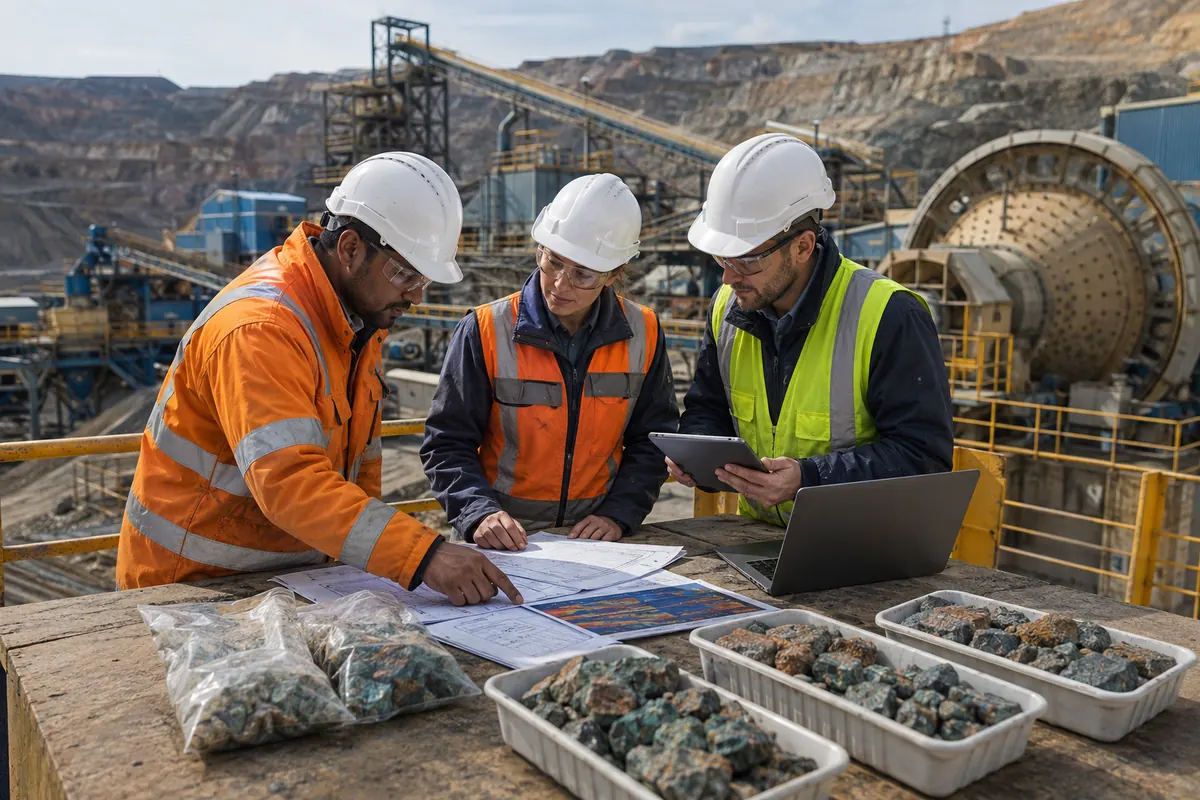
Representative ore samples should be tested for mineralogy, particle-size distribution, hardness, abrasion, moisture, gravity response, flotation response, concentrate grade, recovery target, and reagent consumption. Testwork defines whether the project needs conventional sulfide flotation, oxide leaching, a mixed-ore route, or a staged plan.
For upstream circuit planning, compare our iron ore crushing plant guide and manganese ore beneficiation plant guide.
Typical Sulfide Copper Ore Processing Flow
Most sulfide copper projects use a sequence that reduces ore size, liberates copper-bearing minerals, floats a concentrate, and removes water for transport. The final flow must follow testwork, but the main sections are usually consistent.
1. Receiving, Feeding, and Primary Crushing
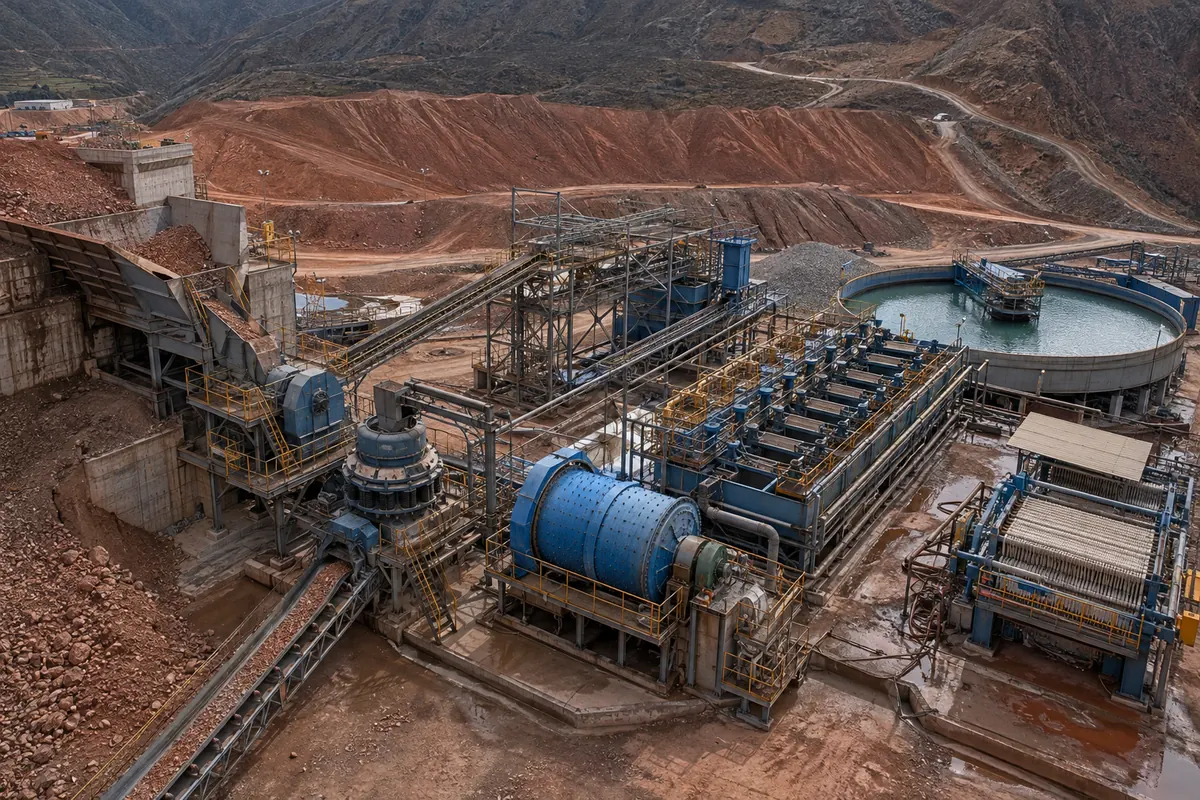
Run-of-mine copper ore is delivered to a hopper. A vibrating feeder or grizzly feeder controls the feed to a jaw crusher and can remove natural fines before primary crushing. The jaw crusher must accept the real maximum rock size, while wear allowance, liner access, foundation, and surge capacity support reliable operation.
2. Secondary Crushing, Screening, and Fine Ore Storage
After primary crushing, a cone crusher and vibrating screen commonly operate in closed circuit. Qualified material moves forward while oversize returns to the cone crusher. A fine ore bin or covered stockpile then buffers the grinding circuit from mine and crushing interruptions.
3. Grinding and Classification
Grinding releases copper minerals from gangue. A ball mill with hydrocyclones is common in small and medium plants. The target is the liberation size established by testwork, not the finest possible grind: overgrinding can raise energy use, create slimes, and reduce flotation selectivity.
4. Copper Flotation
For sulfide copper ore, flotation uses controlled air, reagents, pH, and residence time to separate copper minerals from gangue. Rougher cells recover value, scavengers capture remaining copper, and cleaner stages raise concentrate grade. Regrinding may be required before final cleaning.
5. Concentrate Dewatering and Tailings
A concentrate thickener increases slurry density, then a filter press, ceramic filter, or vacuum belt filter removes water for transport. Thickener overflow is often returned to the process-water circuit. Tailings may be thickened, filtered for dry stacking, pumped to storage, or used for backfill according to the site plan.
Recommended Equipment Configuration
| Plant Section | Main Equipment | Selection Focus |
|---|---|---|
| Ore receiving | hopper, vibrating feeder, grizzly | truck size, largest rock, fines and clay |
| Crushing | jaw crusher, cone crusher, vibrating screen | hardness, abrasiveness, target mill feed |
| Fine ore buffer | conveyors, stockpile, fine ore bin | surge hours, dust control, access |
| Grinding | ball mill, hydrocyclones, slurry pumps | liberation target, throughput, power |
| Flotation | conditioner, rougher, scavenger, cleaner cells | testwork recovery, residence time, reagents |
| Concentrate dewatering | thickener, filter press or ceramic filter | cake moisture and water return |
| Tailings and water | tailings thickener, pumps, process-water tank | storage concept and recirculation |
How Sulfide and Oxide Copper Routes Differ
Sulfide copper ore is often best suited to flotation after crushing and grinding. Oxide copper ore may instead respond to leaching, followed by solvent extraction and electrowinning. Mixed ores can need staged treatment and pilot work. Mineralogy, acid consumption, clay, carbonate content, solution chemistry, recovery time, and residue handling decide the route.
Capacity and Cost Factors
Capacity should be set from annual ore target, operating hours, mine schedule, plant availability, and concentrate output. Major cost drivers are ore hardness and abrasion, required grind size, flotation stages, water source and recycling, conveyor length, elevation, civil works, power, automation, spares, installation, commissioning, and training.
Common Buyer Mistakes
- Selecting flotation equipment before mineralogical and flotation testwork.
- Using average feed size instead of the largest blasted rock size.
- Targeting a finer grind without checking energy use and overgrinding risk.
- Leaving surge storage, water storage, and tailings scope out of the layout.
- Comparing prices without matching recovery, concentrate grade, installation, and tailings scope.
What to Send Before Asking for a Quote
- Raw material description, copper mineral type, head grade, and available assay or testwork.
- Maximum feed size, particle-size distribution, moisture, hardness, abrasion, clay, and bulk density.
- Target output: copper concentrate grade, recovery target, annual tonnage, and operating hours.
- Preferred process route if testwork confirms flotation, leaching, or a mixed flow.
- Capacity, site photos, layout, elevation, climate, power, water, tailings concept, delivery country, schedule, and budget range.
With your raw material, feed size, output size, capacity, site photos, and budget range, MVSI can review the flow and propose suitable crushers, grinding equipment, flotation cells, dewatering equipment, conveyors, and controls.
FAQ
What equipment is used in a copper ore processing plant?
Typical equipment includes a hopper, vibrating feeder, jaw crusher, cone crusher, vibrating screen, conveyors, fine ore bin, ball mill, hydrocyclones, slurry pumps, flotation cells, thickener, filter equipment, tailings equipment, and controls.
What is the usual process for sulfide copper ore?
Sulfide copper ore is commonly crushed, ground to a liberation size, conditioned with flotation reagents, floated into a concentrate, thickened, filtered, and prepared for transport after testwork confirms the flow.
Is flotation suitable for oxide copper ore?
Some oxide ores can be floated, but many are better evaluated for leaching and solvent extraction-electrowinning. Mineralogy and testwork decide the route.
Why is grinding important before copper flotation?
Grinding releases copper minerals from gangue so they can be separated by flotation. Particles that are too coarse may remain locked, while excessive fines can reduce separation quality.
How fine should copper ore be ground?
There is no universal target. The correct P80 depends on mineral liberation, flotation testing, recovery target, and energy cost.
How much does a copper ore processing plant cost?
Cost depends on throughput, ore properties, grind size, flotation stages, dewatering, tailings, utilities, civil works, automation, and installation scope.
What information is needed for a copper plant quotation?
Provide ore assay and mineral type, feed size, target output, capacity, testwork when available, site photos, layout, power, water, tailings concept, delivery country, schedule, and budget range.