Table of Contents
- Why the Flow Sheet Matters
- Information Needed Before Drawing the Flow Sheet
- Basic Crushing Plant Process
- Stage 1: Feeding and Pre-Screening
- Stage 2: Primary Crushing
- Stage 3: Secondary Crushing
- Stage 4: Screening and Return Circuit
- Stage 5: Final Shaping or Sand Making
- Quick Flow Sheet Comparison by Material
- Granite Crushing Plant Flow Sheet
- Basalt Crushing Plant Flow Sheet
- Limestone Crushing Plant Flow Sheet
- River Stone Crushing Plant Flow Sheet
- When to Add a VSI Crusher
- Capacity and Output Size Planning
- Cost and ROI Factors
- Common Buyer Mistakes
- What to Send Before Asking for a Flow Sheet Quote
- Conclusion
- FAQ
- What is a crushing plant flow sheet?
- What is the best flow sheet for granite?
- What is the best flow sheet for basalt?
- Is impact crusher suitable for limestone?
- How do I crush river stone for manufactured sand?
- When should a crushing plant add a VSI crusher?
- Can one plant process granite, basalt, limestone, and river stone?
- What information should I provide before requesting a quotation?
Crushing Plant Flow Sheet for Granite, Basalt, Limestone, and River Stone
A crushing plant flow sheet for granite, basalt, limestone, and river stone should start with material hardness, feed size, target output sizes, capacity, and shape requirements. Hard and abrasive granite or basalt usually needs jaw crushing, cone crushing, screening, and optional VSI shaping. Limestone can often use jaw plus impact crushing because wear cost is lower and impact crushing improves particle shape. River stone is usually hard and rounded, so jaw, cone, screen, and VSI stages are common when manufactured sand is required. The best flow sheet is a complete circuit with matched feeder, crushers, screen decks, return conveyors, stockpiles, power control, and dust management.
Why the Flow Sheet Matters
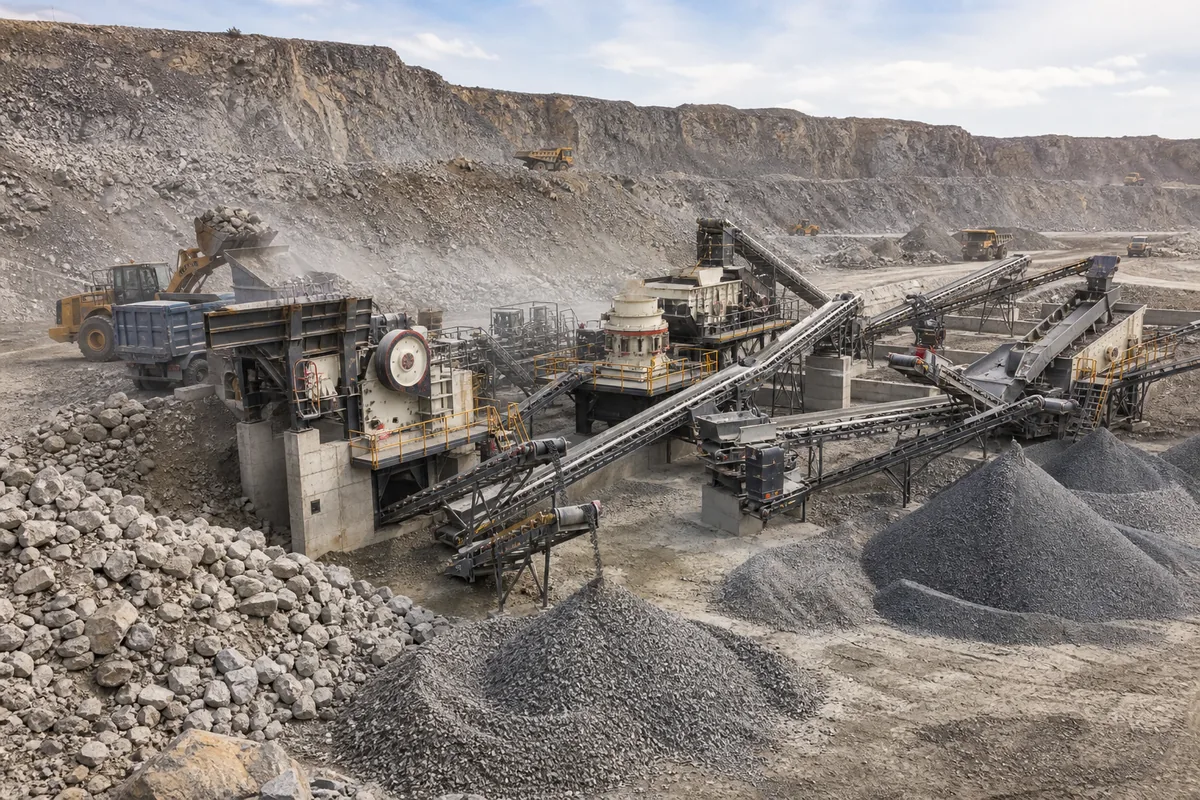
A crushing plant flow sheet is the practical map of how rock moves from raw feed to finished aggregate. It shows the feeder, primary crusher, secondary crusher, tertiary crusher, screen, return conveyor, stockpile conveyors, dust control points, and sometimes washing or sand making equipment. A good flow sheet protects the whole plant from overload, wrong product size, high wear cost, and poor aggregate shape.
For quarry owners and aggregate producers, the flow sheet is more important than a single crusher model. Two plants may both include a jaw crusher and screen, but one may be designed for hard granite while the other is suitable only for limestone. The correct process depends on the rock, the required final products, and the real working conditions at the site.
If you are still comparing the full plant scope, read our guide to complete stone crusher plant setup and the article on jaw crusher, cone crusher, impact crusher, or VSI selection.
Information Needed Before Drawing the Flow Sheet
Before choosing a crusher circuit, collect the project data first. A supplier cannot design a reliable flow sheet from the rock name alone.
Important inputs include:
- Raw material name, hardness, abrasiveness, moisture, clay content, and photos.
- Maximum feed size from blasting, excavation, river deposit, or previous crushing.
- Required final output sizes, such as 0-5 mm, 5-10 mm, 10-20 mm, or 20-31.5 mm.
- Required capacity in tons per hour and expected operating hours per day.
- Whether the final product needs cubical shape, manufactured sand, or only road base aggregate.
- Available power, site space, stockpile area, dust control rules, and maintenance access.
- Whether the plant should be stationary, mobile, or semi-mobile.
- Budget range, delivery schedule, spare parts plan, and installation support requirement.
These details decide whether the plant needs jaw + cone, jaw + impact, cone + VSI, extra screening, or a simpler single-stage process.
Basic Crushing Plant Process
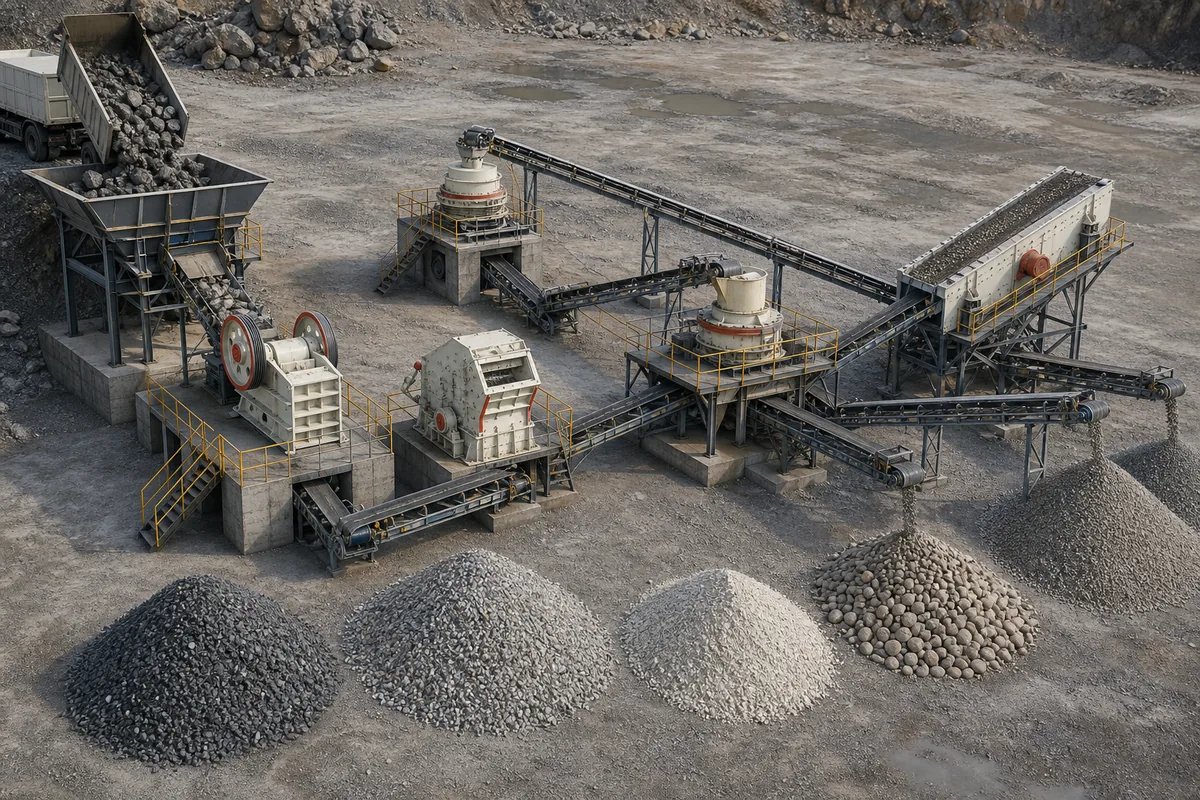
Most aggregate flow sheets follow the same logic: control the feed, reduce the rock in stages, screen the product, return oversize material, and store final aggregate separately.
Stage 1: Feeding and Pre-Screening
A vibrating feeder or grizzly feeder controls the raw material entering the primary crusher. When the feed contains soil, clay, or small natural fines, pre-screening can remove part of the undersize before crushing. This reduces crusher load and improves plant efficiency.
The feeder should match the actual feed size and truck or loader cycle. If the feeder is too small, the whole plant loses capacity even when the crushers are large enough.
Stage 2: Primary Crushing
The primary crusher reduces large stone to a size that secondary equipment can accept. For most quarry and mining aggregate projects, a jaw crusher is the normal primary crusher because it can handle large feed and hard material. For softer limestone with controlled feed size, a heavy impact crusher may also be considered.
Stage 3: Secondary Crushing
Secondary crushing normally decides the main product size range. Cone crushers are commonly used for granite, basalt, river stone, quartz-rich rock, and hard ore because compression crushing controls wear better in abrasive material. Impact crushers are often used for limestone, dolomite, concrete recycling, and medium-hard stone when cubical shape and high reduction ratio are important.
Stage 4: Screening and Return Circuit
The vibrating screen separates finished aggregate from oversized material. Oversize returns to the cone crusher, impact crusher, or VSI crusher for further reduction. Screen deck area, mesh size, moisture, dust, and return conveyor capacity can become the bottleneck if they are not matched to the crusher capacity.
Stage 5: Final Shaping or Sand Making
A VSI crusher is added when the plant needs 0-5 mm manufactured sand or improved cubical shape for asphalt and concrete aggregate. VSI crushing works best with controlled feed from previous stages and a closed circuit with fine screening. For more detail, see VSI Crusher Capacity Guide: 50 TPH to 500 TPH Sand Production.
Quick Flow Sheet Comparison by Material
| Raw Material | Typical Flow Sheet | Best Use | Key Risk |
|---|---|---|---|
| Granite | feeder + jaw crusher + cone crusher + screen + optional VSI | hard-rock aggregate, concrete stone, manufactured sand | high liner and screen wear if feed is unstable |
| Basalt | feeder + jaw crusher + cone crusher + screen + VSI for shaping | road aggregate, asphalt aggregate, high-strength concrete | high abrasiveness and high return load |
| Limestone | feeder + jaw crusher + impact crusher + screen | road base, concrete aggregate, cement-related aggregate | clay, moisture, and oversize slabs can reduce efficiency |
| River stone | feeder + jaw crusher + cone crusher + screen + optional VSI | rounded stone aggregate, sand making, commercial quarry | hard rounded feed can slip or overload poorly selected chambers |
This table is a starting point. The final process should still be checked against the real feed size, capacity, final product grading, and local operating conditions.
Granite Crushing Plant Flow Sheet
Granite is hard and abrasive, so the safest base flow is usually feeder + jaw crusher + cone crusher + vibrating screen. If the project needs better particle shape or 0-5 mm manufactured sand, add a VSI crusher after cone crushing and connect it with a fine screen and return conveyor.
A practical granite flow sheet may look like this:
- Grizzly feeder removes small fines and feeds the jaw crusher.
- Jaw crusher reduces large granite to secondary feed size.
- Cone crusher reduces the material to aggregate size.
- Vibrating screen separates 5-10 mm, 10-20 mm, and larger products.
- Oversize returns to the cone crusher.
- Optional VSI crusher shapes small aggregate or produces manufactured sand.
Granite plants should pay close attention to liner material, cone chamber selection, screen wear, conveyor protection, and dust control. For mobile granite projects, compare our guide to mobile crusher plant for granite.
Basalt Crushing Plant Flow Sheet
Basalt is also hard and often abrasive. It is widely used for road aggregate, asphalt aggregate, railway ballast, and high-strength concrete. A jaw crusher + cone crusher + screen circuit is normally the core process. VSI shaping is common when the buyer needs better cubical aggregate for asphalt or concrete.
For basalt, the main challenge is stable capacity under wear. A plant with a high return load can overload the cone crusher and screen. The flow sheet should include enough screen area, suitable cone closed-side setting, proper conveyor width, and easy access for wear part replacement.
If the target products include 0-5 mm sand, 5-10 mm chips, and 10-20 mm aggregate, the final screen and VSI loop should be selected as a system. A VSI cannot perform well if the incoming feed is too coarse, uneven, wet, or mixed with clay.
Limestone Crushing Plant Flow Sheet
Limestone is usually easier to crush than granite or basalt. For many limestone aggregate projects, feeder + jaw crusher + impact crusher + screen is economical and simple. The impact crusher can provide good reduction and cubical shape in one stage, which may reduce the need for a cone crusher.
However, limestone deposits are not all the same. Some limestone contains hard silica bands, clay pockets, or high moisture. These conditions can increase wear, block chutes, reduce screening efficiency, and create too much fine material.
A limestone flow sheet should check:
- Whether the maximum feed size requires a jaw crusher before impact crushing.
- Whether the impact crusher can handle the expected moisture and clay.
- Whether the screen can separate clean final products without blinding.
- Whether dust suppression is needed around transfer points and stockpiles.
- Whether the plant must make sand or only road base and coarse aggregate.
When limestone is abrasive or the plant needs very stable long-term production, a cone crusher can still be considered. The decision should be based on wear cost per ton, not only the first purchase price.
River Stone Crushing Plant Flow Sheet
River stone is usually rounded, dense, and hard. The rounded shape can make feeding and chamber control more difficult than angular quarry rock. A common flow sheet is feeder + jaw crusher + cone crusher + vibrating screen. If the buyer needs manufactured sand or better shape, a VSI crusher is added after cone crushing.
Because river stone is often mixed with sand, clay, or moisture, pre-screening and washing may be needed in some projects. If the final product is road aggregate, dry screening may be enough. If the product is concrete sand or washed aggregate, the plant may need sand washing, water recycling, and extra fines control.
River stone plants should avoid oversizing the jaw crusher while undersizing the screen. The feed may look easy because the stones are rounded, but high hardness and high recirculating load can limit the plant if the secondary circuit is weak.
When to Add a VSI Crusher
A VSI crusher is not required in every flow sheet. It is added when the market or specification needs better shape, lower flakiness, or manufactured sand.
Add VSI when:
- The plant must produce 0-5 mm manufactured sand.
- Asphalt or concrete customers require better cubical shape.
- Cone crusher product contains too much flaky or elongated aggregate.
- River stone or hard rock needs final shaping after compression crushing.
- The quarry wants to sell higher-value sand and fine aggregate.
Do not add VSI only because it looks complete on a quotation. VSI crushing adds power demand, rotor wear parts, screen load, and return conveyors. The extra stage should be justified by final product value. For a detailed comparison, read VSI Crusher vs Cone Crusher: Which Is Better for Manufactured Sand?.
Capacity and Output Size Planning
Flow sheet capacity should be based on saleable output, not only feed tons per hour. A plant may accept 200 TPH of raw rock but produce only part of that as the target 10-20 mm aggregate because some material returns to the crusher or becomes sand.
| Target Capacity | Typical Flow Sheet Complexity | Planning Notes |
|---|---|---|
| 50-100 TPH | simple jaw + impact or jaw + cone + screen | suitable for small quarry, road project, or startup aggregate business |
| 100-200 TPH | jaw + cone or impact + multi-deck screen | common range for commercial aggregate and road contractors |
| 200-300 TPH | heavy feeder + jaw + cone + screen + return circuit | needs enough conveyor width, stockpile space, trucks, and power |
| 300+ TPH | multi-stage crushing with multiple screens and stockpile conveyors | usually needs stronger automation, dust control, and maintenance planning |
Output sizes also control the layout. A plant making only 0-40 mm road base is much simpler than a plant making 0-5 mm, 5-10 mm, 10-20 mm, and 20-31.5 mm at the same time. For multi-size aggregate design, see How to Design a Crushing Plant for 0-5mm, 5-10mm, 10-20mm Aggregates.
Cost and ROI Factors
The cost of a crushing plant flow sheet is affected by more than crusher quantity. A cheaper process may cost more during operation if it creates high wear, unstable grading, or excessive downtime.
Important cost factors include:
- Primary feed size and whether heavy-duty feeding is required.
- Material hardness, abrasiveness, and expected wear part life.
- Crusher type, motor power, chamber design, and reduction ratio.
- Screen size, number of decks, mesh type, and return load.
- Conveyor length, stockpile height, transfer points, and dust control.
- Power supply, automation, safety guards, and maintenance platforms.
- Spare parts package, operator skill, installation support, and commissioning.
- Shipping, inland transport, civil foundation, and local service requirements.
For budget planning, read Stone Crusher Plant Cost: What Determines the Final Price?.
Common Buyer Mistakes
The first mistake is choosing the flow sheet by rock name only. A buyer may say “limestone” or “granite,” but the real decision depends on feed size, hardness, moisture, clay, output grading, and site layout.
The second mistake is focusing on crusher price while ignoring the screen. The screen controls final products and return load. If it is too small, the whole plant capacity drops even when the crushers are powerful.
The third mistake is using impact crushing for abrasive hard rock only because the initial quotation is lower. For granite, basalt, and quartz-rich river stone, wear cost may make cone crushing more economical.
The fourth mistake is adding VSI without checking the market for manufactured sand or cubical aggregate. A VSI stage is valuable when the final product earns more or meets a required specification. Otherwise, it adds cost without enough return.
What to Send Before Asking for a Flow Sheet Quote
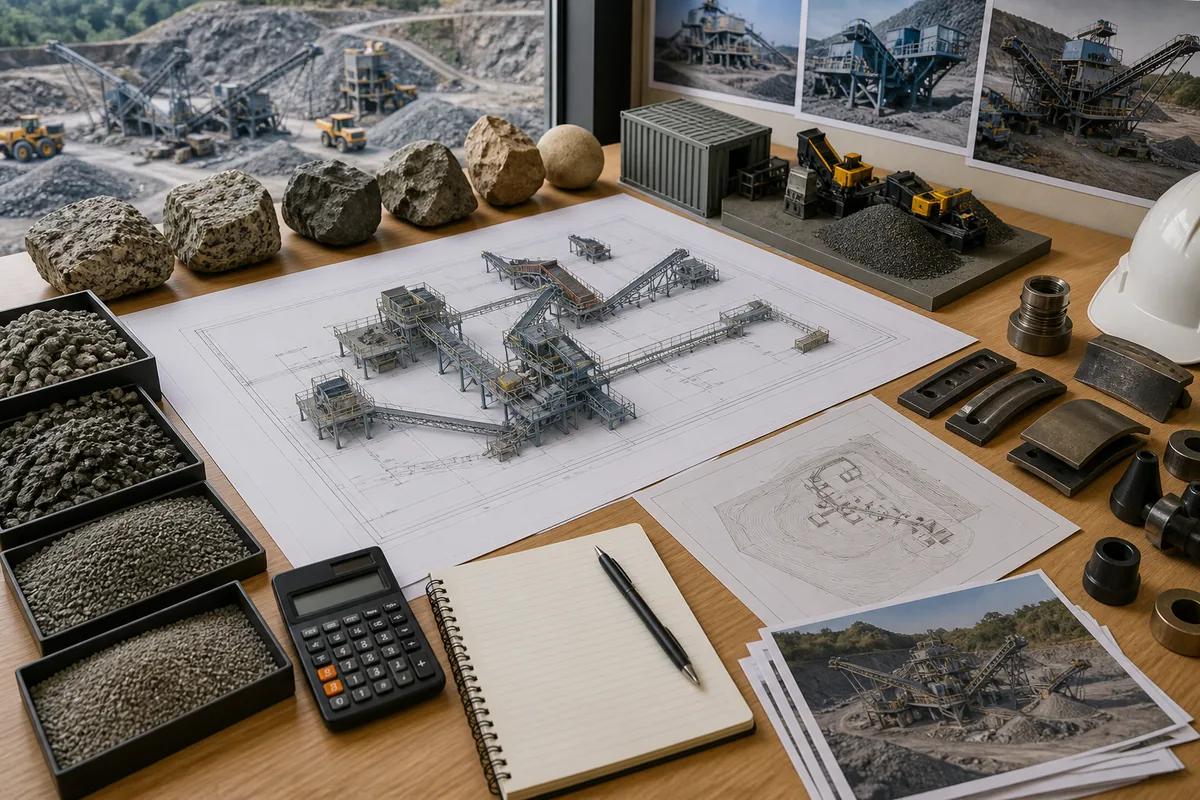
To get a useful crushing plant flow sheet and quotation, prepare:
- Raw material name, photos, hardness, abrasiveness, moisture, and clay content if known.
- Maximum feed size before primary crushing.
- Required output sizes, such as 0-5 mm, 5-10 mm, 10-20 mm, or 20-31.5 mm.
- Target capacity in tons per hour and expected working hours per day.
- Whether you need manufactured sand, cubical shape, or only coarse aggregate.
- Site photos, available land size, stockpile space, access road, and foundation limits.
- Power supply, diesel or grid preference, dust control requirement, and local weather conditions.
- Budget range, delivery schedule, spare parts preference, and installation support needs.
With these details, MVSI can recommend a practical flow sheet instead of a generic equipment list.
Conclusion
The best crushing plant flow sheet is different for granite, basalt, limestone, and river stone. Granite and basalt usually need jaw crusher + cone crusher + screen, with VSI added for shaping or sand making. Limestone often works well with jaw crusher + impact crusher + screen. River stone usually needs jaw crusher + cone crusher + screen, and may need VSI or washing depending on the final product.
If you are planning a stone crushing plant, send MVSI your raw material, feed size, output size, capacity, site photos, and budget range. We can help review the application and suggest a flow sheet that matches your material, final products, site conditions, and operating cost target.
FAQ
What is a crushing plant flow sheet?
A crushing plant flow sheet is the process layout showing how material moves through the feeder, crushers, screen, return conveyors, stockpiles, and optional VSI or washing equipment. It helps match equipment to the required final products.
What is the best flow sheet for granite?
For most granite aggregate projects, the best starting flow sheet is feeder + jaw crusher + cone crusher + vibrating screen. Add a VSI crusher when the project needs manufactured sand or better cubical shape.
What is the best flow sheet for basalt?
Basalt usually needs jaw crushing, cone crushing, screening, and sometimes VSI shaping. Because basalt can be highly abrasive, the flow sheet should focus on wear control, stable feed, and enough screen capacity.
Is impact crusher suitable for limestone?
Yes. Impact crusher is often suitable for limestone because limestone is usually less abrasive than granite or basalt. A jaw crusher + impact crusher + screen flow can be economical for limestone aggregate.
How do I crush river stone for manufactured sand?
River stone usually needs jaw crusher + cone crusher + screen first. For manufactured sand, add a VSI crusher and fine screen after cone crushing so oversized material can return for further shaping.
When should a crushing plant add a VSI crusher?
Add a VSI crusher when the project needs 0-5 mm manufactured sand, better cubical shape, lower flakiness, or premium aggregate for asphalt and concrete. The VSI should work with controlled feed and screening.
Can one plant process granite, basalt, limestone, and river stone?
One plant can sometimes process several materials, but the flow sheet must be designed for the hardest and most abrasive material if the buyer wants reliable operation. Crusher settings and wear parts may change by material.
What information should I provide before requesting a quotation?
Provide raw material, maximum feed size, final output sizes, target capacity, site photos, power condition, whether VSI or washing is needed, and budget range. These details make the flow sheet and quotation more accurate.