Table of Contents
- What Does Rock-on-Rock Mean in a VSI Crusher?
- What Does Rock-on-Iron Mean in a VSI Crusher?
- How the Impact Path Is Different
- Which Design Is Better for Granite and Basalt?
- Which Design Is Better for Limestone?
- How to Choose the Right VSI Chamber
- Raw Material Hardness and Abrasiveness
- Feed Size
- Required Output Size
- Recommended Plant Configuration
- Cost and Maintenance Differences
- Common Buyer Mistakes
- What Information Should You Send Before Requesting a VSI Quote?
- Internal Reading
- Conclusion
- FAQ
- What is rock-on-rock VSI crushing?
- What is rock-on-iron VSI crushing?
- Which VSI chamber is better for granite?
- Which VSI chamber is better for limestone?
- Does rock-on-rock produce better sand shape?
- Does rock-on-iron have higher wear cost?
- Can one VSI crusher switch between rock-on-rock and rock-on-iron?
- What information should I provide before choosing a VSI chamber?
Rock-on-rock and rock-on-iron are two common VSI crusher chamber designs. Rock-on-rock VSI crushing throws material from the rotor into a packed bed of rock, which helps reduce metal wear and improve particle shape. Rock-on-iron VSI crushing throws material against metal anvils, which can provide stronger impact and higher breakage force, but may increase wear cost when processing abrasive rock. For manufactured sand, the better choice depends on raw material hardness, abrasiveness, feed size, required sand percentage, product shape target, capacity, and maintenance budget.
For quarry owners and aggregate producers, choosing the right VSI chamber is important because it affects sand quality, wear parts consumption, downtime, and cost per ton.
What Does Rock-on-Rock Mean in a VSI Crusher?
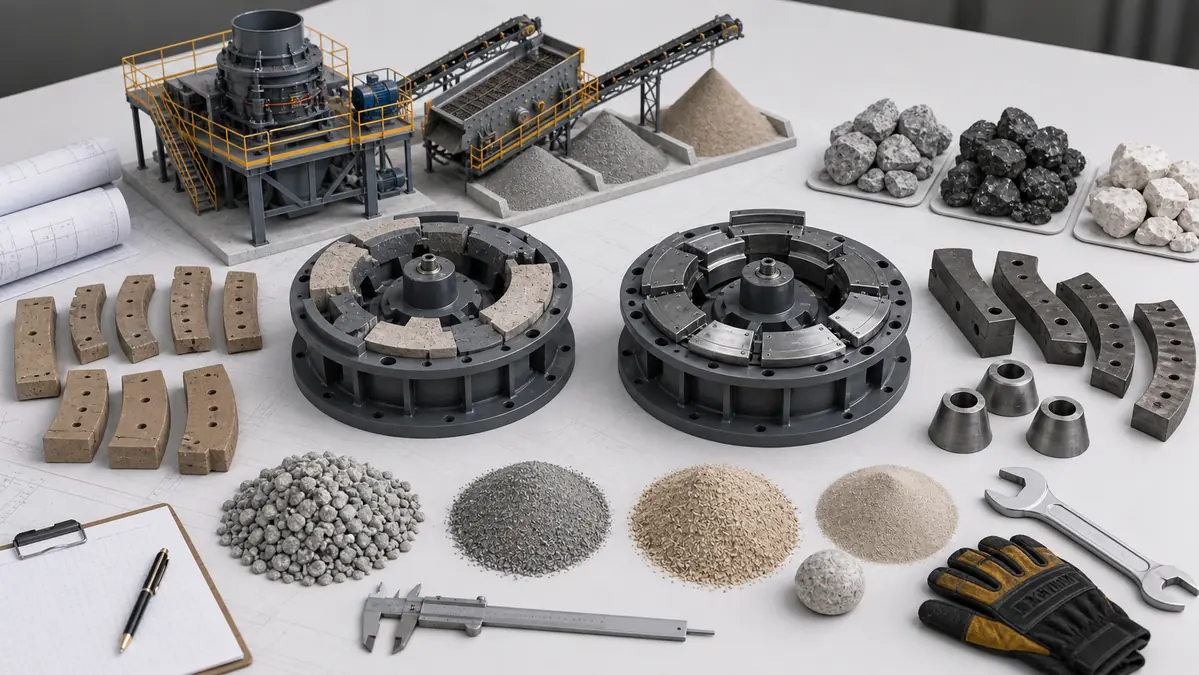
In a rock-on-rock VSI crusher, material enters the rotor and is accelerated outward at high speed. Instead of hitting metal anvils directly, the material impacts a packed bed of rock inside the crushing chamber. The rock bed becomes the main impact surface.
This design is often used when buyers want lower metal wear in abrasive applications, better cubical particle shape, stable aggregate shaping, manufactured sand from hard rock, and reduced direct contact between rock and metal parts.
What Does Rock-on-Iron Mean in a VSI Crusher?
In a rock-on-iron VSI crusher, material from the rotor impacts metal anvils or impact blocks inside the crushing chamber. The impact surface is metal rather than a packed rock bed.
This design can provide stronger direct impact. It may be useful when the material needs more breakage force, the rock is less abrasive, higher reduction is needed in the final stage, or the application can accept higher wear part consumption.
How the Impact Path Is Different
| Factor | Rock-on-Rock VSI | Rock-on-Iron VSI |
|---|---|---|
| Main impact surface | Packed rock bed | Metal anvils or impact blocks |
| Typical advantage | Lower metal wear and good shaping | Stronger direct crushing force |
| Wear cost | Usually lower with abrasive rock | Usually higher with abrasive rock |
| Best use | Aggregate shaping and manufactured sand | More aggressive final crushing |
| Suitable material | Granite, basalt, river stone, quartz | Limestone and some medium-hard materials |
Which Design Is Better for Granite and Basalt?
For granite and basalt, rock-on-rock is often the first choice because these materials are hard and abrasive. If the material hits metal anvils directly, wear cost can rise quickly. A rock bed inside the chamber helps protect metal components and can improve cubical shape.
Which Design Is Better for Limestone?
Limestone is usually softer and less abrasive than granite or basalt. Rock-on-iron may be practical when the buyer needs stronger impact and the wear cost is acceptable. However, rock-on-rock can still be used if the main target is shaping and stable manufactured sand quality.
How to Choose the Right VSI Chamber
Raw Material Hardness and Abrasiveness
Hard and abrasive materials usually favor rock-on-rock because direct metal impact can become expensive. Softer materials may allow rock-on-iron if stronger crushing force is needed.
Feed Size
Oversized feed can damage the rotor and increase vibration. A VSI crusher should usually receive controlled feed from a jaw, cone, or impact crusher and vibrating screen.
Required Output Size
If the main target is 0-5 mm manufactured sand and better shape, rock-on-rock is often suitable. If more reduction force is needed, rock-on-iron may be considered.
Recommended Plant Configuration
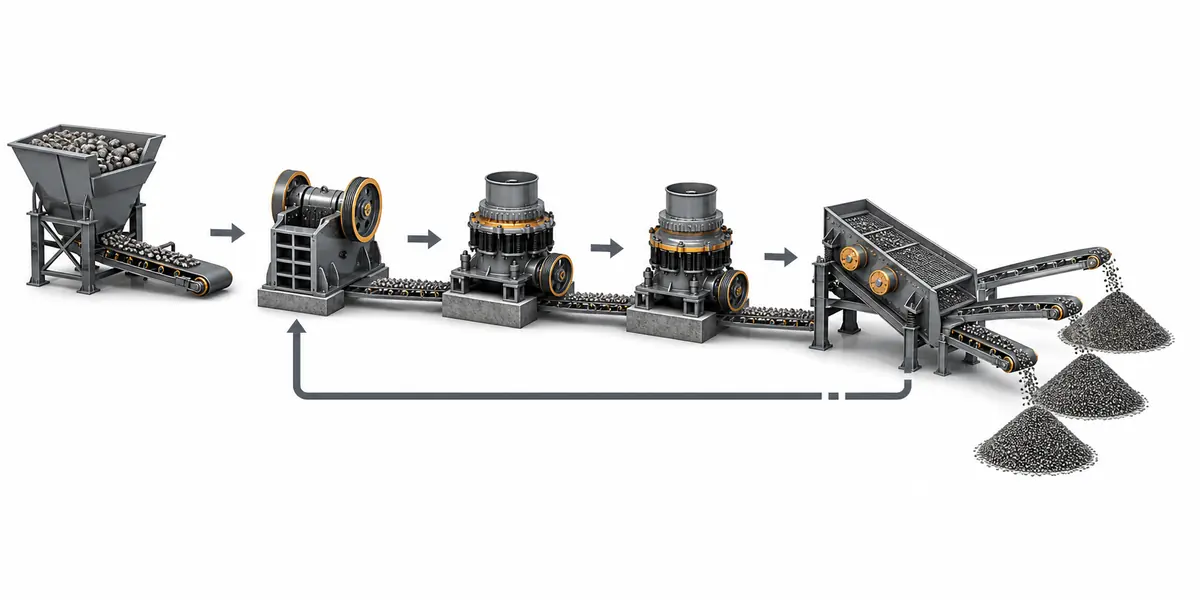
For hard rock manufactured sand, a common configuration is vibrating feeder, jaw crusher, cone crusher, vibrating screen, VSI crusher with suitable chamber design, sand washer or air classifier, belt conveyors, and electrical control system.
Cost and Maintenance Differences
Rock-on-rock can reduce direct metal wear in abrasive material, but it still requires regular inspection of rotor tips, liners, feed tube, and chamber build-up. Rock-on-iron may produce strong impact, but anvils and liners can wear faster, especially with abrasive rock.
Common Buyer Mistakes
- Choosing rock-on-iron for very abrasive rock without calculating wear cost
- Choosing rock-on-rock but feeding oversized material
- Ignoring rotor speed and feed rate
- Buying a VSI crusher without checking screen capacity
- Expecting one chamber design to fit every material
- Not preparing spare rotor tips, anvils, or liners
- Ignoring vibration caused by uneven feed
- Asking for a quotation without material and final size details
What Information Should You Send Before Requesting a VSI Quote?
Send raw material name, material hardness and abrasiveness if known, maximum feed size, required final product sizes, required capacity, target use, current plant configuration, site photos, local power conditions, budget range, and expected operating hours.
Internal Reading
If you are still comparing VSI equipment selection, read How to Choose a VSI Sand Making Machine for Granite, Basalt, and Limestone.
For a broader crusher comparison, read VSI Crusher vs Cone Crusher: Which Is Better for Manufactured Sand?.
Conclusion
Rock-on-rock VSI crushing is usually better when abrasive rock, lower metal wear, and cubical product shape are priorities. Rock-on-iron VSI crushing can be useful when stronger direct impact is needed and wear cost is acceptable. For granite, basalt, river stone, and quartz, rock-on-rock is often preferred. For limestone and some medium-hard materials, rock-on-iron may be practical depending on the product target and operating budget.
If you are planning a VSI sand making plant, send your raw material, feed size, final product size, capacity, site photos, and budget range. MVSI can help recommend the right VSI chamber, wear parts, and complete crushing and screening configuration.
FAQ
What is rock-on-rock VSI crushing?
Rock-on-rock VSI crushing means the material leaving the rotor impacts a packed bed of rock inside the chamber. This can reduce direct metal wear and improve aggregate shape.
What is rock-on-iron VSI crushing?
Rock-on-iron VSI crushing means the material leaving the rotor impacts metal anvils or impact blocks. It can provide stronger direct impact but may increase wear cost.
Which VSI chamber is better for granite?
Rock-on-rock is often better for granite because granite is hard and abrasive. It can help reduce metal wear and improve cubical particle shape.
Which VSI chamber is better for limestone?
Limestone may use either rock-on-rock or rock-on-iron. Rock-on-iron can be practical when stronger crushing force is needed and wear cost is acceptable.
Does rock-on-rock produce better sand shape?
Rock-on-rock is widely used for aggregate shaping and manufactured sand because it helps break weak edges and create more cubical particles.
Does rock-on-iron have higher wear cost?
It can have higher wear cost, especially with abrasive rock, because the material directly impacts metal anvils or impact blocks.
Can one VSI crusher switch between rock-on-rock and rock-on-iron?
Some VSI designs may support different chamber configurations, but this depends on the machine model. Ask the manufacturer before assuming conversion is possible.
What information should I provide before choosing a VSI chamber?
Send raw material, hardness, abrasiveness, feed size, final size, required capacity, current plant configuration, site photos, power conditions, budget, and expected operating hours.