Table of Contents
- What Is a Stone Crusher Plant?
- Main Equipment in a Complete Stone Crusher Plant
- 1. Vibrating Feeder
- 2. Primary Crusher
- 3. Secondary Crusher
- 4. Tertiary Crusher or VSI Crusher
- 5. Vibrating Screen
- 6. Belt Conveyors
- 7. Dust Control and Electrical Control
- Recommended Stone Crusher Plant Layout
- How to Choose the Right Crusher Configuration
- Granite and Basalt
- Limestone
- River Stone
- Capacity Planning: 50 TPH to 500 TPH
- Cost Factors in a Stone Crusher Plant
- Mobile vs Stationary Stone Crusher Plant
- Common Mistakes When Setting Up a Crusher Plant
- What Information Should You Send Before Requesting a Quote?
- Internal Reading
- Conclusion
- FAQ
- What equipment is needed for a complete stone crusher plant?
- How much does a stone crusher plant cost?
- What is the best crusher for granite?
- Is a mobile crusher plant better than a stationary plant?
- How many tons per hour can a stone crusher plant produce?
- How do I design the layout of a crusher plant?
- What information should I provide before asking for a quotation?
- Can one crusher produce all aggregate sizes?
A complete stone crusher plant is a production system that turns large rock into finished aggregate or manufactured sand. A typical setup includes a vibrating feeder, jaw crusher, cone crusher or impact crusher, vibrating screen, belt conveyors, electrical control system, dust control, and stockpile areas. The right layout depends on raw material hardness, feed size, final product sizes, required capacity, site area, power supply, and budget. For quarry owners and contractors, the best plant is not simply the cheapest machine list. It is the configuration that produces stable quality at a competitive cost per ton.
This guide explains how to plan the equipment, layout, capacity, and cost of a stone crusher plant before requesting a quotation.
What Is a Stone Crusher Plant?
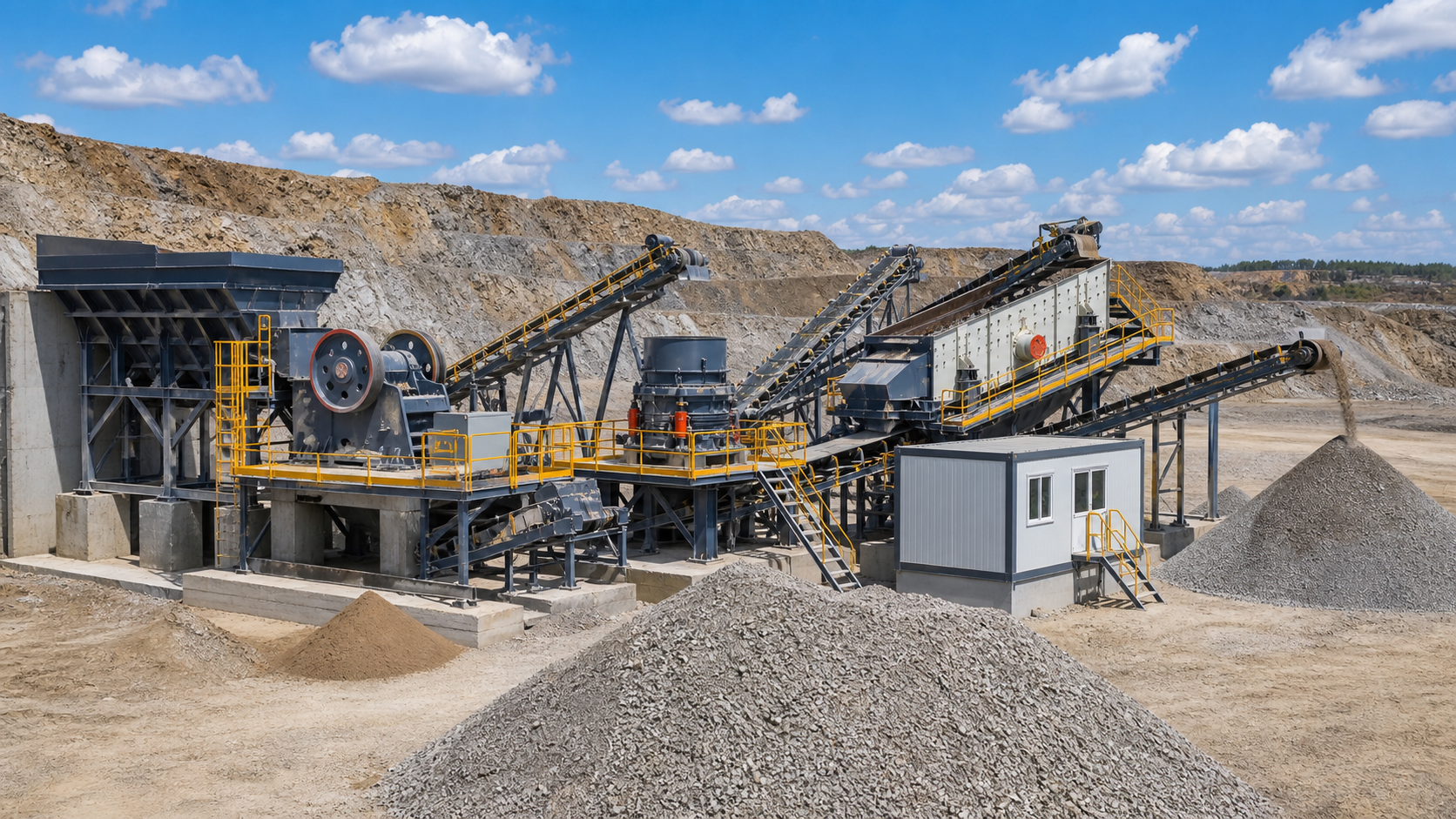
A stone crusher plant is a complete crushing and screening line used to process raw stone into different aggregate sizes. It is used in quarry production, road construction, concrete aggregate, asphalt aggregate, railway ballast, mining, and infrastructure projects.
The plant may be stationary, mobile, or semi-mobile. A stationary plant is usually installed on concrete foundations for long-term quarry production. A mobile plant is better for contractors, temporary sites, and projects that need fast relocation.
Common raw materials include:
- Granite
- Basalt
- Limestone
- River stone
- Dolomite
- Quartz
- Iron ore and other hard ore
- Construction waste and recycled concrete
Main Equipment in a Complete Stone Crusher Plant
The correct equipment depends on the material and final product requirement. However, most complete plants include the following sections.
1. Vibrating Feeder
The vibrating feeder sends raw stone into the primary crusher at a stable rate. It can also remove some fine material before crushing, which helps improve efficiency and reduce unnecessary wear.
2. Primary Crusher
The primary crusher handles the largest stone from the quarry or mine. A jaw crusher is the most common primary crusher because it accepts large feed size and is suitable for hard rock.
3. Secondary Crusher
The secondary crusher reduces the material after primary crushing. For hard rock such as granite and basalt, a cone crusher is usually preferred. For limestone and medium-hard stone, an impact crusher can be used when the buyer wants good shape and lower reduction stages.
4. Tertiary Crusher or VSI Crusher
If the project needs manufactured sand or better aggregate shape, a tertiary crusher or VSI crusher may be added. A VSI crusher is especially useful for producing 0-5 mm sand and improving cubical shape.
5. Vibrating Screen
The vibrating screen separates crushed material into different sizes. Oversized material returns to the crusher, while qualified aggregate moves to final stockpiles.
6. Belt Conveyors
Belt conveyors connect the machines and move material between crushing, screening, and stockpile areas. Conveyor width, length, angle, and belt speed must match the plant capacity.
7. Dust Control and Electrical Control
Dust control may include water spray, dry dust collectors, covered conveyors, and sealed transfer points. The electrical control system may include motor starters, PLC control, emergency stops, monitoring, and remote operation options.
Recommended Stone Crusher Plant Layout
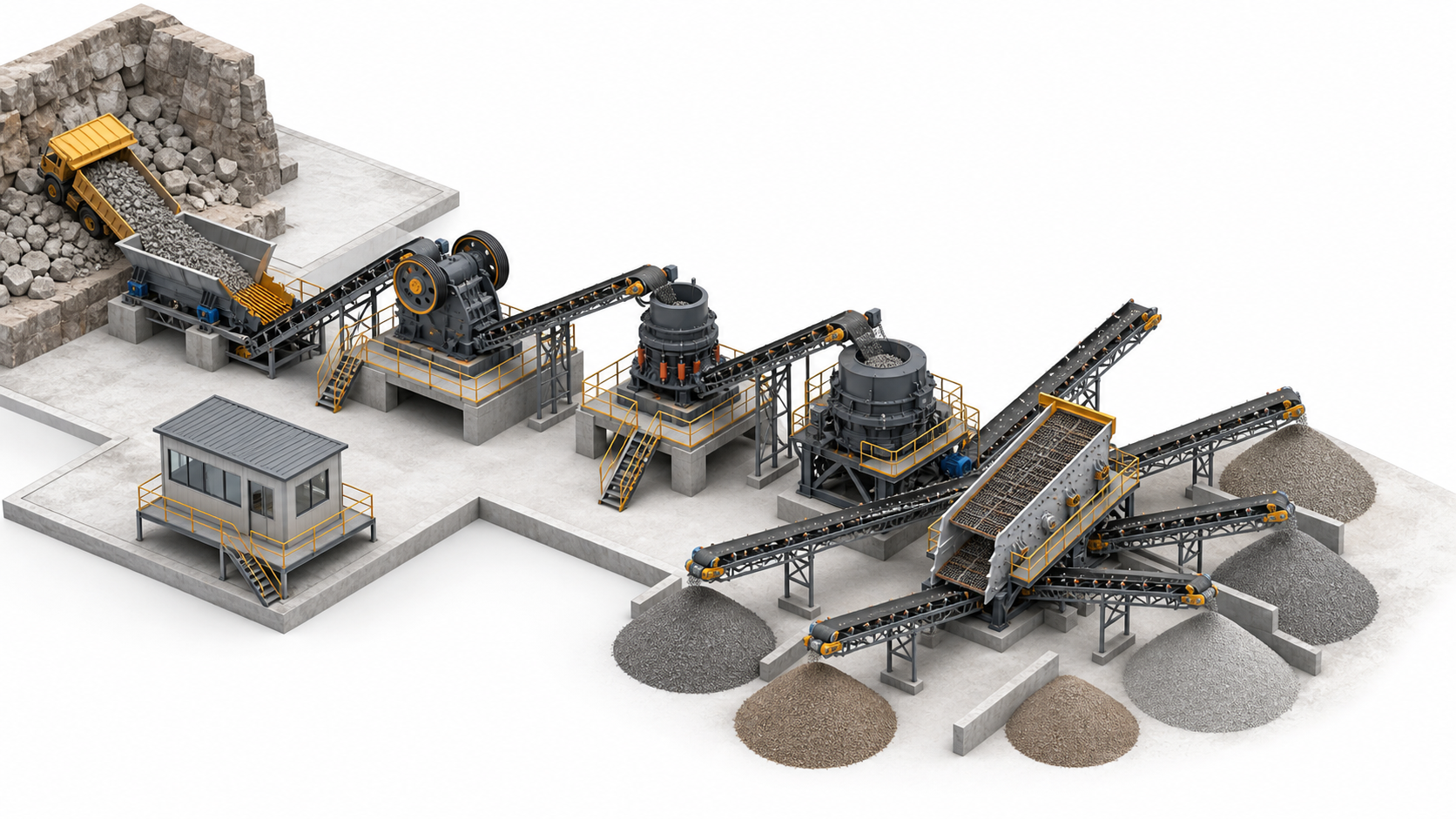
A good layout makes the plant easier to operate, maintain, and expand. Poor layout can increase conveyor cost, cause material blockage, make maintenance difficult, and limit future capacity upgrades.
For a typical hard rock aggregate plant, the process flow is:
- Raw stone enters the hopper and vibrating feeder.
- The jaw crusher performs primary crushing.
- Belt conveyor sends material to the cone crusher.
- The cone crusher performs secondary crushing.
- The vibrating screen separates different sizes.
- Oversized material returns to the crusher.
- Qualified aggregate moves to stockpiles.
- If sand making is required, suitable material enters the VSI crusher.
- Final sand may go through washing or air classification.
How to Choose the Right Crusher Configuration
There is no single crusher plant configuration that fits every material. The selection should start from raw material and product requirements.
Granite and Basalt
Granite and basalt are hard and abrasive. A common setup is vibrating feeder, jaw crusher, cone crusher, vibrating screen, and VSI crusher if manufactured sand or shaping is required.
Limestone
Limestone is usually softer than granite and basalt. A jaw crusher or impact crusher can be used for primary crushing, followed by impact crushing, cone crushing, and screening depending on final product requirements.
River Stone
River stone is often hard and rounded. It may require jaw crushing, cone crushing, and VSI shaping if the buyer needs manufactured sand.
Capacity Planning: 50 TPH to 500 TPH
Capacity is one of the most important design factors. A plant rated at 100 TPH and a plant rated at 300 TPH may use different crusher models, screen sizes, motor power, conveyor widths, and foundation designs.
| Capacity Range | Common Application | Typical Configuration |
|---|---|---|
| 50-100 TPH | Small quarry, road project, local aggregate supply | Feeder, jaw crusher, screen, optional cone or impact crusher |
| 100-200 TPH | Medium quarry and construction aggregate | Feeder, jaw crusher, cone or impact crusher, screen, conveyors |
| 200-300 TPH | Commercial quarry production | Feeder, jaw crusher, cone crusher, screen, return conveyor, dust control |
| 300-500 TPH | Large quarry or mining aggregate project | Heavy feeder, large jaw crusher, multiple cone crushers, large screens, automation |
When planning capacity, do not only look at the crusher nameplate. The real plant capacity also depends on feed grading, moisture, screen efficiency, conveyor capacity, and how much material returns in closed circuit.
Cost Factors in a Stone Crusher Plant
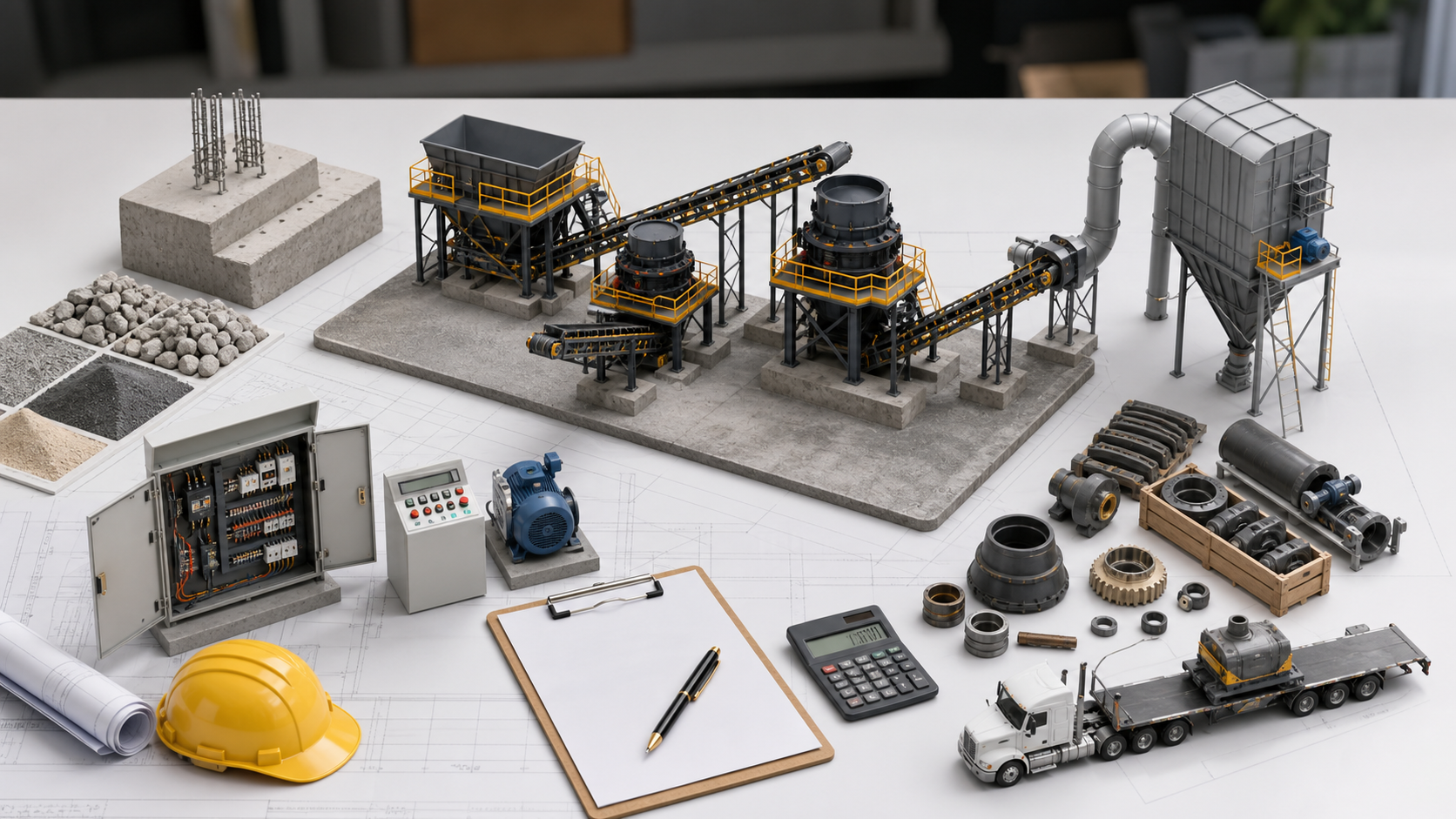
The cost of a stone crusher plant can vary widely because each project has different material, capacity, output size, automation, and site conditions.
Main cost factors include:
- Crusher models and quantity
- Vibrating screen size and number of decks
- Conveyor length, belt width, and transfer height
- Steel structure and platform design
- Foundation and civil work
- Electrical control system and automation
- Dust control, water spray, or dust collector
- Sand washer or air classifier if manufactured sand is required
- Wear parts and spare parts package
- Transport, container loading, installation, and commissioning
Mobile vs Stationary Stone Crusher Plant
A stationary plant is usually better for long-term quarry production. It has stronger foundations, stable operation, easier expansion, and better long-term cost per ton.
A mobile stone crusher plant is better when the project site changes frequently, installation time is limited, the project is temporary, or road construction and demolition recycling require site-to-site movement.
Common Mistakes When Setting Up a Crusher Plant
Many crusher plant problems are caused by incomplete planning before purchase.
- Choosing equipment before confirming raw material hardness
- Ignoring maximum feed size
- Buying a crusher that does not match the screen capacity
- Underestimating conveyor length and stockpile area
- Forgetting dust control and water drainage
- Selecting a plant based only on low initial price
- Not planning maintenance access around crushers and screens
- Asking for a quotation without final product sizes
What Information Should You Send Before Requesting a Quote?
To get an accurate crusher plant proposal, prepare raw material name, maximum feed size, required final product sizes, required capacity, manufactured sand requirement, mobile or stationary preference, site photos, local power conditions, environmental requirements, budget range, and delivery time.
Internal Reading
If the project needs manufactured sand or aggregate shaping, read VSI Crusher vs Cone Crusher: Which Is Better for Manufactured Sand? to understand when a VSI crusher should be added after cone crushing.
If you are new to VSI crushing, read What Is a VSI Crusher and How Does It Work? first.
Conclusion
A complete stone crusher plant should be designed as a full production system, not as a random list of machines. The feeder, crusher, screen, conveyors, dust control, electrical system, foundation, and stockpile layout must work together. For hard rock, a jaw crusher plus cone crusher is often the core configuration. For manufactured sand or better particle shape, a VSI crusher can be added in the final stage.
If you are planning a quarry, road aggregate, or manufactured sand project, send your raw material, feed size, final product sizes, required capacity, site photos, and budget range. MVSI can help design a suitable mobile or stationary stone crusher plant for your project.
FAQ
What equipment is needed for a complete stone crusher plant?
A complete stone crusher plant usually needs a vibrating feeder, jaw crusher, cone crusher or impact crusher, vibrating screen, belt conveyors, electrical control system, dust control equipment, and stockpile areas.
How much does a stone crusher plant cost?
The cost depends on capacity, raw material hardness, crusher models, screen size, conveyor length, automation, dust control, foundation, transport, and installation requirements. A complete quotation needs project details.
What is the best crusher for granite?
For granite, a jaw crusher plus cone crusher is commonly used because granite is hard and abrasive. If manufactured sand or better shape is required, a VSI crusher can be added after cone crushing.
Is a mobile crusher plant better than a stationary plant?
A mobile crusher plant is better for temporary projects and changing job sites. A stationary plant is usually better for long-term quarry production and lower cost per ton.
How many tons per hour can a stone crusher plant produce?
Stone crusher plants can be designed from about 50 TPH to 500 TPH or more. The real capacity depends on feed size, material hardness, crusher model, screen efficiency, and closed-circuit return load.
How do I design the layout of a crusher plant?
Start with the process flow, then plan feeder position, crusher foundations, screen position, conveyor routes, stockpile areas, truck access, maintenance space, dust control, and future expansion space.
What information should I provide before asking for a quotation?
Send raw material, maximum feed size, required output sizes, required capacity, mobile or stationary preference, site photos, local power conditions, dust control requirements, and budget range.
Can one crusher produce all aggregate sizes?
Usually no. A complete plant needs crushing and screening together. The crusher reduces stone size, while the vibrating screen separates finished products and returns oversized material for further crushing.