Table of Contents
- Maximizing Material Processing Efficiency: How Our Crusher Transforms Your Operations
- Precision Crushing for Diverse Materials: Adaptable Solutions for Your Specific Needs
- Engineered for Extreme Durability: Robust Construction That Withstands Demanding Environments
- Advanced Technology Integration: Smart Features That Enhance Performance and Control
- Technical Specifications: Detailed Breakdown of Power, Capacity, and Operational Parameters
- Power Systems & Drive Configuration
- Capacity (TPH) & Feed Material Matrix
- Operational Parameters & Tolerances
- Construction & Wear Part Standards
- Proven Reliability in Action: Customer Success Stories and Industry Certifications
- Frequently Asked Questions
- What is the optimal replacement cycle for crusher wear liners?
- How do I adapt a crusher for varying ore hardness (e.g., 5 vs. 7 on Mohs scale)?
- What are the best practices for controlling excessive vibration?
- What lubrication specifications are critical for gyratory crusher mainshaft bearings?
- How do I select the right jaw crusher for highly abrasive iron ore?
- Can a cone crusher’s hydraulic system adjust for product shape and tramp metal?
In the dynamic world of aggregate processing, mining, and recycling, the selection of the right crusher is not merely a purchase—it is a foundational strategic decision. The term “type of material crusher” refers to the critical engineering principle that machinery must be meticulously matched to the feedstock it will process. From the abrasive hardness of granite to the malleability of asphalt millings, each material presents unique challenges of abrasion, compression, and fracture. Understanding this core concept is essential for optimizing operational efficiency, controlling product gradation, and managing long-term wear costs. This exploration delves into how jaw, cone, impact, and roll crushers, among others, are each uniquely engineered to transform specific raw materials into valuable, specification-grade products, forming the very heart of modern material reduction workflows.
Maximizing Material Processing Efficiency: How Our Crusher Transforms Your Operations
Efficiency in material processing is not merely about throughput; it is a function of engineered synergy between crusher design, metallurgy, and application-specific kinematics. Our crushers are architected from the ground up to transform raw material handling from a cost center into a predictable, high-yield component of your operation.
The core of this transformation lies in the intersection of advanced material science and precision engineering. Critical wear components are not simply “hard steel”; they are proprietary alloys developed for specific comminution stresses.
- Optimized Chamber Geometry & Kinematics: Each crusher type features a chamber profile and eccentric motion engineered to maximize the inter-particle compression effect. This reduces direct wear on liners by ensuring material crushes material, directly translating to lower operating costs and more consistent product gradation.
- Application-Specific Metallurgy: We employ a graded approach to wear parts. Mantles, concaves, and jaw plates are cast from modified Mn-steel (11-14% Manganese) and TIC (Titanium Carbide) reinforced alloy steels for optimal balance between work-hardening capability and impact resistance. For highly abrasive feeds, we specify Martensitic Chrome Iron alloys, providing a Brinell hardness exceeding 650 HB for maximum service life in silica-rich or iron ore applications.
- Intelligent Load Management: Integrated hydraulic systems serve a dual purpose: providing overload protection and enabling real-time CSS (Closed Side Setting) adjustment under load. This allows operators to compensate for wear or alter product size without halting production, ensuring peak TPH (Tonnes Per Hour) is maintained throughout the liner lifecycle.
- Rigorous Standardization & Safety: Every crusher is designed, manufactured, and tested to ISO 21873-1 for mobile units and relevant CE machinery directives. Structural integrity is validated via FEA (Finite Element Analysis) against dynamic loads exceeding rated capacity by 150%, ensuring reliability in the most demanding mining and aggregate environments.
The operational transformation is quantified through measurable parameters. The following table illustrates the performance envelope of our primary crusher series across varied material classifications, demonstrating its core adaptability.
| Model Series | Recommended Feed Material (Unconfined Compressive Strength) | Max. Feed Size (mm) | Capacity Range (TPH) | Primary Wear Alloy Grade |
|---|---|---|---|---|
| PH-1 | Medium Abrasive (Granite, Basalt < 180 MPa) | 900 | 450 – 1200 | Mn-14 / TIC Reinforced |
| PH-2 | High Abrasive / High Silica (Quartzite, Iron Ore) | 850 | 400 – 1100 | Martensitic Chrome Iron |
| PH-3 | Mixed Demolition / Recycled Concrete | 800 | 350 – 950 | High-Toughness Alloy Steel |
Ultimately, maximizing efficiency means achieving the lowest cost per tonne over the crusher’s total lifespan. This is delivered through engineered durability that reduces downtime for liner changes, operational flexibility to adapt to changing feed or product requirements, and predictable performance backed by granular material testing and capacity modeling. The result is a processing stream defined by stability, controllability, and superior ROI.
Precision Crushing for Diverse Materials: Adaptable Solutions for Your Specific Needs
The core challenge in material reduction is not simply applying force, but applying the correct type and magnitude of force in a controlled manner. A true precision crusher is defined by its engineered adaptability to material properties—hardness, abrasiveness, moisture content, and feed size—ensuring optimal particle size distribution (PSD), throughput, and liner life. This is achieved through a synergy of metallurgical science, mechanical design, and configurable operational parameters.
Material-Specific Engineering & Metallurgy
Crusher performance and longevity are dictated by the wear materials in direct contact with the feed. Selection is a critical engineering decision based on material analysis.
- Manganese Steel (Mn14, Mn18, Mn22): The industry standard for jaw, cone, and gyratory crusher liners. Its unique work-hardening property increases surface hardness from ~220 HB to over 500 HB upon impact, creating a hard, wear-resistant surface over a tough, shock-absorbing core. Higher manganese grades (e.g., Mn22) are specified for highly abrasive feeds.
- Chromium White Iron (High-Cr Iron): Superior for extreme abrasion in vertical shaft impactors (VSI) and hammer crushers against siliceous materials. Its primary carbide network provides exceptional wear resistance but lower impact toughness than manganese steel.
- Alloy Steel Castings: Used for hammers, rotors, and impact plates where a balance of hardness and toughness is required. Alloying elements like chromium, molybdenum, and nickel are added to achieve specific yield and tensile strengths.
- Ceramic & Composite Liners: Deployed in specialized applications for highly corrosive or contaminationsensitive processes, offering extreme wear resistance in slurry or chemical environments.
Configurable Crushing Dynamics for Target PSD
Precision is achieved by allowing operational adjustment of the crushing chamber geometry and dynamics.
- Cone & Gyratory Crushers: Feature adjustable eccentric throw and speed to fine-tune the stroke and crushing frequency. The closed-side setting (CSS) is the primary control for product top size. Hydraulic systems allow for dynamic adjustment and automatic tramp iron release.
- Jaw Crushers: The nip angle and chamber geometry are fixed by design, but product size is controlled by the closed-side setting. Robust, simple machines for primary reduction of hard, abrasive ores.
- Impact Crushers (Horizontal & Vertical Shaft): Offer the greatest operational flexibility. Rotor speed, feed rate, and the configuration of impact aprons/anvils directly control the intensity of impact and resulting product shape. Ideal for producing cubical aggregates and crushing medium-hard, non-abrasive materials.
- Double-Roll & Hybrid Crushers: Utilize precisely adjustable gap settings and differential roll speeds to control sizing and introduce shear forces, effective for friable materials and achieving a tight size band with minimal fines.
Technical Specifications & Compliance
Equipment selection must be grounded in verifiable performance data and international standards to ensure safety, interoperability, and reliability.
| Parameter | Consideration | Industry Standard / Typical Range |
|---|---|---|
| Capacity | Must be based on actual material density (not bulk assumed). | Stated in Metric Tons per Hour (MTPH) for a defined material (e.g., 2.6 t/m³ granite) at a specific feed size and product CSS. |
| Feed Size & Hardness | Dictates crusher type and size. | Measured by Feed Top Size (F100) and Work Index (Wi) in kWh/t. Jaw/Gyratory for high Wi, >750 Mpa. Impact for Wi < 0.5. |
| Product PSD | The primary performance outcome. | Defined as % passing specified mesh sizes (e.g., 95% passing 40mm). |
| Drive & Power | Determines energy efficiency and torque capability. | Direct drive or V-belt; motor power in kW. ISO 8528 for genset compatibility if mobile. |
| Compliance | Non-negotiable for global operation and safety. | CE Marking (EMC, Machinery Directive), ISO 9001 (Quality Management), and relevant local mining safety standards. |
Operational Advantages of a Precision-Engineered System
- Maximized Uptime & Liner Life: Correct material selection and chamber design reduce unscheduled downtime for liner changes, directly lowering cost per ton.
- Predictable Output Quality: Consistent control over CSS, rotor speed, and feed rate yields a stable product PSD, critical for downstream processing efficiency.
- Adaptability to Feed Variation: Modern crushers with hydraulic adjustment and automation interfaces can compensate for changes in feed hardness or size in real-time.
- Optimized Energy Efficiency: Applying the most efficient reduction mechanism (compression, impact, shear) for the specific material minimizes specific energy consumption (kWh/t).
Engineered for Extreme Durability: Robust Construction That Withstands Demanding Environments
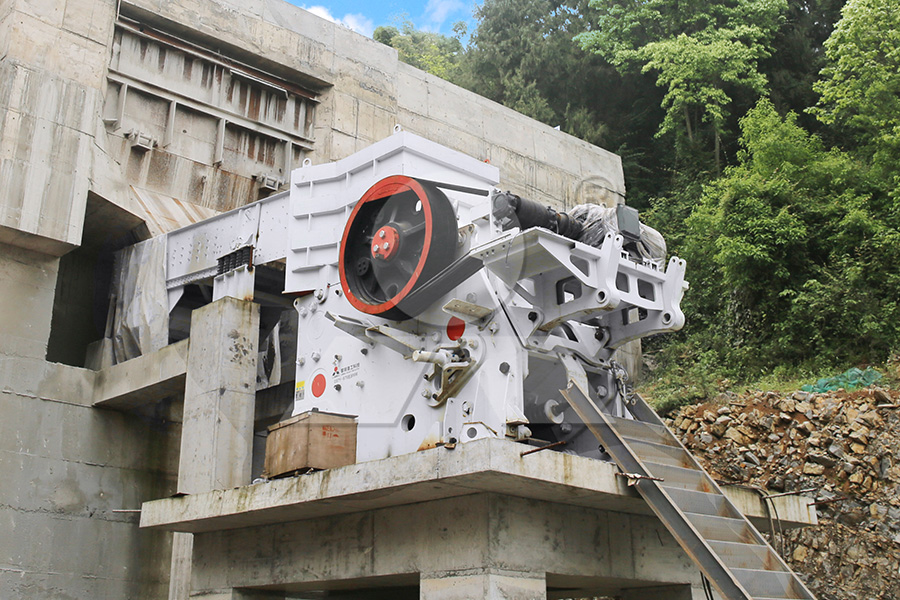
The core structural integrity of a material crusher is non-negotiable. Our crushers are engineered from the ground up to endure the relentless punishment of abrasive ores, high-impact loading, and continuous operation in remote, harsh environments. This durability is not a claim but a result of deliberate engineering choices in materials, design, and validation.
Material Science & Metallurgy
Critical wear components are forged from advanced, work-hardening alloys. Jaw plates, concaves, mantles, and blow bars are predominantly cast from Austenitic Manganese Steel (Mn14%, Mn18%, Mn22%) or proprietary High-Chrome White Iron (HCWI) alloys. The selection is application-driven:
- Mn-Steel: Excels under high-impact, strain-hardening with each impact to form an extremely tough wear-resistant surface while retaining a shock-absorbing core.
- HCWI Alloys: Provide superior abrasion resistance for highly abrasive but less impact-intensive applications, with chromium carbides embedded in a martensitic matrix.
Main frames and housings are constructed from high-tensile, low-alloy steel plate (Q345B, Hardox® equivalents), with critical stress points reinforced by heavy-duty ribbing and seamless welding. All major castings and forgings adhere to stringent internal specifications surpassing common ASTM or DIN standards.
Engineering & Construction Principles
- Monobloc Frame Design: For mid-to-large capacity crushers, the main frame is a single-piece, stress-relieved fabrication or casting, eliminating weak points associated with bolted sections and ensuring permanent alignment.
- Optimized Kinematics: Chamber designs and eccentric throw profiles are calculated to maximize reduction efficiency while minimizing wasteful friction and wear, directly extending liner life and reducing recirculating load.
- Precision Machining: All bearing seats, guide surfaces, and mating components are machined to tight tolerances (IT7-IT8) on CNC portals, guaranteeing perfect assembly, optimal load distribution, and extended bearing life.
- Protective Systems: Integrated, automated lubrication systems with flow and temperature monitoring safeguard high-value bearings. Non-destructive testing (NDT) like ultrasonic and magnetic particle inspection is standard on all critical welds and components.
Validation & Standards
Every design is validated via Finite Element Analysis (FEA) under dynamic loads exceeding rated capacity. Prototypes undergo field trials in benchmark mining operations. Final assembly and performance testing comply with international standards for safety and quality (ISO 9001, CE Marking), with capacity (TPH) and product curve certifications provided.
Functional Advantages of This Robust Construction:
- Maximized Uptime: Reduced frequency of liner changes and structural maintenance translates directly to higher availability and lower operating costs.
- Adaptability to Feed Variability: Robust mechanics handle fluctuations in ore hardness (e.g., from 200 MPa to 350 MPa compressive strength) and occasional uncrushable material without catastrophic failure.
- Total Cost of Ownership (TCO): The significant initial investment is amortized over a vastly extended service life, with predictable wear part costs and protected core assets.
- Operational Safety: Integrity of the structure under extreme load is fundamental to operator safety, preventing fatigue-related incidents.
Technical Parameters: Wear Part Material Selection Guide
| Application Profile | Recommended Primary Wear Material | Typical Expected Life (Base Reference)* | Key Property Utilized |
|---|---|---|---|
| High-Impact, Non-Abrasive (e.g., limestone, recycled concrete) | Tough Manganese Steel (Mn18%/22%) | 80,000 – 120,000 MT | Work-Hardening, Impact Absorption |
| Highly Abrasive, Moderate Impact (e.g., granite, basalt) | Composite Alloys / Martensitic Steel | 60,000 – 90,000 MT | Abrasion Resistance, Fracture Toughness |
| Extremely Abrasive, Low Impact (e.g., quartzite, iron ore) | High-Chrome White Iron (26-30% Cr) | 45,000 – 70,000 MT | Superior Abrasion Resistance (HV 700-900) |
| Severe Service (Unpredictable, mixed feed with tramp metal risk) | Hybrid Design (HCWI matrix with tough backing) | Variable, but highly reliable | Damage Tolerance, Crack Arrestment |
*Life is highly dependent on specific feed gradation, moisture, and operational TPH. Values are for comparison only.
Advanced Technology Integration: Smart Features That Enhance Performance and Control
Advanced Technology Integration in material crushers is no longer an optional upgrade but a fundamental engineering requirement for operational efficiency, predictive maintenance, and total cost of ownership management. Modern systems integrate sensor networks, data analytics, and automated control logic directly into the crusher’s mechanical design, transforming it from a passive component into an intelligent processing node.
Core Smart System Architecture:
A typical integrated system is built on a layered architecture:
- Sensor Layer: Embedded sensors monitor real-time parameters (vibration, temperature, pressure, power draw, chamber level).
- Control Layer: A dedicated Programmable Logic Controller (PLC) processes sensor data and executes control algorithms.
- Human-Machine Interface (HMI): Local touchscreen panels provide operational control and visualization.
- Connectivity Layer: Industrial-grade gateways enable secure data transmission to plant SCADA systems or cloud-based platforms for advanced analytics.
Functional Advantages of Integrated Smart Features:
- Automated Wear Compensation & CSS Control: Hydraulic adjustment systems, governed by the PLC, automatically maintain the Closed Side Setting (CSS) to compensate for liner wear. This ensures consistent product gradation and throughput (TPH) without manual intervention, directly optimizing yield.
- Real-Time Condition Monitoring: Vibration analysis transducers and temperature sensors on bearings and the main shaft detect anomalies indicative of imbalance, misalignment, or lubrication failure. This enables condition-based maintenance, preventing catastrophic failures and unplanned downtime.
- Load & Power Management: Intelligent drives monitor motor amperage and power draw. The system can automatically regulate feed rates via upstream equipment to prevent choking in cone crushers or overload in jaw crushers, protecting the mechanical components and ensuring operation within design limits.
- Liner Wear Tracking: Utilizing algorithmic models based on operating hours, feed material hardness (e.g., Bond Work Index), and crushing pressure, the system predicts remaining liner life for Mn-steel (e.g., ASTM A128 Grade B3/B4) or composite alloy mantles/concaves/jaws. This allows for precise planning of liner change-outs during scheduled maintenance windows.
- Remote Diagnostics & Telematics: Secure remote access allows OEM technicians to perform diagnostics, adjust parameters, and update software. This minimizes on-site service time and ensures crushers operate with the latest performance firmware.
Technical Parameters Enhanced by Smart Controls:
The following table illustrates key performance and control parameters that are actively monitored and managed by advanced systems:
| Parameter | Monitoring Method | Control Action | Impact on Performance & Standards |
|---|---|---|---|
| Closed Side Setting (CSS) | Laser measurement or hydraulic position sensors | Automatic adjustment via hydraulic rams | Maintains product specification (ISO 21873-1), ensures consistent TPH. |
| Main Shaft Speed | Variable Frequency Drive (VFD) feedback | VFD regulation for cone/impact crushers | Optimizes particle shape and capacity for varying ore hardness. |
| Bearing Temperature | RTD or thermocouple sensors | Alarm triggers and automatic shutdown sequences | Prevents seizure; critical for compliance with CE safety directives. |
| Crushing Chamber Level | Ultrasonic or radar sensors | Interface with feeder PLC to regulate feed rate | Prevents overload (choking) or underload (poor utilization), maximizes efficiency. |
| System Pressure (Hydraulic) | Pressure transducers | Regulates clamping force (jaw) or clearing stroke (cone) | Protects against tramp iron; ensures stability per design engineering standards. |
Material Science & Durability Integration: Smart systems are designed to work in synergy with advanced materials. Data on feed material abrasiveness (e.g., silica content) and impact energy informs not only operational settings but also the specification of wear parts. For instance, data logs can justify the selection of a premium martensitic alloy steel over a standard Mn-steel for a specific, highly abrasive application, validating the ROI on material grade.
The convergence of robust mechanical design (certified to ISO 21873 for mobile crushers or relevant ASTM standards), advanced metallurgy, and deterministic control logic creates a machine whose performance, availability, and longevity are quantifiably superior. This integration provides plant managers with unprecedented control and foresight, transforming crushing from a brute-force operation into a precise, data-driven process.
Technical Specifications: Detailed Breakdown of Power, Capacity, and Operational Parameters
Power Systems & Drive Configuration
Primary crusher drives are engineered for high-torque, low-speed operation to manage initial breakage of run-of-mine (ROM) material. Motors are typically high-efficiency IE3 or IE4 class, with power ratings scaling directly with feed size and designed throughput.
- Jaw & Gyratory Crushers: Utilize rugged, high-slip electric motors (150 kW to over 1 MW) coupled with V-belt or direct drive systems. Integral hydraulic systems for adjustment and overload protection (e.g., tramp release) are standard.
- Cone & Impact Crushers: Often employ variable frequency drives (VFDs) for precise control of rotor or mantle speed, optimizing product gradation and power consumption (typically 75 kW to 600 kW). This allows real-time adaptation to feed material fluctuations.
Key Functional Advantage: VFD integration enables soft-start capabilities, reducing mechanical stress and peak electrical demand, while allowing the crusher’s operational parameters to be tuned for specific ore hardness (e.g., adjusting rpm for granite vs. limestone).
Capacity (TPH) & Feed Material Matrix
Throughput (Tonnes Per Hour) is not a standalone figure but a function of crusher geometry, closed-side setting (CSS), stroke, and material characteristics. The critical material properties are:
- Bulk Density: Ranges from 1.6 t/m³ (coal) to over 2.8 t/m³ (dense metallic ores).
- Abrasion Index (Ai) & Bond Work Index (Wi): Quantify wear potential and breakage energy required.
- Moisture & Clay Content: Dictate pre-screening and feed system design to prevent clogging.
| Crusher Type | Typical Max Feed Size (mm) | Capacity Range (TPH)* | Optimal Material Hardness (Mohs/Compressive Strength) | Primary Wear Component Material |
|---|---|---|---|---|
| Jaw Crusher | 1200 – 1500 | 200 – 1,600 | Medium to Very Hard (< 320 MPa) | Fixed & moving jaws: Manganese steel (Mn14%, Mn18%, Mn22%) |
| Gyratory Crusher | 1400 – 1800 | 800 – 5,500+ | Hard to Very Hard (> 250 MPa) | Concaves & mantle: Austenitic Mn-steel (Mn12-18%) or TIC-wire reinforced alloy |
| Cone Crusher (HPGR) | 250 – 350 | 100 – 2,000 | Medium to Extremely Hard (< 400 MPa) | Mantle & bowl liner: High-grade Mn-steel or Martensitic white iron (e.g., ASTM A532) |
| Impact Crusher (HSI) | 800 – 1200 | 100 – 800 | Soft to Medium Hard (< 250 MPa) | Blow bars & impact plates: Chrome-martensitic steel (27% Cr), ceramic composites |
| Double Roll Crusher | 200 – 800 | 50 – 600 | Soft to Medium Hard, Friable | Roll shells: Manganese steel or automatic weld-overlay carbide |
*Capacity is indicative for material with bulk density ~1.6 t/m³. Actual TPH scales linearly with actual bulk density.
Operational Parameters & Tolerances
Precise control of these parameters determines final product shape, size distribution (gradation), and liner wear life.
- Closed Side Setting (CSS): The minimum gap between crushing members. Tighter CSS increases fineness but reduces throughput and increases power draw. Modern crushers feature hydraulic CSS adjustment for remote, real-time control.
- Eccentric Throw & Speed: In cone and gyratory crushers, these define the crushing stroke and cycle frequency. Optimized combinations are selected for desired product shape (cubicity) and capacity.
- Chamber Design: Profile of the crushing zone (e.g., standard, coarse, fine). Correct chamber selection for the feed and product target is critical for efficiency and wear management.
- System Pressure (Hydraulic): Monitors crushing force. A sudden pressure spike activates the overload protection system, preventing catastrophic failure from uncrushable material.
Key Functional Advantage: Advanced automation systems (e.g., ASRi for cone crushers) continuously monitor power draw, pressure, and CSS, making autonomous adjustments to maintain optimal loading and product specification, safeguarding the integrity of alloy steel components.
Construction & Wear Part Standards
- Frame & Structure: Fabricated from high-tensile, low-alloy steel plate (e.g., ASTM A572 Gr 50). Critical weld procedures follow ISO 3834 or EN 1090 standards. Non-destructive testing (NDT) is mandatory on stress zones.
- Wear Parts: Material selection is science-driven. For abrasive, high-impact applications, modified Hadfield manganese steel (11-14% Mn, 1-1.4% C) work-hardens to ~500 BHN. For highly abrasive, lower-impact conditions, martensitic chromium iron (15-27% Cr) with carbide networks provides superior life.
- Bearings & Seals: Utilize heavy-duty spherical roller bearings (ISO 355-defined dimensions) with labyrinth and grease purge seals to exclude contaminants. Bearing temperatures are continuously monitored.
- Certification: Machinery designed to relevant ISO standards (e.g., ISO 21873 for mobile crushers) and carries CE marking for the EU market, with optional IECEx for hazardous mining environments.
Proven Reliability in Action: Customer Success Stories and Industry Certifications
Our crushers are engineered for material-specific degradation, not generic “hardness.” Success is measured by sustained throughput and liner life in defined, punishing applications.
Certified Engineering Standards
All equipment meets or exceeds ISO 21873-1:2015 (Building construction machinery) for structural integrity and ISO 9001 for quality management. CE marking confirms compliance with EU machinery safety directives. Crucially, our foundry controls the metallurgy of wear parts to proprietary specifications beyond generic ASTM standards.
Documented Performance in Critical Applications
-
High-Abrasion Iron Ore Processing (Pilbara Region, Australia):
- Challenge: Consistently processing hematite with abrasive silica content exceeding 18%, requiring sub-30mm product for pelletizing.
- Solution: Primary jaw crusher with a curved Mn-steel jaw plate profile (Grade 3, modified with 1.5% Cr for abrasion resistance) and an optimized nip angle.
- Result: Achieved a sustained 1,450 TPH with jaw liner life extended by 40% compared to the site’s previous OEM, reducing change-out downtime.
-
Recycling Reinforced Concrete (Demolition, Germany):
- Challenge: Processing mixed C&D waste with high-tensile steel rebar, causing shock loading and potential cavity-ringing in cone crushers.
- Solution: Heavy-duty impact crusher with a monolithic, stress-relieved rotor and hydraulic adjustment of primary and secondary aprons for real-time product sizing.
- Result: System handles uncrushable steel via automatic apron retraction, maintaining a consistent 350 TPH of 0-40mm aggregate with <1% oversize. Certified for noise and dust emissions per German TA Lärm and EN 14986.
-
Abrasive & Plastic Clay in Cement Quarry (Vietnam):
- Challenge: High-moisture, plastic clay layers causing frequent choking in standard gyratory and jaw crushers during monsoon season.
- Solution: Double-roll crusher with self-cleaning, carbide-tipped segments and a hydraulic pressure relief system.
- Result: Eliminated bridging and choking, processing material with up to 28% moisture at 600 TPH. The toothed-segment design provided necessary shear force for clay breakup.
Functional Advantages Validated by Field Data
- Material-Adaptive Wear Parts: Liners are cast from different alloy grades (e.g., Austenitic Mn-steel for impact, Martensitic white iron for pure abrasion) based on the specific wear mechanism identified in the feed analysis.
- Capacity Under Load: Rated TPH capacities are guaranteed for defined material characteristics (Bond Work Index, Abrasion Index, moisture content), not ideal laboratory conditions.
- Predictable Maintenance Intervals: Liner wear patterns are documented, enabling predictive maintenance scheduling tied to tonnage processed, not just runtime.
Frequently Asked Questions
What is the optimal replacement cycle for crusher wear liners?
Monitor liner thickness; replacement is critical at 60-70% wear. For high-abrasion ores, use work-hardened Hadfield manganese steel (Mn14 or Mn18). Cycle depends on feed material’s abrasion index (Ai) and silica content. Implement predictive maintenance via laser scanning to schedule downtime, maximizing liner life without risking catastrophic failure.
How do I adapt a crusher for varying ore hardness (e.g., 5 vs. 7 on Mohs scale)?
Adjust the closed-side setting (CSS) and crusher speed. For harder ore (Mohs 7), reduce CSS and potentially lower RPM to manage stress. Ensure the mainframe and bearings are rated for higher forces. Use alloy steel jaws/cones with specific heat treatment (e.g., quenching and tempering) for hardness/toughness balance to prevent premature fracture.
What are the best practices for controlling excessive vibration?
First, check for unbalanced rotor or worn bearings (use SKF or Timken premium brands). Ensure proper foundation bolt torque and structural integrity. Imbalance often stems from uneven wear on blow bars or hammers; rotate/replace symmetrically. For persistent issues, conduct a dynamic vibration analysis to identify resonant frequencies.
What lubrication specifications are critical for gyratory crusher mainshaft bearings?
Use ISO VG 320 extreme pressure (EP) gear oil with anti-wear additives. Maintain oil cleanliness to ISO 4406 18/16/13 or better with offline filtration. Monitor oil temperature (65-80°C ideal) and pressure. Annual oil analysis is mandatory to detect water ingress or wear metals, indicating bearing (e.g., spherical roller type) condition.
How do I select the right jaw crusher for highly abrasive iron ore?
Prioritize robust kinematics and material. Choose a crusher with a steep nip angle and large feed opening. Specify jaws made of modified manganese steel (like Terex’s MX alloy) for enhanced work-hardening. Ensure the pitman and toggle are oversized for the expected shock loads. Pair with a pre-scalper to remove fines.
Can a cone crusher’s hydraulic system adjust for product shape and tramp metal?
Yes. Modern systems allow real-time adjustment of the CSS via hydraulic rams (typically 8-15 MPa operating pressure). For tramp metal, the hydraulic release system instantly opens the setting. For shape control, utilize the hydroset system to dynamically adjust during operation, optimizing for cubical product in tertiary crushing stages.