Table of Contents
- Maximise Quarry Output: High-Capacity Crushing Solutions for Australian Mining
- Adaptable to Harsh Terrains: Rugged Design Built for Australia’s Diverse Conditions
- Energy-Efficient Operations: Reduce Costs with Advanced Crushing Technology
- Comprehensive Technical Specifications: Engineered for Precision and Durability
- Proven Reliability: Trusted by Australian Industries for Consistent Performance
- Frequently Asked Questions
- What is the typical wear life of jaw crusher liners in Australian granite, and how can it be maximised?
- How do I configure a cone crusher for varying ore hardness, from soft sandstone to hard basalt?
- What are the critical vibration control points in a stationary crusher plant foundation?
- Which lubrication system is critical for gyratory crusher bearings in high-dust environments?
- How often should impact crusher rotors and blow bars be inspected in high-abrasion applications?
- What is the most common cause of premature failure in cone crusher bushings, and how is it prevented?
In the dynamic landscape of Australia’s construction and mining sectors, the demand for robust and efficient aggregate production is paramount. For businesses seeking to capitalize on infrastructure projects, quarry operations, or road development, investing in a stone crusher plant represents a strategic move toward greater autonomy and profitability. The Australian market offers a diverse range of mobile and stationary crushing and screening solutions, engineered to tackle the continent’s unique geological materials and vast project sites. Selecting the right plant for sale is not merely a purchase; it is a critical investment in operational efficiency, enabling you to directly control material specification, reduce costs, and meet stringent project timelines. This exploration delves into the key considerations for acquiring a plant that aligns with both your production goals and the specific challenges of the Australian environment.
Maximise Quarry Output: High-Capacity Crushing Solutions for Australian Mining
Australian mining operations demand crushing solutions engineered for extreme duty cycles, high throughput, and the specific geologies of local iron ore, gold, and hard rock quarries. Maximising output is a function of selecting plant components with superior material integrity, precise engineering tolerances, and configurations matched to your feed material’s abrasion index and compressive strength.
Core Technical Specifications for High-Output Plants:
- Primary Jaw Crushers: Fabricated from high-grade, quenched & tempered manganese steel (Mn14Cr2, Mn18Cr2) for wear parts. Feature deep crushing chambers and aggressive nip angles to handle slabby feed from Australian basalt, granite, and iron ore.
- Secondary & Tertiary Cone Crushers: Equipped with heavy-duty hydraulic systems for automatic setting adjustment and tramp release. Liners utilise advanced alloys for sustained performance in abrasive silicaceous ores. Multi-cylinder hydraulic designs provide superior crushing force and finer product shaping.
- High-Capacity Impact Crushers: Rotors are of solid steel or welded plate construction, dynamically balanced to ISO 1940-1 standards. Incorporate primary and secondary aprons adjustable via hydraulic rams for precise product gradation control in limestone and softer rock applications.
Functional Advantages of a Properly Specified Plant:
- Material & Wear Science: Critical wear components (mantles, concaves, jaw dies, blow bars) are cast from proprietary alloys with optimal hardness-toughness balance to resist gouging and fatigue, directly reducing cost per tonne.
- Capacity & Throughput: Plants are configured for 300 to over 1,000 TPH (tonnes per hour) systems, with vibrating feeders and screens sized to eliminate bottlenecks. Grizzly feeders with adjustable sections pre-scalp deleterious material.
- Operational Reliability: Centralised automated lubrication systems, vibration sensors, and temperature monitors on crusher bearings are standard. PLC-controlled sequencing ensures smooth start-up and shutdown.
- Adaptability to Site Conditions: Modular designs or track-mounted configurations (if applicable) allow for relocation within a site. Dust suppression systems are integrated to comply with state-specific environmental regulations.
Technical Parameters for Primary Stationary Jaw Crusher Selection:
| Model Reference | Feed Opening (mm) | Max Feed Size (mm) | Capacity Range (TPH) | Drive Power (kW) | Approx. Total Weight (tonnes) |
|---|---|---|---|---|---|
| JC120 | 1200 x 830 | 700 | 240 – 450 | 110 – 132 | 28 |
| JC160 | 1600 x 1200 | 1000 | 500 – 800 | 160 – 200 | 62 |
| JC200 | 2000 x 1500 | 1300 | 800 – 1200 | 250 – 315 | 105 |
Note: Capacities are indicative for material with a bulk density of 1.6t/m³ and compressive strength <200MPa. Final sizing requires detailed analysis of feed gradation and desired product specifications.
Ultimately, maximising quarry output is not merely about the largest machine, but the optimal system. This requires crushers built to international standards (ISO 9001, CE marked) and configured with precision-matched screening and conveying circuits to ensure sustained, high-volume production under Australian mining conditions.
Adaptable to Harsh Terrains: Rugged Design Built for Australia’s Diverse Conditions
Australian mining and quarrying operations demand equipment that can withstand extreme environmental and material stresses. Our stone crusher plants are engineered from the ground up for this purpose, utilizing a philosophy of over-engineering critical components to ensure uptime in remote and punishing locations.
Core Material and Construction Philosophy
The structural integrity begins with the use of high-grade, abrasion-resistant steels. Key wear parts like jaw plates, cone mantles, and blow bars are cast from premium Manganese Steel (Mn14, Mn18, Mn22) and Chrome-Alloy Irons, selected based on the specific abrasiveness and impact of the feed material. These alloys work-harden under impact, increasing surface hardness while retaining a tough, shock-absorbing core. Main frames and chassis are constructed from high-tensile, welded steel plate (often Q345B or equivalent), with reinforced stress points and ribbed designs to resist fatigue from constant vibration and dynamic loading.
Engineering for Environmental Adversity
Plants are configured to operate reliably across Australia’s climatic extremes, from the dust of the Pilbara to the humidity of Queensland.
- Dust Suppression & Ingress Protection: Integrated, high-capacity dust suppression systems with strategically placed nozzles keep particulate emissions controlled. Critical electrical components and bearings are housed in IP65/66-rated enclosures to seal out dust and moisture.
- Thermal Management: Hydraulic and lubrication systems are fitted with oversized coolers and reservoirs to maintain optimal viscosity and prevent overheating during sustained high-ambient-temperature operation. Conversely, cold-climate packages include immersion heaters for hydraulic oil and engine block heaters.
- Corrosion Resistance: Beyond standard paint, critical structural components receive multiple coatings, including zinc-rich primers and polyurethane topcoats. Stainless steel fasteners and corrosion-resistant alloys are specified for coastal or high-salinity environments.
Mobility and Terrain Adaptability
The plants are built not just to survive, but to be efficiently positioned and operated on challenging sites.
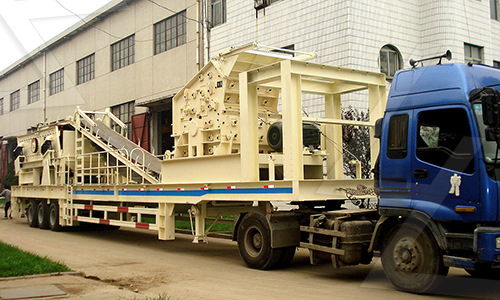
- Heavy-Duty Chassis & Undercarriage: Featuring wide-track, multi-axle configurations with high-clearance, heavy-duty bogies. This ensures stability on uneven ground and reduces ground pressure for operation on softer surfaces.
- Hydraulic Stability: Outriggers and hydraulic jacks provide a solid, level operating base quickly, minimizing setup time on uneven pads.
- Modular, Robust Conveying: Radial stackers and transfer conveyors utilize deep-trough idlers with sealed, lifetime-lubricated bearings. Abrasion-resistant (AR) rubber belting with high tensile strength is standard to handle sharp, heavy material over long distances.
Technical Compliance and Performance Assurance
All designs adhere to stringent international standards for safety and quality, including ISO 9001 for quality management and CE marking where applicable, indicating conformity with health, safety, and environmental protection standards for products sold within the EEA. Crucially, components are designed to meet or exceed Australian safety standards.
| Feature | Specification / Benefit | Direct Impact on Harsh Terrain Operation |
|---|---|---|
| Frame Construction | Reinforced, ribbed high-tensile steel | Resists structural fatigue from constant vibration on uneven ground. |
| Wear Part Material | Mn18Cr2/Mn22Cr2 Alloy Steel | Optimal balance of hardness & toughness for abrasive Australian iron ore, basalt, and granite. |
| Bearing & Drive Guarding | IP66 Sealed, Over-sized | Prevents dust and water ingress, extending component life in arid or wet conditions. |
| Dust Suppression | High-pressure, low-volume spray system | Maintains regulatory compliance and protects moving parts in dusty environments. |
| Ground Clearance | ≥ 400mm standard | Enables traversal over rough terrain and rocky outcrops without damage. |
| Ore Hardness Adaptability | Configurable crusher cavities & speeds | Allows optimization for crushing high-SiO2 materials or softer limestone without plant modification. |
This engineered resilience translates directly to operational reliability and lower cost-per-tonne in the field, ensuring the plant maintains its rated TPH capacity under real-world Australian conditions, not just in controlled environments.
Energy-Efficient Operations: Reduce Costs with Advanced Crushing Technology
Energy consumption is the single largest operational cost in a fixed or mobile crushing plant. Advanced technology directly targets this by optimizing the comminution process—the energy-intensive work of reducing rock—through superior mechanical design, material science, and intelligent control systems.
Core Technological Drivers for Efficiency
- High-Efficiency Crusher Design: Modern jaw, cone, and impact crushers feature optimized kinematics and chamber geometries. This ensures a more consistent and inter-particle crushing action, maximizing size reduction per kWh. For example, steep cavity angles and optimized eccentric throws in cone crushers promote a higher percentage of first-pass crushing, minimizing recirculation load and wasted energy.
- Premium Material Science in Wear Parts: The use of advanced alloy steels (e.g., ISO 21873-standard martensitic manganese steel with micro-alloying elements like Chromium and Molybdenum) is non-negotiable. These materials offer superior work-hardening properties and abrasion resistance, maintaining optimal chamber geometry and crushing kinematics for far longer. This prevents the gradual efficiency drop and power creep associated with worn liners.
- Direct Drive & Variable Frequency Drive (VFD) Systems: Replacing traditional V-belt drives with direct crusher-motor couplings eliminates transmission losses. Coupled with VFDs, this allows the crusher motor to draw only the required power for the instantaneous feed conditions and hardness of the ore (e.g., from 6 to 8 on the Mohs scale). It provides soft-start capability, reducing inrush current and mechanical stress.
- Intelligent Process Control & Automation: Integrated PLC/SCADA systems with continuous feed-back from load, pressure, and power sensors dynamically adjust feeder rates, crusher settings, and conveyor speeds. This maintains the plant at its peak operational tonnage (TPH) while preventing choke-feeding or running empty—both states that waste significant energy.
Operational Impact & Specification Considerations
When evaluating a plant for energy-efficient operations, key specifications and features must be scrutinized beyond mere headline power ratings.
| Parameter | Technical Consideration | Direct Impact on Efficiency |
|---|---|---|
| Specific Power Consumption | kWh per tonne of processed material (kWh/t). A benchmark for overall plant design. | The definitive metric. Modern plants target 0.8–1.2 kWh/t for hard granite, compared to 1.5–2.0+ in older designs. |
| Crusher Drive Motor & Control | Type (e.g., squirrel cage induction), protection rating (IP65+), and inclusion of a dedicated VFD. | VFD control can reduce crusher motor energy use by 15-30% under variable load compared to fixed-speed operation. |
| Wear Part Metallurgy | Grade specification (e.g., 18% Mn, 2% Cr alloy) and certified hardness/impact toughness values. | Premium liners can operate 30-50% longer, maintaining designed throughput and product shape with consistent power draw. |
| Plant Control System | Level of automation (e.g., automatic setting adjustment, load-based feed regulation). | Prevents over-processing, minimizes idle running, and ensures all units operate in harmony, optimizing total system power. |
| Auxiliary System Design | Efficiency of conveyors (ESCO-rated idlers), dust suppression fans (variable flow), and lighting (LED). | Auxiliaries can account for 20-30% of site power; high-efficiency components compound the primary crushing savings. |
Ultimately, an energy-efficient plant is a lower-cost-per-tonne asset. The capital investment in advanced technology is justified by a rapid ROI through reduced power bills, lower thermal stress on mechanical components leading to reduced maintenance downtime, and the capacity to process more material within the same grid connection or generator capacity constraints common in remote Australian mining and quarrying operations.
Comprehensive Technical Specifications: Engineered for Precision and Durability
Core Crusher Specifications & Material Integrity
Primary crushing modules are built around robust jaw or gyratory crushers featuring high-wear components manufactured from premium 18% Manganese Steel (Mn18Cr2) or T500 Alloy Steel. These alloys undergo specialized heat treatment to achieve a minimum surface hardness of 450-500 HB, creating a work-hardening effect that extends service life under high-impact loading from Australian iron ore, granite, and basalt.
Secondary and tertiary reduction is achieved via cone crushers with patented multi-layer crushing chambers. Chambers are precision-cast from high-grade alloys and designed for specific feed gradations and product shape requirements. Hydraulic adjustment and clearing systems provide overload protection and rapid setting changes, typically within minutes, to adapt to varying ore characteristics.
- Advanced Chamber Geometry: Computer-optimized profiles ensure optimal inter-particle crushing, maximizing yield of cubical product and minimizing long, flaky aggregates critical for asphalt and road base specifications.
- Intelligent Drive & Lubrication Systems: Crushers are equipped with integrated, sensor-monitored lubrication units with fail-safe cooling and filtration, ensuring bearing temperatures remain within ISO 281 L10 life calculation parameters.
- Precision Machined Main Frames: Fabricated from Q345B steel plate with normalized stress-relieving, main frames feature machined mounting surfaces for bearing housings and drive components, guaranteeing permanent alignment and eliminating vibrational fatigue points.
Screening & Classification Precision
Heavy-duty vibrating screens employ high-tensile, oil-tempered spring steel or polyurethane modular screening media. Decks are configured for efficiency, with top decks often utilizing wire mesh for scalping and lower decks employing polyurethane panels with tailored aperture geometry for precise separation in high-abrasion applications.
- Dynamic Load Management: Screen boxes are designed with finite element analysis (FEA) to withstand dynamic forces, with vibration mechanisms mounted on SKF or FAG-class spherical roller bearings for continuous high-G-force operation.
- Modular Media System: Panels are side-tensioned and interchangeable, allowing for rapid on-site aperture changes to meet different product specifications without replacing entire decks.
Conveying & Structural Engineering
Plant infrastructure is based on heavy-duty channel and I-beam construction, with walkways, platforms, and access ladders compliant with AS 1657. Conveyor systems feature:
- Idlers & Pulleys: CEMA C/D rated idlers with triple-labyrinth seals and Grade 5 precision grinding pulleys, dynamically balanced to ISO 1940 G6.3 standard.
- Belting: Minimum EP 500/3 fabric or ST 2000 steel cord belting with abrasion-resistant (AR) covers, spliced using vulcanization for endless operation.
Integrated Control & Performance Metrics
The plant is governed by a centralized PLC-based control system with SCADA interface, providing real-time monitoring of:
- Crusher power draw (kW) and hydraulic pressure
- Bearing temperature and vibration levels
- Conveyor belt alignment and sequence interlocking
- Production tonnage (TPH) and main motor amperage
Key Plant Configuration Table
| Module | Primary Crusher (Typical) | Secondary/Tertiary Crusher (Typical) | Screening Unit (Typical) | Max Feed Size | Capacity Range (TPH)* | Installed Power (kW) |
|---|---|---|---|---|---|---|
| Hard Rock (Granite/Basalt) | Jaw Crusher (PEV/HD) | Multi-Cylinder Hydraulic Cone | 3-Deck Horizontal Screen | 900mm | 150 – 600 | 350 – 850 |
| Abrasive Ore (Iron Ore) | Gyratory Crusher | High-Pressure Grinding Rolls (HPGR) or Cone | 2-Deck Banana Screen | 1200mm | 500 – 1200+ | 700 – 1500+ |
| Recycled Concrete/Asphalt | Impact Crusher (APPH) | Secondary Impact Crusher | 2-Deck Inclined Screen | 700mm | 200 – 400 | 250 – 550 |
*Capacity is dependent on feed material density, hardness (Wi), and required product sizing. All specifications comply with relevant CE and ISO 9001:2015 quality management standards for design and fabrication.
Proven Reliability: Trusted by Australian Industries for Consistent Performance
The cornerstone of operational viability in Australia’s diverse and demanding conditions is not marketing promise, but engineered, demonstrable reliability. Our plants are specified for their foundational robustness, where component integrity dictates system-wide uptime. This is achieved through a material-first philosophy and adherence to international engineering protocols.
Core Engineering for Uncompromising Durability:
- Critical Wear Part Composition: Jaws, concaves, and mantles are cast from proprietary high-grade manganese steel (Mn14, Mn18, Mn22) with controlled chromium and molybdenum additions. This ensures optimal work-hardening under impact, creating a surface that becomes harder than the ore it processes, thereby extending service life in abrasive Australian iron ore, gold, and basalt applications.
- Structural Integrity: Primary frames and crusher bodies are fabricated from high-tensile, low-alloy steel plate, with critical stress points reinforced. Welding procedures and post-weld heat treatment follow strict protocols to eliminate internal stresses and prevent fatigue cracking under cyclical loading.
- Bearing & Drive System Specification: Oversized, internationally branded spherical roller bearings are selected for high radial and axial load capacity. Drive systems are engineered with calculated service factors to handle peak loads without failure, supported by precision-machined shafts to ensure perfect alignment.
Certified Design & Manufacturing Standards:
All core crushing and screening modules are designed and manufactured in compliance with ISO 9001 for quality management systems. Key structural and pressure-bearing components carry CE marking, indicating conformity with EU health, safety, and environmental protection standards, which often exceed local requirements. This provides a verifiable framework for safety and quality assurance.
Mining-Specific Performance Parameters:
Reliability is quantified through consistent performance against key operational metrics. Plants are configured not just for a target Tonnes Per Hour (TPH), but for sustained TPH across the hardness spectrum of Australian feed material.
| Performance Parameter | Engineering Consideration | Operational Outcome |
|---|---|---|
| Adaptive Crushing Chambers | Computer-optimized cavity profiles for jaw, cone, and impact crushers. | Maintains optimal reduction ratio and product shape across varying feed sizes and hardness (e.g., from 200 MPa limestone to 350+ MPa granite). |
| System Capacities (TPH) | Holistic plant design from primary feed to final product stacking, with calculated bottlenecks removed. | Guaranteed throughput from 150 TPH to 1000+ TPH configurations without reliability decay at design limits. |
| Tramp Iron & Overload Protection | Hydraulic adjustment and clearing systems on cone crushers; releasable toggle systems on jaw crushers. | Prevents catastrophic downtime by automatically passing uncrushable material and recovering to operational setting. |
| Dust Suppression & Containment | Integrated spray systems at transfer points and high-wear dust seals on crushers and screens. | Ensures compliance with site environmental management plans and protects vital machinery from abrasive particulate ingress. |
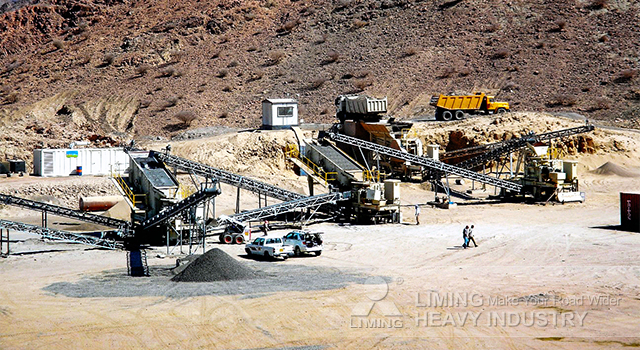
This engineering rigor results in a plant where mean time between failures (MTBF) is maximized, and total cost of ownership is predictable. The proof is in the deployment: these configurations operate continuously in Pilbara iron ore regions, Queensland coal basins, and hard rock quarries along the eastern seaboard, where scheduled maintenance, not unscheduled repair, defines the production calendar.
Frequently Asked Questions
What is the typical wear life of jaw crusher liners in Australian granite, and how can it be maximised?
For Australian granite (Mohs ~6-7), high-manganese steel (Mn14) liners typically last 45,000-60,000 tonnes. Maximise life by ensuring proper heat treatment for work-hardening and maintaining a correct crushing chamber profile. Regularly check for excessive wear at the bottom third of the jaw, which indicates need for adjustment or rotation.
How do I configure a cone crusher for varying ore hardness, from soft sandstone to hard basalt?
Adjust the hydraulic setting and eccentric throw. For hard basalt, use a finer setting with a faster eccentric speed to prevent overload. For softer sandstone, a coarser setting increases throughput. Always pair this with the appropriate liner profile (standard for coarse, short head for fine) and monitor main shaft pressure continuously.
What are the critical vibration control points in a stationary crusher plant foundation?
Key points are the primary crusher base and screen decks. Use reinforced concrete foundations with isolation pads or springs, especially for rotary equipment. For primary jaw crushers, ensure the foundation mass is 3-5 times the equipment weight. Regularly check hold-down bolt torque and monitor for resonant frequencies from vibrating screens.
Which lubrication system is critical for gyratory crusher bearings in high-dust environments?
The main shaft bearing requires a sealed, forced-filtration oil circulation system. Use high-viscosity EP gear oil (ISO VG 320) with extreme pressure additives. Integrate dual filters and continuous particulate monitoring. Brands like SKF or Timken offer specialised spherical roller bearings for this application, which must be kept under positive pressure to exclude dust.
How often should impact crusher rotors and blow bars be inspected in high-abrasion applications?
In high-silica applications, perform visual inspections every 48-72 operating hours. Use ultrasonic testing quarterly to check for internal rotor fatigue cracks. Rotate or replace tungsten carbide-tipped blow bars based on wear profile, not just weight loss, to maintain optimal impact angle and crushing efficiency. Imbalance is a primary failure mode.
What is the most common cause of premature failure in cone crusher bushings, and how is it prevented?
The primary cause is improper lubrication or contaminated oil. Prevent failure by using a dedicated, temperature-controlled lube system with 10-micron filtration. Maintain oil cleanliness to ISO 4406 16/14/11 or better. Ensure the correct oil viscosity (often ISO VG 150) and monitor crusher drive power to detect binding from insufficient clearance or misalignment.