Table of Contents
- Maximizing Quarry Output: How the pyb 2200 Cone Crusher Delivers Unmatched Crushing Efficiency
- Engineered for Extreme Loads: The Structural Integrity and Durability of the pyb 2200
- Optimized Particle Size Control: Achieving Consistent Product Quality with Advanced Crushing Technology
- Low Maintenance, High Uptime: The Cost-Effective Operation and Reliability of the pyb 2200
- Technical Specifications and Customization Options for the pyb 2200 Cone Crusher
- Core Technical Specifications
- Customization & Configuration for Site-Specific Demands
- Functional Advantages in Mining Context
- Proven Performance in the Field: Customer Success Stories and Industry Trust
- Frequently Asked Questions
- What is the recommended replacement cycle for PYB 2200 mantle and concave wear parts?
- How does the PYB 2200 adapt to crushing ores of varying hardness (e.g., limestone vs. granite)?
- What are the critical steps for controlling abnormal vibration in a PYB 2200?
- What are the specific lubrication requirements for the PYB 2200’s main shaft assembly?
- How do I optimize the PYB 2200’s discharge size and product shape for different applications?
- What is the procedure for adjusting the spring release system on the PYB 2200?
In the demanding world of aggregate production and mining, achieving optimal throughput and consistent product quality hinges on the performance of your core crushing equipment. The PYB 2200 cone crusher stands as a formidable solution engineered for such high-capacity, secondary and tertiary crushing applications. Renowned for its robust construction and reliable spring-release system, this machine is designed to handle hard and abrasive materials with remarkable efficiency. Its significant crushing force and optimized cavity design translate directly to higher productivity and superior particle shape. For operations seeking to enhance their processing circuit with a proven, heavy-duty performer, the PYB 2200 represents a strategic investment in durability, output, and long-term operational stability.
Maximizing Quarry Output: How the pyb 2200 Cone Crusher Delivers Unmatched Crushing Efficiency
The PYB 2200 cone crusher is engineered as a high-performance secondary and tertiary crushing solution for medium to large-scale quarrying and mining operations. Its core design philosophy centers on transforming high feed volumes of hard, abrasive materials into consistently sized aggregate with maximum operational uptime and minimal specific energy consumption. This efficiency is not a single feature but the result of integrated mechanical design, advanced material science, and precision manufacturing.
Core Technical Superiority: Design & Materials
The crusher’s unmatched efficiency stems from a synergistic combination of its robust mechanical structure and the application of wear-resistant materials.
- Optimized Crushing Chamber Geometry: The PYB 2200 utilizes a steep-head, steep-cavity design. This geometry promotes inter-particle crushing, where rocks fracture against each other, significantly increasing throughput while reducing liner wear and power draw per ton of material processed.
- Advanced Liner Material Science: Mantle and concave liners are cast from high-grade Manganese Steel (Mn14Cr2, Mn18Cr2, or equivalent proprietary alloys). These alloys work-harden under impact, forming an extremely hard, wear-resistant surface layer that continuously renews throughout the liner’s life, maintaining crushing efficiency and product gradation.
- Forged High-Integrity Main Shaft: The main shaft is a single-piece, high-carbon steel forging, heat-treated for optimal core toughness and surface hardness. This ensures exceptional resistance to bending fatigue and shear forces under peak loads from uncrushable material or feed surges.
- Heavy-Duty Spherical Bevel Gear & Pinion: The drive system features a large-diameter, precision-machined spiral bevel gear and pinion set. This design ensures smooth, high-torque transmission with minimal backlash, delivering reliable power to the eccentric for consistent crushing action under full load.
Operational Advantages for Maximized Output
| Advantage | Engineering Rationale & Quarry Impact |
|---|---|
| High Throughput Capacity | The large feed opening (350mm) combined with high eccentric throw enables processing capacities of 580-1000 TPH, depending on closed-side setting (CSS) and material characteristics. This directly scales quarry output. |
| Superior Product Shape & Gradation | The laminating crushing principle (rock-on-rock and rock-on-iron) produces a well-shaped, cubic end product with a reduced flakiness index, essential for high-value construction aggregate and downstream processing efficiency. |
| Adaptability to Ore Hardness | A combination of variable eccentric speed and adjustable CSS allows operators to fine-tune the crusher for a wide range of materials, from hard granite (up to 250 MPa compressive strength) to moderately abrasive basalt and limestone. |
| Enhanced Reliability & Reduced Downtime | The hydraulic clearing and adjustment system allows for rapid discharge of tramp iron and on-the-fly CSS changes. Coupled with a robust dust seal and labyrinth ring system, it protects internal bearings from contamination, extending service intervals. |
| Built to International Standards | The crusher’s design, manufacturing, and performance testing adhere to ISO 9001 quality management standards and relevant CE directives for machinery safety, ensuring global operational compliance and component interoperability. |
Key Performance Parameters
| Parameter | Specification / Value |
|---|---|
| Standard Cavity Type | Coarse |
| Max. Feed Size | 350 mm |
| Discharge Opening Range (CSS) | 30-60 mm |
| Processing Capacity | 580-1000 t/h |
| Main Motor Power | 280-260 kW |
| Eccentric Speed | 220 r/min |
| Machine Weight (approx.) | 80,000 kg |
Ultimately, the PYB 2200’s crushing efficiency is a direct function of its ability to maintain optimal operating parameters over extended periods. The strategic use of wear-resistant alloys minimizes liner change frequency, while its robust dynamic design ensures stable operation at high loads, translating directly into higher availability, predictable maintenance costs, and a lower cost-per-ton over the crusher’s lifecycle.
Engineered for Extreme Loads: The Structural Integrity and Durability of the pyb 2200
The pyb 2200 cone crusher is engineered from the ground up to withstand the immense mechanical stresses and abrasive wear inherent in high-tonnage, hard rock mining operations. Its structural integrity is not an afterthought but the foundational principle of its design, ensuring operational reliability and longevity in the most demanding environments.
Core Structural Philosophy & Material Science
The main frame, adjustment ring, and bowl are constructed from high-grade, high-tensile carbon steel, fabricated and stress-relieved to eliminate internal weaknesses. Critical wear components, including the mantle and concave, are cast from premium Manganese Steel (Mn14Cr2 / Mn18Cr2). This austenitic manganese steel work-hardens under continuous impact, its surface developing a hardened layer while the core remains ductile to absorb energy, dramatically extending service life in abrasive crushing chambers.
Engineering for Load & Fatigue Resistance
- Massive Bearing Sizing: Incorporates oversized spherical roller bearings on both the eccentric and countershaft assemblies. These are rated for extreme radial and axial loads, providing a substantial safety factor beyond calculated peak operating forces to prevent premature bearing failure.
- Hydraulic Overload Protection: An integrated hydraulic clearing and adjustment system serves a dual purpose. Beyond chamber setting control, it acts as a real-time safeguard, automatically relieving crushing pressure during tramp iron events or overloads, preventing catastrophic stress on the main shaft and frame.
- Optimized Load Path: The robust design ensures crushing forces are channeled efficiently through the main shaft and into the heavy-duty frame, minimizing bending moments and off-axis stresses that lead to fatigue cracks.
Compliance & Validation
The crusher’s design and manufacturing processes adhere to stringent international standards for heavy machinery, including ISO 9001 for quality management and relevant CE directives for safety. Critical structural welds are subjected to non-destructive testing (NDT), and major castings are certified to meet specified material grade and impact toughness requirements.
Operational Durability & Mining-Specific Advantages
The structural resilience of the pyb 2200 translates directly into uncompromising field performance:
- Sustained High Capacity: The robust construction allows the crusher to consistently operate at its designed 600-1000 TPH capacity when processing hard, abrasive ores like granite, basalt, and iron ore, without structural compromise.
- Reduced Structural Maintenance: Unlike lighter-built units, the pyb 2200’s heavy-section frame and stress-managed design drastically reduce the risk of frame fatigue, weld failures, or bearing seat wear, leading to lower lifetime structural maintenance costs.
- Adaptability to Variable Feed: The inherent strength of the system provides tolerance for less-than-ideal feed conditions, handling fluctuations in hardness and size without inducing damaging vibration or shock loads into the structure.
| Component | Material / Feature | Primary Durability Function |
|---|---|---|
| Main Frame & Adjustment Ring | High-Tensile Carbon Steel, Stress-Relieved | Provides absolute rigidity, absorbs entire crushing load, resists fatigue. |
| Mantle & Concave | Austenitic Manganese Steel (Mn14Cr2+) | Work-hardens under impact; offers exceptional abrasion resistance. |
| Main Shaft | Forged Alloy Steel, Precision Machined | Transmits torque and crushing force; high fatigue strength. |
| Eccentric & Bearings | Alloy Steel Bushings, Oversized Roller Bearings | Handles extreme radial/axial loads; ensures smooth, stable eccentric motion. |
This focus on foundational strength ensures the pyb 2200 is not merely a crusher, but a long-term, reliable production asset engineered to endure.
Optimized Particle Size Control: Achieving Consistent Product Quality with Advanced Crushing Technology
Optimized particle size distribution is the cornerstone of efficient downstream processing and final product specification. The PYB 2200 cone crusher achieves this through a precise mechanical design and robust material selection, ensuring consistent output across varying feed conditions and ore hardness profiles.
Core Mechanism for Precision Control
The primary control variable is the closed-side setting (CSS), adjusted via the hydraulic system that raises or lowers the main shaft assembly. The PYB 2200 employs a high-precision, double-acting hydraulic cylinder for this adjustment, allowing for real-time compensation of wear and ensuring the CSS remains constant during operation. This is critical for maintaining the target product curve. The crushing action itself—a combination of inter-particle comminution within the parallel zone and the final sizing at the discharge point—is governed by the geometry of the mantle and concave.
Material Science & Wear Component Integrity
Consistent sizing is impossible without predictable wear patterns. The PYB 2200’s wear components are cast from proprietary high-manganese steel (Mn18Cr2/ZGMn18Cr2) or superior alloy grades for highly abrasive applications. These materials work-harden under impact, forming a durable, self-renewing surface layer that maintains the critical liner profile longer. This directly translates to a stable product gradation over extended operational campaigns, reducing the frequency of CSS re-adjustment.
Technical Standards & Operational Assurance
The crusher’s design and manufacturing adhere to ISO 9001 quality management systems and carry CE certification, ensuring dimensional accuracy and material traceability for all critical components. This standardization guarantees that every PYB 2200 performs to its published specifications, providing a reliable foundation for plant design and product forecasting.
Functional Advantages for Consistent Output
- Stable Parallel Zone: A sufficiently long parallel zone between the mantle and concave ensures multiple compression events, promoting a cubicle product and reducing the percentage of oversize and undersize material.
- Advanced Hydraulic Clearing: The tramp release and clearing system responds in seconds, protecting the crusher from uncrushable material. The fast reset feature minimizes downtime and allows the crusher to return to its pre-set CSS immediately, avoiding prolonged periods of off-spec production.
- Adaptive Crushing Chamber: The PYB 2200’s chamber profile is engineered for a balanced throughput (TPH) and product fineness. It effectively handles feed materials with a compressive strength up to 350 MPa, making it suitable for hard rock granites, basalts, and abrasive iron ores.
- Integrated Control Compatibility: The crusher’s hydraulic and lubrication systems are designed for seamless integration with plant-wide PLC/SCADA systems, enabling remote monitoring of key parameters like CSS (via position sensors), pressure, and temperature, which are all indirect indicators of product size stability.
Key Performance Parameters
The following table outlines the primary capacity and configuration data that directly influence particle size control capabilities.
| Parameter | Specification | Relevance to Particle Size Control |
|---|---|---|
| Nominal Feed Opening | 350 mm | Determines maximum feed size and influences the reduction ratio achievable for a given CSS. |
| Max. Feed Size | 300 mm | Must be respected to ensure proper choke-fed conditions for optimal inter-particle crushing. |
| Discharge Range (CSS) | 30 – 60 mm | The direct adjustment range for defining the primary product size. Fine settings within this range produce aggregate for asphalt, while coarser settings are for railway ballast. |
| Processing Capacity | 600 – 1000 TPH | Capacity varies inversely with CSS setting and material hardness. Consistent sizing is maintained across the range when operated within design limits. |
| Main Motor Power | 280 – 300 kW | Provides the consistent energy input required for steady-state crushing conditions, essential for uniform product output. |
Ultimately, the PYB 2200’s design philosophy prioritizes mechanical and hydraulic stability. This inherent reliability, combined with wear-resistant metallurgy, provides the operational predictability required for modern mineral processing and aggregate production circuits where consistent product quality is a non-negotiable economic factor.
Low Maintenance, High Uptime: The Cost-Effective Operation and Reliability of the pyb 2200
The operational cost-effectiveness of the PYB 2200 is engineered into its design and material selection, prioritizing component longevity and service accessibility to maximize availability. Its reliability is not an aspiration but a predictable outcome of adhering to rigorous international standards and applying proven metallurgical solutions for severe comminution duty.
Core Engineering for Sustained Performance:
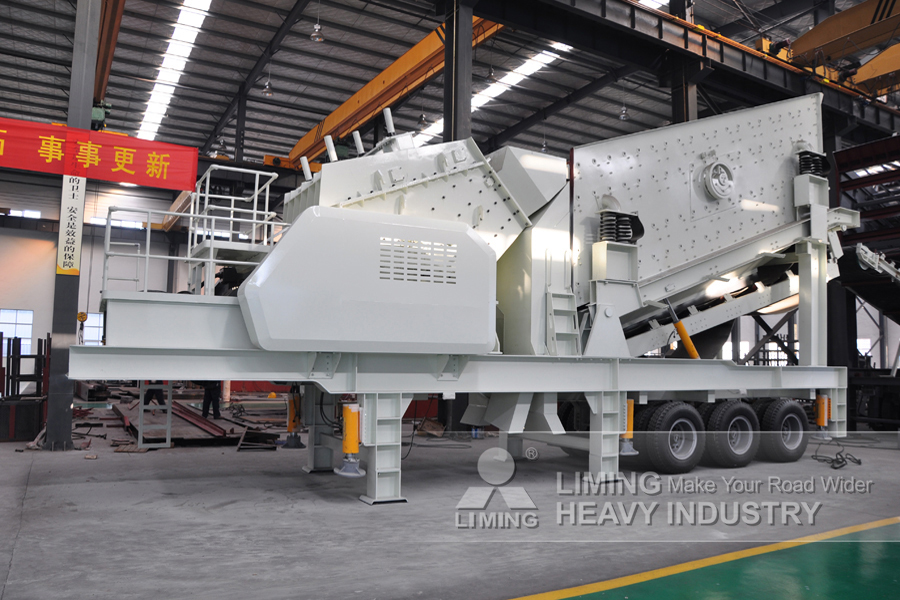
- Optimized Liner Design & Metallurgy: The crushing mantle and concave are cast from high-grade manganese steel (typically Mn18Cr2 or equivalent), engineered for work-hardening under impact. This creates a progressively harder wear surface that extends service life in abrasive ore applications, while the underlying material retains necessary toughness to resist cracking.
- Robust Mechanical Foundation: The main frame is a high-integrity, cast steel or heavy-welded steel construction, stress-relieved to prevent distortion under cyclical loading. The eccentric bushing assembly utilizes precision-machined bronze bearings with forced lubrication, ensuring stable operation and protecting the core mechanical components from wear.
- Intelligent Lubrication & Hydraulic Systems: A dedicated, dual-circuit lubrication system with filtration and cooling maintains optimal oil cleanliness and temperature for both the gear and bearing assemblies. The integrated hydraulic system provides overload protection and enables adjustment of the discharge setting, eliminating the need for mechanical shims and reducing downtime for product size changes.
- Service-Oriented Design: Strategic placement of inspection hatches and hydraulic jacking points allows for liner change-outs and routine inspections without major disassembly. Common wear components are standardized for easier sourcing and replacement.
Technical Assurance & Standards Compliance:
The crusher’s design and manufacturing process conform to international standards for safety and structural integrity, including CE marking requirements and relevant ISO standards (e.g., ISO 21873 for mobile crushers, ISO 12100 for safety). This provides a verifiable baseline for performance expectations and operational safety in global mining and aggregate operations.
Operational Parameters for High Uptime Planning:
Reliability is quantified through consistent throughput and adaptability. The PYB 2200 is designed for continuous, high-tonnage production.
| Parameter | Specification | Implication for Uptime |
|---|---|---|
| Nominal Capacity | 590-1000 TPH | Consistent, high-volume output reduces the required runtime to meet targets, allowing for scheduled maintenance windows. |
| Max Feed Size | 300 mm | Handles run-of-mine or primary-crushed feed without bridging, minimizing feed-related stoppages. |
| Power | 280-260 kW | Driven by a standard industrial motor, ensuring reliable power transmission and service availability. |
| Discharge Adjustment | Hydraulic System | Enables rapid CSS adjustment for product control or clearing, a task measured in minutes versus hours. |
| Adaptable Crushing Cavity | Standard coarse cavity design | Optimized for secondary crushing of hard and abrasive ores (e.g., granite, basalt, iron ore), balancing throughput and liner wear life. |
The result is a machine whose maintenance intervals are predictable and whose meancime-to-repair (MTTR) is minimized. Capital cost is amortized over a longer, more productive service life, with lower cost-per-ton as the definitive metric of its cost-effective operation.
Technical Specifications and Customization Options for the pyb 2200 Cone Crusher
Core Technical Specifications
The PYB 2200 is a robust, large-crushing-force cone crusher engineered for secondary and tertiary reduction of hard and abrasive ores. Its design prioritizes sustained throughput under high-load conditions typical in large-scale mining and aggregate operations.
Key Operating Parameters:
| Parameter | Specification | Notes |
| :— | :— | :— |
| Standard Cone Type | Coarse | Optimized for secondary crushing. |
| Feed Opening | 350 mm | Accepts consistent feed from large jaw crushers. |
| Max. Feed Size | 300 mm | |
| Discharge Range | 30-60 mm | Adjustable via hydraulic cavity clearing system. |
| Nominal Capacity | 590-1000 TPH | Varies with cavity wear, feed gradation, and material crushability (Wi). |
| Main Shaft Speed | 220 rpm | Provides optimal peripheral speed for balanced throughput and liner wear. |
| Motor Power | 280-300 kW | Standard 8-pole electric motor, 380V/50Hz or customizable. |
| Weight (Crusher Only) | ~80,000 kg | Indicates structural mass and rigidity. |
Material Science & Construction:
- Main Frame & Eccentric Sleeve: Fabricated from high-integrity, normalized carbon steel (e.g., ASTM A36 equivalent or superior), stress-relieved to prevent distortion.
- Critical Wear Components (Mantle & Concave): Manufactured from premium Austenitic Manganese Steel (Mn14Cr2, Mn18Cr2). This work-hardening alloy achieves a surface hardness of ≥550 HB under impact, providing exceptional resistance to abrasion and gouging in granite, basalt, and iron ore applications.
- Gears & Bearings: Helical gears for smooth engagement; large-diameter spherical roller bearings on the drive and eccentric assemblies ensure high radial and axial load capacity, aligned with ISO 281 standards for bearing life calculation.
Customization & Configuration for Site-Specific Demands
The base PYB 2200 platform can be configured to match specific circuit roles and ore characteristics.
1. Crushing Cavity Profiles:
- Coarse (Standard – PYB): For general secondary crushing, maximizing throughput.
- Medium (PYZ): For tertiary crushing, providing a finer, more uniform product size.
- Fine (PYD): For producing sand or very fine aggregates in a quaternary stage.
2. Wear Liner Material & Profile Optimization:
- Alloy Selection: Beyond standard Mn-steel, options include:
- TIC (Tungsten Carbide Insert) Liners: For ultra-abrasive, low-impact materials like silica-rich sandstone.
- Multi-Alloy Composite Liners: Hard, abrasion-resistant alloys in high-wear zones combined with impact-resistant alloys in others.
- Profile Engineering: Liner profiles can be tailored to influence product shape (cubicity) and throughput, balancing between inter-particle crushing and attrition.
3. Automation & Control Integration:
- ASRi (Automatic Setting Regulation) Compatibility: Can be fitted with sensors and hydraulic controls to maintain closed-side setting (CSS) automatically, compensating for liner wear and ensuring consistent product size.
- Condition Monitoring Ports: For real-time bearing temperature, oil pressure, and vibration (ISO 10816) monitoring, enabling predictive maintenance.
4. Drive System Variants:
- Direct V-Belt Drive (Standard): Cost-effective and reliable.
- Fluid Coupling: Recommended for sites with frequent, unavoidable uncrushable material entry to protect the motor and drive train from shock loads.
- Variable Frequency Drive (VFD): Allows precise adjustment of crusher speed to fine-tune capacity and product gradation for different ore types.
5. Ancillary System Customization:
- Lubrication System: Air-to-oil or water-to-oil cooler options based on ambient operating temperatures.
- Dust Sealing: Enhanced, multi-stage sealing systems (labyrinth & grease purged) for operations where dust ingress is a primary concern.
- Discharge Conveyor Interface: Custom discharge hopper and skirt board designs to integrate seamlessly with existing plant conveyors.
Functional Advantages in Mining Context
- High Reduction Ratio & Capacity: Efficiently reduces large feed from primary stages to mill-ready feed in a single machine, simplifying circuit design.
- Adaptability to Ore Variability: Robust construction and cavity options allow it to handle fluctuations in feed hardness (e.g., from molybdenite to harder wall rock) without significant downtime.
- Predictable Wear Life: Standardized, high-quality wear parts allow for accurate maintenance scheduling and liner inventory management.
- Inherent Tramp Iron Protection: The spring-loaded release system allows the crushing bowl to lift and automatically reset in the event of uncrushable material entering the chamber, minimizing the risk of catastrophic damage.
- Compliance: The machine can be manufactured and tested to meet CE marking requirements, incorporating essential health and safety directives, and aligns with international standards for mechanical vibration and bearing life.
Proven Performance in the Field: Customer Success Stories and Industry Trust
The PYB 2200 cone crusher’s design is validated not in a laboratory, but under continuous, high-load operation in diverse mining and aggregate quarries globally. Its reputation is built on a foundation of metallurgical integrity and predictable, high-tonnage output, making it a cornerstone asset for operations where unscheduled downtime equates to significant financial loss.
Core Technical Endorsements from Field Deployment:
- Material & Wear Life: The mantle and concave are cast from high-grade manganese steel (typically ZGMn13 or equivalent proprietary alloys), engineered for work-hardening under impact. This creates a progressively harder wear surface in operation, dramatically extending service intervals in abrasive conditions like granite, basalt, and iron ore processing.
- Structural Integrity Under Load: The heavy-duty main frame and cast steel construction are engineered to absorb the high crushing forces and vibration inherent in reducing 350mm feed material. This robustness is critical for maintaining gear alignment and bearing integrity, directly contributing to the crusher’s operational lifespan exceeding a decade in well-maintained circuits.
- Capacity Consistency: Operators report sustained throughputs of 590-1000 TPH, contingent on feed gradation and closed-side setting. The combination of a 2200mm crushing head diameter, high eccentric throw, and optimized crushing cavity geometry ensures this capacity is achieved without compromising product shape for downstream processes.
- Adaptability to Ore Characteristics: The standard coarse crushing cavity is specifically designed for secondary crushing of hard, competent ores. The machine’s high power (280-260kW) and large eccentric moment allow it to maintain rated speed and crushing force even with fluctuating feed hardness (compressive strength up to 300 MPa), ensuring stable product size distribution.
Documented Operational Parameters from Active Sites:
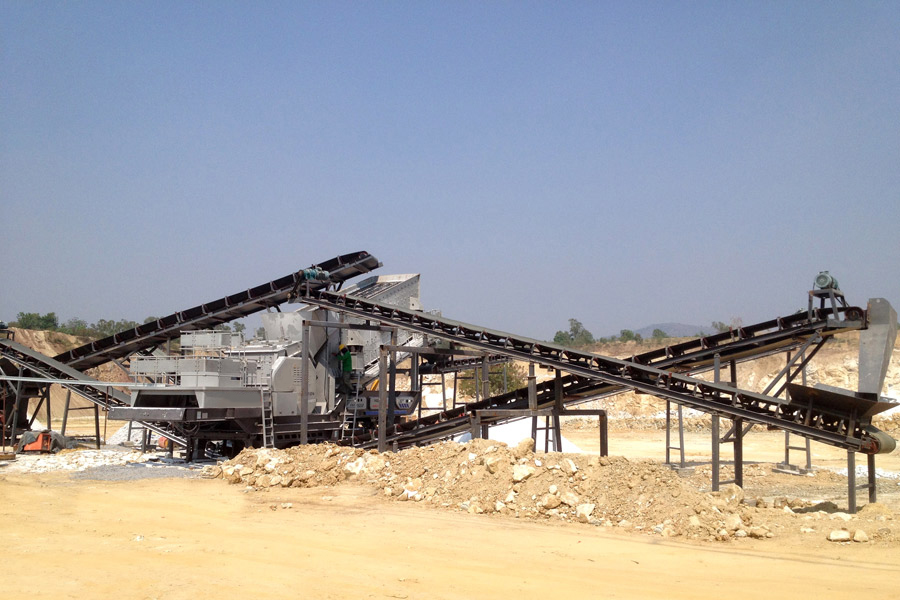
The following table summarizes key performance data from documented installations, illustrating the machine’s range under configured conditions.
| Location / Project Type | Primary Feed Material | Avg. Throughput (TPH) | Product Size (CSS) | Notable Operational Period |
|---|---|---|---|---|
| Copper Mine, South America | Chalcopyrite Ore (Abrasive, High-Silica) | 720 | 45mm | 7 years, with one mantle/concave changeout |
| Granite Quarry, Southeast Asia | Granite Aggregate (Abrasive, 260 MPa Compressive) | 680 | 38mm | 11 years, primary secondary crusher |
| Iron Ore Processing Plant, Australia | Hematite (Dense, Abrasive) | 950 | 50mm | 5 years, operating 20h/day |
| Limestone Aggregate Plant, Europe | Limestone (Non-abrasive, 150 MPa) | 1000+ | 35mm | 9 years, minimal wear part cost |
Industry Trust & Compliance: The PYB 2200’s design and manufacturing adhere to international mechanical standards (ISO, CE marking for EU compliance), which govern everything from casting quality and non-destructive testing (NDT) to dynamic balance and safety guarding. This certification provides a baseline of trust for multinational engineering procurement firms. The ultimate trust metric, however, is repeat business; this model is frequently selected for plant expansions and is a common specification in turnkey project bids for medium-to-large scale mineral processing and infrastructure projects. Its simplicity of design, coupled with globally available OEM and tier-1 replacement components, minimizes operational risk—a critical factor in long-term mine planning.
Frequently Asked Questions
What is the recommended replacement cycle for PYB 2200 mantle and concave wear parts?
Replacement depends on ore abrasiveness (Mohs hardness). For granite (~Mohs 7), expect 450,000-550,000 tons. Use ZGMn13Cr2 high-manganese steel, water toughening treated. Monitor liner thickness; replace at ~65mm remaining. Implement regular crusher setting checks to prevent accelerated, uneven wear from oversized feed.
How does the PYB 2200 adapt to crushing ores of varying hardness (e.g., limestone vs. granite)?
Adjust the crusher’s closed-side setting (CSS) hydraulically: 30-60mm for hard ore (granite), 60-100mm for soft (limestone). Correspondingly, adjust main shaft rotational speed. Ensure the spring release system is calibrated to the correct pressure (approx. 2.9-3.3 MPa) to protect the machine from tramp iron in harder materials.
What are the critical steps for controlling abnormal vibration in a PYB 2200?
First, check foundation bolt torque (≥ 580 N·m). Inspect wear part thickness for imbalance. Verify main shaft bushing (e.g., Timken or SKF) clearance and lubrication. Ensure feed distribution is central and non-segregated. Imbalanced crushing chamber loading is a primary cause of harmonic vibration.
What are the specific lubrication requirements for the PYB 2200’s main shaft assembly?
Use ISO VG 320 extreme pressure gear oil. Maintain oil temperature below 55°C. Flow must be 16-25L/min to bearings. Key focus: ensure clean oil filtration (≤ 25µm) and correct oil level in the reservoir. Contamination is the leading cause of spherical bearing and eccentric bushing failure.
How do I optimize the PYB 2200’s discharge size and product shape for different applications?
Precisely control the CSS via the hydraulic adjustment cap. For finer product, reduce CSS and increase the speed of the vertical precession. Ensure consistent, non-flooded feed. Pair with proper screen circuit closed-loop control. Product shape is directly tied to a well-distributed, choke-fed crushing chamber.
What is the procedure for adjusting the spring release system on the PYB 2200?
Isolate and depressurize the hydraulic system. Adjust the spring pre-load via the adjustment ring to achieve the designed release pressure (refer to manual for specific ore hardness). Standard setting is ~3.1 MPa. Use a calibrated gauge. Incorrect pressure risks damage from uncrushables or reduces throughput.