

Picture of Secondary Crusher: A Visual Guide to Crushing Stages
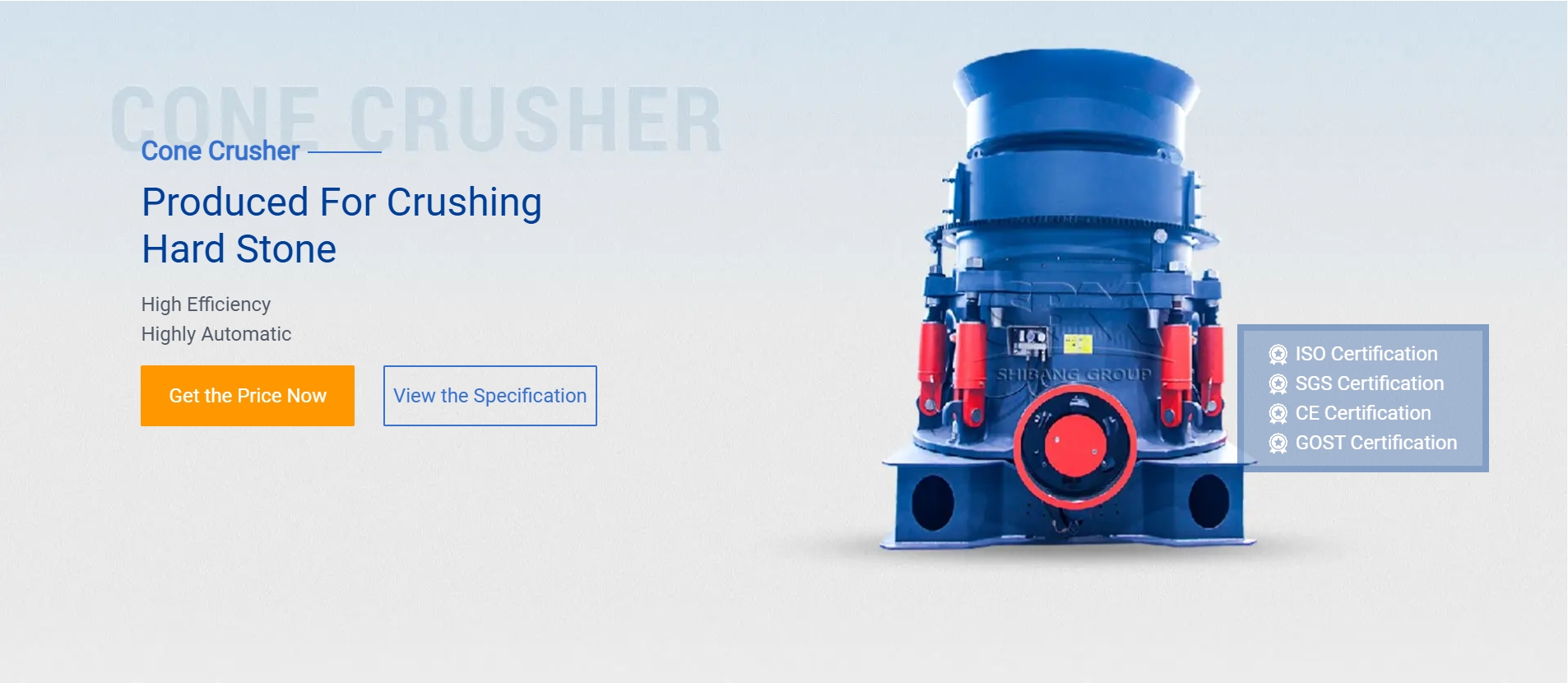
In mineral processing and aggregate production, a picture of a secondary crusher typically reveals the machine’s defining mechanical features—whether it is the conical mantle and concave ring of a cone crusher, the rotor and impact plates of an impact crusher, or the toothed rolls of a roll crusher—each visual element directly corresponds to the crushing mechanism that reduces material from primary-stage output (typically 150–300 mm) to a finer product (usually 20–80 mm). These images are not merely illustrative; they serve as practical references for identifying equipment type, assessing wear patterns, and understanding operational principles. For instance, a photograph of a cone crusher’s cross-section clearly shows the eccentric motion that creates a gyrating compression zone, while an image of an impact crusher highlights the high-speed rotor and adjustable breaker plates that rely on kinetic energy for size reduction. Such visual documentation is essential for engineers, operators, and maintenance personnel who must quickly recognize component condition or troubleshoot performance issues.
The most common secondary crushers—cone crushers, impact crushers (both horizontal-shaft and vertical-shaft), and roll crushers—each present distinct visual signatures in photographs. A cone crusher picture often emphasizes its steep crushing chamber: the fixed concave (bowl liner) surrounds a moving mantle that gyrates eccentrically. The gap between these two surfaces narrows toward the discharge end, creating a compression zone where rock is progressively crushed. In many industrial images, you can see wear marks on the liners or even manganese steel patterns that indicate how material flows through the chamber. This visual evidence helps operators estimate liner life without stopping production. Similarly, pictures of horizontal-shaft impactors (HSI) show a heavy rotor equipped with blow bars rotating at high speed (typically 30–50 m/s tip speed), with adjustable curtain-like impact plates hanging above. The open design allows viewing of internal wear parts; experienced technicians can judge whether blow bars need replacement by comparing their profile in photos against factory specifications.
Vertical-shaft impactors (VSI), another common secondary stage machine, appear in pictures with their distinctive “rock-on-rock” or “rock-on-anvil” configurations. The central rotor accelerates material outward into either a stone-lined chamber or metal anvils. Images often capture the rotor’s feed tube and distributor cone, along with wear-resistant carbide tips on impeller shoes. These details are critical because VSI performance depends heavily on rotor balance and tip condition—a picture taken during maintenance can reveal uneven wear that might cause vibration.
Roll crushers present yet another visual: two parallel cylindrical rolls rotating inward against each other. Photographs typically show smooth or corrugated roll surfaces with adjustable gap settings visible through side access doors. The presence of hydraulic cylinders or spring-loaded mechanisms in such images indicates how overload protection works—a key safety feature often documented in equipment manuals..jpg)
Beyond individual machine types, pictures taken from different angles provide additional insights. A side-view photo may show drive motors, belt guards, and chute connections; an overhead shot reveals feed distribution patterns; while close-ups highlight specific wear zones like mantle grooves or blow bar edges. In modern operations, thermal imaging cameras sometimes supplement standard photographs to detect hot spots caused by friction or misalignment..jpg)
The value of these images extends beyond training manuals into real-time diagnostics. For example, comparing historical photos of a cone crusher’s concave profile against current ones can quantify liner wear rates within millimeters—data used to schedule replacements before catastrophic failure occurs. Similarly, impactor pictures showing cracked blow bars allow proactive ordering rather than emergency shutdowns.
In conclusion, any accurate picture of a secondary crusher is far more than a static snapshot; it is a functional diagram encoding decades of engineering knowledge about particle breakage mechanics and equipment durability. By learning to read these visual cues—the angle of crushing surfaces, spacing between components, signs of abrasion—operators gain immediate insight into whether their machine is performing optimally or approaching maintenance thresholds. This makes photographic documentation an indispensable tool in every crushing plant’s operational toolkit.
(Word count: approximately 720)