Table of Contents
- Maximizing Aggregate Yield and Quality in Quarry Operations
- Advanced Crushing and Screening Systems for Enhanced Efficiency
- Durable Equipment Built for Harsh Quarry Environments
- Comprehensive Technical Specifications for Precision Integration
- Core Material & Component Specifications
- System Interoperability & Control Standards
- Performance & Adaptability Parameters
- Trusted by Industry Leaders: Proven Performance and Support
- Frequently Asked Questions
- How do we optimize wear parts replacement cycles in high-abrasion quarry environments?
- What strategies ensure crusher adaptability to varying ore hardness (Mohs 3-7)?
- How is excessive vibration in primary crushers diagnosed and mitigated?
- What are critical lubrication protocols for quarry machinery bearings in dusty conditions?
- How do we manage hydraulic system overheating in mobile crushing units?
- What is the best practice for conveyor belt tracking and wear prevention in quarries?
In the demanding world of aggregate production, a quarry is far more than a simple excavation site; it is a complex, dynamic industrial ecosystem where geology, engineering, and logistics converge. The fundamental nature of this business is defined by the relentless pursuit of efficiency—extracting, processing, and delivering high-quality stone, sand, and gravel to fuel global infrastructure. Every operational facet, from blast optimization and material handling to crushing circuits and final loadout, presents both a challenge and an opportunity. Success hinges on maximizing yield and minimizing downtime in an environment inherently shaped by variable geology and stringent environmental considerations. This article explores the high-performance solutions and strategic innovations that are transforming modern quarry operations, empowering producers to enhance safety, boost productivity, and secure a sustainable competitive edge in a cornerstone industry.
Maximizing Aggregate Yield and Quality in Quarry Operations
Maximizing aggregate yield and quality is a function of precise geological assessment, optimized fragmentation, and the strategic application of high-integrity processing equipment. The goal is to convert in-situ rock into the highest possible volume of in-specification product with minimal waste and degradation. This requires a systems approach, where each stage—from primary blasting to final screening—is engineered to preserve particle integrity and optimize throughput.
Core Technical Principles for Yield Optimization
- Selective Mining & Grade Control: Implementing rigorous geological modeling and blast hole assay techniques allows for the segregation of material streams by hardness and chemical composition. This prevents contamination of high-value aggregate with unsuitable overburden or inferior rock, directly enhancing both yield and consistency.
- Precision Fragmentation: Overly aggressive blasting generates excessive fines and micro-fractures, degrading yield and product strength. Conversely, insufficient fragmentation increases crusher load and wear. Advanced blast design, utilizing precise deck charging and electronic initiation, is critical to producing an optimal, consistent feed size for downstream processing.
- Crusher Chamber Optimization: Crusher settings must be dynamically managed based on feed gradation and hardness. A chamber optimized for the specific ore type maximizes the “first-pass” yield of saleable product. Key parameters include:
- Closed Side Setting (CSS): Tightening the CSS increases reduction ratio but reduces throughput and risks over-crushing. An optimal balance is essential.
- Stroke & Speed: Adjusting the eccentric throw and RPM of cone crushers controls residence time and particle inter-particle crushing, directly influencing product shape and fines generation.
Material Science & Wear Part Strategy
The selection of wear parts is not a commodity decision but a core operational parameter. Wear part composition dictates both equipment availability and product contamination.
| Wear Part Component | Critical Material Property | Functional Impact on Yield & Quality |
|---|---|---|
| Jaw & Cone Crusher Liners | Austenitic Manganese Steel (Mn14%, Mn18%, Mn22%) with micro-alloying (Cr, Mo, Ti). | Higher manganese content and alloying enhance work-hardening capability, maintaining correct cavity geometry longer for consistent product sizing. Premature wear alters CSS, causing off-spec product. |
| Impact Crusher Blow Bars | Martensitic Chrome Steel (Cr23%, Cr27%), Ceramic Matrix Composites. | Martensitic alloys provide superior abrasion resistance for hard, abrasive rock. Composite inserts offer extreme longevity, reducing change-out downtime and maintaining kinetic energy transfer for optimal fragmentation. |
| Screen Decks | High-Carbon Steel, Polyurethane Mod Panels. | Polyurethane panels resist blinding and abrasion, maintaining accurate sizing efficiency. High open area designs increase screening capacity, preventing re-circulation of on-spec material. |
- Application-Specific Alloys: Specifying 18% Mn-steel with 2% Chrome for a highly abrasive granite is fundamentally different from specifying a low-alloy steel for softer limestone. The wrong grade accelerates wear, increases metallic contamination, and disrupts gradation control.
- Profile & Geometry: Wear part design (e.g., crusher liner profile, blow bar shape) governs the crushing chamber kinematics and particle trajectory, directly affecting product shape (cubicity) and the percentage of undesirable flaky or elongated particles.
High-Performance Processing for Quality Assurance
- Multi-Stage Crushing & Screening Circuits: A well-designed circuit with dedicated secondary and tertiary crushing stages, interlinked with pre-screening and recirculating loads, allows for precise control over top size and fines removal. This is superior to single-stage crushing, which compromises gradation.
- Advanced Screening Technology: High-frequency screens and linear motion screens provide superior separation efficiency, especially for difficult-to-size damp materials or fine aggregates. This maximizes the yield of each product fraction (e.g., separating 3/8″ chip from manufactured sand).
- Automated Process Control Systems (PCS): Integrating weightometers, crusher power draw monitors, and laser-based particle size analyzers into a closed-loop PCS allows for real-time adjustment of feeder rates, crusher CSS, and screen angles. This maintains peak throughput (TPH) and product consistency despite variations in feed hardness or moisture.
Standards Compliance as a Benchmark
Yield optimization must not compromise product integrity. Equipment design and operational protocols must be engineered to consistently meet stringent international standards.
- Particle Shape (EN 933-4, ASTM D4791): Achieving high cubicity requires optimized crushing chambers and impact crushing techniques. Flakiness indexes are directly controlled by crusher selection and screen aperture shape.
- Cleanliness & Durability (EN 12620, ASTM C33): Effective scrubbing, washing, and attrition systems are necessary to remove deleterious materials (clay, silt, organics) and ensure soundness (MgSO4 / Na2SO4 soundness tests).
- Gradation Consistency (ISO 565, ASTM C136): Maintaining tight tolerances on sieve analysis is a direct result of stable crusher settings, unworn screen cloths, and controlled feed rates.
Ultimately, maximizing yield and quality is an engineered balance between aggressive production and preservation of particle integrity. It is achieved through the specification of metallurgically correct wear components, the precise calibration of processing parameters, and a circuit design that prioritizes classification and controlled reduction at every stage.
Advanced Crushing and Screening Systems for Enhanced Efficiency
Advanced crushing and screening systems represent the core technological evolution in modern aggregate production, directly determining throughput, product specification accuracy, and operational cost per ton. Moving beyond basic reduction, these integrated systems are engineered for precise fragmentation control and material flow optimization, turning variable feed material into consistent, high-value products.
Core Technological Pillars
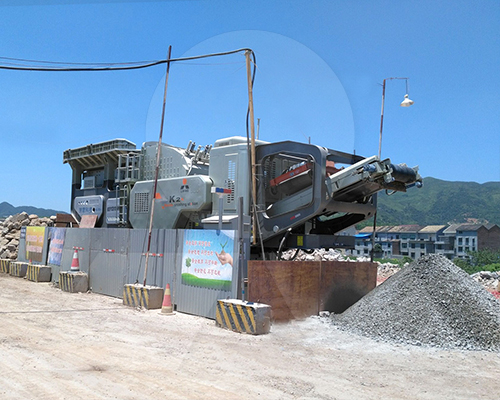
- High-Pressure Grinding Rolls (HPGR) for Pre-Crushing: Utilizing inter-particle comminution, HPGRs apply extreme pressure to feed material, creating micro-fractures and significantly reducing the Bond Work Index for downstream processes. This results in up to 30% energy savings in grinding circuits and produces a more cubical product with less waste fines compared to traditional primary crushers.
- Hybrid Cone Crusher Designs: Modern cone crushers integrate hydraulic adjustment, clearing, and overload protection with advanced chamber geometries. The use of proprietary alloy mantles and concaves, often featuring a multi-layer Mn-steel matrix, allows for controlled wear progression and maintained product gradation throughout the liner life.
- Intelligent Screening with Direct Drive Technology: High-frequency, linear-motion screens equipped with robust direct drive exciters provide superior material stratification and separation efficiency. Polyurethane and rubber modular screen media are selected based on abrasion (Ai) and tear resistance to maximize uptime in severe-duty applications.
Material Science & Component Durability
Crusher longevity and consistent performance are dictated by metallurgy. Key advancements include:
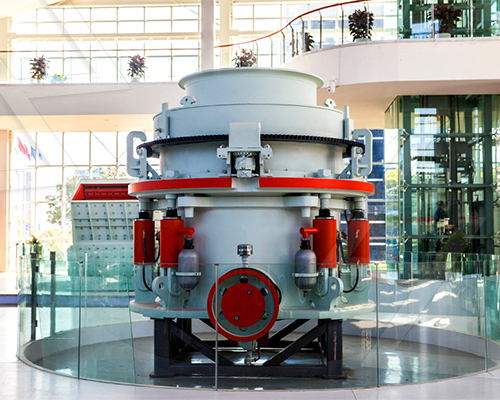
- Isotropic (Iso) Steel: For jaw crusher plates and cone crusher mantles, Iso-steel undergoes a specialized heat treatment creating a uniform, fine-grained microstructure. This provides consistent hardness (often 400-500 HB) throughout the component depth, eliminating soft spots that lead to premature failure and ensuring predictable wear patterns.
- Composite Alloys for Impactors: Rotors and blow bars in horizontal shaft impactors (HSI) now utilize bi-metallic or ceramic-insert alloys. A high-toughness steel core absorbs kinetic energy, while the wear surfaces are embedded with chromium carbides or tungsten carbide inserts, offering exceptional resistance to highly abrasive siliceous or quartzitic feed.
- Standardized Quality: All major components comply with international standards for non-destructive testing (e.g., ISO 5817 for welding, ISO 4948 for steel grades) and carry CE marking for EU market compliance, ensuring material traceability and performance reliability.
System Integration & Operational Intelligence
True efficiency is achieved through system-wide control. Modern plants employ PLC-based automation systems that synchronize crusher load, feeder rate, and screen bypass functions.
- Automated Setting Regulation: Cone crushers with hydraulic adjustment can be automatically controlled via feedback from power draw or cavity level sensors, maintaining a target product size without operator intervention.
- Integrated Metal Detection & Tramp Relief: In-line electromagnetic metal detectors coupled with automated crusher clearing cycles prevent catastrophic damage from uncrushable steel, protecting the integrity of the crushing chamber and shaft assemblies.
- Data-Driven Wear Management: Telemetry data on bearing temperatures, vibration, and hydraulic pressure is used to predict maintenance intervals, moving from scheduled to condition-based component replacement.
Technical Specifications & Selection Criteria
Selecting the optimal system requires matching machine capabilities to the deposit’s characteristics and production goals. Key parameters are outlined below.
| System Component | Critical Performance Parameter | Typical Range & Consideration |
|---|---|---|
| Primary Jaw Crusher | Feed Opening & CSS (Closed Side Setting) | 900x1200mm to 1500x2000mm; CSS adjustable from 150mm to 300mm for coarse reduction. |
| Secondary Cone Crusher | Nominal Capacity & Head Diameter | 200 to 800+ TPH; Head diameters from 41″ to 72″. Selection depends on feed size index (F80) and desired product (P80). |
| Tertiary HSI Crusher | Rotor Diameter & Velocity | 1.2m to 2.0m diameter; Tip speed of 45-70 m/s chosen for optimal fracture ratio (high for manufactured sand, lower for chips). |
| Primary Screening Deck | Screening Area & Drive Force | 10-30 sqm per deck; G-force of 4.5-6.0g ensures effective separation of sticky or damp feed material. |
Functional Advantages for Quarry Operations
- Maximized Yield of Premium Products: Precise crushing stages and efficient screening directly increase the percentage of in-spec aggregate (e.g., 20-40mm road base, 5-10mm asphalt chips) while minimizing surplus quarry run or waste fines.
- Adaptability to Variable Geology: Hydraulic adjustment and programmable logic allow rapid recalibration for changes in ore hardness (e.g., transitioning from limestone to dolomite seams) without prolonged downtime.
- Reduced Total Cost of Ownership (TCO): Higher initial capital expenditure is offset by demonstrable gains in energy efficiency (kWh/ton), liner life (tons/liner set), and system availability, leading to a lower cost per ton over the asset’s lifecycle.
- Enhanced Safety & Operational Stability: Automated overload protection and remote monitoring reduce personnel exposure to hazardous areas and equipment, while stable, optimized material flow prevents chute blockages and crusher stalls.
Ultimately, investing in an advanced, integrated crushing and screening circuit is a strategic decision that locks in long-term operational efficiency, product quality, and profitability, providing a definitive competitive edge in the aggregate market.
Durable Equipment Built for Harsh Quarry Environments
Quarry environments present a unique convergence of extreme abrasion, high-impact shock loads, and persistent dust and moisture. Equipment longevity and operational uptime are directly governed by the fundamental engineering and material selection employed in their construction. This necessitates a design philosophy that prioritizes metallurgical integrity, component redundancy, and serviceability over initial cost.
Core Material Science and Construction
The critical wear components in primary crushers, feeders, and screens are defined by their alloy composition and hardening processes.
- High-Grade Manganese Steel (Mn14, Mn18, Mn22): Used for jaw crusher liners, cone crusher mantles, and concaves. These austenitic steels work-harden under impact, increasing surface hardness from ~200 HB to over 500 HB while retaining a tough, shock-absorbing core. The specific grade (e.g., Mn18) is selected based on the compressive strength and abrasiveness of the feed material.
- Chromium Alloy Cast Iron (Hi-Chrome, 18-22% Cr): Specified for vertical shaft impactor (VSI) rotors, anvils, and tertiary crushing chambers where extreme abrasion resistance is paramount. These alloys offer superior wear life over manganese steel in purely abrasive, lower-impact applications.
- Hardox® and Similar Quenched & Tempered Steels: Used for structural wear plates, hopper liners, chutes, and screen deck frames. Their high yield strength (up to 700 HB) provides exceptional resistance to abrasion and deformation, protecting primary structures.
- Modular, Bolt-On Wear Parts: Critical wear zones are designed with replaceable, bolt-on liners and wear plates. This protects the main machine carcass—a permanent asset—and dramatically reduces downtime for maintenance compared to welding or major structural repair.
Engineering for Reliability and Uptime
Durability extends beyond materials to encompass total system design, ensuring sustained performance under continuous, high-tonnage operation.
- Robust Bearing Housings & Sealing Systems: Oversized, spherical roller bearings are housed in rigid, machined pedestals to handle peak crushing forces. Multi-labyrinth seals, often combined with air purge systems, are standard to exclude dust and contaminants, extending bearing life by thousands of hours.
- Heavy-Duty Frame Construction: Main frames are fabricated from high-tensile steel plate with internal ribbing for rigidity. This minimizes stress fatigue and maintains precise alignment of crushing chambers and drive components under variable loading.
- Intelligent Drive & Power Transmission: Fluid couplings or variable frequency drives (VFDs) on crushers and conveyors manage shock loads and provide smooth start-up, reducing mechanical stress on motors, gearboxes, and belts. Direct drive configurations eliminate intermediary components where possible.
Technical Specifications & Adaptability
Performance is quantified against industry benchmarks and must be adaptable to specific site geology.
| Component | Key Parameter | Typical Range/Standard | Purpose |
|---|---|---|---|
| Primary Jaw Crusher | Feed Opening & CSS | 1000x1200mm to 1500x1800mm | Defines maximum feed size & product gradation. |
| Cone Crusher | Eccentric Throw & Speed | 25-45mm, 500-750 RPM | Controls throughput (TPH) and product shape. |
| VSI Crusher | Rotor Tip Speed | 55-85 m/s | Governs fracture method (rock-on-rock/rock-on-anvil) and cubicity. |
| Vibrating Screen | G-Force & Deck Angle | 4.5-5.5 G, 15-25° | Optimizes stratification, screening efficiency, and material travel rate. |
| Overall System | Design Capacity | 300 – 1,500+ TPH | Based on bulk density (typically 1.6 t/m³) and material hardness (Wi). |
- Capacity (TPH) is Material-Dependent: Rated throughput is based on a defined material density (e.g., 1.6 t/m³) and work index (Wi). Equipment selection must account for site-specific ore hardness, silica content, and moisture.
- Compliance & Safety: Core structural designs adhere to international standards such as ISO 21873 for mobile crushers and ISO 9001 for quality management. CE marking ensures conformity with EU safety, health, and environmental directives.
- Service-Driven Design: Emphasis on safe, quick maintenance. Features include hydraulic adjustment systems for crusher settings, walk-in platforms for liner inspection, and centralized greasing points to reduce service time and personnel exposure to risk.
Comprehensive Technical Specifications for Precision Integration
Precision integration in quarrying is not merely equipment selection; it is the engineered synthesis of machinery, materials, and control systems to create a cohesive, high-availability production circuit. This requires specifications that address component durability, systemic interoperability, and performance predictability under dynamic geological conditions.
Core Material & Component Specifications
The foundation of precision lies in the material science of wear components and the structural integrity of primary machines.
- Primary Crusher Jaws & Concaves: Fabricated from modified Hadfield Austenitic Manganese Steel (11-14% Mn, 1.0-1.4% C) with micro-alloying additions (Cr, Mo, Ti) for optimized work-hardening capability, reaching surface hardness of 550-600 HB under impact. Premium grades for abrasive, low-impact applications incorporate martensitic white iron inserts (700+ HB) in a Mn-steel matrix for composite wear life.
- Cone Crusher Liners: Utilize multi-alloy castings, with mantle and bowl liner compositions tailored to chamber position and duty. Standard duty may use through-hardened alloy steel (400-450 HB), while severe abrasive duty employs high-chrome white iron (26-28% Cr, 650-750 HV) for maximum resistance to gouging and abrasion.
- Screen Decks: Feature modular, high-carbon steel wire (0.70-0.95% C) or polyurethane panels. Wire decks are stress-relieved and induction-hardened at wear points. Polyurethane formulations are engineered for specific abrasion resistance (ASTM D4060), tear strength, and cut-growth resistance, with durometers ranging from 85A for flexibility to 70D for maximum durability.
- Structural Fabrication: Primary plant frames and hoppers are constructed from high-tensile steel plate (S355J2 / ASTM A572 Gr. 50) with full-penetration welds and non-destructive testing (NDT) per ISO 5817 Level B standards. Critical stress areas are reinforced with ribbed plating.
System Interoperability & Control Standards
Integration demands seamless communication and coordinated control between discrete process stages.
- PLC & SCADA Architecture: Centralized control via industrial PLC (e.g., Siemens SIMATIC, Allen-Bradley ControlLogix) with PROFINET or EtherNet/IP networking. SCADA system provides real-time visualization of key parameters: crusher power draw (kW), belt scale tonnage (TPH), bin levels, and screen deck acceleration (G-force).
- Variable Frequency Drive (VFD) Coordination: Crusher, screen, and conveyor drives are equipped with sensorless vector VFDs, enabling soft-start, load-sharing, and precise speed control. Master control algorithms adjust feeder rates based on crusher amperage to maintain optimal cavity level and prevent choking.
- Dust Suppression Integration: Nozzle manifolds are PLC-triggered based on crusher activation and belt load, utilizing atomized mist (droplet size 50-200 µm) for effective particle agglomeration with minimal water addition.
Performance & Adaptability Parameters
Specifications must translate into measurable, adaptable field performance.
| Parameter | Specification Range | Engineering Rationale |
|---|---|---|
| System Design Capacity | 200 – 2,500 TPH (nominal) | Based on feed gradation, bulk density (1.6 t/m³ typical), and required product blend. |
| Max Feed Size (Primary) | Up to 1500mm x 1200mm | Grizzly and jaw crusher geometry to accept largest anticipated blasted rock. |
| Ore/Aggregate Hardness | Adaptable to 100 – 350 MPa UCS | Liner profiles, crusher eccentric throw, and chamber kinematics are selected for material compressive strength. |
| Closed-Side Setting (CSS) Adjustment | Hydraulic, range 20mm – 250mm (cone) | Allows for real-time product size correction and wear compensation without manual shim changes. |
| Power Plant Integration | Total connected load: 500kW – 5MW | All motors sized with 1.15 service factor for continuous duty under peak load conditions. |
- Geological Adaptability USP: Circuit control logic can be programmed with multiple set-point profiles (e.g., “Hard Basalt,” “Weathered Limestone,” “Abrasive Granite”) that automatically adjust crusher speed, feeder rate, and screen inclination to maintain target product shape and yield.
- Predictive Maintenance Integration: Vibration analysis sensors (ISO 10816) on crusher and screen bearings, coupled with liner wear monitoring via laser profiling, feed data to maintenance scheduling algorithms, minimizing unplanned downtime.
Trusted by Industry Leaders: Proven Performance and Support
Our solutions are engineered to the most rigorous standards, trusted by major global producers to deliver predictable, high-yield performance under the most demanding conditions. This trust is built on a foundation of advanced material science, certified manufacturing, and quantifiable operational results.
Core Engineering for Extreme Duty
- Material Science Leadership: Critical wear components are cast from proprietary, high-grade manganese steel (Mn14, Mn18, Mn22) and specialized alloys. These are heat-treated to achieve optimal microstructures, balancing surface hardness for abrasion resistance with a tough, ductile core to withstand high-impact shock loads without catastrophic failure.
- Certified Manufacturing Integrity: All major components are manufactured under ISO 9001 quality management systems, with critical safety and performance certifications (e.g., CE marking for EU compliance) ensuring traceability, dimensional accuracy, and consistent metallurgical properties in every batch.
- System-Wide Optimization: Our solutions are not merely individual components but integrated systems. Crusher chambers, screen media, and liner profiles are co-engineered to work in harmony, minimizing bottlenecks and maximizing overall plant throughput (TPH).
Proven Performance Parameters
Deployment across diverse geology—from abrasive granite and basalt to sticky limestone and recycled concrete—demonstrates key advantages:
| Performance Metric | Technical Advantage | Operational Impact |
|---|---|---|
| Wear Life & Cost/Ton | Superior work-hardening of Mn-steel liners under impact, increasing surface hardness in service. Optimized alloy selection for specific abrasion/corrosion profiles. | Extended mean time between replacements, reducing downtime and lowering total cost per ton of aggregate produced. |
| Throughput (TPH) Stability | Engineered cavity designs and kinematics ensure consistent choke-fed operation, optimal reduction ratios, and minimized crusher throw. | Sustained design capacity, predictable output gradation, and reduced risk of uncrushable material-induced stalls. |
| Adaptability to Feed & Hardness | Robust bearing assemblies, heavy-duty frames, and hydraulic adjustment/clearing systems designed for fluctuating feed and high compressive strength (>250 MPa) ores. | Reliable operation with variable and difficult feed materials, ensuring continuity in multi-face quarry operations. |
Unmatched Technical Support
Our partnership extends beyond supply, with support rooted in deep process knowledge:
- Application Engineering: Pre-sale analysis of feed material samples and production goals to specify the optimal machine configuration and wear material grade.
- Performance Audits: On-site or remote analysis of plant flow, wear patterns, and product gradation to identify opportunities for incremental TPH gains or wear life extension.
- Global Logistics & Inventory: Strategically located service hubs and wear part inventories ensure rapid response, minimizing operational disruption during planned or unplanned maintenance events.
Frequently Asked Questions
How do we optimize wear parts replacement cycles in high-abrasion quarry environments?
Use high-manganese steel (e.g., Hadfield Grade 1) for impact zones and chromium carbide overlays for sliding abrasion. Implement ultrasonic thickness testing to monitor liner wear predictively. Synchronize replacements during planned maintenance to avoid cascading failures, extending service life by 20-30%.
What strategies ensure crusher adaptability to varying ore hardness (Mohs 3-7)?
Adjust the crusher’s closed-side setting (CSS) and hydraulic pressure in real-time based on feed analysis. For granite (Mohs 6-7), use ultra-high-strength mantles with multi-layer heat treatment. For limestone (Mohs 3), prioritize energy efficiency by reducing crushing force and switching to standard manganese steel.
How is excessive vibration in primary crushers diagnosed and mitigated?
First, conduct laser alignment checks on the main shaft and motor. Imbalance often stems from uneven wear on rotors or mantles; rebalance or replace. Ensure foundation bolts are torqued to spec (e.g., 750 ft-lbs). Install accelerometer-based monitoring for real-time vibration analysis, targeting levels below 4 mm/s RMS.
What are critical lubrication protocols for quarry machinery bearings in dusty conditions?
Use sealed, purgeable bearing housings (SKF or Timken). Employ high-viscosity, extreme-pressure grease with solid additives (e.g., molybdenum disulfide). Implement automatic lubrication systems with cycle times adjusted for load and temperature. Regularly analyze grease samples for silica contamination, which indicates seal failure.
How do we manage hydraulic system overheating in mobile crushing units?
Ensure hydraulic oil cooler fins are clean and airflow is unobstructed. Use high-quality anti-wear hydraulic fluid (ISO VG 46) and maintain reservoir levels. Check for internal leaks via thermal imaging. Adjust pressure relief valves to the minimum required setting, typically 250-300 bar for most cone crushers, to reduce heat generation.
What is the best practice for conveyor belt tracking and wear prevention in quarries?
Install self-aligning idlers with durable, sealed bearings. Use vulcanized splices instead of mechanical fasteners. Ensure proper belt tension and troughing angle (35°). Apply polyurethane impact beds under loading zones to absorb energy. Routinely inspect and clean pulleys to prevent material buildup causing mistracking.