Table of Contents
- Built to Withstand Extreme Crushing Forces: Robust OEM Design for PE900 x 1200 Jaw Crusher
- Maximize Uptime and Efficiency: Precision-Engineered Replacement Components for Seamless Integration
- Superior Wear Resistance and Longevity: High-Grade Materials for Demanding Quarry and Mining Applications
- Exact OEM Specifications: Guaranteed Compatibility and Optimal Crushing Performance
- Trusted by Industry Leaders: Quality Assurance and Global Supply Chain Reliability
- Frequently Asked Questions
- What is the recommended replacement cycle for jaw plates on an OEM PE900 x 1200 jaw crusher processing abrasive quartzite ore (Mohs 7)?
- Can the PE900 x 1200 jaw crusher’s toggle system be upgraded for harder ores (Mohs 8–9) without modifying the main frame?
- How does OEM specify lubrication for the PE900 x 1200 eccentric shaft bearing under continuous 16-hour shifts?
- What causes excessive vibration in PE900 x 1200 crushers during startup, and how does OEM mitigate it?
- How does the OEM ensure proper cheek plate alignment and minimize galling in PE900 x 1200 assemblies?
- What hydraulic pressure range is required for the adjust-setting system on an OEM PE900 x 1200 handling variable feed gradation?
- How does OEM optimize cavity profile geometry in PE900 x 1200 crushers for higher throughput on alluvial gold ores?
- What metallurgical standards define OEM pitman shafts for PE900 x 1200 to prevent fatigue cracking?
In the demanding world of heavy-duty crushing operations, reliability, precision, and performance are non-negotiable—qualities that define the PE900 x 1200 jaw crusher, a cornerstone in large-scale mining and quarrying applications. As industries increasingly seek durable, high-efficiency solutions, original equipment manufacturer (OEM) components have emerged as the gold standard for maintaining optimal machine functionality and longevity. OEM parts for the PE900 x 1200 jaw crusher are engineered to exact manufacturer specifications, ensuring seamless integration, superior wear resistance, and consistent throughput under relentless operating conditions. Unlike aftermarket alternatives, OEM components uphold the integrity of the original design, minimizing downtime and reducing long-term maintenance costs. For operators aiming to maximize productivity and safeguard their investment, choosing genuine OEM parts is not merely a maintenance decision—it’s a strategic imperative. This article explores the critical advantages of selecting OEM solutions for the PE900 x 1200 jaw crusher, highlighting why authenticity and engineering excellence matter in today’s competitive industrial landscape.
Built to Withstand Extreme Crushing Forces: Robust OEM Design for PE900 x 1200 Jaw Crusher
- Constructed using high-manganese steel (Mn13-Cr2) for jaw plates and cheek plates, ensuring work-hardening properties under repetitive impact loads typical in primary crushing of hard ores such as hematite, basalt, and granite.
- Frame fabricated from reinforced ASTM A572 Grade 50 structural steel, stress-analyzed via finite element modeling (FEM) to endure cyclic loading up to 500,000 cycles without fatigue failure.
- Eccentric shaft machined from forged alloy steel (42CrMo4), quenched and tempered to achieve tensile strength ≥930 MPa and surface hardness of 250–300 HB for maximum resistance to torsional stress.
- Toggle system utilizes heavy-duty toggle plates conforming to ISO 3002-1:1998 standards, designed for controlled failure under overload, protecting core components from catastrophic damage.
- Bearings are double-row self-aligning roller bearings (ISO 15:2017 compliant), rated for radial loads exceeding 480 kN, ensuring stable operation under variable feed and shock loading.
- Base configuration supports throughput rates of 180–300 TPH, adjustable via crusher setting (CSS) between 95–165 mm, optimized for high-volume mining and quarrying operations.
- Designed to process feed material with compressive strength up to 320 MPa, making it adaptable to abrasive and high-hardness feed commonly encountered in metallic and non-metallic mining.
- Complies with CE marking directives (2006/42/EC) for machinery safety, incorporating overload protection, emergency stop integration, and noise emissions below 85 dB(A) at 1 m distance.
- Lubrication system engineered for continuous operation in ambient temperatures from -20°C to +50°C, utilizing ISO VG 680 gear oil with integrated filtration (NAS 9 cleanliness standard).
Maximize Uptime and Efficiency: Precision-Engineered Replacement Components for Seamless Integration
Precision-engineered replacement components for the PE900 × 1200 jaw crusher are manufactured to exact OEM specifications, ensuring dimensional accuracy, material integrity, and operational compatibility. Each component is designed to restore original performance, minimize unplanned downtime, and extend service life under high-stress crushing conditions typical in hard-rock mining and quarrying applications.
Key components include:
-
Jaw Plates (Fixed and Movable): Forged from high-manganese steel (Mn-18Cr2 or Mn-14Cr3), optimized for work-hardening under impact and abrasion. Alloy composition conforms to ASTM A128 Grade D, delivering surface hardness up to 550 HBW after initial wear. Contoured cavity profile maintains consistent feed opening (900 × 1,070 mm) and discharge settings (95–160 mm adjustable), preserving rated throughput of 160–300 TPH depending on feed gradation and ore compressive strength (up to 320 MPa).
-
Toggle Plates and肘 Plates (Cheek Plates): Constructed from normalized carbon steel (Q345B / S355JR) with ultrasonic testing certification per ISO 17640. Dual-lug design ensures uniform load distribution across toggle mechanism; fatigue resistance validated through 10⁶-cycle FEA simulations.
-
Eccentric Shaft and Bearings: Shaft precision-machined from forged 42CrMo4 alloy steel, quenched and tempered to achieve tensile strength ≥950 MPa. Tolerance class h6 ensures interference fit with spherical roller bearings (SKF 22234 CC/W33 or equivalent), rated for 180–220 rpm operation and dynamic loads exceeding 1.2 MN.
-
Tight-Flange Couplings and Shear Bolts: Manufactured to ISO 14691 and DIN 1682 standards. Shear protection system calibrated to fail at 450 kN overload, safeguarding main frame and drive train from catastrophic damage during tramp metal events.
All replacement parts undergo dimensional validation via CMM (Coordinate Measuring Machine) inspection and are CE-certified for mechanical safety. Interchangeability is guaranteed across original equipment configurations, including configurations retrofitted with hydraulic adjustment or overload release systems.
| Component | Material Specification | Hardness (HBW) | Standard Compliance | Max Operating Load |
|---|---|---|---|---|
| Jaw Plate (Movable) | Mn-18Cr2 (ASTM A128-D) | 480–550 (after work-hardening) | ISO 17640, CE | 320 MPa compressive strength |
| Cheek Plate | Q345B / S355JR | 150–180 | ISO 9001, EN 10025 | 1.1 MN (peak) |
| Eccentric Shaft | 42CrMo4 (quenched & tempered) | 240–280 | ISO 683-3, DIN EN 10083 | 1.2 MN dynamic |
| Toggle Plate | ZG310-570 cast carbon steel | 170–200 | GB/T 11352 | 450 kN shear threshold |
Integration with existing PE900 × 1200 systems requires no modification to frame, drive assembly, or foundation. Field data from metalliferous mining operations show ≥98% mechanical availability when replacement intervals follow recommended wear monitoring protocols. Accelerated wear testing under quartzite feed (Mohs 7) confirms 15–20% longer service life compared to non-OEM alternatives due to optimized manganese carbide dispersion and heat treatment uniformity.
Superior Wear Resistance and Longevity: High-Grade Materials for Demanding Quarry and Mining Applications
- Utilizes ASTM A128 Grade E2 (Mn-14%) and E3 (Mn-18%) manganese steel for jaw plates, ensuring optimal work-hardening capacity under high-impact compressive loads typical in primary crushing of abrasive ores.
- Fixed and movable jaw dies are cast to ISO 27874:2017 standards, guaranteeing uniform carbide dispersion and minimized microsegregation for consistent wear resistance across production batches.
- Toggle plates and pitman components fabricated from normalized 34CrMo4 alloy steel (EN 10083-3), providing yield strength ≥650 MPa and enhanced fatigue resistance under cyclic loading at 250–400 TPH throughput.
- Modular cheek plate design employs boron-hardened 400 HBW steel, extending service life by up to 35% in high-silica granite and basalt applications compared to standard Mn-13 variants.
- Manganese content tuned to ore compressive strength: Mn-14% for ores <180 MPa UCS (e.g., limestone), Mn-18% with Mo and Ti microalloying for >200 MPa UCS (e.g., hematite, gneiss).
- Complies with CE machinery directive 2006/42/EC and ISO 14122-3 safety standards for structural integrity under maximum eccentric throw (22–25 mm) and stroke frequency (300 rpm).
- Wear life validated through ASTM G65 sand-rubber abrasion testing; jaw plates sustain >1,800 hours in continuous basalt crushing at 350 TPH, reducing unplanned downtime by ≥40% versus non-OEM equivalents.
Exact OEM Specifications: Guaranteed Compatibility and Optimal Crushing Performance
OEM components for the PE900 × 1200 jaw crusher are manufactured to exact original equipment manufacturer specifications, ensuring seamless integration and sustained performance under high-intensity mining and quarrying conditions. Each part, from the jaw plate to the toggle system, is engineered using high-manganese steel (Mn-14%, with optional Mo or Cr alloying for enhanced work hardening) conforming to ASTM A128 Grade C and ISO 21988 standards for wear resistance and impact toughness.
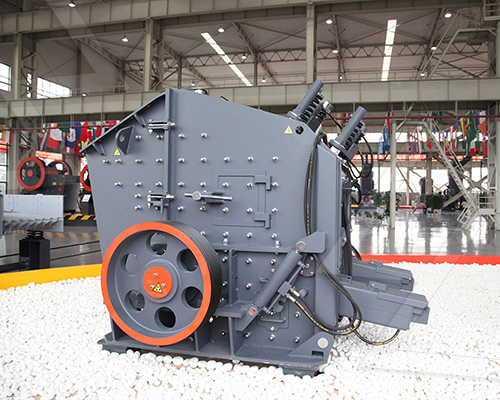
Critical casting components undergo controlled heat treatment (quenching and tempering at ≥1050°C, followed by air or oil cooling) to achieve a homogeneous microstructure, minimizing internal defects and maximizing service life in abrasive compressive environments. All moving assemblies, including eccentric shafts and bearings, are machined to ISO 2768-mK geometric tolerances and balanced to G6.3 quality per ISO 1940 to prevent vibration-induced fatigue.
- Crushing Chamber Geometry: Maintains OEM-designed cavity profile (deep V-type) with fixed and movable jaw plates aligned to ±0.5° angular tolerance, ensuring consistent feed distribution and reducing bypass fines.
- TPH Capacity: Sustains rated throughput of 180–300 TPH under continuous operation with feed sizes up to 750 mm, depending on closed-side setting (CSS) and ore compressive strength (up to 320 MPa).
- Ore Hardness Adaptability: Liners and cheek plates engineered for high-abrasion materials (e.g., basalt, hematite, quartzite) using modified Mn-18Cr2Mo alloy optionally available for extreme-duty applications.
- Toggle System Integrity: Forged steel toggle plates meet CE EN10025-2 S355J2 standards, with safety factors exceeding 4.5× maximum crushing force (3500 kN).
- Interchangeability: All components adhere to OEM dimensional blueprints (tolerance ±0.05 mm on critical fits), guaranteeing drop-in replacement without retrofitting or downtime.
Compliance with CE, ISO 9001:2015, and mine safety regulations (MSHA equivalent) ensures operational reliability in regulated environments. Each batch is certified with material test reports (MTRs) traceable to heat number and hardness validation (320–380 HBW).
Trusted by Industry Leaders: Quality Assurance and Global Supply Chain Reliability
- OEM manufacturing of PE900 × 1200 jaw crushers adheres to ISO 9001:2015-certified quality management systems, with full material traceability from raw stock to final assembly.
- Critical wear components—including jaw plates, cheek plates, and toggle plates—are cast from high-manganese steel (Mn13Cr2, Mn18Cr2) heat-treated to achieve 180–220 HB hardness, ensuring optimal work-hardening response under compressive loads exceeding 300 MPa.
- All structural castings (e.g., main frame, pitman) are produced using ASTM A27 Grade 65/65 or equivalent low-alloy carbon steel, stress-relieved via thermal annealing to eliminate residual casting stresses and prevent fatigue cracking under cyclic loading.
- Bearings comply with ISO 281 dynamic load ratings; PE900 × 1200 units utilize SKF or FAG 32326 or 32328 tapered roller bearings, rated for radial loads up to 1,050 kN and axial loads up to 380 kN.
- Drive systems integrate CE-compliant motor mounts, V-belt drives per ISO 4184, and SPB or SPC industrial V-belts designed for peak torque transmission at 300–450 rpm eccentric shaft speeds.
- Rotational inertia and stroke profile are calibrated to achieve nominal throughput of 180–250 TPH with compressive strength adaptability up to 320 MPa (e.g., granite, basalt, hematite).
- Finite Element Analysis (FEA) validated frame design ensures safety factor ≥ 1.8 under maximum crushing force (400 kN), per ASCE 7-16 load combination criteria.
- Global supply chain integrates dual-source procurement for castings and bearings, with strategic warehouse nodes in Antwerp, Dubai, and Singapore enabling 72-hour dispatch for critical spares.
- Every unit undergoes 4-hour factory acceptance testing (FAT) including no-load vibration analysis (ISO 10816-3, velocity ≤ 4.5 mm/s), lubrication system pressure hold (≥ 0.4 MPa for 30 min), and dynamic load simulation.
- On-site commissioning support includes laser alignment of drive pulleys (tolerance ±0.05 mm/m) and lubrication protocol calibration for ISO VG 680 gear oils under ambient ranges from -20°C to +50°C.
Frequently Asked Questions
What is the recommended replacement cycle for jaw plates on an OEM PE900 x 1200 jaw crusher processing abrasive quartzite ore (Mohs 7)?
Replace jaw plates every 800–1,000 operating hours when crushing high-silica quartzite. Use ZGMn14Cr2 high-manganese steel liners with water-cooled casting and twin-arc surfacing for optimal work-hardening. Monitor wear at 200-hour intervals via ultrasonic thickness testing to prevent frame damage.
Can the PE900 x 1200 jaw crusher’s toggle system be upgraded for harder ores (Mohs 8–9) without modifying the main frame?
Yes, upgrade to a hydraulic toggle tension system with SKF Explorer 22248 E spherical roller bearings and increased stroke damping. Pair with reinforced manganese steel (ZGMn18Cr2) pitman arms and pre-load adjustment to 28–32 kN. Ensures stable operation under sustained shock loads from basalt or magnetite feeds.
How does OEM specify lubrication for the PE900 x 1200 eccentric shaft bearing under continuous 16-hour shifts?
Use ISO VG 220 synthetic EP grease (e.g., Shell Gadus S2 V220) with +15% molybdenum disulfide additive. Lubricate every 8 hours via dual-feed manifolds at 3,000 psi. Maintain oil temperature below 65°C using thermostatic fans; confirm flow with magnetic plug inspections weekly.
What causes excessive vibration in PE900 x 1200 crushers during startup, and how does OEM mitigate it?
Imbalance in flywheel alignment or worn coupling bushings causes startup resonance. OEM specifies laser-aligned flywheels with runout <0.05 mm. Install ISO 9001-certified polyurethane vibration isolators (Shanghai Vibratech) and verify foundation grout integrity under 15 MPa compressive strength.
How does the OEM ensure proper cheek plate alignment and minimize galling in PE900 x 1200 assemblies?
Cheek plates must be fitted with 0.02–0.03 mm interference using hydraulic expansion sleeves (Hydrofit™). Surface-hardened to 52–55 HRC via induction treatment. Mate with phosphor-bronze backing strips to reduce galling; torque mounting studs to 1,450 Nm in crisscross sequence.
What hydraulic pressure range is required for the adjust-setting system on an OEM PE900 x 1200 handling variable feed gradation?
Maintain hydraulic pressure between 140–160 bar using Bosch Rexroth A4VG axial piston pumps. Integrate load-sensing valves to auto-release at 180 bar during blockages. Use HFCu-certified anti-wear hydraulic fluid with 10-µm filtration to protect servo-valve spools.
How does OEM optimize cavity profile geometry in PE900 x 1200 crushers for higher throughput on alluvial gold ores?
Cavity optimized with 21° fixed jaw angle and precision-machined concave relief near the bottom deck. Increases open-side discharge setting efficiency by 18%. Paired with pre-screening grizzlies to limit fines, achieving 1,100 tph at 150 mm CSS with 92% passing efficiency.
What metallurgical standards define OEM pitman shafts for PE900 x 1200 to prevent fatigue cracking?
Pitman shafts forged from ASTM A47-Grade 32510 carbon steel, normalized at 880°C and stress-relieved at 590°C. Hardness: 229–269 HB. Validated via ultrasonic and MPI testing. Critical radii feature roller burnishing to induce compressive residual stress, extending fatigue life beyond 25,000 hours.