Table of Contents
- Understanding M Sand Manufacturing Machines and Their Rising Demand
- Key Factors Influencing M Sand Manufacturing Machine Prices
- Types of M Sand Plant Setups and Their Investment Costs
- Comparative Analysis of Leading M Sand Machine Manufacturers and Pricing
- How to Choose the Right M Sand Manufacturing Machine for Your Budget
- Frequently Asked Questions
- What factors influence the price of an M sand manufacturing machine?
- How much does a complete M sand manufacturing plant cost?
- What is the price range for a vertical shaft impact (VSI) crusher used in M sand production?
- Are automatic or semi-automatic M sand machines more cost-effective?
- How does capacity affect M sand machine pricing?
- What additional equipment affects the total cost of an M sand setup?
- Is imported machinery more expensive than indigenous M sand manufacturing equipment?
- How do wear parts impact the long-term cost of M sand machines?
- Can modular M sand plants reduce upfront investment?
- Do energy-efficient models justify their premium pricing?
- What role does particle shape and grading control play in machine selection and pricing?
- How does after-sales service and warranty affect M sand machine valuation?
As the construction industry shifts toward sustainable and consistent alternatives to river sand, M sand (manufactured sand) has emerged as a preferred choice, driving demand for advanced M sand manufacturing machines. In 2024, understanding the price dynamics of these machines is crucial for entrepreneurs, contractors, and quarry operators aiming to optimize production efficiency and meet stringent quality standards. Machine costs vary significantly based on capacity, technology, and automation level, with prices influenced by factors such as raw material type, desired fineness modulus, and regional market conditions. From vertical shaft impactors to multi-stage processing plants, the range of available equipment presents diverse investment options tailored to specific operational needs. This analysis explores the key determinants shaping M sand machine pricing, compares prominent machine types on the market, and delivers a comprehensive cost breakdown to guide informed decision-making in an increasingly competitive and regulated industry landscape.
Understanding M Sand Manufacturing Machines and Their Rising Demand
-
M sand manufacturing machines are engineered systems designed to produce manufactured sand (M sand), a high-quality alternative to river sand in construction applications. These machines utilize advanced crushing, grinding, and classification technologies to generate uniformly graded, angular particles that enhance the strength and durability of concrete and mortar.
-
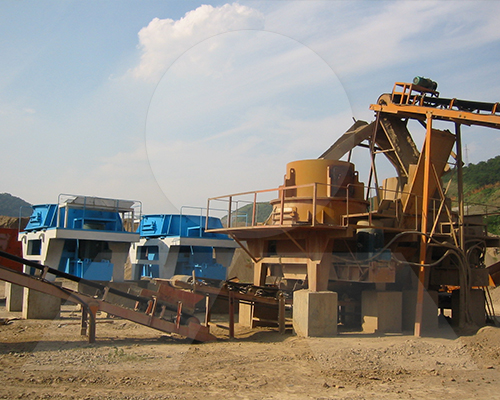
The core components of an M sand manufacturing machine typically include a primary crusher (such as a jaw crusher), secondary impact or cone crushers, a vertical shaft impactor (VSI) for fine particle shaping, and an air or water-based classification system to ensure precise gradation. The integration of automation and control systems allows for consistent output, reduced operational errors, and optimized energy consumption.
-
Rising urbanization, infrastructure development, and stringent environmental regulations restricting river sand mining have significantly increased the demand for M sand. Governments across emerging economies are enforcing policies to promote sustainable construction materials, further accelerating adoption. As a result, manufacturers are investing in high-efficiency M sand production lines capable of meeting construction-grade specifications (e.g., IS 383 in India).
-
Technological advancements have improved the precision and scalability of M sand machines. Modern VSIs, for instance, offer adjustable rotor speeds and feed controls, enabling customization of particle size distribution and surface texture. Additionally, modular plant designs allow for easy transportation and rapid deployment at project sites, enhancing operational flexibility.
-
The demand surge is also driven by performance advantages: M sand exhibits lower impurity levels, consistent gradation, and superior bonding properties compared to natural sand. These attributes translate into reduced cement consumption, improved structural integrity, and long-term cost savings in large-scale construction.
-
Market dynamics in 2024 reflect increased competition among equipment suppliers, leading to innovations in energy efficiency, wear-part longevity, and predictive maintenance features. This competitive landscape, coupled with growing awareness among contractors and developers, continues to expand the global footprint of M sand manufacturing systems.
Key Factors Influencing M Sand Manufacturing Machine Prices
- Machine capacity and throughput rate
- Degree of automation and control systems
- Crusher type and configuration
- Material quality and wear component durability
- Compliance with environmental and regulatory standards
- Level of customization and integration capability
- Brand reputation and after-sales support
The price of M sand manufacturing machines is determined by a confluence of technical, operational, and market-driven variables. Machine capacity—measured in tons per hour (TPH)—is a primary cost driver; higher-capacity units require robust engineering, larger motors, and reinforced structures, significantly increasing production costs. Units designed for 100 TPH command premium pricing over those rated for 30–50 TPH due to scalability and sustained operational demands.
Automation level directly influences cost. Machines equipped with programmable logic controllers (PLCs), remote monitoring, real-time diagnostics, and automated feed regulation systems reduce manual intervention and improve output consistency but add 15–25% to base pricing. Advanced control integration enhances predictive maintenance and energy efficiency, justifying the investment for large-scale producers.
The type of crusher used—vertical shaft impact (VSI), horizontal shaft impact (HSI), or cone crushers—impacts both machine price and final sand quality. VSI crushers, preferred for producing cubical-shaped sand with low flakiness, are more expensive due to precision rotor design and wear-resistant materials such as tungsten carbide anvils or high-chrome liners. Wear component longevity directly affects lifecycle cost; machines with replaceable, modular wear parts reduce downtime and long-term operating expenses.
Environmental compliance adds cost but is non-negotiable in regulated markets. Units with dust suppression systems, noise enclosures, and water recycling integration meet statutory requirements but require additional engineering and components. Machines compliant with IS 383 and CPCB norms are priced higher but ensure market acceptance and operational legality.
Customization for site-specific feed materials (e.g., basalt, granite, or recycled concrete) increases design complexity and cost. Integration with existing crushing circuits or conveyor systems further influences pricing based on engineering adjustments.
Finally, brand equity and post-sale service infrastructure affect valuation. Established manufacturers offering comprehensive warranties, technical training, and spare parts networks command price premiums, reflecting long-term reliability and reduced total cost of ownership.
Types of M Sand Plant Setups and Their Investment Costs
-
Fixed M Sand Plant Setup
Designed for long-term operations at a single site, fixed setups are engineered for high-volume production with minimal material handling loss. These installations typically include a primary jaw crusher, vertical shaft impactor (VSI), vibrating screens, and screw or hydro-separators for fines control. Equipment is mounted on concrete foundations, ensuring stability and prolonged service life. Power requirements range from 150 to 300 kW, depending on capacity (100–300 TPH). Land acquisition and civil works constitute a significant portion of initial costs. Total investment ranges from ₹1.8 to ₹3.5 crore, excluding land. Ideal for large construction projects, ready-mix concrete producers, or regions with consistent sand demand. -
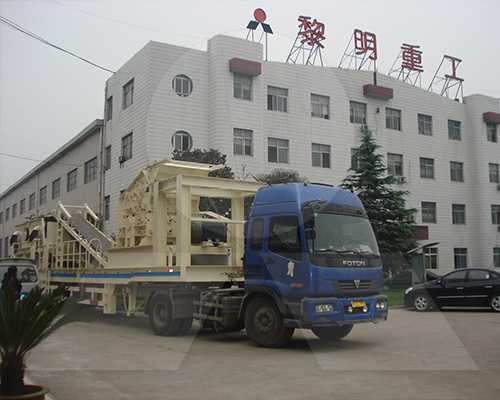
Portable M Sand Plant Setup
Engineered for mobility, portable plants integrate crushing, screening, and washing units on tracked or wheeled chassis. These setups enable relocation across quarries or construction sites, reducing transportation costs for raw materials. Typical capacity spans 50–150 TPH, with power needs between 100–200 kW. Despite lower upfront investment (₹1.2 to ₹2.2 crore), operational efficiency may be marginally lower due to compact design and dynamic alignment challenges. Best suited for short-term contracts, remote locations, or operators seeking geographical flexibility. -
Semi-Mobile (Modular) M Sand Plant Setup
Bridging fixed and portable configurations, modular plants offer disassemblable structures that can be reassembled at new sites with moderate effort. They maintain near-fixed plant efficiency while enabling relocation every few years. Components are pre-fabricated and bolted on-site, reducing installation time. Capacities range from 80–200 TPH with power requirements of 130–250 kW. Investment falls between ₹1.6 and ₹2.8 crore, factoring in transport and reassembly logistics. Suitable for mid-scale operators targeting regional markets with fluctuating demand.
| Setup Type | Capacity (TPH) | Power (kW) | Investment Range (₹) | Best Use Case |
|---|---|---|---|---|
| Fixed | 100–300 | 150–300 | 1.8 – 3.5 Crore | High-volume, permanent operations |
| Portable | 50–150 | 100–200 | 1.2 – 2.2 Crore | Temporary sites, mobile operations |
| Semi-Mobile | 80–200 | 130–250 | 1.6 – 2.8 Crore | Mid-term regional deployment |
Investment costs are influenced by automation level, crusher type (e.g., VSI vs. HSI), and inclusion of dust suppression and water recycling systems. Imported components can increase prices by 15–25% over indigenous setups.
Comparative Analysis of Leading M Sand Machine Manufacturers and Pricing
-
Robust Sand Solutions (India): Offers VSI-based M sand systems with modular automation; machines range from ₹18 lakh to ₹1.2 crore, depending on capacity (10–100 TPH). Known for energy-efficient rotor design and low wear-part consumption, their pricing reflects premium engineering, with service support across southern India.
-
Metso Outotec (Finland): Global leader providing high-intensity Barmac B series VSIs; entry-level units start at ₹2.5 crore, scaling beyond ₹4 crore for fully integrated plants. Superior particle shaping and durability justify premium pricing, particularly for large-scale, continuous operations demanding consistent cubical grain output.
-
Sand Master Engineers (India): Mid-tier manufacturer with TPH capacities from 5 to 75; pricing spans ₹14 lakh to ₹85 lakh. Machines emphasize ease of maintenance and locally adaptable configurations. Cost advantage stems from domestic manufacturing, though wear life and control system sophistication trail global counterparts.
-
KPI-JCI (USA, part of Sandvik Group): Delivers high-performance Titan VSIs and classified fines systems; base units start around ₹2.2 crore. Integrated dust management and remote monitoring elevate operational reliability, targeting high-volume producers willing to invest in lifecycle cost reduction.
-
L&T Construction (India): Offers turnkey M sand solutions using proprietary vertical shaft impactors; systems priced between ₹1.1 crore and ₹3.5 crore. Strong focus on compliance with IS 383 standards, backed by in-house R&D and material testing infrastructure.
| Manufacturer | Origin | Price Range (INR) | Capacity Range (TPH) | Key Differentiator |
|---|---|---|---|---|
| Robust Sand | India | ₹18L – ₹1.2Cr | 10–100 | Energy-efficient rotor, service reach |
| Metso Outotec | Finland | ₹2.5Cr – ₹4Cr+ | 50–200 | Superior grain shaping, global support |
| Sand Master | India | ₹14L – ₹85L | 5–75 | Cost-effective, localized service |
| KPI-JCI | USA | ₹2.2Cr – ₹3.8Cr | 60–150 | Advanced automation, dust control |
| L&T Construction | India | ₹1.1Cr – ₹3.5Cr | 50–120 | Compliance assurance, turnkey delivery |
Pricing differentials stem from automation level, material science in wear components, and after-sales ecosystem. Indian manufacturers dominate the sub-₹1 crore segment, prioritizing affordability and service accessibility. Global brands command 2–3× premiums for precision engineering, longevity, and compliance assurance. Buyers evaluating total cost of ownership increasingly favor higher CAPEX solutions with lower operational costs and consistent sand quality.
How to Choose the Right M Sand Manufacturing Machine for Your Budget
-
Assess production requirements before selecting an M sand manufacturing machine. Determine your desired output capacity (in TPH—tons per hour) and the required fineness modulus (typically 2.6–3.2 for construction-grade M sand). Machines that deliver higher precision in particle shape and size tend to command premium pricing but reduce waste and improve concrete performance.
-
Prioritize energy efficiency and operational costs. High-speed vertical shaft impactors (VSI) are common in modern M sand plants due to their low wear cost and ability to produce cubical aggregates. However, twin-rotor VSIs offer higher throughput and better particle shaping but at increased capital cost. Evaluate specific energy consumption (kWh/ton) across models—efficient machines reduce long-term operating expenditure significantly.
-
Consider automation level and maintenance demands. Fully automated plants with PLC controls minimize manual intervention and improve consistency but represent a 20–30% cost premium over semi-automated systems. For budget-conscious buyers, modular semi-automatic systems provide scalability and lower initial investment, though they require more skilled labor oversight.
-
Evaluate total cost of ownership (TCO), not just upfront price. Include installation, spare parts availability, crusher liner life, and expected downtime. For instance, machines with chrome-lined wear parts may cost more initially but offer extended service life in abrasive feedstock like granite or basalt.
-
Source machines from OEMs with proven service networks in your region. Post-sale support, technical training, and spare parts logistics directly impact uptime. A slightly higher-priced machine from a reputable manufacturer often outperforms a cheaper alternative with poor service coverage.
-
Conduct pilot testing when possible. Feed your raw material into the manufacturer’s demo plant or request sample production data. This validates machine performance under real conditions and prevents costly mismatches.
-
Budget allocation should reflect long-term goals:
- Under ₹15 lakhs: Suitable for small stationary or portable crushers with 30–50 TPH capacity; limited automation.
- ₹15–40 lakhs: Mid-tier VSI-based plants with partial automation; ideal for regional suppliers.
- Above ₹40 lakhs: Fully automated, high-capacity systems (100+ TPH) with advanced dust control and screening integration.
Selecting the right machine balances upfront cost with reliability, scalability, and conformity to IS 383 standards for manufactured sand. Make procurement decisions based on verified performance data and lifecycle economics, not initial price alone.
Frequently Asked Questions
What factors influence the price of an M sand manufacturing machine?
The price of an M sand manufacturing machine is influenced by several key factors including machine capacity (measured in tons per hour), type of crusher technology used (such as vertical shaft impactors or cone crushers), degree of automation, material of construction (e.g., high-chrome alloys for wear resistance), energy efficiency, compliance with environmental regulations, and integration with auxiliary systems like feeders, screens, and dust collectors. Customization for specific feed materials (like granite, basalt, or riverbed gravel) and regional supply chain logistics also contribute to variability in pricing.
How much does a complete M sand manufacturing plant cost?
A complete M sand manufacturing plant typically ranges from ₹1.5 crore to ₹5 crore (approximately $180,000 to $600,000 USD), depending on capacity and configuration. Plants with higher throughput (100–200 TPH) incorporating advanced VSI crushers, automated control systems, and pollution control mechanisms command premium pricing. Additional costs include site preparation, civil works, electrical installations, and commissioning fees.
What is the price range for a vertical shaft impact (VSI) crusher used in M sand production?
Industrial-grade VSI crushers used in M sand manufacturing typically range from ₹8 lakh to ₹25 lakh ($10,000 to $30,000 USD). The price varies based on rotor design (rock-on-rock vs. rock-on-anvil), motor power (90–200 kW), throughput capacity (30–200 TPH), and inclusion of smart monitoring systems. High-end models with hydraulic adjustment and remote diagnostics cost significantly more due to enhanced reliability and reduced downtime.
Are automatic or semi-automatic M sand machines more cost-effective?
Fully automatic M sand plants are more cost-effective in the long term despite higher upfront costs (typically 20–30% more than semi-automatic systems). They offer precise grain size control, consistent quality, lower labor requirements, reduced human error, and integration with SCADA systems for real-time performance monitoring—leading to improved operational efficiency, lower cost per ton, and faster ROI over medium to large-scale operations.
How does capacity affect M sand machine pricing?
Machine price scales non-linearly with capacity. A 50 TPH unit may cost ₹1.2 crore, whereas a 100 TPH plant may cost ₹2.2 crore—indicating economies of scale. Larger systems use heavier-duty components, advanced drive systems, and modular designs that justify incremental cost increases. However, cost per ton of sand produced decreases significantly with higher-capacity installations due to improved throughput efficiency.
What additional equipment affects the total cost of an M sand setup?
Total project cost is significantly influenced by auxiliary equipment such as vibrating feeders, multideck screens, sand washing units, slurry separators, conveyor belts, dust suppression systems, and control panels. Including these can increase the base machine cost by 30–50%. Advanced setups may also require water recycling plants and noise enclosures to comply with environmental standards, further impacting investment.
Is imported machinery more expensive than indigenous M sand manufacturing equipment?
Yes, imported M sand machines (from Germany, Japan, or Sweden) typically cost 1.5 to 2 times more than locally manufactured Indian equivalents due to higher technology standards, precision engineering, and import duties. However, they often offer superior wear life, energy efficiency, and after-sales support. Indian OEMs like Metso Outotec India, REMCO, and Pioneer Machinery provide competitive performance at lower TCO (Total Cost of Ownership), especially with localized service networks.
How do wear parts impact the long-term cost of M sand machines?
Wear parts—such as blow bars, impact plates, and liners—account for 15–20% of lifetime operating costs. High-quality, abrasion-resistant materials (like CARBI® or Hi-Chrome alloys) reduce replacement frequency and downtime. Machines designed for easy wear part access and modular replacement minimize maintenance labor, lowering overall lifecycle costs despite a higher initial machine price.
Can modular M sand plants reduce upfront investment?
Yes, modular M sand plants reduce initial capital outlay by enabling phased expansion and faster installation. These pre-engineered, skid-mounted units cost 10–15% less than custom-built systems and require minimal civil work. They are ideal for rental models or temporary projects, offering scalability and relocation flexibility—making them financially strategic for entrepreneurs testing market demand.
Do energy-efficient models justify their premium pricing?
Energy-efficient M sand machines, particularly those with IE3/IE4 motors, variable frequency drives (VFD), and optimized rotor dynamics, command a 10–15% price premium but reduce power consumption by 15–25%. For a 100 TPH plant operating 6,000 hours annually, this translates into savings of ₹15–25 lakh ($1,800–$3,000) per year in electricity costs, delivering payback within 1–2 years.
What role does particle shape and grading control play in machine selection and pricing?
Advanced M sand machines with adjustable rotor speed, feed control, and closed-circuit screening ensure optimal cubical particle shape and adherence to IS 383 grading standards—which enhances concrete strength and reduces cement usage. Such precision-engineered systems integrate AI-driven quality control loops and cost more, but are essential for premium construction applications where sand quality directly impacts structural integrity.
How does after-sales service and warranty affect M sand machine valuation?
Premium-priced machines often include comprehensive warranties (1–3 years), onsite technical support, remote diagnostics, and scheduled preventive maintenance—critical for minimizing downtime. Machines backed by pan-India service networks (e.g., from OEMs like KPI-JCI or McLanahan) offer higher long-term value. Skimping on service coverage can lead to costly breakdowns and production losses, making serviceability a justifiable cost component.