Table of Contents
- Understanding Laterite Nickel Deposits and Their Mining Challenges
- Key Equipment Used in Laterite Nickel Mining Operations
- Crushing and Grinding Systems for Laterite Nickel Ore Processing
- Hydrometallurgical Processing Equipment in Nickel Recovery
- Innovations and Sustainability in Laterite Nickel Mining Technology
- Frequently Asked Questions
- What equipment is essential for laterite nickel mining operations?
- How does laterite nickel ore composition influence equipment selection?
- What role does dewatering equipment play in laterite nickel mining?
- Which crushing and screening solutions are optimal for laterite nickel?
- How is material handling optimized in laterite nickel operations?
- What innovations exist in drilling and excavation for laterite deposits?
- How are environmental challenges addressed in laterite nickel mining equipment design?
- What maintenance strategies extend the lifespan of laterite mining equipment?
- How is HPAL feed preparation integrated with mining equipment?
- What automation technologies are used in laterite nickel mining?
- Are electric mining trucks viable for laterite nickel operations?
- How do OEMs customize equipment for tropical laterite environments?
Extracting nickel from laterite ores presents a complex challenge that demands advanced engineering, precision, and resilience—qualities embodied in the specialized equipment designed for this demanding task. Unlike sulfide ores, lateritic deposits require unique processing approaches due to their high moisture content, variable composition, and deep weathering profiles, making the selection of appropriate mining machinery critical to operational success. From high-capacity excavators and dozers engineered for overburden removal in tropical environments to robust crushing and conveying systems tailored for high-clay feed materials, every component plays a vital role in ensuring efficient extraction and processing. Innovations in material handling, agglomeration, and hydrometallurgical preparation have further elevated the importance of integrated, reliable equipment solutions. As global demand for nickel surges—fueled by the electric vehicle revolution and stainless steel production—mining operators are increasingly reliant on cutting-edge technology to enhance productivity, reduce downtime, and maintain environmental compliance. The right machinery doesn’t just support laterite nickel mining—it defines its viability and long-term sustainability.
Understanding Laterite Nickel Deposits and Their Mining Challenges
-
Laterite nickel deposits form through prolonged tropical weathering of ultramafic rocks, resulting in deep, layered profiles rich in iron and magnesium silicates. These deposits are predominantly located in equatorial and sub-equatorial regions, including Indonesia, the Philippines, New Caledonia, and parts of South America and Africa. Unlike sulfide deposits, laterites contain nickel bound within oxide and silicate minerals such as goethite, garnierite, and smectite, making extraction more complex due to the lack of discrete nickel-bearing sulfide minerals.
-
The vertical stratification of laterite profiles typically includes distinct zones: limonite at the surface, a transition zone, and saprolite at depth. The limonite zone is iron-rich with moderate nickel content, while the saprolite zone contains higher nickel concentrations within magnesium silicates but poses challenges due to its friable and moisture-laden nature. This heterogeneity demands selective mining and tailored processing strategies.
-
Mining laterite nickel deposits involves significant logistical and technical hurdles. Open-pit methods dominate due to the near-surface occurrence of ore, but high rainfall in tropical environments leads to persistent water management issues, slope instability, and haul road degradation. Additionally, overburden-to-ore ratios can be substantial, increasing stripping costs and environmental footprint.
-
Equipment selection is critical to operational efficiency. High-capacity excavators and electric rope shovels are required for overburden removal and ore excavation, while robust haul trucks with high traction and corrosion resistance are essential for transporting wet, abrasive material. Dozers equipped with advanced GPS-guided blade control optimize cut-and-fill operations and pit dewatering preparations.
-
One of the principal challenges is ore variability, which affects downstream processing. Nickel distribution is often inconsistent both vertically and laterally, necessitating real-time grade monitoring and blending strategies. In-pit ore sorting using portable XRF analyzers or sensor-based systems enhances feed consistency and reduces processing costs.
-
The abrasive nature of lateritic material accelerates wear on cutting edges, buckets, and liners, demanding equipment with hardened steel components and predictive maintenance regimes. Coupled with remote mine locations, these factors elevate maintenance complexity and equipment lifecycle costs.
-
Effective mining of laterite nickel demands an integrated approach—combining precision excavation, adaptive logistics, and durability-focused machinery—to ensure economic viability amid geotechnical and metallurgical complexity.
Key Equipment Used in Laterite Nickel Mining Operations
-
Excavators: Large hydraulic excavators are essential for overburden removal and initial ore extraction in laterite deposits. Their high dig depth and bucket capacity enable efficient handling of the deep, weathered profiles typical of laterite systems.
-
Load-Haul-Dump (LHD) Machines: In selective mining scenarios or bench development, LHDs transport fragmented ore from working faces to dump points or primary crushers. Their maneuverability in confined areas supports precise ore-waste segregation.
-
Dozers: Bulldozers equipped with GPS-guided grading systems are deployed for land clearing, pit preparation, and haul road maintenance. High-precision dozing ensures optimal slope stability and drainage in tropical mining environments.
-
Haul Trucks: Articulated and rigid-frame dump trucks transport overburden and ore across variable terrain. High-payload capacities (60–360 tons) and all-wheel drive configurations are standard for maintaining throughput in high-moisture conditions.
-
Crushers: Primary gyratory or jaw crushers reduce run-of-mine ore to a size suitable for downstream processing. Given the high moisture and clay content of laterite, crushers with robust anti-clogging designs are preferred.
-
Stackers and Reclaimers: Used in stockyard management, these machines ensure homogenization and controlled feed delivery to processing plants. Automated stackers with radial or linear movement optimize material blending.
-
Agglomerators: Rotary drums or disc pelletizers prepare crushed ore for heap leaching by forming uniform agglomerates, enhancing permeability and reagent penetration.
-
Leach Pads: Constructed with high-density polyethylene (HDPE) liners, these engineered platforms support solvent extraction through controlled percolation of sulfuric acid in heap or dump leaching operations.
-
Solution Collection Systems: Networked piping and HDPE-lined sumps collect pregnant leach solution (PLS), directing it to solvent extraction and electrowinning (SX/EW) circuits.
-
Thickeners and Filters: Countercurrent decantation (CCD) thickeners and vacuum belt filters recover process water and produce dry residue for disposal, critical in water-scarce or environmentally sensitive regions.
-
Reagent Dosing Systems: Automated sulfuric acid and lime dosing units ensure precise pH control during leaching and neutralization, optimizing metal recovery and effluent stability.
Each item in this equipment chain is selected for durability, adaptability to tropical climates, and integration with hydrometallurgical recovery processes. Operational synergy between extraction and processing machinery directly influences recovery rates, energy consumption, and environmental compliance in laterite nickel operations.
Crushing and Grinding Systems for Laterite Nickel Ore Processing
-
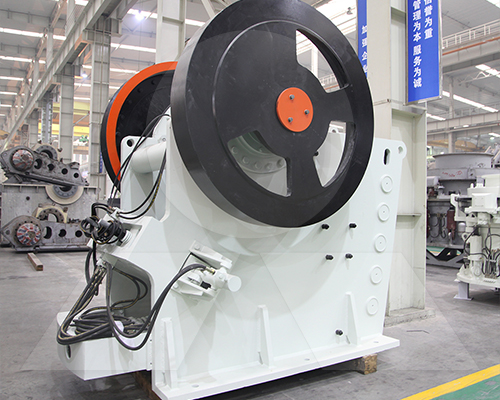
Primary crushing of laterite nickel ore typically employs jaw or gyratory crushers, selected based on feed size, throughput requirements, and ore hardness. Given the high moisture content and clay-rich nature common in lateritic deposits, crushers must be resistant to clogging and designed for consistent performance under abrasive conditions. Closed-circuit configurations with scalping screens are often deployed to ensure oversized material is recirculated, maintaining product size uniformity.
-
Secondary and tertiary crushing stages utilize cone or impact crushers to further reduce particle size to levels suitable for grinding circuits. In operations targeting high liberation of nickel-bearing minerals such as garnierite, achieving a fine crush—typically P80 values between 10–25 mm—is critical. Selective crushing strategies may be applied to minimize over-grinding of softer clay fractions, thereby reducing energy consumption and limiting slime generation.
-
Grinding circuits for laterite nickel ore are predominantly configured as semi-autogenous (SAG) or ball mill systems, with rod mills occasionally employed for intermediate grinding. SAG mills offer energy efficiency and reduced media costs but require competent ore fractions to function optimally; thus, their applicability depends on ore variability. Ball mills, operated in closed circuit with hydrocyclones, provide precise particle size control essential for downstream processing, particularly in high-pressure acid leach (HPAL) or heap leach operations.
-
Due to the abrasive nature of laterite ores and their tendency to coat grinding media, mill liners and classification systems must be engineered for wear resistance. Ceramic or rubber-lined components, along with advanced grinding media management protocols, enhance operational longevity. Additionally, slurry rheology must be monitored closely—additives may be introduced to mitigate viscosity issues arising from fine clays.
-
Emerging trends include the integration of high-pressure grinding rolls (HPGR) as an alternative to conventional crushing and grinding, offering improved energy efficiency and finer product size distributions. However, HPGR implementation requires careful assessment of moisture content and ore compressive strength to avoid roll surface degradation.
-
Process automation, including real-time particle size analysis and adaptive control systems, ensures consistent grind size and optimal energy utilization across variable ore feed conditions.
Hydrometallurgical Processing Equipment in Nickel Recovery
-
High-integrity hydrometallurgical processing equipment is fundamental to nickel recovery from laterite ores, particularly in high-pressure acid leaching (HPAL) and atmospheric leaching operations. These systems are engineered to handle aggressive chemical environments, elevated temperatures, and high solids loading, ensuring efficient dissolution of nickel and cobalt from limonitic and saprolitic feed materials.
-
The core of any HPAL circuit is the autoclave system, typically constructed from titanium-clad or alloy 686 steel to resist sulfuric acid corrosion at temperatures exceeding 250°C and pressures above 4 MPa. Modern autoclaves incorporate advanced mixing mechanisms, such as gas-sparged or mechanical agitators, to maintain slurry homogeneity and optimize oxygen mass transfer, which is critical for iron oxidation and nickel leaching kinetics.
-
Downstream of leaching, solid-liquid separation is achieved via pressure filters, pre-coat filters, or counter-current decantation (CCD) thickeners. CCD circuits are favored for their high recovery efficiency and low wash water consumption, utilizing a series of thickeners to progressively recover pregnant leach solution (PLS) while minimizing reagent loss.
-
The PLS then undergoes selective metal recovery via solvent extraction (SX) or precipitative techniques such as hydroxide or sulfide precipitation. SX units employ pulse columns or mixer-settlers with corrosion-resistant linings (e.g., rubber-lined carbon steel or fiberglass-reinforced plastic) to facilitate phase dispersion and coalescence. Extractants such as organophosphorus acids are used to selectively transfer nickel and cobalt into an organic phase, followed by stripping to produce high-purity intermediate solutions.
-
Crystallization or electrowinning equipment finalizes nickel recovery. High-efficiency crystallizers produce nickel sulfate hexahydrate suitable for battery-grade applications, while electrowinning cells with inert anodes and titanium cathodes generate LME-grade nickel metal. Both systems require precise control of temperature, pH, and current density to ensure product consistency and energy efficiency.
-
All hydrometallurgical equipment must integrate with advanced process control systems to monitor slurry density, redox potential, and acid concentration in real time. Automation enhances operational safety, reduces reagent consumption, and maximizes metal recovery—critical for economic viability in fluctuating nickel markets.
Innovations and Sustainability in Laterite Nickel Mining Technology
-
Implementation of high-pressure acid leaching (HPAL) advancements has significantly improved nickel recovery rates from lateritic ores, particularly in saprolite zones, where traditional methods faced inefficiencies. Modern HPAL reactors now operate at optimized temperature and pressure regimes, enhancing leaching kinetics while reducing acid consumption through closed-loop reagent recycling systems.
-
Sensor-based ore sorting technologies have been integrated into upstream processing, enabling real-time differentiation between nickel-bearing and waste material. This selective pre-concentration reduces downstream energy demand and minimizes tailings volume, contributing to both operational efficiency and environmental sustainability.
-
Energy-efficient comminution circuits, incorporating high-efficiency grinding mills and vertical roller mills, have replaced conventional ball mills in several operations. These systems reduce specific energy consumption by up to 30%, aligning with decarbonization goals in mineral processing.
-
Water stewardship has driven innovation in slurry handling and dewatering. Filter-press and high-rate thickener systems now achieve dry-stack tailings disposal in suitable climates, drastically reducing freshwater requirements and eliminating risks associated with wet tailings impoundments.
-
Hybrid power integration—combining solar, wind, and battery storage with conventional diesel or grid sources—is increasingly deployed in remote laterite mining sites. Such hybrid systems lower greenhouse gas emissions and reduce reliance on imported fuels, enhancing energy security.
-
Digital twin modeling and machine learning algorithms are being applied to optimize process parameters across leaching, solvent extraction, and electrowinning circuits. Predictive maintenance models reduce equipment downtime and extend asset life, improving overall plant availability.
-
Research into alternative lixiviants, such as organic acids and chloride-based systems, aims to reduce environmental impact and improve selectivity in nickel dissolution. While not yet mainstream, pilot-scale trials show promise for reducing sulfuric acid dependency and minimizing co-dissolution of iron and magnesium.
-
Closed-loop residue management strategies, including co-disposal of leach residues with overburden and phytostabilization using nickel-hyperaccumulating vegetation, contribute to long-term land rehabilitation and reduce ecological footprint.
These technological evolutions collectively advance the economic viability and environmental performance of laterite nickel operations, positioning the sector to meet rising demand driven by battery and stainless steel markets while adhering to stringent sustainability benchmarks.
Frequently Asked Questions
What equipment is essential for laterite nickel mining operations?
Laterite nickel mining requires specialized equipment including bucket-wheel excavators, scrapers, front-end loaders, haul trucks, and crushing systems. Given the siliceous and clay-rich composition of laterite ores, robust machinery capable of handling high moisture content and abrasive materials is essential. In-pit crushing and conveying (IPCC) systems are increasingly adopted to improve energy efficiency and reduce haulage costs.
How does laterite nickel ore composition influence equipment selection?
Laterite nickel ores are typically high in moisture, iron, and magnesium, with low nickel grades (0.8–2.0%). This necessitates equipment with high durability and resistance to corrosion and abrasion. Crushers must handle sticky, clay-laden material without clogging, while washing and screening systems are often integrated to manage slimes and improve downstream processing efficiency.
What role does dewatering equipment play in laterite nickel mining?
Dewatering is critical due to the high moisture content (up to 30%) of laterite ores. Equipment such as thickener units, filter presses, and vacuum belt filters are used to reduce moisture before processing. Efficient dewatering minimizes transportation costs and improves the effectiveness of subsequent hydrometallurgical processes like high-pressure acid leaching (HPAL).
Which crushing and screening solutions are optimal for laterite nickel?
Semi-mobile or modular crushing and screening plants with primary jaw or gyratory crushers and vibrating screens are preferred. These systems are designed to handle variable feed rates and high clay content. Tertiary crushing may be included if downstream HPAL circuits require fine feed sizes under 10 mm.
How is material handling optimized in laterite nickel operations?
Conveyor systems, especially overland and high-capacity radial stackers, are used to transport ore from mine face to stockyard or processing plant. These systems reduce diesel consumption and emissions. Smart monitoring systems with sensors and predictive maintenance algorithms keep uptime high in high-humidity tropical environments where most laterite mines operate.
What innovations exist in drilling and excavation for laterite deposits?
Innovations include GPS-guided motor graders and scrapers for precision bench leveling, and specialized bucket designs for excavators to improve performance in sticky lateritic soils. Some operations use hydro-excavation for selective mining to reduce dilution and prioritize higher-grade zones.
How are environmental challenges addressed in laterite nickel mining equipment design?
Modern equipment incorporates closed-loop water recycling systems, electric or hybrid drives to reduce emissions, and dust suppression units. Autonomous haulage systems (AHS) are being piloted to reduce fuel use and improve operational control in remote locations with minimal infrastructure.
What maintenance strategies extend the lifespan of laterite mining equipment?
Preventive and predictive maintenance using IoT-enabled sensors to monitor wear, vibration, and lubrication conditions is standard. Protective coatings and wear-resistant liners are applied to crushers and conveyors. Onsite mobile maintenance units ensure rapid response in remote tropical mining regions.
How is HPAL feed preparation integrated with mining equipment?
Ore from mining equipment is conveyed to agglomeration drums where it is mixed with acid and binders. Specialized feed preparation plants with precise dosing systems ensure uniform particle size and moisture content, critical for efficient leaching in HPAL circuits. Blending equipment maintains consistent feed grade.
What automation technologies are used in laterite nickel mining?
Autonomous drilling, hauling, and dozer systems are deployed to improve safety and efficiency. Digital twins simulate equipment performance under tropical rainfall and ore variability. Centralized control rooms integrate geological, equipment, and process data for real-time decision-making.
Are electric mining trucks viable for laterite nickel operations?
Yes, particularly in greenfield projects aiming for carbon neutrality. Battery-electric haul trucks (e.g., 90–120 ton capacity) are being tested in pilot programs. Their adoption is supported by renewable energy integration (solar, hydro) at remote tropical sites where laterite deposits are common.
How do OEMs customize equipment for tropical laterite environments?
OEMs modify engines for high ambient temperatures, enhance corrosion protection with galvanized or polymer coatings, and seal electrical systems against humidity. Cooling systems are oversized, and履带 (track) materials are hardened to resist abrasive lateritic soils.