Table of Contents
- Iron Ore Processing: The Critical Role of Crushing in Modern Mining Operations
- Introduction
- Why Crushing Matters in Iron Ore Processing
- The Iron Ore Crushing Process: A Step-by-Step Breakdown
- 1. Primary Crushing
- 2. Secondary Crushing
- 3. Tertiary Crushing
- 4. Screening and Classification
- Crushing Circuit Configurations
- Open Circuit vs. Closed Circuit
- Wet vs. Dry Crushing
- Equipment Selection Criteria for Iron Ore Crushing
- Best Practices for Optimizing Iron Ore Crushing
- 1. Implement Real-Time Monitoring
- 2. Optimize Blasting to Reduce Crushing Load
- 3. Use Advanced Control Systems
- 4. Maintain Proper Feed Distribution
- 5. Regular Liner Inspection and Replacement
- Environmental and Safety Considerations
- Dust Control
- Noise Reduction
- Energy Efficiency
- Emerging Technologies in Iron Ore Crushing
- 1. Artificial Intelligence and Machine Learning
- 2. Smart Wear Parts
- 3. Mobile and Semi-Mobile Crushing Plants
- 4. Dry Beneficiation Integration
- Case Study: Crushing in the Pilbara (Western Australia)
- Economic Impact of Efficient Crushing
- Conclusion
- Frequently Asked Questions (FAQ)
- Q1: What is the ideal crusher for hard iron ore?
- Q2: How does crushing affect iron ore grade?
- Q3: Can iron ore be crushed without water?
- Q4: What is the difference between crushing and grinding?
- Q5: How often should crusher liners be replaced?
Iron Ore Processing: The Critical Role of Crushing in Modern Mining Operations
Introduction
Iron ore is the backbone of global steel production, accounting for approximately 98% of all mined iron ore being used in steelmaking. Before this valuable mineral can be transformed into steel, it must undergo a complex series of processing steps—and crushing is the foundational stage that determines the efficiency, cost-effectiveness, and overall success of the entire operation. This article provides an in-depth look at iron ore processing crushing, exploring equipment, methodologies, industry best practices, and emerging technologies that are reshaping the sector.
Why Crushing Matters in Iron Ore Processing
Crushing is not merely a size-reduction process; it is a strategic step that directly impacts:
- Liberation of valuable minerals: Crushing breaks the ore down to a size where gangue (waste rock) can be separated from iron-bearing minerals.
- Downstream efficiency: Properly crushed ore improves the performance of grinding mills, magnetic separators, and flotation cells.
- Energy consumption: Crushing accounts for approximately 3–5% of total energy consumption in a mining operation, making optimization a high-priority financial consideration.
- Final product quality: The particle size distribution after crushing influences the grade and recovery rate of the final iron ore concentrate.
The Iron Ore Crushing Process: A Step-by-Step Breakdown
1. Primary Crushing
Objective: Reduce run-of-mine (ROM) ore (typically 1,000–1,500 mm) to a manageable size (150–300 mm).
Equipment Used:
- Jaw Crushers: The most common primary crusher, known for their reliability and high throughput. They operate by compressing ore between a fixed and a movable jaw plate.
- Gyratory Crushers: Preferred for very large mines (capacity > 5,000 t/h) due to their continuous crushing action and ability to handle hard, abrasive ores.
Key Considerations:
- Feed size and hardness dictate the choice between jaw and gyratory crushers.
- Primary crushers are typically located underground or at the pit edge to minimize haulage costs.
2. Secondary Crushing
Objective: Reduce ore from 150–300 mm to 50–100 mm.
Equipment Used:
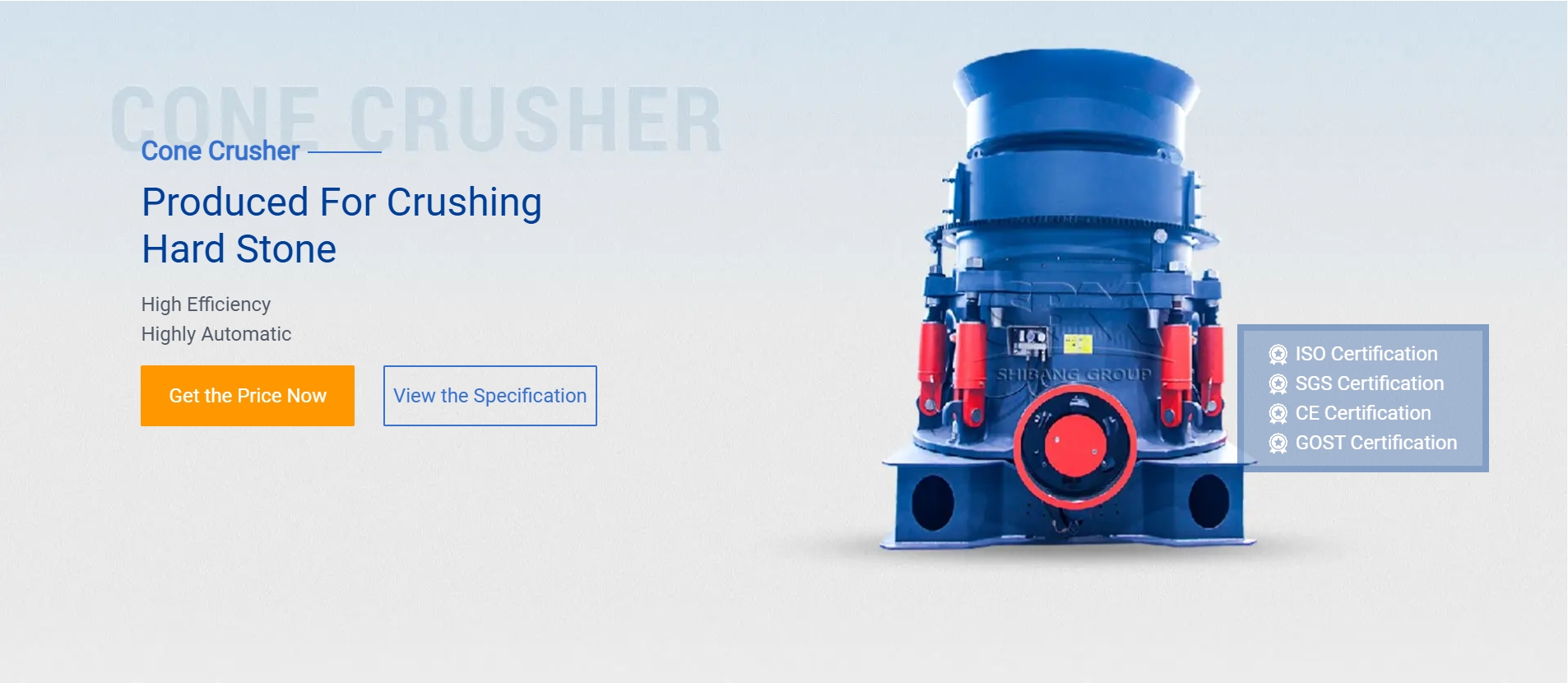
- Cone Crushers: The industry standard for secondary crushing. They offer high reduction ratios, good particle shape, and low operating costs.
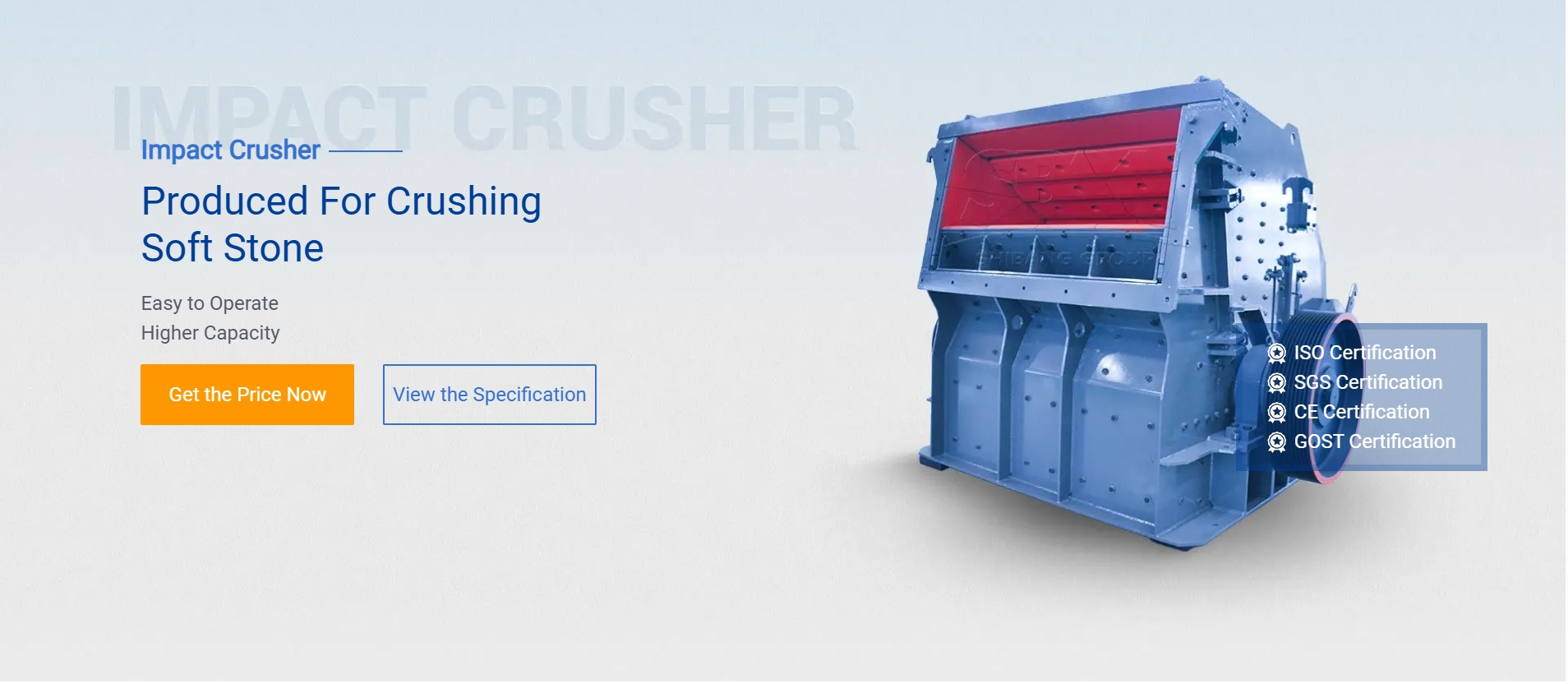
- Impact Crushers: Used for softer ores or when a cubical product shape is required, though they are less common in hard-rock iron ore applications.
Key Considerations:
- Closed-side setting (CSS) adjustments allow operators to control product size precisely.
- Screening between primary and secondary crushing removes fines, preventing over-crushing and improving efficiency.
3. Tertiary Crushing
Objective: Further reduce ore to 10–50 mm, preparing it for grinding or direct beneficiation.
Equipment Used:
- High-Pressure Grinding Rolls (HPGR): Increasingly popular for iron ore due to their energy efficiency (20–30% less energy than conventional crushers) and micro-cracking benefits that enhance downstream grinding.
- Short-Head Cone Crushers: Used when a finer product (under 20 mm) is required.
Key Considerations:
- Tertiary crushing often operates in closed circuit with vibrating screens to ensure all material meets the target size.
- The product from this stage may feed directly into ball mills or SAG mills for further size reduction.
4. Screening and Classification
While not strictly a crushing step, screening is inseparable from the crushing circuit. Vibrating screens classify ore by size, sending oversize material back to the crusher (closed-circuit operation) and forwarding undersize material to the next stage.
Types of Screens:
- Banana screens (high-capacity, multi-slope)
- Linear motion screens (for fine separation)
- Dewatering screens (for moisture removal in wet processing)
Crushing Circuit Configurations
Open Circuit vs. Closed Circuit
| Parameter | Open Circuit | Closed Circuit |
|---|---|---|
| Definition | Ore passes through the crusher once | Oversize material is recycled back to the crusher |
| Product Consistency | Less uniform | Highly uniform |
| Energy Efficiency | Lower (over-crushing occurs) | Higher (only oversize is re-crushed) |
| Typical Application | Primary crushing | Secondary/tertiary crushing |
Wet vs. Dry Crushing
- Dry crushing is preferred in arid regions (e.g., Pilbara, Australia) to conserve water.
- Wet crushing is used when downstream processes (e.g., spiral concentrators) require slurry feed, or when dust suppression is a priority.
Equipment Selection Criteria for Iron Ore Crushing
Choosing the right crusher is a balance of several factors:
- Ore Hardness (Abrasion Index): High-silica ores require wear-resistant liners (e.g., manganese steel, ceramic composites).
- Moisture Content: Sticky, clay-rich ores may clog standard crushers, necessitating sizers or roll crushers.
- Capacity Requirements: Throughput demands (t/h) dictate crusher size and number of units.
- Product Specification: Target particle size and shape (e.g., for direct-reduced iron or pellet feed).
- Capital vs. Operating Costs: HPGRs have higher upfront costs but lower energy and media consumption over time.
Best Practices for Optimizing Iron Ore Crushing
1. Implement Real-Time Monitoring
Modern crushers are equipped with sensors that track:
- CSS (closed-side setting)
- Power draw
- Liner wear
- Vibration levels
These data points enable predictive maintenance and prevent unplanned downtime.
2. Optimize Blasting to Reduce Crushing Load
Effective blasting in the mine can reduce the ROM size, shifting energy consumption from energy-intensive crushing to cheaper blasting. This is known as “drill-to-mill” optimization.
3. Use Advanced Control Systems
Automated crusher settings (e.g., ASRi™ by Sandvik, or Metso’s IC™ series) allow real-time adjustment of CSS based on feed conditions, maximizing throughput while protecting equipment.
4. Maintain Proper Feed Distribution
Evenly distributing ore across the crusher chamber prevents uneven wear, reduces power spikes, and improves product consistency. Chutes and feeders should be designed to avoid segregation..jpg)
5. Regular Liner Inspection and Replacement
Worn liners increase energy consumption and reduce reduction ratios. A proactive liner management program can extend crusher life by 20–30%.
Environmental and Safety Considerations
Dust Control
Crushing generates significant dust, which poses health risks and environmental compliance challenges. Solutions include:
- Water spray systems
- Enclosed crusher houses
- Baghouse filters or wet scrubbers
Noise Reduction
Crushers can produce noise levels above 100 dB. Engineering controls (e.g., acoustic enclosures) and administrative controls (e.g., rotation of personnel) are essential.
Energy Efficiency
With energy costs rising, operators are increasingly adopting:
- HPGR technology (up to 30% energy savings)
- Variable frequency drives (VFDs) on conveyor motors
- Solar or hybrid power systems at remote sites
Emerging Technologies in Iron Ore Crushing
1. Artificial Intelligence and Machine Learning
AI algorithms can predict crusher performance, optimize settings in real time, and detect anomalies before they cause failures. Companies like Metso Outotec and FLSmidth are integrating AI into their digital service platforms.
2. Smart Wear Parts
Sensors embedded in crusher liners can transmit wear data wirelessly, enabling just-in-time replacement and reducing the risk of catastrophic failure.
3. Mobile and Semi-Mobile Crushing Plants
In-pit crushing and conveying (IPCC) systems reduce truck haulage, cutting fuel costs and CO₂ emissions by up to 30%. These systems are gaining traction in large open-pit iron ore mines.
4. Dry Beneficiation Integration
New dry magnetic separators (e.g., Eriez’s RevX) can process crushed ore without water, eliminating the need for tailings dams—a major environmental advantage..jpg)
Case Study: Crushing in the Pilbara (Western Australia)
The Pilbara region produces over 95% of Australia’s iron ore. Major players like BHP, Rio Tinto, and Fortescue Metals Group operate massive crushing facilities that process up to 60,000 t/h of ore.
Key Features:
- Primary gyratory crushers (60–89 inch) located at the mine pit
- Secondary and tertiary cone crushers in closed circuit with banana screens
- Fully automated control rooms using AI-based optimization
- Dry crushing with dust suppression systems to meet strict environmental regulations
The result: high-grade lump ore (6–30 mm) and fines (<6 mm) that are directly shipped to steelmakers in China, Japan, and South Korea.
Economic Impact of Efficient Crushing
The crushing stage can account for 5–10% of total operating costs in an iron ore operation. Optimizing this stage yields:
- Higher throughput (up to 15% increase with proper settings)
- Lower energy consumption (savings of $0.50–$1.50 per ton)
- Reduced liner wear (extending replacement cycles by 20%)
- Improved downstream recovery (1–3% higher iron grade in concentrate)
For a 10 Mt/y operation, these improvements can translate to $10–20 million in annual savings.
Conclusion
Iron ore processing crushing is far more than a mechanical necessity—it is a strategic lever for profitability, sustainability, and competitiveness. From primary jaw crushers to advanced HPGR systems, the choice of equipment and operational strategy must be tailored to the specific ore body, market conditions, and environmental constraints.
As the industry moves toward carbon-neutral mining, crushing technologies that reduce energy consumption, water usage, and waste generation will become increasingly vital. Operators who embrace automation, real-time data analytics, and innovative comminution technologies will be best positioned to thrive in the evolving global iron ore market.
Frequently Asked Questions (FAQ)
Q1: What is the ideal crusher for hard iron ore?
For hard, abrasive ores (e.g., magnetite, hematite with high silica), gyratory crushers for primary and cone crushers for secondary/tertiary stages are the industry standard. HPGRs are excellent for tertiary applications due to their energy efficiency.
Q2: How does crushing affect iron ore grade?
Crushing alone does not change the chemical grade, but it enables downstream beneficiation (magnetic separation, flotation) to remove gangue, thereby increasing the iron content of the final product.
Q3: Can iron ore be crushed without water?
Yes. Dry crushing is common in water-scarce regions. However, dust control measures (water sprays or baghouses) are still required for safety and environmental compliance.
Q4: What is the difference between crushing and grinding?
Crushing reduces ore to <50 mm using mechanical compression or impact. Grinding further reduces it to <0.1 mm using abrasion (ball mills, SAG mills). Crushing is more energy-efficient per ton, so maximizing crushing and minimizing grinding is a key optimization strategy.
Q5: How often should crusher liners be replaced?
Liner life depends on ore abrasiveness and crusher settings. Typically, primary crusher liners last 6–12 months, while secondary/tertiary liners last 3–6 months. Wear monitoring systems can extend life by optimizing settings.
For more insights on iron ore processing, beneficiation, and mining technology, explore our related articles or contact our engineering team for a customized crushing solution.