Table of Contents
- Maximizing Ore Recovery: Advanced Extraction and Beneficiation Solutions
- Advanced Extraction for Minimal Dilution
- High-Efficiency Beneficiation Circuitry
- Optimizing Operational Efficiency: Streamlined Processing for Higher Yield
- Engineered for Durability: Robust Equipment for Harsh Mining Environments
- Precision in Processing: Tailored Technologies for Consistent Iron Quality
- Sustainable Mining Practices: Eco-Friendly Solutions for Reduced Environmental Impact
- Comprehensive Support: End-to-End Services from Exploration to Delivery
- Frequently Asked Questions
- How can we extend wear parts lifespan in high-abrasion iron ore crushers?
- What is the best strategy for adapting processing equipment to varying ore hardness (Mohs 4-7)?
- How do we mitigate excessive vibration in primary gyratory crushers?
- What are critical lubrication requirements for ball mills in iron ore processing?
- How to optimize hydraulic system performance in excavators for heavy digging?
- What is the most effective method for dust suppression in conveyor transfer points?
Beneath the earth’s surface lies the backbone of modern civilization: iron ore. Its journey from rugged geological formation to the refined steel that frames our cities and fuels our industries is a testament to human ingenuity and engineering prowess. Iron ore mining and processing is a complex, multi-stage symphony of extraction, crushing, beneficiation, and agglomeration, transforming raw, unremarkable rock into a commodity of immense global importance. This intricate process not only powers economies but also drives continuous innovation in efficiency and environmental stewardship. As we delve into the methods and machinery that make it all possible, we uncover a world where precision meets scale, ensuring the essential flow of material that builds everything from skyscrapers to automobiles.
Maximizing Ore Recovery: Advanced Extraction and Beneficiation Solutions
Maximizing ore recovery is a function of precision in both extraction and beneficiation. The goal is to liberate and concentrate the maximum amount of economically viable iron minerals (primarily magnetite and hematite) from the ore body and gangue with minimal dilution and loss to tailings. This requires a systems-level approach, integrating robust extraction equipment with highly calibrated processing circuits.
Advanced Extraction for Minimal Dilution
Modern extraction focuses on selectivity and equipment longevity to maintain high-grade feed to the plant. Key advancements include:
- Precision Blasting & Grade Control: Advanced geostatistical modeling and blast pattern design, informed by real-time grade data from down-hole probes, ensure optimal fragmentation while minimizing the dilution of waste rock with ore.
- High-Tonnage, Adaptive Loading: Hydraulic shovels and front-end loaders equipped with ISO 21873-compliant hydraulic systems and buckets lined with air-hardened, abrasion-resistant (AR) steel plates (e.g., JIS G4404 S45C, Hardox 500) provide the durability needed for continuous 5,000+ TPH loading cycles in abrasive taconite formations.
- Haulage Efficiency: Autonomous and semi-autonomous haul truck fleets optimize cycle times and route efficiency, ensuring consistent feed to the primary crusher and reducing bottlenecks that can lead to recovery losses at the mine face.
High-Efficiency Beneficiation Circuitry
Beneficiation transforms ROM ore into a marketable concentrate. Recovery is maximized by selecting and sequencing unit operations based on the ore’s specific liberation characteristics (grain size, mineral association) and magnetic properties.
Primary and Secondary Crushing:
- Gyratory and cone crushers with martensitic manganese steel (Mn-steel, ASTM A128 Grade B3/B4) mantles and concaves withstand extreme compressive forces (>250 MPa) to reduce feed to a nominal -150mm size. Modern designs feature hydraulic adjustment and clearing systems for consistent product size distribution, critical for downstream grinding efficiency.
Grinding & Liberation:
- The grinding circuit, typically comprising SAG, AG, or ball mills, is the most energy-intensive stage. Maximizing recovery here depends on achieving optimal particle liberation without over-grinding, which creates fine, unrecoverable slimes.
- Mill liners made from high-chromium white iron alloys (e.g., ASTM A532 Class III Type A) offer superior abrasion resistance, maintaining mill geometry and grinding efficiency over extended campaigns.
- Advanced process control systems use real-time particle size analysis (PSD) and mill load sensors to autonomously adjust feed rates and cyclone classifications, optimizing the grind for liberation.
Magnetic Separation & Concentration:
- For magnetite ores, recovery is achieved through a multi-stage magnetic separation circuit. High-Gradient Magnetic Separators (HGMS) and PERMROLL® separators capture fine, weakly magnetic particles that older drum separators would lose to tailings.
- Technical Parameter Comparison: Common Magnetic Separation Stages
| Stage | Feed Size (µm) | Field Intensity (Gauss) | Target Recovery | Typical Iron Recovery Gain |
| :— | :— | :— | :— | :— |
| Primary (Cobber) | -1000 to -500 | 800 – 1,500 | Bulk magnetite | ~85-90% of total magnetite |
| Secondary (Rougher) | -150 to -75 | 2,000 – 4,000 | Liberated magnetite | ~5-8% incremental |
| Tertiary (Finisher) | -45 to -30 | 6,000 – 10,000+ | Fine/liberated magnetite | ~2-4% incremental |
Gravity & Flotation for Hematite/Non-Magnetic Ores:
- For hematite or itabirite ores, spiral concentrators and reflux classifiers use specific gravity differences for pre-concentration.
- Reverse cationic flotation (silica flotation) is the industry standard for producing high-grade (>67% Fe) concentrates. Key to recovery is the precise control of reagent chemistry (amines, starch, pH modifiers) and the use of column flotation cells, which provide superior froth washing and grade control compared to mechanical cells.
Tailings Management & Residual Recovery:
- Maximizing recovery extends to tailings streams. Tailings Reprocessing Plants (TRPs) employ high-frequency screens and advanced magnetic separators to scavenge residual iron oxides from historic or current tailings dams, often recovering an additional 5-15% of iron units.
- Ceramic disc filters and hyperbaric filters achieve final concentrate moisture levels below 9%, reducing mass loss and energy consumption during pelletizing or sintering transport.
Optimizing Operational Efficiency: Streamlined Processing for Higher Yield
Operational efficiency in iron ore processing is fundamentally governed by the precision of comminution and beneficiation, and the robustness of material handling. Yield optimization is not merely about throughput; it is a systems engineering challenge that balances particle liberation, gangue rejection, and mechanical availability to maximize the mass of saleable product per unit of energy and time. The core levers are found in circuit design, wear management, and process control.
Core Technical Pillars for Streamlined Processing
- Advanced Comminution Circuit Design: Moving beyond traditional three-stage crushing and ball milling to integrated systems featuring High-Pressure Grinding Rolls (HPGR) for tertiary crushing. This creates micro-fractures in the ore, improving downstream liberation and reducing specific energy consumption in grinding by 15-30%. Circuit configurations are optimized based on Bond Work Index (Wi) and Abrasion Index (Ai) testing of the specific ore body.
- Precision Beneficiation & Separation: Employing sensor-based ore sorting (e.g., XRT, laser) for early waste rejection at coarse sizes, drastically reducing volume to downstream processes. For fine ore, the shift is towards high-gradient magnetic separators (HGMS) for magnetite and advanced flotation reagents for hematite, achieving Fe recoveries above 92% while managing silica and alumina content to meet blast furnace specifications.
- Strategic Wear Part Management: The selection of liner and wear material grades is critical. For high-impact areas (primary crushers, feed chutes), manganese steel (11-14% Mn) with work-hardening properties is standard. For high-abrasion, low-impact zones (transfer points, slurry pumps), chromium-molybdenum alloys (e.g., ASTM A532 Class III Type A) or ceramic-lined components are specified to extend service life, directly reducing maintenance downtime and cost per ton.
- Intelligent Process Control & Integration: Modern plants deploy distributed control systems (DCS) integrated with particle size analyzers (PSD) and on-stream X-ray fluorescence (XRF) analyzers. Real-time data enables closed-loop control of crusher gaps, mill load, and separator settings, maintaining the circuit at its optimal performance envelope despite feed variability.
Functional Advantages of an Optimized Circuit
- Increased Throughput & Availability: Reduced bottlenecking and predictive maintenance schedules achieve plant availability consistently above 92%, translating to higher sustainable tonnes per hour (TPH).
- Superior Product Grade Control: Tightened process variability ensures final product consistently meets target Fe grade and impurity limits (SiO₂, Al₂O₃, P), commanding premium pricing.
- Reduced Specific Energy Consumption: Efficient comminution and minimized recirculating loads lower kWh/tonne processed, a major operational cost driver.
- Adaptability to Ore Variability: A well-designed circuit with intelligent control can accommodate changes in ore hardness (as measured by Unconfined Compressive Strength – UCS) and mineralogy without significant yield loss.
Technical Specifications for Critical Comminution Components
| Component | Key Parameter | Typical Range / Standard | Impact on Yield |
|---|---|---|---|
| Primary Gyratory Crusher | Gape / Feed Opening | 1,200 – 1,500 mm | Defines maximum feed size and primary throughput capacity. |
| HPGR (Tertiary) | Specific Pressure | 3.5 – 4.5 N/mm² | Controls product micro-fracturing and particle size distribution to the ball mill. |
| Ball Mill (Closed Circuit) | Circulating Load | 150% – 250% | Optimizes grinding efficiency; controlled via hydrocyclone configuration. |
| Wear Liners (Mill) | Material Grade | ISO 13521:1999 (for cast abrasion-resistant materials) | Determines liner life and maintenance interval, affecting availability. |
Ultimately, achieving higher yield is an exercise in minimizing entropy within the processing stream. Every inefficiency—be it overgrinding, unnecessary handling, or unplanned stoppage—represents lost mass and energy. The integration of geometallurgical modeling, which links ore characteristics from the mine plan to process parameters, is now the standard for front-end engineering design (FEED) of high-yield facilities. This ensures the plant is not just built to specification, but is engineered for the specific ore it will process over its life of mine.
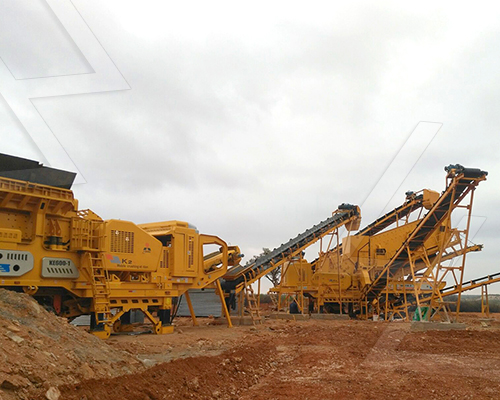
Engineered for Durability: Robust Equipment for Harsh Mining Environments
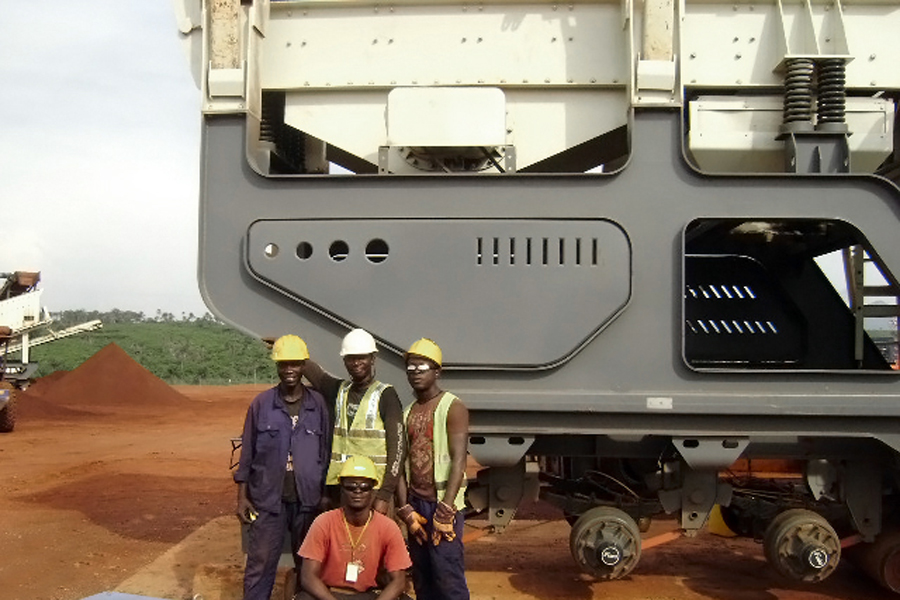
The operational integrity of an iron ore mine hinges on equipment engineered to withstand extreme mechanical stress, continuous abrasion, and high-impact loads. Failure is not an option in remote locations where downtime translates directly to significant production and revenue loss. Our equipment philosophy is rooted in material science and precision engineering, creating assets that are not merely durable, but are integral, reliable extensions of your mining process.
Core Material & Construction Philosophy
- Advanced Material Selection: Critical wear components are fabricated from proprietary high-grade abrasion-resistant (AR) steels, often exceeding 500 Brinell hardness. For high-impact applications, such as primary crusher jaws and cone mantles, we utilize modified manganese steel (Mn-steel, 11-14% Mn) that work-hardens under continuous impact, increasing surface hardness while retaining a tough, shock-absorbing core.
- Precision Fabrication & Quality Assurance: All major structures, from crusher frames to conveyor galleries, are built to ISO 9001 quality-managed processes. Welding procedures follow stringent AWS D1.1 or equivalent standards, with non-destructive testing (NDT) like ultrasonic and magnetic particle inspection employed on critical seams to ensure structural integrity.
- Component Standardization & Sealing: Where applicable, bearings, gearboxes, and hydraulic components are selected from globally recognized manufacturers (SKF, Rexroth, etc.) to ensure worldwide availability. Multi-labyrinth seals, pressurized purge systems, and IP66/67-rated electrical enclosures are standard to combat pervasive iron ore dust and moisture.
Functional Advantages in Key Applications
-
Primary Crushing & Sizing:
- Gyratory and jaw crushers feature massive, stress-relieved main frames and forged alloy steel eccentric shafts.
- Chamber designs and crushing profiles are optimized for specific ore characteristics (e.g., high-grade hematite vs. abrasive, clay-bound itabirite) to maximize throughput (TPH) and liner life.
- Automated setting adjustment systems maintain product size consistency while protecting the crusher from tramp metal.
-
Material Handling & Conveying:
- Conveyor idlers feature robust, triple-labyrinth sealed bearings with grease reservoirs, designed for a minimum L10 life exceeding 60,000 hours under high load.
- Chute liners and transfer points utilize modular, replaceable ceramic/urethane composite or ultra-high molecular weight polyethylene (UHMWPE) liners to minimize material adherence and wear.
- Stackers and reclaimers are designed with finite element analysis (FEA) to withstand dynamic loads and wind forces specific to the site location.
-
Processing & Beneficiation:
- HPGR (High-Pressure Grinding Roll) frames are constructed for operating pressures exceeding 300 N/mm², with roll surfaces protected by durable, segmented tungsten carbide studs or wear plates.
- Mill liners are cast from Ni-hard or chrome-molybdenum alloys, with lifter profiles engineered for optimal charge trajectory and grinding efficiency.
- Magnetic separators employ high-grade, temperature-stable rare-earth magnets housed in stainless steel or abrasion-resistant polyurethane casings.
Technical Specifications: Indicative Component Durability
| Equipment Segment | Critical Wear Component | Standard Material Specification | Expected Service Life* (Abrasive Ore) | Key Design Feature |
|---|---|---|---|---|
| Primary Crusher | Jaw Plates / Mantle | Austenitic Manganese Steel (Mn14) | 800,000 – 1.2M tonnes | Reversible / Rotatable design to utilize 100% of wear material. |
| Conveying | Impact Idler Rolls | Rubber Lagging, Shaft: C1045 Steel | 3-5 Years | Modular cartridge design for in-situ bearing replacement. |
| HPGR | Roll Surface | Segmented Tungsten Carbide Studs | 8,000 – 12,000 hours | Automated roll positioning and pressure control for consistent gap. |
| Ball Mill | Shell Liners | Ni-Hard IV (650 BHN) | 12-18 Months | Boltless, self-locking liner system for safer, faster replacement. |
*Service life is indicative and heavily dependent on specific ore abrasiveness (Bond Work Index), feed size, and operational throughput.
Precision in Processing: Tailored Technologies for Consistent Iron Quality
Precision in processing is the critical bridge between variable geological deposits and the stringent, non-negotiable specifications of the global steel industry. Consistency in iron ore quality—defined by controlled Fe grade, predictable impurity levels (SiO₂, Al₂O₃, P, S), and optimal physical properties (granulometry, moisture)—is not achieved by chance. It is engineered through a system of tailored technologies designed to measure, separate, and homogenize.
The core challenge lies in the inherent heterogeneity of run-of-mine (ROM) ore. Variability in hardness, abrasiveness, and mineral liberation characteristics demands a processing circuit that is both robust and precise. This is addressed through a layered technological approach:
-
Advanced Comminution Circuitry: Primary crushing and grinding systems are selected based on precise ore characterization (Bond Work Index, Abrasion Index). High-pressure grinding rolls (HPGR) are deployed for efficient, particle-bed comminution, reducing over-grinding and lowering specific energy consumption. Liner materials for mills and chutes, such as specialized Ni-hard or chromium carbide overlays, are specified for maximum wear life against highly abrasive ores, ensuring consistent throughput (TPH) and particle size distribution over extended campaigns.
-
Sensor-Based Ore Sorting & Pre-Concentration: Prior to energy-intensive fine grinding, sensor-based sorters (e.g., X-ray transmission, laser) identify and eject low-grade or waste material. This increases head grade to the downstream plant, reduces mass flow, and directly enhances the consistency of feed to concentration units.
-
High-Resolution Magnetic & Gravity Separation: For magnetic ores, the evolution from traditional low-intensity drums to superconducting high-gradient magnetic separators (SHGMS) allows for the recovery of ultra-fine, weakly magnetic hematite or the removal of paramagnetic impurities. For hematite or complex ores, spiral concentrators and reflux classifiers provide precise density-based separation, effectively rejecting silica and alumina.
-
Flotation for Ultimate Quality: Reverse flotation, where silica and alumina minerals are floated away from the iron oxide, is the definitive tool for producing premium-grade (>67% Fe) pellet feed. The precise chemistry of collectors, depressants, and frothers is tailored to the specific mineralogy of the deposit, enabling exceptional control over silica and alumina content to meet blast furnace and direct reduction specifications.
-
Process Control & Homogenization: Real-time elemental analyzers (e.g., PGNAA) on conveyor belts provide continuous assay data, feeding advanced process control systems that adjust setpoints autonomously. This is coupled with strategic homogenization beds—both for blending ROM ore and final product—to dampen residual variability, ensuring shipment-to-shipment consistency.
The material specification of the processing equipment itself is a critical USP for operational integrity. Components subject to high-stress abrasion are fabricated from:
| Component | Typical Material Specification | Key Property & Rationale |
|---|---|---|
| Slurry Pump Wet Ends | ASTM A532 Class III Type A (27% Chrome White Iron) | Exceptional resistance to gouging abrasion in high-density, coarse slurry services. |
| Hydrocyclone Liners | Polyurethane / Ceramic Composite | Tailored hardness and elasticity balance for cutting wear in classifying fine slurries. |
| Grinding Mill Liners | High-Carbon, Low-Alloy Steel / Nihard | Optimized microstructure for impact absorption and resistance to grinding media abrasion. |
| Chute & Hopper Liners | Alumina Ceramic Tiles / AR400 Steel Plate | Extreme surface hardness to withstand the sliding abrasion of coarse, sharp ore. |
Final product quality is validated against international standards (ISO 3082 for sampling, ISO 9507 for chemical analysis) and customer-specific technical data sheets. The ultimate measure of precision is the capability to reliably produce distinct product grades—from standard blast furnace sinter feed to low-alumina, high-grade direct reduction pellets—from a single, variable deposit. This tailored technological stack transforms geological resource into a predictable, high-consistency industrial commodity, de-risking the entire steelmaking value chain.
Sustainable Mining Practices: Eco-Friendly Solutions for Reduced Environmental Impact
Sustainable mining integrates advanced engineering and operational discipline to minimize ecological footprint while maintaining material integrity and process efficiency. The core philosophy is to design for longevity, resource efficiency, and closed-loop systems from extraction to processing.
Core Engineering Principles for Sustainability
- Material Science for Durability: Utilizing ultra-high-molecular-weight polyethylene (UHMWPE) for liners in low-abrasion applications and specifying premium abrasion-resistant (AR) steel plates (400-500 Brinell) or chromium-molybdenum (Cr-Mo) alloy castings for critical wear parts in crushers and chutes. This maximizes component service life, reducing the frequency of manufacturing replacements and associated embodied carbon.
- Energy Optimization in Comminution: Crushing and grinding circuits account for the majority of site energy consumption. Implementing High-Pressure Grinding Rolls (HPGR) as a tertiary or quaternary crusher reduces specific energy consumption by up to 30% compared to traditional ball milling circuits, directly lowering greenhouse gas emissions per ton of processed ore.
- Water Management & Recirculation: Modern plants are designed as near-zero-discharge facilities. Thickening and filtration technologies, such as high-rate thickeners and automated filter presses, enable >90% water recirculation. This is critical in water-stressed regions and prevents contaminated effluent.
- Dust Suppression & Air Quality Control: Engineered systems go beyond spraying. They include:
- Dry Fog systems that agglomerate fine particles without over-wetting material.
- Enclosed conveying systems with dust-tight seals and negative-pressure baghouse filtration for transfer points.
- Chemical suppressants for long-term stabilization of stockpiles and haul roads.
Technology-Driven Resource Recovery
- Dry Processing & Beneficiation: For suitable ore bodies (e.g., with distinct magnetic properties), dry processing eliminates water use entirely. Advanced sensor-based sorting (e.g., XRF, laser) and dry magnetic separation allow for early waste rejection, reducing mass to the processing plant and minimizing tailings.
- Tailings Management Innovation: Moving from conventional slurry impoundments to filtered (dry-stack) tailings. This technology de-waters tailings to a cake-like consistency, drastically reducing the footprint, eliminating the risk of catastrophic dam failure, and enabling progressive rehabilitation. Co-disposal with waste rock can create a more geotechnically stable landform.
Operational Excellence & Standards Compliance
Sustainable performance is quantified and assured through adherence to international standards and lifecycle analysis.
| Practice | Technical Parameter / Standard | Impact Metric |
|---|---|---|
| Equipment Longevity | ASTM A514 / Abrasion Resistance (BHN) | Increased mean time between failures (MTBF), reduced spare part consumption. |
| System Efficiency | Specific Energy Consumption (kWh/t) | Direct correlation to Scope 2 emissions reduction. |
| Water Stewardship | ISO 14046: Water Footprint | Achieve >90% recirculation rate; minimal freshwater extraction. |
| Emissions Control | ISO 14064: GHG Accounting | Monitoring and verification of dust (PM10, PM2.5) and CO₂-eq reductions. |
| Tailings Safety | Global Industry Standard on Tailings Management | Filtered tailings moisture content <18%; dry stacking for structural stability. |
Lifecycle and End-of-Mine Planning
Sustainability is embedded from the feasibility study. This includes designing the waste rock dump and tailings storage facility (TSF) topography for concurrent rehabilitation, selecting native plant species for phytostabilization, and planning post-closure land use. Advanced ore body modeling ensures precise extraction, minimizing dilution and waste handling. The ultimate goal is to return the land to a stable, productive state, often within a shorter timeframe than traditional methods permit.
Comprehensive Support: End-to-End Services from Exploration to Delivery
Our integrated service model is engineered to de-risk projects and optimize the entire value chain, from initial geological assessment to the delivery of specification-grade product. We provide the technical continuity and material science expertise necessary to transform a resource into a reliable, high-yield operation.
Core Service Pillars & Technical Execution
- Geological Exploration & Resource Modeling: We employ advanced geophysical surveys, core drilling, and 3D block modeling to define ore body geometry and grade distribution with high confidence. Our focus is on accurately characterizing ore hardness (Bond Work Index), abrasiveness, and mineralogy to inform all downstream decisions.
- Mine Planning & Engineering: We design extraction sequences and haulage profiles to maximize resource recovery and feed consistency. Planning incorporates life-of-mine schedules, waste-to-ore ratios, and detailed geotechnical assessments to ensure pit stability.
- Process Plant Design & Optimization: Flowsheet development is based on definitive metallurgical test work. We engineer circuits for specific ore types, from simple magnetite taconite to complex, fine-grained hematite or goethitic ores, ensuring target TPH capacity and recovery rates are met.
- Equipment Specification & Supply: We specify machinery based on duty severity and required MTBF (Mean Time Between Failures). This includes crushers with Mn-steel liners rated for specific abrasion indices, high-pressure grinding rolls (HPGR) for energy-efficient comminution, and magnetic separators with tailored flux densities.
- Construction & Commissioning Management: We provide on-site supervision to ensure adherence to design specifications and technical standards. Commissioning is systematic, from dry to wet run-in, culminating in performance guarantee tests for throughput, yield, and product quality.
- Product Quality & Logistics: We establish in-process control labs and final product certification protocols. Services include sizing analysis, chemical assay (Fe%, SiO₂, Al₂O₃, P, S content), and blending strategies to meet customer alloy grade specifications. We engineer load-out and transport systems, including rail car loading and port stockpile management, to preserve product integrity.
Technical Parameters & Material Specifications
Our engineering deliverables are governed by rigorous international standards and material specifications to ensure durability and performance.
| System/Component | Key Technical Parameters | Governing Standards / Material Grades |
|---|---|---|
| Primary Crushing | Feed size: Up to 1500mm; Capacity: 2,000 – 6,000 TPH; Liner Material | Liners: ASTM A128 Grade B-Hadfield Mn-Steel (11-14% Mn) |
| Grinding Mill Circuit | Work Index (kWh/t); Circuit Classification Efficiency; Target P80 (µm) | Mill Liners: High-Cr White Iron (ASTM A532) or Rubber Compounds |
| Separation & Beneficiation | Magnetic Intensity (Gauss); DMS Medium Density; Flotation Cell Retention Time | Magnetic Drums: IEC 60034; Filters: ASME BPVC; Structural: ISO 3834 |
| Material Handling | Belt Width & Speed (m/s); Idler Impact Rating (CEMA); Chute Liner Abrasion Index | Conveyor Belting: DIN 22102; Chute Liners: AR400/500 Steel or Ceramic |
| Final Product | Size Fraction (lump, fines, pellet feed); Chemical Specification (Fe%, impurities) | Commercial Standards: Typical reference to ISO 4700 (pellets), ISO 3082 (sampling) |
Functional Advantages of the Integrated Approach
- Risk Mitigation: Seamless handover between phases eliminates knowledge gaps, ensuring process assumptions from test work are faithfully executed at full scale.
- Lifecycle Cost Optimization: Early equipment selection based on accurate ore characteristics prevents under-specification (premature failure) and over-specification (capital waste).
- Quality Assurance: Control over the entire chain allows for precise adjustment of beneficiation parameters to meet shifting market demands for blast furnace or direct reduction alloy grades.
- Operational Efficiency: A single point of technical accountability ensures that throughput (TPH), recovery, and availability targets are engineered into the system from the outset and maintained.
Frequently Asked Questions
How can we extend wear parts lifespan in high-abrasion iron ore crushers?
Use high-manganese steel (e.g., Hadfield Grade 1) for liners and mantles, and implement a scheduled rotation program. Monitor wear profiles with laser scanning. Optimal lifespan is achieved by pairing material selection with controlled feed size to prevent uneven wear and metal-on-metal contact.
What is the best strategy for adapting processing equipment to varying ore hardness (Mohs 4-7)?
Integrate a centralized control system to adjust crusher hydraulic pressure and cone crusher speed in real-time based on feed analysis. For extreme hardness, temporarily switch to tungsten carbide-tipped drill bits and increase screening frequency to manage recirculating load and prevent bottlenecks.
How do we mitigate excessive vibration in primary gyratory crushers?
Conduct laser alignment of the main shaft and base during installation. Use condition monitoring with accelerometers to detect imbalance early. Ensure foundation mass is 1.5-2x the machine weight. Regularly check and tighten all eccentric bushing and spider arm wedges to specified torque values.
What are critical lubrication requirements for ball mills in iron ore processing?
Use extreme-pressure (EP) lithium complex grease for trunnion bearings and ISO VG 320 synthetic gear oil for the girth gear. Implement automatic lubrication systems with flow meters. Key parameters: maintain oil temperature below 55°C and conduct quarterly oil analysis for ferrous wear debris and viscosity breakdown.
How to optimize hydraulic system performance in excavators for heavy digging?
Maintain hydraulic fluid cleanliness to ISO 18/16/13 standards. Adjust system pressure to the upper limit of the OEM specification for digging force. Use biodegradable high-performance HVLP fluid. Monitor hose integrity and replace every 5,000 hours; prioritize brands like Parker or Gates for critical high-pressure lines.
What is the most effective method for dust suppression in conveyor transfer points?
Implement a multi-stage system: primary sealing with ceramic-lined skirting, followed by a fine mist spray (nozzles at 70 psi) using surfactant-treated water. For high-risk zones, install local extraction hoods connected to cartridge filters. This controls respirable silica dust while minimizing material moisture addition.