Table of Contents
- Built to Dominate Tough Terrain: Unmatched Power in Primary Crushing
- Maximize Output with High-Stroke Impact Technology and Rotor Efficiency
- Heavy-Duty Construction: Reinforced Frames and Wear-Resistant Components for Extended Uptime
- Precision-Engineered for Scalable Operations: Versatile Sizing and Throughput Options
- Trusted by Industry Leaders: Proven Performance in Mining and Quarrying Applications
- Frequently Asked Questions
- What is the recommended replacement cycle for wear parts on the HSM Big Rock Hammer Crusher, and which components wear fastest?
- How does the HSM Big Rock Hammer Crusher adapt to varying ore hardness on the Mohs scale?
- What vibration control mechanisms are integrated into the HSM Big Rock Hammer Crusher, and how are imbalances corrected?
- What lubrication system and oil specifications are required for the main bearing assembly?
- How does hydraulic pressure impact crushing efficiency, and what settings are optimal under high-tonnage loads?
- What maintenance protocols prevent catastrophic failure in high-cycle operations?
In the demanding world of mining, quarrying, and bulk material processing, efficiency, durability, and performance are non-negotiable. Enter the HSM Big Rock Hammer Crusher—a robust, high-capacity solution engineered to tackle the toughest crushing challenges with unmatched reliability. Designed for heavy-duty applications, this industrial powerhouse combines advanced rotor dynamics with wear-resistant materials to deliver consistent particle size reduction, even under extreme operating conditions. Whether processing hard limestone, shale, or recycled construction debris, the HSM Big Rock Hammer Crusher stands out for its optimized throughput, reduced maintenance downtime, and energy-efficient operation. Its innovative design ensures maximum impact force, translating into superior crushing efficiency and lower operating costs over time. Backed by rigorous engineering and field-tested performance, this crusher is setting new benchmarks across industries that demand resilience and productivity. For operations seeking to elevate their material reduction capabilities, the HSM Big Rock Hammer Crusher isn’t just a machine—it’s a strategic advantage engineered for excellence in the most unforgiving environments.
Built to Dominate Tough Terrain: Unmatched Power in Primary Crushing
The HSM Big Rock Hammer Crusher is engineered for extreme-duty primary crushing in hard-rock mining and quarrying environments. Built around a high-inertia rotor system and reinforced manganese steel (Mn18Cr2) blow bars, the crusher delivers consistent performance under compressive strengths exceeding 200 MPa. The rotor shaft is forged from high-tensile alloy steel (42CrMo4), thermally treated to achieve uniform hardness (HRC 48–52) and fatigue resistance critical for cyclic impact loading.
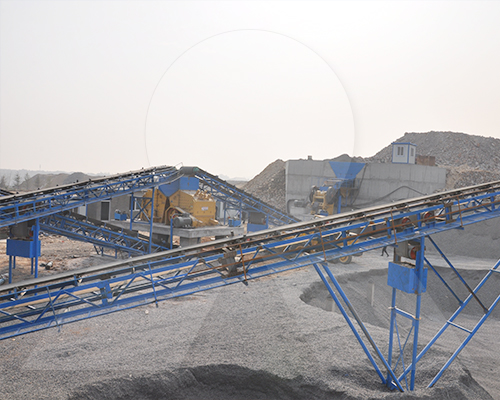
Critical wear components adhere to ISO 148-1 and ASTM A128 Grade E standards, ensuring impact toughness >150 J at -40°C. The crushing chamber geometry is optimized via discrete element modeling (DEM) to maximize kinetic energy transfer, reducing recirculation and increasing throughput efficiency. CE-certified drivetrains integrate dual dry-lubricated disc couplings to dampen torque spikes during overloads.
- Achieves 800–1,500 TPH capacity with feed sizes up to 1,200 mm
- Adjustable rotor speed (180–320 rpm) enables precise control over product gradation
- Modular anvil assembly allows rapid reconfiguration for variable ore hardness (f = 12–20 on Protodyakonov scale)
- Hydraulic rotor positioning simplifies blow bar rotation and changeout, reducing maintenance downtime by 40%
- Dual-stage grizzly pre-screen minimizes tramp material ingress, protecting downstream components
| Parameter | Value |
|---|---|
| Max Feed Size | 1,200 mm |
| Rotor Diameter | 2,800 mm |
| Rotor Weight | 22,500 kg |
| Drive Power | 630–900 kW (IEC 60034-30-1 compliant) |
| Blow Bar Life (avg) | 1,200–1,800 operating hours |
| Compliance | ISO 9001, CE, ISO 12100:2010 |
The crusher’s base frame utilizes stress-relieved ASTM A572 Grade 50 steel with finite element analysis-verified load paths to withstand seismic-class vibration. All pivot points feature triple-lip seals and automatic lubrication systems conforming to DIN 31026, ensuring operational integrity in dust-laden and high-moisture conditions typical of primary crushing stations.
Maximize Output with High-Stroke Impact Technology and Rotor Efficiency
High-Stroke Impact Technology in the HSM Big Rock Hammer Crusher leverages an optimized impact trajectory and extended hammer swing amplitude to deliver superior fracture energy per blow. By increasing the stroke length of the hammer pivot, kinetic energy transfer to feed material rises exponentially with rotational speed, enabling efficient size reduction of high-SiO₂ and abrasive feedstocks up to 200 MPa compressive strength. This technology is particularly effective for primary crushing of hard igneous ores such as basalt, granite, and quartzite.
The rotor assembly is precision-balanced to ISO 1940-1 G2.5 standards, minimizing vibration and ensuring stable operation at full-load RPM. Forged from high-tensile nodular cast iron (EN-GJS-600-3) and reinforced with tungsten-carbide inserts at impact zones, the rotor resists deformation under continuous cyclic loading. Hammer pivot shafts are induction-hardened to 58–62 HRC using AISI 4340 alloy steel, enhancing fatigue resistance and service life in high-moisture, high-abrasion environments.
Hammers are fabricated from high-manganese steel (ASTM A128 Grade E2), which undergoes work-hardening upon impact—surface hardness increases from 220 HB to over 500 HB after initial operation, prolonging wear life in high-quartz applications. Modular hammer design allows rapid replacement without rotor disassembly, reducing downtime to under 45 minutes per set.
Key advantages of the integrated High-Stoke Impact and Rotor Efficiency system:
- Achieves up to 1,800 TPH throughput in open-circuit configuration for run-of-mine feed ≤ 800 mm
- Reduces specific energy consumption by 18–22% compared to conventional hammer crushers (per ISO 14120-1 energy efficiency benchmarks)
- Adaptable to variable feed gradation via adjustable grate bar spacing (modular system with 60–120 mm increments)
- Compliant with CE machinery directive 2006/42/EC, incorporating overload protection and real-time vibration monitoring per ISO 13374-1
- Capable of processing materials with Mohs hardness up to 8.5 when operated within specified feed size and moisture limits (<12% w.b.)
Rotor speed is optimized between 280–320 RPM depending on application, balancing impact force and wear rate. Finite Element Analysis (FEA)-validated design ensures stress distribution remains below 75% of yield strength under maximum load conditions, providing a 1.5x safety margin per ASCE 7-22 criteria.
Heavy-Duty Construction: Reinforced Frames and Wear-Resistant Components for Extended Uptime
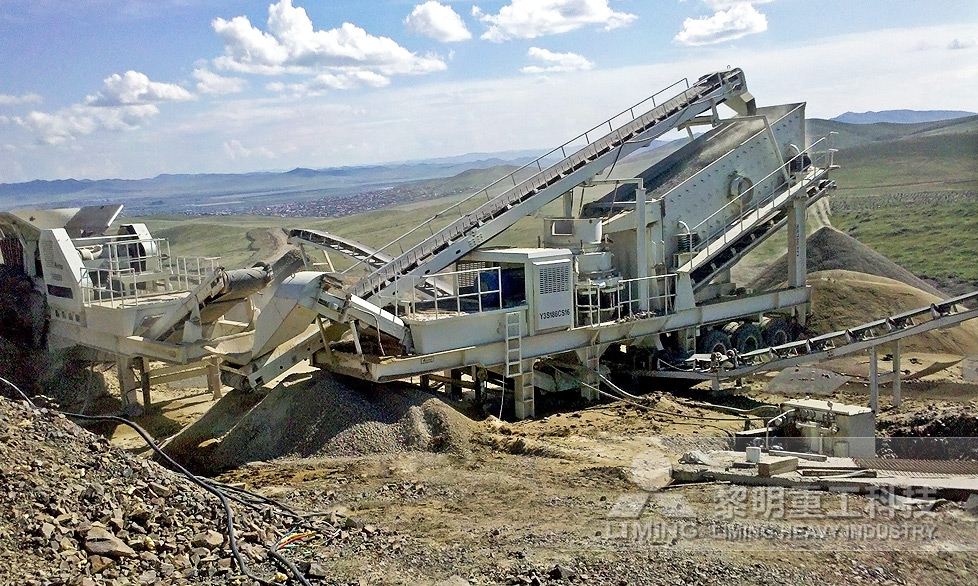
Heavy-duty construction is fundamental to the operational reliability of the HSM Big Rock Hammer Crusher in high-intensity mining and quarrying environments. The crusher’s structural integrity is anchored in a fully welded, box-section mainframe fabricated from high-tensile structural steel (S355JR), conforming to ISO 16124 standards for mining machinery frames. This rigid foundation minimizes deflection under dynamic loading, ensuring precise rotor alignment and consistent crushing performance across extended duty cycles.
Critical wear zones—including the impact plates, breaker liners, and rotor assembly—are constructed from Mn18Cr2 high-manganese steel, heat-treated to achieve a surface hardness of 500–550 HBW. This alloy composition enables work-hardening behavior under impact, increasing surface resistance to abrasion as the crusher operates. For applications processing abrasive ores such as quartzite or basalt (Mohs hardness 6–7), optional overlay cladding with tungsten carbide (WC-Co) is available on impact surfaces, extending component life by up to 40% compared to standard Mn-steel.
Rotor shafts are precision-machined from forged 42CrMo4 alloy steel, quenched and tempered to deliver a tensile strength of ≥950 MPa and core toughness of ≥55 J at -20°C (per ISO 6892-1 and ISO 148-1). This ensures resistance to torsional stress and shock loading during tramp metal events. Hammers are mounted via durable dovetail connections with dual locking pins to prevent axial displacement, and are designed for 180° rotation to utilize all four working edges, maximizing material utilization.
All wear components adhere to CE machinery directive 2006/42/EC and are dimensionally interchangeable across units to reduce spare parts complexity. Design for maintainability includes quick-access side doors with hydraulic assists and centralized lubrication points, minimizing downtime during wear inspections and changeouts.
Key functional advantages:
- Reinforced S355JR frame withstands cyclic loads up to 1.5× rated TPH capacity without structural fatigue
- Mn18Cr2 alloy components adapt to feed variability in run-of-mine ore, maintaining performance across hardness fluctuations (up to 150 MPa UCS)
- Rotor balance certified to ISO 1940-1 G2.5 for smooth operation at high rotational speeds (up to 900 rpm)
- Average time between wear part replacements: 800–1,200 hours under 800–1,500 TPH basalt crushing conditions
- Compliance with ISO 12100 for mechanical safety in continuous-duty mining operations
Precision-Engineered for Scalable Operations: Versatile Sizing and Throughput Options
Precision-engineered rotor assemblies utilize high-chrome white iron hammers and Mn-steel breaker plates to deliver optimal wear life under high-abrasion conditions, particularly in hard rock applications exceeding 200 MPa compressive strength. Modular rotor configurations support rapid adaptation between primary and secondary crushing stages, enabling seamless integration across diverse ore types—from quartzite and basalt to hematite-rich formations—without structural modification.
Throughput scalability is achieved via three standardized frame sizes (HSM-800, HSM-1200, HSM-1600), each compliant with ISO 14122 (machine safety) and CE mechanical directives, allowing plug-in compatibility with existing conveyor and feed systems. Hammer mass and rotational inertia are calibrated to maintain consistent energy transfer across variable feed gradations, ensuring cubical product morphology and minimizing fines generation in friable ores.
- Adjustable curtain gap controls enable precise output sizing (P80 range: 10–50 mm) without downtime
- Hammers forged from AISI 4340 alloy steel, heat-treated to 45–50 HRC, provide 30% longer service life versus standard Mn-13 castings
- Dual-toggle grizzly systems pre-screen tramp material, reducing unplanned停机 by up to 40% in mixed-run mining feeds
- Direct-drive IE4 efficiency motors (75–315 kW) synchronize with variable frequency drives for load-responsive power modulation
Available throughput options accommodate operations scaling from 120 TPH to 800 TPH, with rotor speeds adjustable between 250–650 RPM to match specific gravity and moisture content of feed material. All models integrate SCADA-ready sensors for real-time monitoring of bearing temperature, vibration, and hammer wear—enabling predictive maintenance aligned with mine production schedules.
| Model | Rotor Diameter (mm) | Max Feed Size (mm) | Output Range (TPH) | Power Range (kW) | Discharge Opening Adjustment |
|---|---|---|---|---|---|
| HSM-800 | 800 | 350 | 120–250 | 75–132 | Hydraulic |
| HSM-1200 | 1200 | 500 | 250–500 | 160–250 | Hydraulic |
| HSM-1600 | 1600 | 700 | 500–800 | 280–315 | Hydraulic |
Design adheres to FEA-validated stress models under ASCE 7-22 dynamic loading criteria, ensuring structural integrity in high-shock environments. Replaceable liner systems in the crushing chamber reduce rebuild cycles by 60%, supporting continuous operations in remote mining locations with limited maintenance infrastructure.
Trusted by Industry Leaders: Proven Performance in Mining and Quarrying Applications
- Engineered with high-chromium cast iron hammers and Mn-18Cr2 alloyed blow bars, ensuring optimal wear resistance and impact toughness in high-abrasion environments typical of hard rock mining (compressive strength up to 300 MPa).
- Complies with ISO 9001:2015 design controls and CE machinery directive 2006/42/EC, validating structural integrity, safety protocols, and performance consistency under continuous load cycles.
- Designed for primary and secondary crushing in large-scale open-pit quarries and underground hard rock operations, handling feed sizes up to 1,200 mm with throughput rates from 150 to 1,800 TPH.
- Adjustable rotor speed (600–1,000 RPM) and grate bar configuration enable precise product sizing (P80 from 10–50 mm), accommodating variable feed composition across granite, basalt, and iron ore applications.
- Reinforced rotor assembly with dynamic balancing to ISO 1940 G2.5 standards minimizes vibration, extending bearing life and reducing unplanned downtime in 24/7 mining operations.
- Hydraulic adjustment system for hammer positioning and automated lubrication monitoring ensure consistent performance and reduce maintenance intervals by up to 35% compared to conventional hammer mills.
- Proven in high-capacity aggregates and metallic ore processing plants across South Africa, Australia, and Canada, demonstrating >92% uptime in corrosive, high-dust environments with ambient temperatures ranging from -20°C to +50°C.
Frequently Asked Questions
What is the recommended replacement cycle for wear parts on the HSM Big Rock Hammer Crusher, and which components wear fastest?
Primary wear parts—hammers and liner plates—should be inspected every 72 hours of operation. High-manganese steel (Mn13Cr2 or Mn18) hammers typically last 150–300 hours, depending on feed hardness. Replace when wear exceeds 70% thickness; faster degradation occurs with quartz-rich ores above Mohs 7.
How does the HSM Big Rock Hammer Crusher adapt to varying ore hardness on the Mohs scale?
The crusher adjusts feed rate and rotor speed via variable frequency drives (VFDs). For ores above Mohs 7, reduce feed velocity and use heat-treated hammers (HB 450–500) to minimize impact fatigue. Pre-screening ensures only appropriately sized, hardness-consistent feed enters, reducing strain on critical components.
What vibration control mechanisms are integrated into the HSM Big Rock Hammer Crusher, and how are imbalances corrected?
Dual-plane vibration sensors monitor shaft imbalance in real time. Excessive vibration (>7 mm/s RMS) triggers automatic shutdown. Imbalances are corrected via precision dynamic rotor balancing (ISO 1940 G2.5 standard) and checking hammer symmetry. Ensure all fasteners are torqued to 320 Nm and inspect bearings monthly for pitting or brinelling.
What lubrication system and oil specifications are required for the main bearing assembly?
Use ISO VG 220 synthetic gear oil with anti-wear (AW) and extreme pressure (EP) additives. The automatic lubrication system delivers 0.5 L/min at 3-bar pressure every 20 minutes. FAG or SKF spherical roller bearings require oil changes every 3,000 hours, or quarterly in high-dust environments, to prevent micro-pitting and false brinelling.
How does hydraulic pressure impact crushing efficiency, and what settings are optimal under high-tonnage loads?
The hydraulic adjustment system maintains chamber pressure between 100–140 bar during peak load. Exceeding 160 bar risks relief valve fatigue. For high-tonnage operations, set pre-charge pressure to 90 bar in accumulators and ensure nitrogen cushions absorb shock spikes, optimizing throughput and reducing liner wear.
What maintenance protocols prevent catastrophic failure in high-cycle operations?
Perform daily inspections of hammer pivot pins and locking mechanisms. Torque all housing bolts weekly to 450 Nm. Monitor oil cleanliness (NAS 8 or better) and replace suction filters every 500 hours. Conduct ultrasonic thickness testing on liners bi-weekly and schedule preventive rebuilds every 6,000 operating hours, including rotor shaft alignment checks.