A sand and gravel production line typically costs between $80,000 and $2,000,000+, depending on capacity, configuration, automation level, and raw material hardness. Small lines for local aggregate production may start around $80K–$300K, while medium-sized commercial plants usually range from $300K–$800K. Large, fully automated production lines with high output and washing systems can exceed $1M–$2M+.
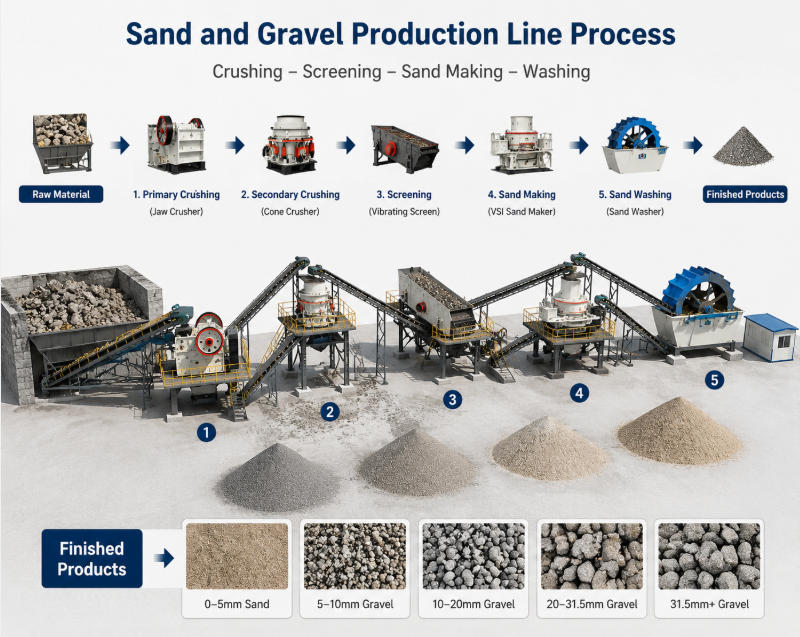
The final price is mainly determined by the complete system configuration, including crushing, screening, sand making, and sand washing equipment, as well as site conditions and production requirements.
What Is a Sand and Gravel Production Line?
A sand and gravel production line is a complete industrial system used to process natural rock or construction waste into usable aggregates such as sand and crushed stone. It typically includes multiple stages:
- Primary crushing (jaw crusher)
- Secondary/tertiary crushing (cone crusher or impact crusher)
- Sand making (VSI sand maker)
- Screening system (vibrating screen)
- Washing system (sand washer)
- Conveying system (belt conveyors)
Key Factors That Affect Cost
1. Production Capacity
Higher output requires larger and more durable equipment.
- 50–100 TPH: Small-scale line
- 100–300 TPH: Medium-scale line
- 300–800+ TPH: Large-scale plant
2. Raw Material Hardness
- Soft stone (limestone): lower cost equipment
- Hard stone (granite, basalt): higher wear resistance required → higher cost
3. Configuration Complexity
More stages = higher investment:
- Basic crushing + screening → lower cost
- Full system with sand making + washing → higher cost
- Dry + wet combination → highest cost
4. Automation Level
- Manual operation: cheaper
- PLC + centralized control system: higher cost but lower labor cost
5. Site & Engineering Conditions
- Foundation works
- Steel structure platform
- Installation and commissioning
Typical Price Ranges by Configuration
| Type | Capacity | Configuration | Price Range |
|---|---|---|---|
| Basic crushing line | 50–100 TPH | Jaw + cone + screen | $80K–$200K |
| Standard sand line | 100–300 TPH | Crushing + sand making + screening | $200K–$800K |
| Full sand washing plant | 200–500 TPH | Crushing + VSI + washer + automation | $500K–$1.5M |
| Large industrial plant | 500–1000+ TPH | Fully automated system | $1M–$2M+ |
Practical Example Cases
Case 1: Small Local Quarry (120 TPH)
- Equipment: jaw crusher + impact crusher + vibrating screen
- Output: road base aggregate
- Total investment: ~$180,000
- Suitable for: local construction supply
Case 2: Medium Commercial Sand Plant (250 TPH)
- Equipment: jaw crusher + cone crusher + VSI + sand washer
- Output: high-quality manufactured sand
- Total investment: ~$600,000
- Suitable for: commercial concrete suppliers
Case 3: Large Highway Project (800 TPH)
- Equipment: full automated crushing + multi-stage screening + washing system
- Output: multiple aggregate grades
- Total investment: ~$1.5M–$2M+
- Suitable for: national infrastructure projects
How to Choose the Right Production Line
When selecting a sand and gravel production line, consider:
- Material type (limestone, granite, basalt, river stone)
- Required output size distribution
- Daily production demand
- Budget range
- Local environmental regulations
- Maintenance capability
Selection Advice
- If budget is limited → choose modular configuration (upgrade later)
- If high-quality sand is required → include VSI + washing system
- If raw material is very hard → prioritize cone crusher-based design
Cost Breakdown (Typical)
- Crushing equipment: 40%–55%
- Sand making system: 15%–25%
- Screening system: 10%–15%
- Washing system: 10%–20%
- Electrical + installation: 10%–20%
FAQs
1. What is the cheapest sand production line?
A small jaw + impact crusher line with basic screening can start around $80,000.
2. Why do prices vary so much?
Because capacity, automation, and raw material hardness significantly affect equipment selection.
3. Is sand washing equipment necessary?
Only if you need high-quality construction sand or must meet strict standards.
4. Can one production line handle different stone types?
Yes, but configuration may need adjustment for hardness differences.
5. How long does installation take?
Typically 30–90 days depending on project scale.
6. What is the lifespan of the equipment?
Main equipment lasts 8–15 years with proper maintenance.
7. Can I upgrade the line later?
Yes, modular design allows adding crushers, screens, or washers.
8. What is the main operating cost?
Electricity, wear parts (blow bars, liners), and labor.
Summary
A sand and gravel production line generally costs $80,000 to over $2 million, depending on capacity, configuration, and automation level. The most important factors affecting investment are production demand, raw material hardness, and whether a full sand washing system is required. A well-designed system balances cost, efficiency, and product quality to ensure long-term profitability.