Table of Contents
- 1. Exploration: Identifying Iron Ore Deposits
- 2. Extraction: Open-Pit or Underground Mining
- Open-Pit Mining (Most Common for Iron Ore)
- Underground Mining
- 3. Primary Crushing: Reducing Ore Size with Jaw Crushers
- 4. Secondary & Tertiary Crushing: Cone Crushers for Further Reduction
- 5. Screening & Classification: Vibrating Screens Separate Fractions
- 6. Grinding & Beneficiation: Liberating Iron from Gangue Minerals
- A) Grinding Mills Reduce Particles Further (Size Reduction)
How Is Iron Ore Mined and Processed? The Six Main Steps Explained
Iron ore mining and processing involve a series of complex steps to transform raw ore into usable material for steel production. Understanding these stages—exploration, extraction, crushing, screening, grinding, and beneficiation—helps mining managers optimize operations and procurement specialists select the right equipment. Below is a detailed breakdown of the six main steps in iron ore mining and processing.
1. Exploration: Identifying Iron Ore Deposits
Before mining begins, geologists conduct extensive exploration to locate viable iron ore deposits. This involves:
- Geological Surveys: Mapping rock formations using satellite imagery and aerial photography.
- Drilling Core Samples: Extracting samples to analyze iron content (typically 20–65% Fe).
- Resource Estimation: Calculating ore reserves using assays and 3D modeling software.
High-grade hematite (>60% Fe) and magnetite (>50% Fe) deposits are prioritized due to their economic viability.
2. Extraction: Open-Pit or Underground Mining
Once a deposit is confirmed, extraction methods are chosen based on depth and geology:
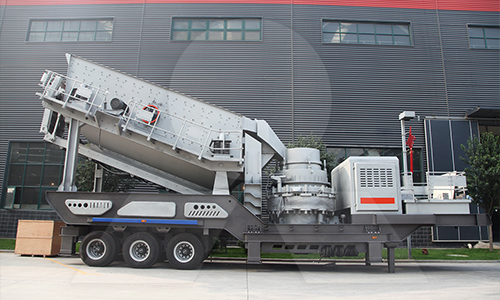
Open-Pit Mining (Most Common for Iron Ore)
- Used for shallow deposits (<200m depth).
- Large-scale equipment (electric shovels, haul trucks) removes overburden before blasting ore.
- Production rates can exceed 100 million tons annually in major mines.
Underground Mining
- Employed for deeper orebodies (e.g., Kiruna Mine, Sweden).
- Sublevel caving or block caving techniques maximize yield with minimal waste rock removal.
Blasted ore is transported to primary crushing plants via haul trucks or conveyors.
3. Primary Crushing: Reducing Ore Size with Jaw Crushers
The first stage of size reduction involves jaw crushers, which handle large chunks (up to 1.5m diameter):
- Feed Size: ≤1,500mm → Output Size: 150–300mm
- High-capacity models (e.g., Nordberg C150) process 1,000+ tons/hour with manganese steel liners for wear resistance.
- Crushers operate at compressive strengths >350 MPa to break hard iron ores efficiently.
Crushed material is then conveyed to secondary crushing circuits.
4. Secondary & Tertiary Crushing: Cone Crushers for Further Reduction
Secondary crushing uses cone crushers (e.g., Symons or HP series) for intermediate sizing:
- Feed of 150–300mm → Reduced to ~30–60mm
- Hydraulic adjustment systems optimize particle shape and throughput (~500 tph).
For finer requirements (three-stage crushing), tertiary cone crushers or high-pressure grinding rolls (HPGRs) achieve outputs of <10mm before screening. Key metrics include:
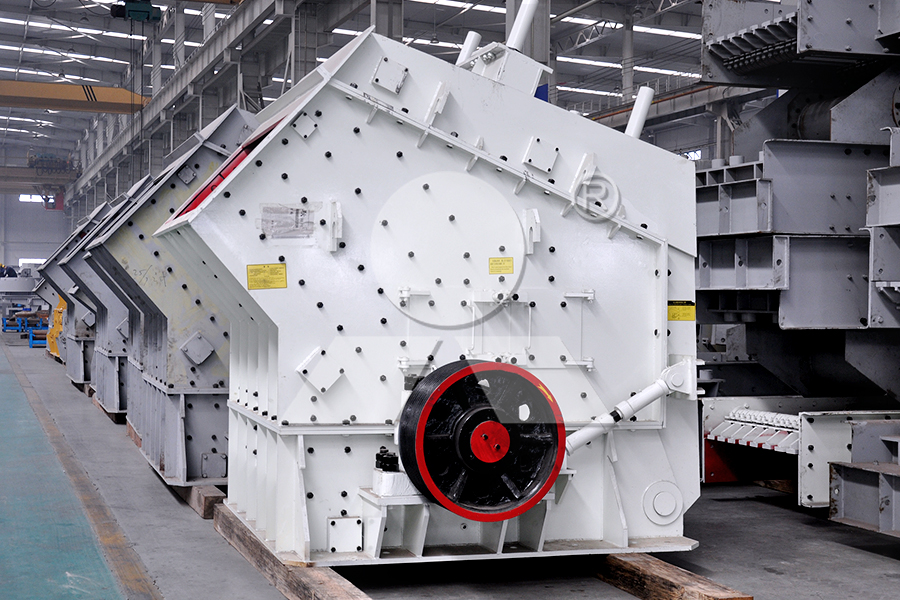
- Crusher Closed Side Setting (CSS): Adjusted to control discharge size (±2mm tolerance).
- Power Draw: Ranges from 200–500 kW depending on hardness (Bond Work Index tests guide selection).
5. Screening & Classification: Vibrating Screens Separate Fractions
Vibrating screens classify crushed ore by size before beneficiation:
- Multi-deck screens (Banana or Linear types) sort particles into lump (+6mm) and fines (−6mm).
- Screening efficiency (>90%) minimizes recirculation loads in closed-loop circuits.
- Common aperture sizes: 10mm, 6mm, and 3mm for pellet feed preparation.
Undersized material advances to grinding mills; oversized fractions return for re-crushing (closed-circuit crushing). Data-driven adjustments include:
- Screen inclination angle (~15–25°) affects residence time and throughput (~800 tph per unit).
- Vibration frequency (700–1,000 RPM) prevents blinding in sticky ores like goethite-rich deposits.
6. Grinding & Beneficiation: Liberating Iron from Gangue Minerals
The final stage prepares ore for concentration via two key processes: