Table of Contents
- Unlocking Garnet’s Potential: The Precision Crushing Process for Optimal Performance
- Why Garnet Crushing Matters: Enhancing Abrasive Efficiency and Consistency
- Advanced Crushing Technology: Ensuring Uniform Particle Size and Purity
- Technical Specifications: Grading, Hardness, and Application-Specific Crushing
- Trusted by Industry Leaders: Quality Assurance and Sustainable Sourcing
- Your Crushing Solution: Customizable Options for Diverse Industrial Needs
- Frequently Asked Questions
- How do I optimize wear parts replacement cycles in garnet crushing?
- What crusher settings adapt best to varying garnet ore hardness (Mohs 7-8)?
- How is excessive vibration controlled in garnet crushing equipment?
- What are the critical lubrication requirements for garnet crusher bearings?
- How do I prevent crusher clogging when processing moist garnet?
- What is the best secondary crushing method for producing specific garnet grit sizes?
Within the rugged world of industrial abrasives, garnet stands apart for its remarkable combination of hardness, sharp fracture, and natural inertness. But the journey from raw, crystalline ore to the precise, consistent grains used for waterjet cutting, filtration, and surface preparation is a fascinating tale of precision engineering. The process of crushing garnet is far more nuanced than simple pulverization; it is a carefully controlled operation designed to preserve the mineral’s inherent angularity and cutting power. By employing a series of specialized crushers and sophisticated sorting techniques, processors transform bulk material into graded products that meet exacting industrial specifications. Understanding this transformation reveals the critical, behind-the-scenes science that turns a vibrant gemstone into a powerhouse of modern manufacturing and environmental remediation.
Unlocking Garnet’s Potential: The Precision Crushing Process for Optimal Performance
Garnet’s industrial value is directly tied to the integrity of its hard, angular grains. Unlike simple size reduction, precision crushing is a controlled deconstruction process designed to liberate these grains from the ore matrix while minimizing the creation of undersized fines or micro-fractures that degrade performance. The goal is a high-yield output of structurally sound, sharp particles within a specified mesh range, whether for abrasive blasting, waterjet cutting, or filtration.
The process is governed by the ore’s physical properties, primarily its Mohs hardness (7.5-8.5) and typically brittle nature. This demands crushing technology that applies compressive force efficiently without introducing excessive attrition or heat. A primary jaw crusher establishes the initial size reduction, creating a manageable feed for subsequent stages. The core of precision crushing, however, lies in secondary and tertiary processing via cone crushers or high-pressure grinding rolls (HPGR). Here, the selection of crushing chamber geometry, eccentric throw, and operating speed is calibrated to the specific garnet deposit’s characteristics.
Critical to this calibration is the use of ultra-wear-resistant metallurgy in crushing components. Manganese steel (Mn-steel, typically 11-14% Mn) remains standard for its work-hardening properties, but advanced alloy grades with chromium, molybdenum, and nickel are increasingly deployed in liners and mantles to extend service life in highly abrasive garnet applications. These components are often manufactured to ISO 21873 or similar standards for mobile equipment, with stationary crusher parts adhering to rigorous CE-marked or OEM-specific material certifications.
The functional advantages of a precision-configured garnet crushing circuit include:
- High Particle Integrity: Controlled compressive crushing fractures the ore along natural grain boundaries, yielding particles with high structural strength and minimal internal flaws.
- Optimal Size Distribution: Precise control over closed-side settings (CSS) and screening loops ensures a high percentage of product within the target mesh range (e.g., 80/120 for waterjet), maximizing marketable yield.
- Adaptability to Ore Variability: Modular adjustments allow the circuit to maintain product specs despite natural variations in feed hardness or clay content.
- Operational Efficiency: A well-designed circuit maximizes tons per hour (TPH) capacity while minimizing recirculating load and specific energy consumption (kWh/ton).
- Low Contamination: Properly selected and maintained crusher liners prevent metallic contamination of the garnet product, a critical factor for high-purity applications.
For a typical mid-scale garnet processing operation, key technical parameters of the core crushing stages might be summarized as follows:
| Process Stage | Equipment Type | Key Function | Typical Feed Size (mm) | Typical Product Size (mm) | Primary Wear Mechanism |
|---|---|---|---|---|---|
| Primary Crushing | Jaw Crusher (Heavy-Duty) | Coarse size reduction of ROM ore | 250 – 400 | 75 – 150 | Abrasion & Impact |
| Secondary Crushing | Cone Crusher (Standard) | Intermediate reduction & shaping | 75 – 150 | 19 – 50 | Abrasion & Compression |
| Tertiary Crushing | Cone Crusher (Short Head) or HPGR | Final size reduction to near-target spec | 19 – 50 | 6 – 25 | High-Stress Abrasion |
Final sizing and classification are achieved through vibrating screens arranged in closed circuit with the tertiary crusher. Oversize material is recirculated, while correctly sized material is conveyed for washing, drying, and magnetic separation. The entire process is monitored through particle size analysis (PSA) and production rate data to ensure consistent output that meets the stringent performance criteria of industrial garnet markets.
Why Garnet Crushing Matters: Enhancing Abrasive Efficiency and Consistency
Garnet crushing is not a mere size reduction step; it is a precision engineering process that directly dictates the performance and economic value of the final abrasive product. The objective is to liberate and shape the hard, conchoidal-fracturing garnet crystals while minimizing the creation of non-functional fines or damaging the grain structure. Inconsistent or improper crushing leads to poor particle size distribution (PSD), reduced cutting rates, higher media consumption, and unpredictable results in critical applications like waterjet cutting and surface preparation.
The core challenge lies in garnet’s combination of high hardness (7-8 on Mohs scale) and its tendency to cleave. Crushing equipment must apply controlled, compressive forces rather than impact or shear that can shatter grains. This is why staged crushing circuits, typically featuring jaw crushers for primary reduction and cone crushers for secondary shaping, are standard. The selection of crusher liner material is critical; high-grade manganese steel (Mn14, Mn18) or specialized alloys are required to withstand extreme abrasion while maintaining the designed cavity geometry for consistent output.
A properly engineered crushing circuit delivers functional advantages that translate directly to operational efficiency:
- Optimized Particle Morphology: Produces angular, sharp grains with high surface energy, which are essential for aggressive cutting and anchoring in coated abrasive products.
- Tight Particle Size Distribution (PSD): Ensures predictable and repeatable performance. A narrow PSD, such as a well-graded 80 mesh for waterjet cutting, provides consistent kinetic energy transfer, leading to smoother cuts and reduced nozzle wear.
- Maximized Yield of Target Fractions: Efficient liberation and classification minimize waste, increasing the tonnage of saleable abrasive product per ton of raw ore (improved yield).
- Adaptability to Ore Variability: A well-designed circuit with adjustable settings can accommodate fluctuations in feed hardness or moisture, maintaining product consistency from different mine benches or sources.
The technical parameters of the crushing stage are foundational to meeting international abrasive standards. The resulting product’s PSD must conform to specifications such as ISO 11126-3 (for preparation of steel substrates) and FEPA (Federation of European Producers of Abrasives) grading norms. Consistency here is what allows garnet to be certified for use in critical aerospace, marine, and nuclear decommissioning projects.
| Circuit Stage | Primary Objective | Key Equipment & Material Consideration | Direct Impact on Abrasive Product |
|---|---|---|---|
| Primary Crushing | Coarse reduction of ROM ore to manageable size. | Jaw Crusher with Mn-steel liners. Gape & CSS setting defines max feed and initial fragmentation. | Governs overall plant throughput (TPH) and initial liberation efficiency. |
| Secondary Crushing | Shaping particles into the target abrasive size range. | Cone Crusher (often multi-cylinder hydraulic). Liner profile and alloy grade critical for shaping. | Directly controls the dominant particle shape and the core of the PSD curve. |
| Screening & Classification | Separation of product fractions and recirculation of oversize. | High-frequency vibrating screens with precise mesh apertures. | Final gatekeeper for PSD consistency and product grade specification. |
Ultimately, the capital invested in a correctly specified and maintained crushing circuit is recovered through superior product pricing, reduced processing costs from higher yield, and the market trust earned by delivering a consistently high-performance industrial abrasive. It is the non-negotiable first step in transforming a raw mineral into a precision-engineered consumable.
Advanced Crushing Technology: Ensuring Uniform Particle Size and Purity
Advanced crushing systems for garnet processing are engineered to overcome the mineral’s inherent challenges: high hardness (7-7.5 on the Mohs scale), sharp fracture characteristics, and the critical need to preserve chemical purity and angular grain shape. The core technological focus is on achieving a tightly controlled particle size distribution (PSD) while minimizing the generation of contaminating fines and metallic impurities from wear parts.
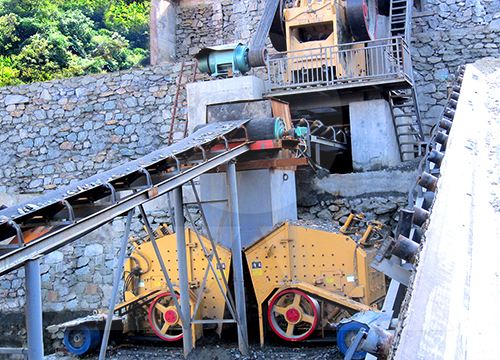
The selection of crusher type is dictated by the feed size and target product specifications. Primary reduction of run-of-mine ore typically employs robust jaw or gyratory crushers. For secondary and tertiary stages, cone crushers are the industry standard for producing consistent, coarse to medium-grade sands. For final shaping and generation of fine grades, high-speed vertical shaft impactors (VSI) are indispensable. VSI crushers utilize a rock-on-rock or rock-on-anvil principle, promoting inter-particle fracture that yields the sharp, angular grain essential for abrasive applications while minimizing wear metal contamination.
Material science in wear parts is a critical differentiator. Standard manganese steel is insufficient for prolonged garnet processing. Premium alloys are mandatory:
- High-Chrome White Iron (HCWI) Liners & Blow Bars: Used in impact crushers for superior abrasion resistance. Their microstructure of hard chromium carbides in a martensitic matrix provides optimal life when processing hard, abrasive garnet.
- Micro-alloyed Austenitic Manganese Steel: For jaw plates and cone crusher mantles/concaves. Advanced grades with added chromium, molybdenum, and boron work-harden more effectively, forming a hardened surface layer that reserves the tough core for impact absorption.
- Ceramic Composite Wear Liners: Employed in high-wear chute and classifier areas to eliminate ferrous contamination entirely in high-purity processing streams.
Modern plants integrate real-time process control and monitoring to ensure consistency. Key elements include:
- Programmable Logic Controller (PLC)-Based Systems: Automatically adjust crusher parameters (e.g., closed-side setting, rotor speed, feed rate) based on power draw and chamber pressure sensors.
- Laser-Based Particle Size Analyzers: Provide continuous PSD feedback from conveyor streams, allowing for closed-loop control of the crushing circuit.
- Metal Detection & Tramp Iron Removal: Magnetic separators and metal detectors are installed upstream of tertiary crushers to protect equipment and prevent contamination.
The functional advantages of an optimized advanced crushing circuit are clear:
- Tight Particle Size Distribution: Directly correlates to predictable performance in abrasive blasting and waterjet cutting, optimizing consumption rates and cut quality.
- Superior Grain Integrity & Angularity: Maximizes cutting efficiency and surface profile creation by producing grains with multiple sharp edges, not rounded particles.
- Minimized Contamination: Advanced metallurgy and ceramic liners drastically reduce iron oxide introduction, preserving the garnet’s natural chemical purity for sensitive applications.
- Adaptability to Ore Variability: Automated systems can compensate for fluctuations in feed hardness or moisture, maintaining a consistent product.
- High Throughput Efficiency: Robust machine designs and circuit layouts achieve high tonnage-per-hour (TPH) rates with reduced specific energy consumption per ton of product.
| Technology Component | Key Parameter | Typical Specification for Garnet |
|---|---|---|
| Cone Crusher (Tertiary) | Closed-Side Setting (CSS) | 6-25 mm (adjustable for product grade) |
| Vertical Shaft Impactor (VSI) | Rotor Tip Speed | 65-85 m/s (optimized for fracturing vs. grinding) |
| Wear Parts (HCWI) | Brinell Hardness | 600-750 HB (post-casting heat treatment) |
| Plant Capacity | Circuit Throughput (TPH) | 50 – 250+ TPH (modular scalable designs) |
| Product Control | Target PSD Standard | Conforms to ISO 11126-3 / FEPA 20-80 mesh standards |
Equipment bearing CE marking and designed to ISO 21873 (mobile crushers) and ISO 9001 for quality management signifies adherence to international safety and manufacturing standards. The ultimate objective is a production circuit that is not merely a series of crushers, but an integrated system delivering garnet of precise physical specification and guaranteed mineralogical integrity.
Technical Specifications: Grading, Hardness, and Application-Specific Crushing
Garnet crushing is a precision reduction process governed by the ore’s inherent mineralogy and the target industrial specification. Success hinges on aligning crusher selection and circuit design with three core parameters: feed grading, material hardness, and end-use application.
Material Hardness & Crusher Selection
Garnet ore typically presents a Mohs hardness of 7.0-7.5, with variations depending on host rock and specific garnet species (e.g., almandine, pyrope). This abrasiveness necessitates crusher components manufactured from high-wear-resistant materials. Standard manganese steel (Mn14, Mn18) is often insufficient for primary stages; modified alloys (e.g., T-400, AR400) or ceramic composites are specified for liners and impellers.
- Primary Crushing (Jaw/Gyratory Crushers): Handles run-of-mine ore up to 500mm. Utilizes alloyed manganese steel (Mn18Cr2) for jaws/concaves to withstand high compressive forces and initial abrasion.
- Secondary/Tertiary Crushing (Cone/Impact Crushers): For reducing 150mm feed to <30mm. High-chrome white iron (HCWI) or martensitic steel blow bars and mantles are critical here, where impact and attrition wear are most severe.
- Fine Grinding (Vertical Shaft Impactors – VSI, Roll Crushers): Produces graded sand. Requires tungsten carbide tip configurations or composite ceramic liners to maintain particle shape control at sub-6mm sizes.
Technical Grading & Classification
Post-crushing, classification via vibrating screens and air separators is mandatory to meet market grades. Industrial garnet is defined by tightly controlled particle size distribution (PSD), not chemical purity alone. The crushing circuit must be tuned to maximize yield within target mesh ranges.
| Application Sector | Target Grade (Mesh) | Key PSD Requirement | Crushing Circuit Focus |
|---|---|---|---|
| Waterjet Cutting | 80/120, 120/200 | Ultra-sharp, angular grains; <1% fines below target mesh | High-speed impact crushing (VSI) for fracturing, with rigorous air classification. |
| Abrasive Blasting | 12/20, 20/40, 30/60 | High density, blocky structure; minimal dust | Controlled compression crushing (cone/roll) to prevent over-generation of fine particles. |
| Filtration Media | 16/30, 20/40 | Rounded, durable grains; high sphericity | Selective crushing and tumbling to achieve shape, with washing to remove fines. |
| Lapping & Polishing | 220, 320, 500+ | Micron-level uniformity; no oversized grits | Multi-stage grinding with closed-circuit classification (wet/dry screens). |
Application-Specific Crushing Parameters
Circuit design is dictated by the final product’s performance criteria.
-
For Abrasive Grit (Waterjet, Blasting):
- USP: Maximizing grain fracture to create fresh, sharp edges. This demands high-impact energy.
- Circuit Typology: Three-stage (Jaw -> Cone -> VSI) is standard. A VSI in tertiary position is non-negotiable for shaping angular particles.
- Control Parameter: Crusher closed-side setting (CSS) and rotor speed are precisely calibrated to produce a high percentage of conchoidal fractures.
-
For Filtration & Lapping Media:
- USP: Achieving consistent, rounded or sub-angular grains with high structural integrity. Minimizing micro-cracks is essential.
- Circuit Typology: Often employs a two-stage (Jaw -> Cone/Roll) circuit with an attached attritioning scrubber. Compression crushers promote inter-particle crushing which rounds grains.
- Control Parameter: Lower crushing ratios per stage and controlled retention time in finishing mills to achieve shape without introducing latent flaws.
Capacity & Operational Specifications
Plant throughput (TPH) must be derated from standard mineral benchmarks due to garnet’s abrasiveness. A crusher rated for 200 TPH on limestone will typically process 130-150 TPH of garnetiferous rock. Key design factors include:
- Wear Life Expectancy: Primary liner life may be 800-1200 hours; tertiary VSI components 150-300 hours. Crusher selection must account for accessible, modular wear part replacement to minimize downtime.
- Drive & Power Design: Motors are sized with a 15-20% service factor above theoretical requirement to maintain RPM under high load, ensuring consistent PSD.
- Dust Control: Integral to circuit design. Garnet dust is a respiratory hazard (SiO2 content) and must be contained via wet suppression or baghouse systems compliant with ISO 12103-1/ATEX directives for abrasive dust.
Trusted by Industry Leaders: Quality Assurance and Sustainable Sourcing
Quality assurance in industrial garnet processing is defined by the precise control of material hardness and particle integrity. The primary technical objective is to liberating garnet crystals from the host ore while minimizing microfractures, which degrade performance in abrasive blasting and waterjet cutting. This is a function of crusher selection, liner metallurgy, and controlled comminution energy.
Critical Technical Parameters & Equipment Selection
The crushing circuit must be engineered for the specific garnet ore body. Key considerations include:
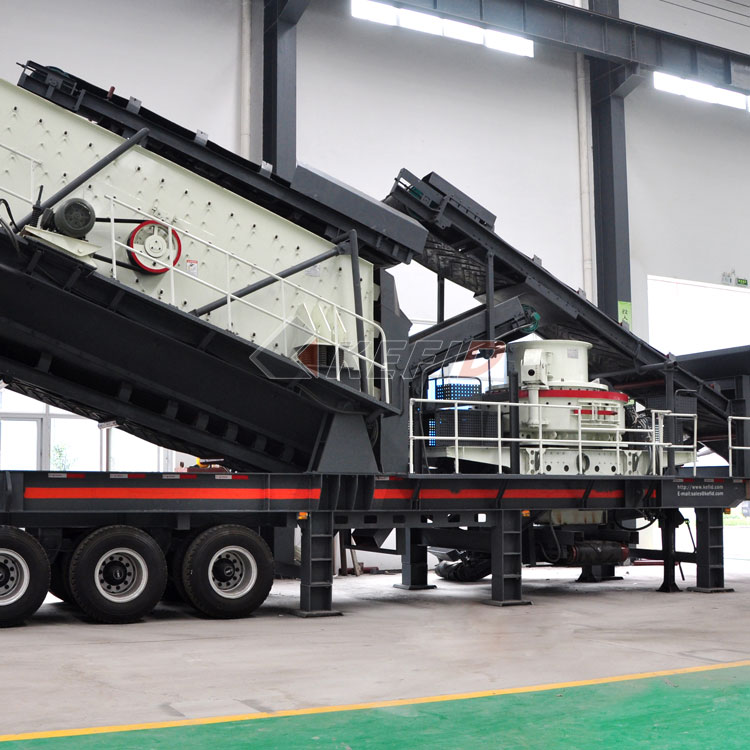
- Feed Ore Hardness & Abrasiveness: Garnet ore (7-7.5 Mohs) is highly abrasive. Crusher components in the primary and secondary stages must exceed this. Manganese steel (Mn14, Mn18) liners are standard for jaw and cone crushers, work-hardening under impact to maintain a hard, wear-resistant surface. For tertiary crushing, high-chrome white iron (HCWI) alloys or ceramic composites provide superior abrasion resistance for shaping the final product.
- Throughput & Product Specification: Plant design revolves around required Tons Per Hour (TPH) and the target grain size distribution. A typical circuit for abrasive-grade garnet aims to produce a high yield of 30/60, 60/80, and 80/120 mesh particles. This requires multi-stage crushing with inter-stage screening to remove fines and prevent over-grinding.
- Particle Shape & Structural Integrity: Cone crushers and vertical shaft impactors (VSIs) are preferred for tertiary reduction. A correctly configured VSI promotes a cubical fracture, creating sharp, angular grains with high internal integrity, which is critical for cutting efficiency and low dust generation.
Quality Assurance Framework
Certification to international standards verifies process control and product consistency.
| Standard | Scope | Relevance to Crushed Garnet |
|---|---|---|
| ISO 9001 | Quality Management Systems | Ensures traceability and consistent operational procedures from ROM ore to packaged product. |
| ISO 11126-10 / ISO 11127 | Preparation of steel substrates / Test methods for abrasives | Defines specific requirements for garnet abrasives, including hardness, density, and chemical composition. |
| CE Marking (EU) | Product Safety | Indicates conformity with health, safety, and environmental protection standards for the European market. |
Rigorous in-process testing is non-negotiable. This includes:
- Sieve Analysis: Continuous monitoring of particle size distribution using automated sieving systems.
- Hardness Testing: Verification of Knoop or Vickers hardness to ensure no degradation from the source crystal.
- Chemical Analysis: XRF spectrometry to guarantee low levels of heavy metals (e.g., lead, chromium) and contaminants like silica dust.
Sustainable Sourcing & Processing
Sustainable practice is a core engineering and operational parameter, not a secondary concern.
- Resource Efficiency: Modern crushing plants are closed-circuit systems with dust collection cyclones and water recycling loops. This minimizes process water discharge and captures particulate matter for disposal or remediation.
- Energy Optimization: Crusher selection directly impacts kWh/ton. High-efficiency cone crushers with hydraulic settings adjustment and variable-speed drives match power input to feed conditions, reducing specific energy consumption.
- Lifecycle Management: Responsible sourcing involves geotechnical stability of mining operations, progressive land rehabilitation, and a documented chain of custody from mine to end-user. Processing facilities are designed to operate within strict local environmental thresholds for noise and air quality.
Your Crushing Solution: Customizable Options for Diverse Industrial Needs
Garnet crushing is a precision comminution process dictated by the mineral’s inherent properties. With a Mohs hardness ranging from 6.5 to 7.5 and a typically brittle, sub-conchoidal fracture, improper crushing generates excessive, unusable fines and accelerates wear. An effective solution is not a single machine, but a system engineered for your specific feedstock characteristics and final product specification.
Core Crushing Principles & System Configuration
Primary reduction of run-of-mine or coarse garnet ore is best handled by robust jaw crushers or gyratory crushers, establishing the initial size envelope. Secondary and tertiary crushing, critical for achieving controlled particle size distributions (PSD), employs cone crushers or high-pressure grinding rolls (HPGR). For final shaping and sand production, vertical shaft impact (VSI) crushers are unparalleled, leveraging garnet’s brittleness to produce cubical, low-flakiness grains ideal for abrasive and filtration markets.
Material Science of Wear Resistance
Component longevity is paramount. Key wear parts—liners, concaves, mantles, and anvils—are not generic. Their selection is a material science decision based on garnet’s abrasive nature.
- Manganese Steel (Mn-Steel / Hadfield Steel): Used in jaw crushers and primary gyratory mantles. Its work-hardening capability provides excellent impact absorption and wear life under high-stress, large-feed conditions.
- Martensitic Alloy Steels: Standard for cone crusher liners and VSI anvils. These through-hardened steels (e.g., grades with chromium, molybdenum) offer superior abrasion resistance for consistent, mid-range feed sizes.
- Ceramic Composite Liners: For highly abrasive, low-impact zones in tertiary chambers or feed chutes. They provide exceptional wear life but require careful engineering to manage brittleness.
Technical Specifications & Standards
All equipment must comply with international mechanical and safety standards (ISO 21873, CE marking). System design is quantified by key performance indicators:
- Throughput (TPH): Scalable from pilot-scale (5-20 TPH) to large-scale mining operations (200+ TPH).
- Product PSD Control: Ability to target specific mesh sizes (e.g., 12/20, 30/60, 80 mesh) for waterjet, blasting, or filtration media.
- Power & Drive Configuration: Electrically driven systems for fixed plants vs. diesel-hydraulic for mobile/remote installations.
- Automation & Control: Integration of PLC-based systems for closed-side setting (CSS) adjustment, load management, and performance monitoring to optimize yield and minimize fines.
Functional Advantages of a Customized Circuit
- Maximized Yield of Target Fractions: Precise stage-wise reduction minimizes the generation of out-of-spec fine or coarse material, directly improving ROI.
- Adaptability to Ore Variability: Configurable crusher parameters and screening loops accommodate fluctuations in feed hardness, moisture, or clay content.
- Reduced Total Cost of Ownership: Strategic selection of wear materials and automated wear compensation extends service intervals and reduces downtime.
- Dust Suppression Integration: Engineered sealing and negative pressure systems maintain a controlled environment, critical for worker safety and meeting MSHA/OSHA requirements.
System Selection Parameters
The following matrix outlines primary considerations for crusher selection based on process stage and garnet characteristics.
| Process Stage | Recommended Crusher Type | Key Material Consideration | Primary Control Parameter | Expected Product Shape |
|---|---|---|---|---|
| Primary Crushing | Jaw Crusher, Gyratory Crusher | High-Toughness Mn-Steel Liners | Feed Opening & CSS | Angular, slabby |
| Secondary Crushing | Cone Crusher (Standard) | Martensitic Alloy Concaves/Mantles | CSS & Eccentric Speed | More uniform, sub-angular |
| Tertiary/Fine Crushing | Cone Crusher (Short Head), HPGR | Premium Alloy or Ceramic Liners | CSS, Pressure (HPGR) | Consistent, granular |
| Final Shaping / Sand Making | Vertical Shaft Impact (VSI) Crusher | High-Chrome or Tungsten Carbide Anvils | Rotor Speed & Feed Rate | Cubical, low flakiness |
Ultimately, a successful garnet crushing operation hinges on aligning comminution energy with the mineral’s fracture mechanics. The goal is a efficient, high-yield circuit that delivers a tightly graded product to specification, with predictable operating costs and robust reliability.
Frequently Asked Questions
How do I optimize wear parts replacement cycles in garnet crushing?
Use high-manganese steel (e.g., ZGMn13Cr2) for hammers and liners. Monitor wear via laser scanning to schedule replacements at 70% loss, not failure. Pair with a predictive maintenance system tracking throughput and power draw. This minimizes unplanned downtime and optimizes parts inventory.
What crusher settings adapt best to varying garnet ore hardness (Mohs 7-8)?
For jaw or cone crushers, adjust the closed-side setting (CSS) hydraulically: tighten for harder feed. Use a pressure relief system set to 20-25 MPa to handle occasional ultra-hard inclusions. Ensure the main shaft speed is reduced by 15-20% for abrasive, high-Mohs material to control fines generation and wear.
How is excessive vibration controlled in garnet crushing equipment?
Ensure perfect rotor balance (to G2.5/ISO 1940-1) and install shear rubber mounts. Use real-time vibration sensors (4-20mA output) on bearings. If vibration exceeds 7 mm/s RMS, check for uneven feed or worn impeller bars immediately. Proper foundation anchoring with epoxy grout is non-negotiable.
What are the critical lubrication requirements for garnet crusher bearings?
Use a synthetic, extreme-pressure (EP) grease with a thickener like lithium complex. For cone crusher main bearings, maintain oil viscosity of ISO VG 320. Filter oil to 10-micron cleanliness. Monitor bearing temperature; a sustained 10°C above ambient baseline signals impending failure. Brands like SKF or Timken are recommended.
How do I prevent crusher clogging when processing moist garnet?
Pre-heat feed below 5% moisture. Install crusher cavity heaters and use a pre-screening scalper. For cone crushers, increase hydraulic pressure on the clearing circuit by 10-15% for faster tramp release. An adjustable frequency drive on the feeder allows instant feed rate reduction if bridging is detected.
What is the best secondary crushing method for producing specific garnet grit sizes?
Use a high-speed cone crusher with a multi-liner cavity profile. Precisely control the CSS and install a downstream vibrating screen in closed circuit. For precise grits, a vertical shaft impactor (VSI) with anvil rings is superior, allowing real-time adjustment of rotor speed and cascade flow.