The production of granite aggregates involves several stages, from quarrying to crushing and screening, to produce high-quality construction materials used in concrete, asphalt, road bases, and other applications. Here’s a detailed breakdown of the process:
1. Quarrying (Extraction)
– Site Selection: Geological surveys identify granite deposits with suitable quality and quantity.
– Drilling & Blasting: Holes are drilled into the rock, filled with explosives, and blasted to break the granite into manageable pieces.
– Excavation: Heavy machinery (excavators, loaders) removes the blasted rock and transports it to the primary crusher.
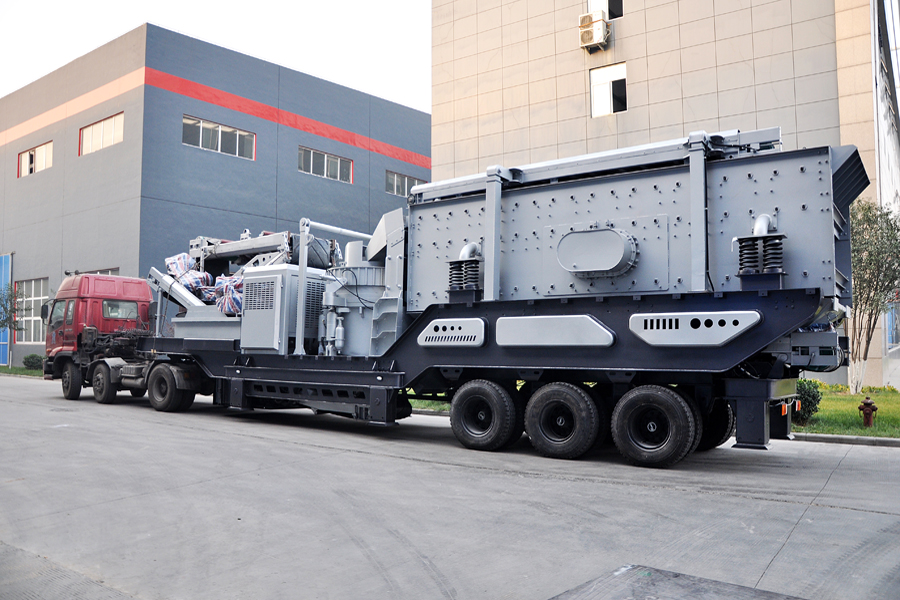 2. Primary Crushing
– Large granite rocks (up to 1–1.5 meters) are fed into a jaw crusher or gyratory crusher for initial size reduction (to ~100–250 mm).
– Dust suppression systems control airborne particles.
3. Secondary Crushing
– Smaller pieces are further crushed using a cone crusher or impact crusher to produce smaller aggregates (~20–50 mm).
– This stage improves particle shape and reduces flakiness.
4. Screening & Classification
– Crushed material is passed through vibrating screens to separate aggregates by size (e.g., 5–10 mm, 10–20 mm, 20–40 mm).
– Oversized material is sent back for re-crushing.
5. Tertiary Crushing (Optional)
– For finer aggregates (e.g., sand or grit), a vertical shaft impactor (VSI) or roller crushe.jpg) ay be used.
ay be used.
– Produces manufactured sand (M-sand) as a byproduct.
6. Washing & Scrubbing (Optional)
– Aggregates may be washed to remove dust, clay, or organic impurities.
– Log washers or sand screws are used for cleaning.
7. Stockpiling & Storage
– Sized aggregates are stored in separate stockpiles to prevent mixing.
– Covered storage may be used to maintain quality in humid climates.
8. Quality Control & Testing
– Aggregates are tested for:
– Particle size distribution (sieve analysis)
– Strength (Los Angeles abrasion test)
– Shape (flakiness index)
– Water absorption
– Chemical stability
9. Transportation
– Aggregates are transported via trucks, rail, or barges to construction