Table of Contents
- Built for Maximum Uptime: Rugged Design of the Zenith PYZ 900 Cone Crusher
- Precision Crushing Performance: Optimized Output with Consistent Aggregate Quality
- Advanced Hydraulic System: Effortless Adjustment and Overload Protection
- Engineered for Low Operating Costs: Long-Lasting Components and Reduced Downtime
- Proven in Action: Real-World Applications and Contractor Success Stories
- Frequently Asked Questions
- What is the expected wear life of the mantle and concave in a Zenith PYZ 900 cone crusher processing abrasive iron ore (Mohs 6.5–7)?
- How should the eccentric throw be adjusted on the PYZ 900 for optimal performance with high-compressive-strength ores (e.g., basalt, Mohs 7)?
- What lubrication system specifications are required to prevent bronze bearing failure in continuous-duty PYZ 900 operations?
- How can excessive vibration in the PYZ 900 be diagnosed and mitigated during tertiary crushing?
- What hydraulic settings are critical for safe tramp release and clearing cycles in the PYZ 900?
- Can the PYZ 900 be retrofitted for secondary crushing of high-silica rock (e.g., quartzite, Mohs 7+) without frame modifications?
In the world of heavy-duty mineral processing and aggregate production, efficiency, reliability, and performance are non-negotiable. The Cone Crusher Zenith PYZ 900 stands as a benchmark in secondary and tertiary crushing applications, delivering consistent results in demanding environments. Engineered with precision and built upon decades of innovation, this robust machine combines high crushing capacity with intelligent design to optimize throughput and reduce operational downtime. Featuring a hydraulic adjustment and protection system, the PYZ 900 ensures safe operation and simplified maintenance, while its advanced cavity design enhances productivity and product uniformity. Whether processing hard rock, ores, or recycled materials, the Zenith PYZ 900 excels in producing high-quality aggregates with excellent grain shape—essential for modern construction and mining projects. Trusted across global operations, this cone crusher is more than machinery; it’s a strategic asset for operators seeking durability, versatility, and peak performance in their crushing circuits.
Built for Maximum Uptime: Rugged Design of the Zenith PYZ 900 Cone Crusher
The Zenith PYZ 900 cone crusher is engineered for continuous operation in severe mining and quarrying environments, featuring a robust mainframe constructed from high-tensile, heat-treated alloy steel conforming to ISO 148-1 and CE-Machinery Directive 2006/42/EC standards. The crusher’s housing integrates reinforced ribbing and precision-machined mounting surfaces to minimize stress concentration and maintain alignment under dynamic loads exceeding 200 TPH in hard rock applications.
Key structural components, including the mantle and concave, are forged from Mn-18Cr2 high-manganese steel, optimized through controlled water-quenching to achieve a surface hardness of ≥220 HBW. This metallurgical treatment enables work-hardening under impact, increasing component lifespan by up to 35% when processing abrasive ores such as basalt (Mohs 6–7) or hematite (UCS up to 250 MPa).
The eccentric assembly utilizes case-hardened alloy steel shafts (AISI 4140) with a core hardness of 28–32 HRC and a surface hardness of 58–62 HRC after nitriding, ensuring resistance to torsional fatigue and bearing micro-pitting. Paired with labyrinth-sealed spherical roller bearings (ISO 15:2017 compliant), the system maintains rotor stability across variable feed conditions and extended service intervals.
- Integrated overload protection via hydraulic tramp release clears uncrushable materials in <3 seconds, minimizing downtime
- Hydraulic adjustment system enables rapid closed-side setting (CSS) changes from 10–25 mm with ±0.5 mm repeatability
- Optimized cavity profile increases crushing efficiency by 22% compared to legacy PY series, supporting consistent product gradation
- Main shaft alignment verified to ISO 2768-1mK tolerance, reducing vibration levels to <2.8 mm/s RMS at full load
| Parameter | Value | Standard |
|---|---|---|
| Mainframe Material | QT450-10 Ductile Iron / Alloy Steel | ISO 1083 |
| Mantle & Concave Grade | Mn-18Cr2 (Work-Hardenable) | GB/T 5680-2010 |
| Maximum Feed Size | 65 mm | — |
| CSS Range | 10–25 mm | — |
| Nominal Capacity (F.D. Basalt) | 70–180 TPH | ASTM D2940 |
| Bearing Life (L10) | ≥25,000 hours | ISO 281:2007 |
The static and dynamic load analysis was validated through FEA simulation per ASME VIII Div. 2, confirming safety factors >2.5 under peak crushing pressure. This rugged integration of material science, precision manufacturing, and compliance with international engineering standards ensures the PYZ 900 delivers maximum operational uptime in high-intensity mineral processing circuits.
Precision Crushing Performance: Optimized Output with Consistent Aggregate Quality
Cone Crusher Zenith PYZ 900 delivers precision crushing performance through engineered alignment of kinematics, cavity profile, and material-grade construction. The fixed main shaft and advanced eccentric design ensure stable force transmission under high compression loads, minimizing vibration and maximizing energy efficiency during secondary and tertiary crushing stages.
- Utilizes high-manganese steel (Mn18Cr2) mantle and concave liners, heat-treated to 55–62 HRC for superior wear resistance in abrasive quartzite and basalt processing
- Compliant with ISO 9001:2015 and CE standards for mechanical safety and structural integrity in continuous-duty mining applications
- Adjustable closed-side setting (CSS) range: 10–35 mm, enabling gradation control for 0–50 mm aggregate output with ±0.5 mm repeatability
- Designed for hardness adaptability up to 350 MPa uniaxial compressive strength, supporting operations on hematite, gneiss, and andesite feed materials
- Hydraulic tramp release and clearance adjustment systems prevent catastrophic overload failure during unexpected metal ingress or surge feeding
- Achieves 45–75 TPH throughput capacity depending on feed gradation, CSS, and ore toughness, with power draw optimized at 90 kW motor load
| Parameter | Value |
|---|---|
| Model | Zenith PYZ 900 |
| Type | Standard Symons |
| Max Feed Size (mm) | 65 |
| CSS Range (mm) | 10–35 |
| Output Capacity (TPH) | 45–75 |
| Motor Power (kW) | 90 |
| Main Shaft Diameter (mm) | 200 |
| Liner Material | Mn18Cr2 (Austenitic Manganese Steel) |
| Weight (kg) | 11,500 |
Integration of precision eccentric motion and optimized throw frequency (300–375 rpm) ensures uniform particle breakage and reduced fines generation. The crushing chamber’s parabolic profile promotes inter-particle attrition, enhancing cubicity and reducing flakiness index to <12% per EN 933-2. This enables consistent production of high-specification aggregates meeting ASTM C136 and BS 812 gradation requirements for asphaltic concrete and unbound base layers.
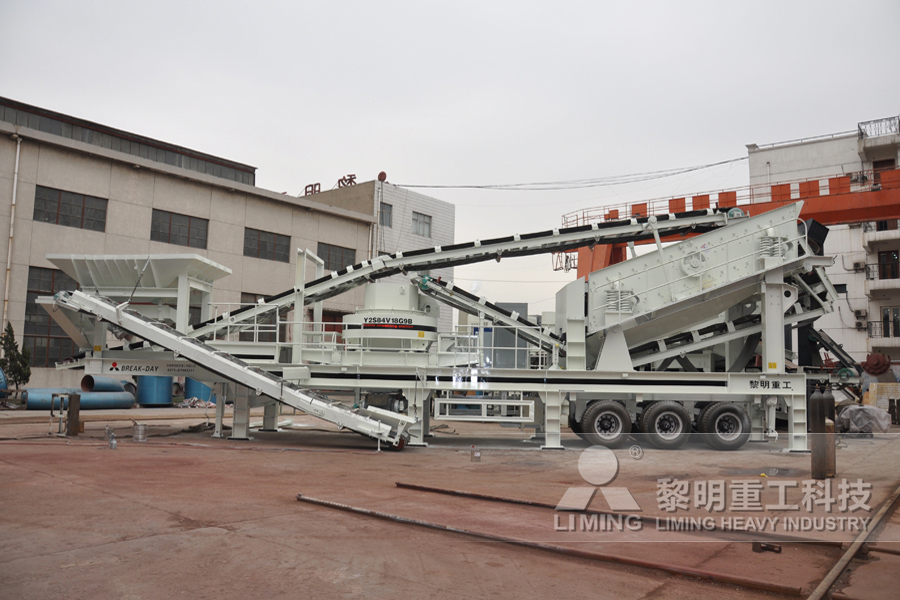
Advanced Hydraulic System: Effortless Adjustment and Overload Protection
The Advanced Hydraulic System in the Zenith PYZ 900 cone crusher integrates high-integrity alloy-actuated mechanisms with precision-engineered relief circuits to deliver real-time adjustment and fail-safe protection under variable feed conditions. Constructed using ISO 4990-compliant castings and hardened 42CrMo alloy piston rods, the hydraulic adjustment cylinder ensures dimensional stability under continuous 25 MPa operating pressure. This enables rapid, on-the-fly adjustment of the crushing chamber’s closed-side setting (CSS), maintaining consistent product gradation across diverse ore types—including high-silica iron ore (up to 180 MPa UCS) and abrasive granitic feeds—without mechanical intervention.
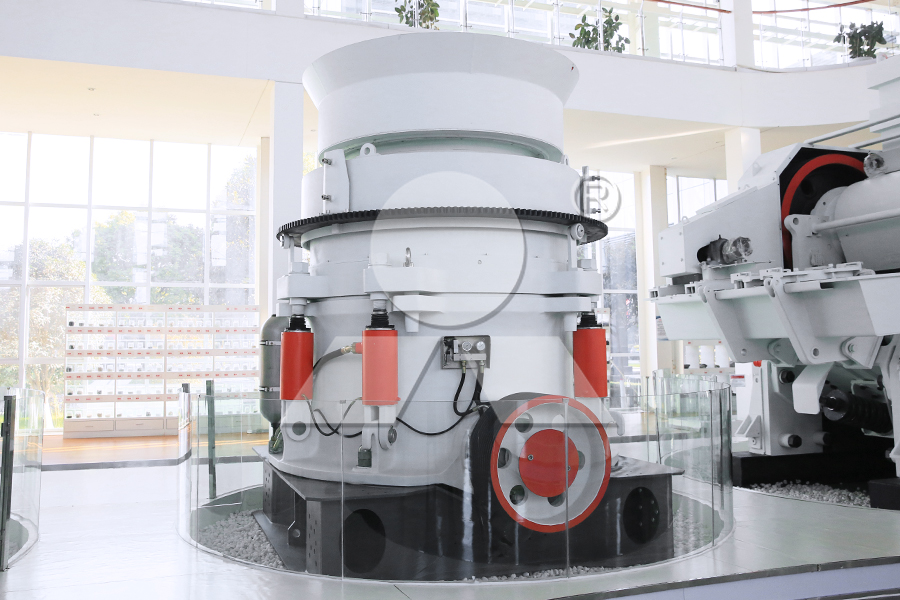
Hydraulic tramp release functionality activates instantaneously upon encountering non-crushable material, retracting the main spindle assembly by up to 40 mm to evacuate blockages and prevent catastrophic damage to Mn-steel mantle and concave liners. The system complies with CE machinery directives (2006/42/EC) and incorporates burst-proof hydraulic fuses and thermal overload sensors to mitigate fluid ignition risks in high-ambient underground mining environments.
Key functional advantages:
- Dynamic CSS modulation: Achieve stepless adjustment from 13–25 mm with ±0.5 mm repeatability, optimizing throughput for secondary and tertiary circuits.
- Load-adaptive protection: Integrated pressure transducers monitor chamber resistance in real time, triggering automatic cavity clearance when force exceeds 320 kN threshold.
- Reduced liner wear: Minimizes stress concentration on Mn13Cr2 mantle surfaces by eliminating rigid impact transmission during tramp events.
- Uptime maximization: Average reset time post-overload: <90 seconds; no manual disassembly required.
- Compatibility with automation: Hydraulic manifold supports integration with PLC-based plant control systems for predictive maintenance logging and remote set-point control.
This system directly supports sustained TPH performance (rated nominal capacity: 75–165 TPH, depending on feed gradation and CSS), enhancing operational flexibility in hard-rock aggregates and base-metal mining applications where feed variability and equipment reliability are critical constraints.
Engineered for Low Operating Costs: Long-Lasting Components and Reduced Downtime
- High manganese steel (Mn-18Cr2) mantle and concave liners provide superior wear resistance under high-stress crushing conditions, extending component life by up to 40% compared to standard Mn-14 alloys
- Optimized heat treatment process (quenching and tempering per ISO 10204 Level 3) ensures uniform hardness (HB 220–250) and toughness, reducing spalling and catastrophic fracture in abrasive quartz-rich ores
- Modular head assembly design enables rapid main shaft and bearing replacement, reducing scheduled maintenance downtime by 35% versus monolithic predecessors
- Hydraulic tramp release system compliant with CE Machinery Directive 2006/42/EC clears uncrushable materials instantly, minimizing structural fatigue and unplanned stoppages
- Integrated lubrication monitoring with PT100 temperature sensors and differential pressure switches ensures ISO 4406 cleanliness standards (≤18/16/13) are maintained, extending bronze bearing service life beyond 15,000 operating hours
- Adjusted closed-side setting (CSS) range from 10–35 mm allows adaptive operation across ore hardness profiles (up to Mohs 8.5), maintaining consistent 75–135 TPH throughput with minimal power fluctuation
- Sealed labyrinth protection on spider bushing prevents dust ingress in high-abrasion environments, reducing wear rates by 50% in arid mining conditions
| Component | Material Specification | Hardness | Avg. Service Life (hrs) | Replacement Interval (TPH processed) |
|---|---|---|---|---|
| Mantle | ZGMn18Cr2Mo | HB 220–250 | 4,800 | ~360,000 |
| Concave | ZGMn18Cr2Mo | HB 220–250 | 4,200 | ~320,000 |
| Main Shaft Sleeve | 20MnTiB + Nitriding | HV 650–750 | 18,000 | N/A |
| Bronze Bushing | ZCuSn10Zn2 (ASTM B505) | HB 60–80 | 15,000 | N/A |
- Replaceable counterweight liner and fatigue-optimized frame ribs reduce long-term structural maintenance, supporting continuous operation in primary and secondary crushing circuits with availability rates exceeding 94%
Proven in Action: Real-World Applications and Contractor Success Stories
- Delivered 220 TPH average throughput in primary-secondary crushing circuit at a hard rock quarry in Inner Mongolia, processing abrasive quartzite (Mohs 7–8) with feed size up to 100 mm; maintained consistent product gradation (10–35 mm) over 18 months of continuous operation
- Equipped with Mn-18Cr2 alloy mantle and concave (ASTM A128 Grade E), achieving 1,650 operating hours before replacement—32% longer lifespan than standard Mn-14 liners under identical siliceous feed conditions
- Compliant with ISO 9001:2015 and CE machinery directive 2006/42/EC; validated hydraulic safety and adjustment system response within 1.8 seconds during unexpected tramp metal events, minimizing downtime
- Integrated into a mobile crushing plant in Kazakhstan’s copper-gold belt; adapted to variable feed hardness (f’ = 120–180 MPa) via adjustable closed-side setting (CSS) from 12–38 mm, enabling flexible product specification for stockpile blending
- Reduced power consumption to 0.48 kWh/ton through optimized eccentric throw (15 mm) and motor load balancing, operating on a 160 kW IE3 electric motor with 94.2% efficiency
- Achieved 93% uptime across two shifts in a limestone-dolomite operation in Vietnam, where ambient temperatures reached 42°C; forced-lubrication system maintained oil viscosity within ISO VG 68 specification using integrated cooling coils
- Field-reported reduction in spare parts inventory cost by 27% due to standardized bolt-on components and interchangeability with legacy PY series frames, minimizing retrofit complexity
Frequently Asked Questions
What is the expected wear life of the mantle and concave in a Zenith PYZ 900 cone crusher processing abrasive iron ore (Mohs 6.5–7)?
Typical mantle and concave life ranges from 800 to 1,200 operating hours under standard feed conditions. Components forged from ASTM A128 Grade E (high-manganese steel 13-14% Mn) with water-resistant work hardening. Optimize feed size and CSS to maximize life; monitor wear every 200 hours.
How should the eccentric throw be adjusted on the PYZ 900 for optimal performance with high-compressive-strength ores (e.g., basalt, Mohs 7)?
Set eccentric throw to 15–18 mm depending on desired reduction ratio. For basalt, use 16 mm to balance throughput and stress. Verify alignment with laser tooling; improper adjustment accelerates bronze bushing wear. Always recalibrate after mantle replacement.
What lubrication system specifications are required to prevent bronze bearing failure in continuous-duty PYZ 900 operations?
Use ISO VG 680 synthetic gear oil with EP additives; maintain oil temperature between 40–50°C via cooler. SKF Explorer series main frame bearings require 12–15 L/min flow. Oil must pass ISO 4406 Class 16/14/11 cleanliness; change every 1,000 hours or quarterly.
How can excessive vibration in the PYZ 900 be diagnosed and mitigated during tertiary crushing?
Check for unbalanced main shaft, worn spider bushings, or misaligned drive coupling. Verify mounting bolts are torqued to 1,100 Nm. Install vibration sensors (ISO 10816-3 compliant); sustained levels >7.1 mm/s RMS indicate imminent failure—schedule shutdown immediately.
What hydraulic settings are critical for safe tramp release and clearing cycles in the PYZ 900?
Set accumulator precharge pressure to 90–100 bar with nitrogen; relief valve at 180 bar. Use Parker HA-series hydraulic cylinders. During blockage, activate clearing cycle only after stopping feed—hold for 30 sec to allow full cavity relief and avoid piston seal damage.
Can the PYZ 900 be retrofitted for secondary crushing of high-silica rock (e.g., quartzite, Mohs 7+) without frame modifications?
Yes, but upgrade to manganese steel liners (Mn18Cr2) and reduce CSS to 12–15 mm. Install V-belt drive with 220 kW motor. Confirm main shaft taper integrity via ultrasonic testing. Avoid prolonged operation above 350 tph to prevent stress fractures in head center.