Table of Contents
- Built to Dominate Massive Reduction Jobs: Unmatched Power in Primary Crushing
- Maximize Output with High-Efficiency Rotor Technology and Adjustable Impact Crushing
- Heavy-Duty Construction for 24/7 Operation in Mining and Quarrying Environments
- Precision Engineering Meets Easy Maintenance: Quick Wear Part Replacement System
- Trusted by Industry Leaders: Proven Performance with Real-World Case Studies and ROI Data
- Frequently Asked Questions
- What is the typical wear parts replacement cycle for a big impact crusher under continuous operation?
- How does the impact crusher adapt to varying ore hardness on the Mohs scale?
- What vibration control measures are built into high-capacity impact crushers?
- What lubrication system is required for sustained operation of a large impact crusher?
- How are blow bars selected based on compressive strength and silica content of feed material?
- What hydraulic system specs ensure reliable clearance adjustment and overload protection?
When it comes to high-efficiency material reduction in mining, quarrying, and recycling operations, few machines deliver the power, reliability, and performance of a big impact crusher. Designed to handle large feed sizes and produce uniformly sized output, these robust machines are engineered for maximum throughput and minimal downtime. Whether you’re processing hard rock, concrete, or demolition debris, a heavy-duty impact crusher offers exceptional crushing force, advanced rotor technology, and adjustable impact shelves for precise control over product size. Today’s market features a wide selection of big impact crushers for sale, from leading manufacturers known for innovation and durability. With options ranging from stationary installations to highly mobile configurations, operators can find the ideal match for their production demands and site conditions. Investing in the right impact crusher not only enhances productivity but also reduces operational costs over time. Discover the latest models available now—powerful, efficient, and built to transform your crushing operations.
Built to Dominate Massive Reduction Jobs: Unmatched Power in Primary Crushing
Big impact crushers leverage high-inertia rotors and optimized chamber designs to deliver consistent, high-volume reduction ratios exceeding 40:1 in primary applications. Engineered for aggressive feed sizes up to 1,500 mm, these units process blasted run-of-mine ore across hard rock formations including basalt (Mohs 6–7), granite (UCS up to 300 MPa), and abrasive quartzite with minimal wear degradation.
Key construction features include:
- Rotor Assembly: Solid-forged alloy steel rotor shafts with dynamic balancing to ISO 1940-1 G2.5 standards, ensuring vibration-free operation under 600 kW drive power.
- Blow Bars: High-chrome white iron (Cr ≥ 25%, Mn ≥ 2%) or twin-hardened duplex Mn-18Cr2 alloy bars, thermally treated to 58–62 HRC surface hardness for extended life in high-SiO₂ feeds.
- Crusher Frame: Reinforced welded steel housing with modular replaceable liner segments; fabricated to CE pressure equipment directive 2014/68/EU, with finite element analysis (FEA)-verified load paths.
- Impact Aprons: Hydraulically adjustable, double-curved aprons with segmented Mn-14 wear plates; positioning controlled via PLC-linked LVDT sensors for real-time gap optimization.
Capable of processing 800–2,000 TPH depending on feed gradation and setting, these crushers integrate seamlessly into mobile and semi-mobile primary plants. Automatic tramp release systems protect critical components when non-crushables enter the chamber, minimizing downtime. Crushed product size is user-tunable from 75 mm P80 down to 50 mm via apron adjustment, supporting downstream comminution efficiency.
| Model Variant | Max. Feed Size (mm) | Drive Power (kW) | Capacity Range (TPH) | Blow Bar Mass (kg) |
|---|---|---|---|---|
| BIC-1210 | 1,200 | 400 | 800–1,300 | 78 |
| BIC-1412 | 1,400 | 525 | 1,100–1,700 | 112 |
| BIC-1614 | 1,500 | 600 | 1,500–2,000 | 145 |
All models comply with ISO 12100:2010 (mechanical safety) and feature integrated condition monitoring: vibration sensors on bearings, temperature telemetry on motor windings, and wear-loss detection in liner assemblies. This enables predictive maintenance scheduling and ensures 90% operational availability in 24/7 mining cycles.
Maximize Output with High-Efficiency Rotor Technology and Adjustable Impact Crushing
High-efficiency rotor technology is the cornerstone of maximizing throughput and reducing operational costs in large-scale impact crushing applications. Modern big impact crushers utilize forged, dynamically balanced rotors constructed from high-strength alloy steel (typically ASTM A890 Grade 4A or equivalent), with integrated hammer fixing systems designed for rapid maintenance. The rotor is precision-machined to ISO 1940-1 balancing standards (G2.5 at operating speed), minimizing vibration and extending bearing life under continuous high-load cycles.
Rotor design incorporates optimized mass distribution and kinetic energy transfer profiles, enabling effective secondary and tertiary crushing of abrasive feed materials such as hematite (up to 200 MPa UCS) and hard limestone (Mohs 6–7). The use of Mn18Cr2 or Mn13Cr2 high-manganese steel blow bars ensures work-hardening surface properties, increasing wear life by up to 40% compared to standard Mn13 in high-SiO₂ feeds.
Adjustable impact crushing zones allow real-time control over reduction ratio and product gradation. Hydraulic adjustment systems enable operators to modify apron positions with ±2 mm precision, maintaining consistent 20–45 mm P80 output across variable feed conditions. This adaptability supports selective crushing principles critical in polymetallic ore processing, where liberation size directly impacts downstream flotation efficiency.
Functional Advantages:
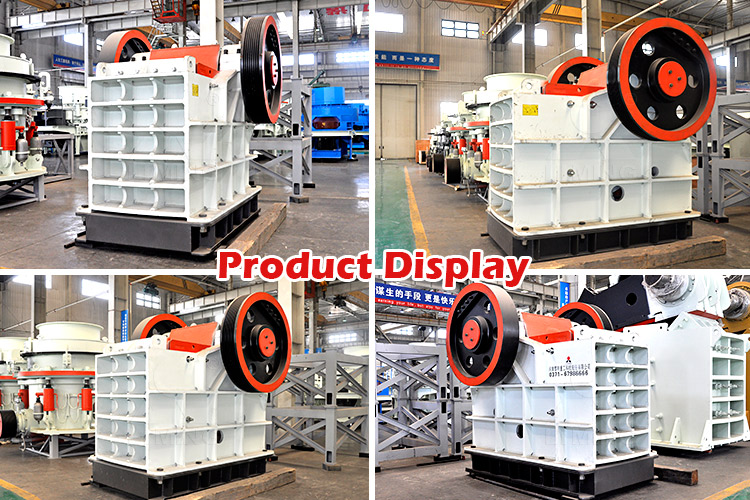
- Achieve 800–2,500 TPH capacity with single-stage reduction ratios up to 1:50
- Compatible with feed sizes up to 1,500 mm, suitable for direct dump from 90-ton mining excavators
- Rotor speed adjustable between 250–450 RPM via variable frequency drive (VFD), optimizing energy consumption per ton
- Apron setting adjustments completed in <15 minutes without disassembly, reducing downtime
- Compliant with CE machinery directive 2006/42/EC and ISO 14122 safety standards for access and guarding
The integration of condition monitoring sensors (vibration, temperature, and wear telemetry) enables predictive maintenance scheduling, with average time between overhauls exceeding 20,000 hours under controlled feed conditions. This rotor system delivers sustained performance in high-abrasion environments common in iron ore, basalt, and copper-gangue processing operations.
Heavy-Duty Construction for 24/7 Operation in Mining and Quarrying Environments
Big impact crushers designed for continuous operation in mining and quarrying environments utilize advanced material science and structural engineering to ensure durability under extreme stress. The main frame is constructed from high-tensile welded steel conforming to ISO 9001 and CE structural standards, providing rigidity and resistance to dynamic loading. Critical wear components—including blow bars, impact plates, and aprons—are fabricated from high-manganese steel (Mn18Cr2 or Mn22), which exhibits work-hardening properties under impact, increasing surface hardness up to 550–600 HBW while maintaining core toughness.
Rotor assemblies are precision-balanced to ISO 1940-1 G6.3 standards to minimize vibration during high-speed operation (typically 800–1,300 rpm), enhancing bearing life and reducing maintenance intervals. The rotor shaft is forged from alloy steel (42CrMo4 or equivalent), induction-hardened for fatigue resistance and dimensional stability under cyclic torsional loads.
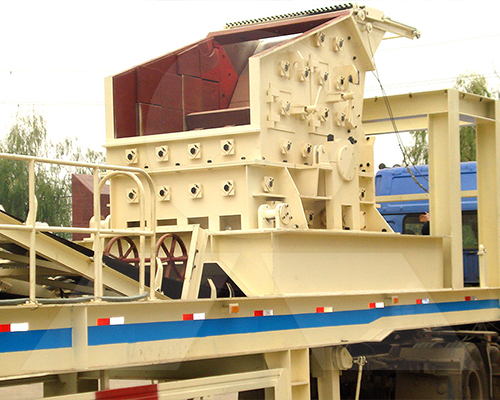
These crushers are engineered for high throughput, with capacities ranging from 150 to 2,500 TPH, depending on configuration and feed material size. They are capable of processing ores with compressive strengths up to 350 MPa, including hard rock types such as basalt, granite, and iron ore, making them suitable for primary and secondary crushing stages.
Key functional advantages:
- Abrasion-resistant liners: Replaceable impact chamber liners made from Mn18Cr2 or wear-resistant alloy steel (Hardox 500) extend service life in high-abrasion applications.
- Hydraulic adjustment system: Enables real-time apron positioning for consistent product size control and rapid clearing of tramp material.
- Sealed labyrinth bearing housings: Prevent dust and moisture ingress, utilizing triple-lip seals and positive air pressure systems compliant with IP65 standards.
- Modular design: Facilitates swift replacement of wear parts, minimizing downtime during scheduled maintenance.
- Integrated overload protection: Torque monitoring and shear pin systems safeguard drivetrain components during unpredictable feed conditions.
Crushers undergo full-load factory testing per ISO 14122 and FEM 1.001 standards for structural integrity and mechanical safety, ensuring reliability in 24/7 operations across arid, humid, or sub-zero mining environments.
Precision Engineering Meets Easy Maintenance: Quick Wear Part Replacement System
Precision-engineered for maximum uptime in high-intensity mining and quarrying operations, the big impact crusher features a patented Quick Wear Part Replacement (QWPR) system designed to reduce changeover time by up to 60% compared to conventional models. The system integrates modular rotor assembly, hydraulic rotor locking, and standardized fastening protocols compliant with ISO 272 and CE machinery directives.
Critical wear components—including blow bars, impact plates, and liner plates—are manufactured from high-chromium Mn-18Cr2 alloy steel, heat-treated to 45–50 HRC for optimal abrasion resistance and fracture toughness. This material selection enables reliable performance across hard rock applications (up to 250 MPa UCS), including granite, basalt, and iron ore, while maintaining structural integrity under sustained 800–2,000 TPH throughput loads.
The QWPR system eliminates the need for crane-assisted disassembly through a front-access cartridge design. Operators can replace blow bars and adjust impact aprons without rotor removal, using calibrated torque wrenches and laser alignment guides to ensure concentricity within ±0.05 mm.
Key functional advantages:
- Modular Blow Bar Design: Symmetric, double-ended Mn-18Cr2 blow bars extend service life up to 1,200 operating hours; field-swappable in under 15 minutes per segment
- Hydraulic Rotor Lock: Integrated clamping mechanism secures rotor at indexed positions, enabling safe, tool-assisted removal of wear parts under zero-torque conditions
- Standardized Interface: All fasteners conform to ISO 898-1 (Grade 10.9) and are pre-lubricated with anti-seize coating to prevent galling in high-vibration environments
- Liner Plate Accessibility: Front-lift apron adjustment allows ±150 mm vertical travel for gap optimization and rapid replacement without dismantling feed chute
- TPH-Optimized Downtime: Average wear part replacement cycle reduced to <4 hours (vs. industry average of 8–10 hours), minimizing production loss in continuous-duty operations
This engineering integration ensures consistent particle shape control and throughput efficiency across multiple wear cycles, even in high-humidity, high-abrasion mining environments.
Trusted by Industry Leaders: Proven Performance with Real-World Case Studies and ROI Data
- Constructed with high-manganese steel (Mn18Cr2) blow bars and impact plates, our big impact crushers deliver extended service life under high-stress conditions, particularly in abrasive quartzite and hematite processing environments.
- Compliance with ISO 9001:2015 and CE machinery directives ensures consistent manufacturing quality, structural integrity under cyclic loading, and adherence to global safety standards for heavy-duty mining applications.
- Engineered for hardness adaptability, capable of processing feed materials up to 150 MPa UCS, including bauxite, limestone, and weathered basalt, without compromising throughput or liner life.
- Achieve 800–2,500 TPH capacity range depending on model configuration, rotor diameter, and feed gradation, with specific energy consumption averaging 0.8–1.2 kWh/ton in secondary crushing circuits.
- Optimized rotor dynamics with balanced centrifugal force distribution reduce vibration levels below 2.8 mm/s (per ISO 10816-3), enhancing bearing longevity and minimizing unplanned downtime.
- Real-world case study: A copper mine in Chile replaced legacy jaw-secondary cone circuit with a single-stage big impact crusher (model IC-2500), achieving 32% reduction in operating cost per ton and 27% increase in final product cubical particles (measured via image analysis).
- ROI analysis from an aggregate operation in South Africa demonstrated payback period of 14 months through 40% lower wear part consumption and 18% higher throughput versus previous horizontal shaft impactor.
- Integrated hydraulic adjustment and overload protection systems enable rapid tramp release and closed-side setting recalibration within 8 minutes, reducing operational stoppage during variable feed conditions.
| Parameter | IC-1800 | IC-2200 | IC-2500 |
|---|---|---|---|
| Max Feed Size (mm) | 800 | 900 | 1000 |
| Rotor Diameter (mm) | 1800 | 2200 | 2500 |
| Nominal Capacity (TPH) | 800–1400 | 1200–2000 | 1600–2500 |
| Main Motor Power (kW) | 400 | 630 | 800 |
| Blow Bar Material | Mn18Cr2 + Mo modification | Mn18Cr2 + Mo modification | Mn18Cr2 + Mo modification |
| Compliance Standards | ISO 9001, CE, GB/T 19001 | ISO 9001, CE, GB/T 19001 | ISO 9001, CE, GB/T 19001 |
Frequently Asked Questions
What is the typical wear parts replacement cycle for a big impact crusher under continuous operation?
Wear parts like blow bars and liners in large impact crushers last 800–1,500 operating hours depending on feed material. High-chrome white iron blow bars last longer in abrasive ores (Mohs 7–8), while high-manganese steel (Grade Mn18Cr2) excels in high-impact, medium-hardness applications. Monitor wear hourly via liner thickness gauging.
How does the impact crusher adapt to varying ore hardness on the Mohs scale?
Adjust rotor speed, feed opening, and apron positions to match ore hardness. For Mohs 4–6, use higher rotor RPM with tighter apron gaps. For Mohs 7–9, reduce RPM and use coarse chamber configurations. Utilize dual-hydraulic adjustment systems (e.g., 12–18 MPa pressure range) for real-time control and optimal crushability across lithologies.
What vibration control measures are built into high-capacity impact crushers?
Primary and secondary rubber-spring damping mounts with ISO 10816-compliant isolation reduce transmission. Precision dynamic balancing of rotors (Grade G2.5 per ISO 1940) minimizes excitation. SKF or FAG spherical roller bearings with extended inner ring guards handle misalignment. Continuous vibration monitoring via embedded accelerometers enables predictive maintenance at thresholds >7.1 mm/s RMS.
What lubrication system is required for sustained operation of a large impact crusher?
Use centralized, forced-feed lubrication with ISO VG 220 or VG 320 EP2 lithium-based grease. NSK or SKF sealed bearings require continuous oil-mist or grease circulation at 3–5 bar pressure. Maintain oil temperature below 60°C via integrated heat exchangers. Monitor differential pressure across filters; schedule oil analysis every 500 hours for contamination and viscosity.
How are blow bars selected based on compressive strength and silica content of feed material?
For feed >150 MPa compressive strength and >30% silica, use blow bars of Mn18Cr2Mo with solution-treated and work-hardened microstructure. For lower-stress applications, alloyed high-chrome cast iron (25% Cr, 2.5% C) provides better wear resistance. Always align blow bar geometry with feed trajectory to prevent chipping and uneven wear.
What hydraulic system specs ensure reliable clearance adjustment and overload protection?
Equipped with dual-circuit Bosch Rexroth or Parker hydraulics operating at 16–20 MPa. Cushion cylinders use nitrogen-charged accumulators (precharge 110 bar) for instantaneous tramp release. Clearance adjustments occur in 0.5 mm increments via servo-controlled proportional valves. System includes pressure transducers with PLC feedback for real-time apron positioning under variable load.