Table of Contents
- Overview of Aggregate Stone Production and Its Economic Role in Zambia
- Key Regions and Geological Resources Driving Stone Quarrying in Zambia
- Major Companies and Production Capacity in Zambia’s Aggregate Sector
- Applications of Aggregates in Zambian Infrastructure and Construction Projects
- Challenges and Growth Prospects for Aggregate Stone Production in Zambia
- Frequently Asked Questions
- What are the key stages in aggregate stone production in Zambia?
- Which types of rocks are commonly used for aggregate production in Zambia?
- How is environmental compliance managed in Zambian aggregate quarries?
- What machinery is essential for a modern aggregate plant in Zambia?
- What are the major challenges in Zambia’s aggregate stone production sector?
- How does Zambia’s geology support large-scale aggregate production?
- What role do local content regulations play in aggregate production?
- How is quality control maintained in Zambian aggregate plants?
- What are the primary end markets for aggregates in Zambia?
- How do energy costs impact aggregate production efficiency in Zambia?
- Are there investment incentives for aggregate production in Zambia?
- How do Zambian aggregate producers ensure workplace safety?
Zambia’s construction and infrastructure boom is fueling unprecedented demand for high-quality aggregate stone, positioning the sector as a cornerstone of the nation’s industrial growth. With urbanization accelerating and government-led development projects expanding across roads, housing, and energy, the need for reliable, locally sourced aggregates has never been more critical. Rich in limestone, granite, and basalt deposits, Zambia boasts vast geological advantages that support a thriving aggregates industry. Yet, beneath this potential lies a landscape of evolving challenges and opportunities—from technological modernization and environmental compliance to market accessibility and regional competition. A growing number of local and international players are investing in mechanized quarries and processing plants, driving efficiency and scalability. As regulatory frameworks mature and demand projections climb, stakeholders are re-evaluating strategies to capture value in both domestic and regional markets. This dynamic environment presents fertile ground for innovation, partnerships, and sustainable growth in one of Africa’s most promising extractive sectors.
Overview of Aggregate Stone Production and Its Economic Role in Zambia
-
Aggregate stone production in Zambia constitutes a foundational element of the nation’s construction and infrastructure development sectors. Comprising materials such as crushed stone, gravel, and sand, aggregates are essential inputs in road construction, building projects, and large-scale civil engineering works. The industry primarily serves domestic demand, driven by ongoing urbanization, public infrastructure initiatives, and private real estate development.
-
Zambia’s geology offers abundant resources suitable for aggregate extraction, particularly in regions with extensive sedimentary and metamorphic rock formations. Key production zones are concentrated near Lusaka, Copperbelt, and Southern Province, where proximity to urban centers and transport corridors reduces logistical costs and enhances market accessibility. Most operations remain small to medium-scale, with a mix of informal quarries and mechanized producers adhering to environmental and safety standards.
-
Economically, the aggregate sector contributes indirectly but significantly to GDP through linkages with construction, transportation, and equipment services. It provides direct and indirect employment to thousands, particularly in rural and peri-urban areas where quarrying activities are prevalent. Despite its importance, the sector operates with limited formal regulation, resulting in inconsistencies in product quality and environmental compliance.
-
Government investment in infrastructure—such as the Lusaka-Ndola Dual Carriageway, irrigation schemes, and urban housing projects—continues to stimulate demand. Additionally, regional integration efforts under the African Continental Free Trade Area (AfCFTA) and the Southern African Development Community (SADC) may create export opportunities, although cross-border competitiveness remains constrained by logistical inefficiencies and energy costs.
-
Major players include established construction groups like Zambeef Properties, Aveng, and Toto Holdings, which integrate quarrying into broader development portfolios. Emerging private quarries and joint ventures are increasingly adopting mechanization to improve yield and consistency.
-
Challenges persist, including land access disputes, inconsistent enforcement of environmental regulations, and energy supply volatility. However, strategic formalization, investment in processing technology, and policy alignment with national development goals present substantial opportunities for sector growth and integration into regional value chains.
Key Regions and Geological Resources Driving Stone Quarrying in Zambia
-
Central Province: The region surrounding Kabwe and Serenje is a primary hub for limestone and dolomite extraction, critical inputs for cement production and agricultural applications. The geological formations in this area, particularly within the Neoproterozoic sedimentary sequences, host extensive carbonate deposits with high purity levels. Proximity to major transport corridors and existing cement manufacturing facilities enhances the economic viability of operations here.
-
Copperbelt Province: Characterized by complex metamorphic and igneous basement rocks, this region supports the production of hard rock aggregates suitable for high-strength concrete and road base materials. Gabbro, diorite, and quartzite are commonly quarried near Chingola and Kitwe. The established mining infrastructure and skilled labor pool from copper operations have facilitated efficient scaling of aggregate operations.
-
Lusaka Province: As the country’s economic and infrastructural nexus, Lusaka drives significant demand for construction aggregates. Local quarries in Chilanga and Kafue exploit sandstone and quartzite formations, supplying crushed stone to residential, commercial, and public infrastructure projects. The Kafue Supergroup formations provide consistent material quality with favorable compressive strength.
-
Southern Province: The area around Mazabuka and Monze contains thick sandstone and conglomerate units within the Karoo Supergroup, offering durable aggregates for road construction and railway ballast. These resources are particularly valuable for large-scale civil engineering projects due to their abrasion resistance and availability in bulk.
-
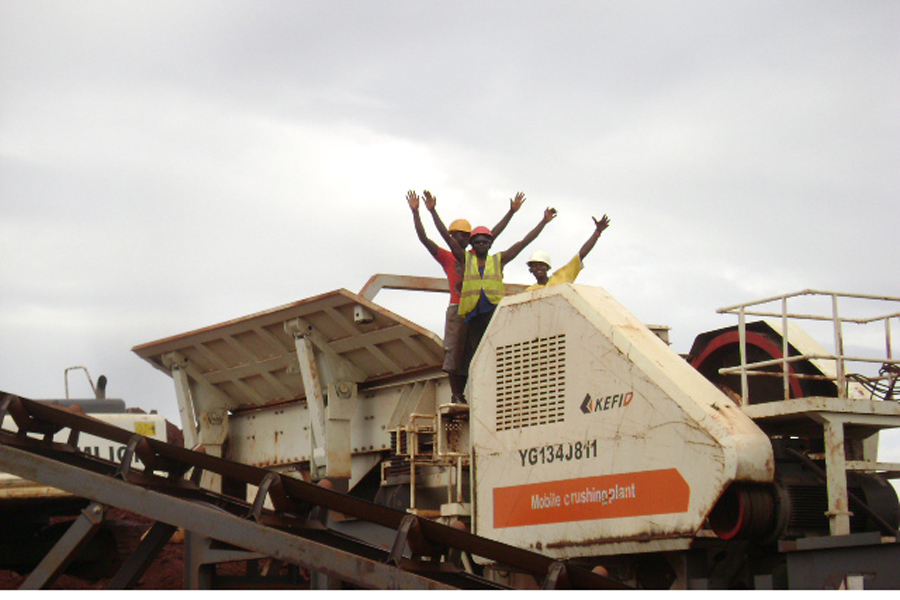
Northwestern Province: Emerging as a strategic frontier, this region hosts underexplored granite and gneiss formations near Solwezi. These igneous and high-grade metamorphic rocks yield high-density aggregates ideal for specialized construction applications, including heavy-duty pavements and coastal defense structures.
| Region | Key Rock Types | Primary Uses | Geological Formation |
|---|---|---|---|
| Central | Limestone, Dolomite | Cement, agriculture | Neoproterozoic carbonates |
| Copperbelt | Gabbro, Diorite | Concrete, road base | Basement complex |
| Lusaka | Sandstone, Quartzite | Construction aggregates | Kafue Supergroup |
| Southern | Sandstone, Conglomerate | Road ballast, civil works | Karoo Supergroup |
| Northwestern | Granite, Gneiss | Heavy construction, specialized uses | Igneous/metamorphic basement |
The spatial distribution of these geological resources aligns closely with Zambia’s infrastructure corridors and urban development zones, enabling cost-efficient supply chains. Continued geological mapping and resource assessments are essential to unlock further potential, particularly in underexplored terrains.
Major Companies and Production Capacity in Zambia’s Aggregate Sector
-
Zambeef Products Plc (via its construction materials division) operates integrated quarrying and crushing facilities primarily in Lusaka and the Copperbelt, with a combined production capacity exceeding 1.2 million tonnes annually. The company supplies granite-based aggregates to major infrastructure projects and commercial developers, leveraging vertical integration within its construction and property development arms.
-
Lafarge Zambia (a subsidiary of LafargeHolcim Group) operates a modern crushing and screening plant adjacent to its cement manufacturing facility in Chilanga. The plant produces high-specification limestone and basalt aggregates with a rated capacity of approximately 800,000 tonnes per year. Its proximity to Lusaka ensures consistent supply to urban construction markets and national road projects funded by the Road Development Agency.
-
African Consolidated Resources (ACR), through its subsidiary Mwembeshi Resources Limited, holds large-scale quarrying rights in the Southern Province and is developing a strategic aggregate hub targeting regional infrastructure corridors. Initial phase production is projected at 600,000 tonnes/year, with expansion plans aligned with anticipated demand from the Lobito Corridor and Nacala Transport Network extensions.
-
Murex Limited, primarily known for steel production, operates a secondary aggregate crushing line at its Chililabombwe site, utilizing by-product materials from mining operations. With a modest capacity of 300,000 tonnes/year, it serves localized demand in the Copperbelt Province, emphasizing cost-effective supply for municipal and industrial construction.
-
Several mid-tier operators, including Kansenshi Mining Plc (Solwezi) and Kalinda Building Materials (Lusaka), contribute regionally with capacities ranging between 150,000 and 400,000 tonnes annually. These firms focus on supply chain responsiveness and niche product differentiation, such as graded chippings for asphalt and concrete batching.
| Company | Primary Location | Estimated Annual Capacity (Tonnes) | Key Feedstock |
|---|---|---|---|
| Zambeef Construction Materials | Lusaka, Copperbelt | 1,200,000+ | Granite |
| Lafarge Zambia | Chilanga | 800,000 | Limestone, Basalt |
| Mwembeshi Resources (ACR) | Southern Province | 600,000 (Phase 1) | Quartzite |
| Murex Limited | Chililabombwe | 300,000 | By-product rock |
| Kalinda Building Materials | Lusaka | 400,000 | Sandstone, Granite |
Collectively, these entities represent over 75% of Zambia’s formal aggregate output. Production capacity remains concentrated near urban centers and mining zones, reflecting infrastructure access and demand clustering. Despite growth in public and private construction, aggregate supply is constrained by limited mechanization among smaller quarries and underdeveloped transport logistics in rural regions. Strategic investments in mobile crushing units and rail-linked distribution are emerging as priorities among leading firms.
Applications of Aggregates in Zambian Infrastructure and Construction Projects
-
Aggregates serve as foundational materials in Zambia’s infrastructure and construction sectors, underpinning both public and private development initiatives. Their primary application lies in road construction, where crushed stone, gravel, and sand form the structural base, sub-base, and surface layers of paved roads. National trunk roads, urban arterial routes, and rural access networks rely heavily on locally sourced aggregates, reducing logistical costs and enhancing project feasibility.
-
In building construction, aggregates are integral to concrete production, used extensively in foundations, columns, slabs, and walls. High-rise developments in Lusaka, Kitwe, and Ndola utilize concrete mixes incorporating crushed granite and river sand, meeting structural integrity and durability standards. Residential housing projects, particularly those under government-led initiatives such as the National Housing Authority, depend on consistent aggregate supply to maintain construction schedules and cost efficiency.
-
Water infrastructure projects, including dam construction, reservoir linings, and drainage systems, employ aggregates for their load-bearing capacity and filtration properties. The Kafue Gorge Lower Power Station and associated water management systems, for example, required substantial volumes of coarse and fine aggregates to ensure hydraulic stability and long-term performance.
-
Railway rehabilitation and expansion programs, notably the Zambia Railways Limited modernization efforts, utilize ballast stone—a specific type of crushed aggregate—to provide track stability, drainage, and vibration absorption. These projects demand aggregates with strict gradation and strength specifications to meet international rail engineering standards.
-
Urban development initiatives, such as stormwater management systems and pavement construction, incorporate aggregates in permeable surfaces and culvert installations. Their role in sustainable urban drainage systems supports climate resilience in rapidly expanding cities.
-
The energy sector, particularly in hydropower and mining infrastructure, depends on high-quality aggregates for structural concrete in powerhouses, tunnels, and access roads. Projects like the Solar Power Plant installations in the Southern Province use aggregates in substation foundations and mounting structures.
-
Overall, the performance, availability, and quality of aggregates directly influence project timelines, structural longevity, and cost control across Zambia’s critical infrastructure domains. As construction demand grows, strategic investment in aggregate production and quality assurance will remain pivotal to national development.
Challenges and Growth Prospects for Aggregate Stone Production in Zambia
-
Limited access to modern quarrying and processing equipment constrains production efficiency and output quality across the Zambian aggregate stone industry. Most operators rely on outdated machinery, resulting in inconsistent product grading and elevated operational costs. This technological deficit hampers competitiveness, particularly in high-specification construction projects requiring precision-graded aggregates.
-
Energy instability presents a persistent challenge. Frequent power outages and reliance on expensive diesel generators increase production costs and disrupt supply timelines. The lack of reliable grid connectivity in remote quarrying regions exacerbates this issue, limiting scalability for mid- and small-sized producers.
-
Regulatory inconsistencies and permitting delays hinder investment and operational continuity. Quarry licensing processes are often protracted and lack transparency, deterring both local and foreign investors. Environmental compliance requirements, while necessary, are inconsistently enforced, creating uncertainty for responsible operators.
-
Transport infrastructure deficiencies restrict market reach. Poor road conditions increase logistics costs, particularly for bulk aggregate transport from quarries to urban construction hubs such as Lusaka, Ndola, and Kitwe. This limits the economic viability of otherwise viable deposits located in peripheral regions.
-
Despite these challenges, growth prospects remain robust, driven by Zambia’s expanding infrastructure agenda. Government-led initiatives in road construction, urban housing, and energy projects generate sustained demand for aggregates. The National Development Plan (2022–2026) prioritizes infrastructure rehabilitation and expansion, creating a favorable demand outlook.
-
Urbanization trends and increasing private-sector construction activity further bolster market potential. Rising real estate development, particularly in Lusaka and the Copperbelt, necessitates reliable aggregate supply chains, incentivizing investment in mechanized production.
-
Regional integration offers export opportunities. Proximity to infrastructure projects in the Democratic Republic of Congo, Angola, and Tanzania positions Zambia as a potential regional supplier, provided logistics and quality standards are addressed.
-
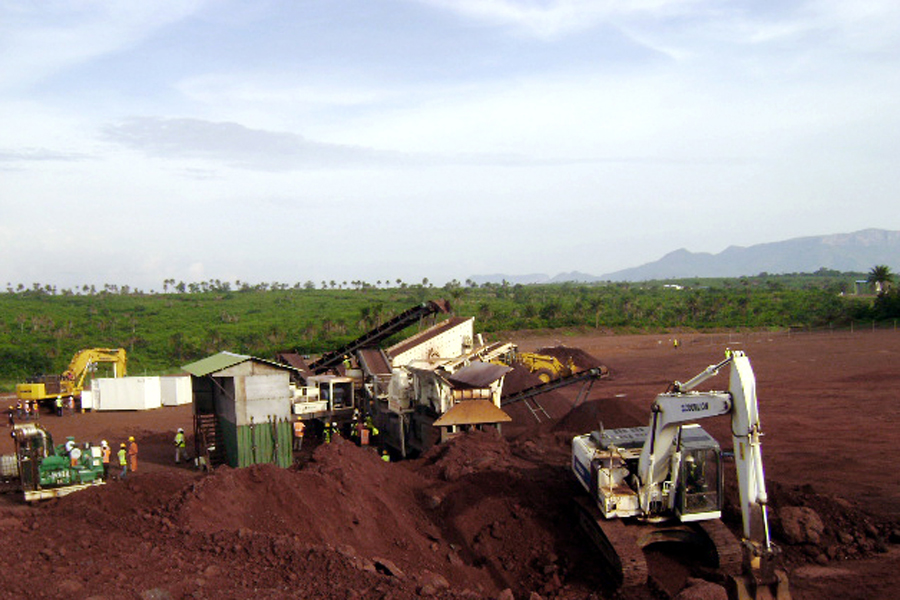
Technological modernization and public-private collaboration represent key growth enablers. Adoption of mobile crushing units, energy-efficient processing, and digital monitoring systems can improve yield and reduce costs. Strategic partnerships with development finance institutions may facilitate capital investment in greenfield and brownfield sites.
-
The industry’s long-term sustainability will depend on harmonizing environmental stewardship with production expansion, particularly through rehabilitation planning and reduced dust and noise emissions.
Frequently Asked Questions
What are the key stages in aggregate stone production in Zambia?
Aggregate stone production in Zambia involves several critical stages: exploration and site assessment, extraction (quarrying), primary and secondary crushing, screening, washing, and stockpiling. Each step requires geotechnical evaluation and adherence to environmental regulations. Efficient operations use jaw crushers for initial reduction, cone or impact crushers for finer grading, and vibrating screens to classify output by size (e.g., 6mm, 10mm, 20mm). Proper plant layout ensures minimized transport and energy use.
Which types of rocks are commonly used for aggregate production in Zambia?
In Zambia, basalt, dolerite, granite, and quartzite are the predominant rock types used due to their high compressive strength and durability. These igneous and metamorphic rocks are abundant in regions such as the Copperbelt and Central Province. Petrographic analysis and Los Angeles abrasion testing ensure suitability for road base, concrete, and railway ballast applications.
How is environmental compliance managed in Zambian aggregate quarries?
Zambian aggregate producers must comply with the Environmental Management Act (2011) and obtain permits from the Zambia Environmental Management Agency (ZEMA). Key requirements include Environmental Impact Assessments (EIAs), rehabilitation plans, dust and noise control measures, and water runoff management. Leading operations use water sprays for dust suppression and implement biodiversity offset programs.
What machinery is essential for a modern aggregate plant in Zambia?
A modern aggregate plant in Zambia typically includes drilling rigs, excavators, dump trucks, primary jaw crushers, secondary cone or impact crushers, multi-deck vibrating screens, conveyors, and wash plants. Mobile and modular plants are becoming popular due to lower capital costs and ease of relocation. Investments in automation and real-time monitoring systems improve throughput and reduce downtime.
What are the major challenges in Zambia’s aggregate stone production sector?
Challenges include inadequate infrastructure (especially transport networks), high energy costs, limited access to financing for medium-sized quarries, fluctuating regulatory enforcement, and skills gaps in plant operation and safety. Additionally, proximity to urban markets affects competitiveness due to high hauling costs, making localized, small-to-medium scale operations more viable.
How does Zambia’s geology support large-scale aggregate production?
Zambia’s Precambrian basement rock formations, particularly within the Lufilian Arc and Muva Supergroup, provide vast reserves of hard, durable rock ideal for aggregates. Structural stability and low seismic activity reduce geological risk. Detailed geological mapping by the Zambia Geological Survey helps in identifying high-yield sites with minimal overburden, optimizing extraction efficiency.
What role do local content regulations play in aggregate production?
The Zambian government promotes local content through the Zambia Development Agency (ZDA), requiring preference for local labor, procurement, and services where feasible. Quarry operators must submit local employment and skills development plans. Compliance enhances licensing and access to public infrastructure projects, which increasingly mandate use of locally sourced aggregates.
How is quality control maintained in Zambian aggregate plants?
Quality control involves routine testing for aggregate gradation, moisture content, specific gravity, and mechanical properties such as aggregate impact and crushing values. Accredited labs perform testing per ZS (Zambia Standards) or ASTM/BS standards. Automated sampling systems and ISO 9001 certification are increasingly adopted by leading producers to ensure consistency for large infrastructure contracts.
What are the primary end markets for aggregates in Zambia?
Key markets include road construction (e.g., Lusaka-Ndola Dual Carriageway), residential and commercial building, mining infrastructure, and railway development. Demand is driven by urbanization and government investment in transport networks. Proximity to construction zones heavily influences quarry profitability, favoring operators near Lusaka, Kitwe, and Ndola.
How do energy costs impact aggregate production efficiency in Zambia?
Electricity costs from ZESCO and reliance on diesel-powered mobile equipment significantly affect production margins. Producers improve efficiency by using solar hybrid systems for auxiliary power, optimizing crusher settings to reduce energy per ton, and negotiating bulk-rate tariffs. Some large operations explore captive power generation to ensure consistent supply and cost control.
Are there investment incentives for aggregate production in Zambia?
Yes, the Zambia Development Agency offers fiscal incentives such as import duty exemptions on mining and quarrying machinery, accelerated depreciation allowances, and tax holidays for capital-intensive ventures in underdeveloped areas. Special Economic Zones (SEZs) provide additional benefits, including streamlined permitting and infrastructure support.
How do Zambian aggregate producers ensure workplace safety?
Reputable producers follow the Mines and Minerals Development Act and Occupational Safety and Health guidelines, conducting regular risk assessments, using personal protective equipment (PPE), and training staff in machine safety and emergency response. Continuous monitoring of slope stability in open pits and preventive maintenance protocols are critical to minimizing accidents.