Table of Contents
- Granite Quarry Crushing Plant: The Complete Guide to Design, Operation, and Optimization
- Introduction
- 1. Why Granite Requires a Specialized Crushing Approach
- Key Challenges:
- The Solution:
- 2. Core Components of a Granite Crushing Plant
- 2.1 Primary Crushing Unit
- 2.2 Secondary Crushing Unit
- 2.3 Tertiary & Quaternary Crushing Units
- 2.4 Screening System
- 2.5 Conveying System
- 2.6 Dust Suppression & Collection System
- 3. Plant Layout: Stationary vs. Mobile vs. Semi-Mobile
- 3.1 Stationary Crushing Plants
- 3.2 Mobile Crushing Plants
- 3.3 Semi-Mobile Crushing Plants
- 4. Key Design Parameters & Calculations
- 4.1 Throughput (Capacity)
- 4.2 Reduction Ratio
- 4.3 Power Consumption
- 4.4 Closed Side Setting (CSS) & Product Gradation
- 5. Equipment Selection: Crusher Types Compared
- 6. Automation & Smart Control Systems
- 6.1 PLC-Based Control
- 6.2 Level Sensors
- 6.3 Metal Detectors & Magnets
- 6.4 Remote Monitoring
- 7. Wear Parts Management & Maintenance
- 7.1 Critical Wear Parts
- 7.2 Maintenance Schedule
- 7.3 Extending Wear Life
- 8. Cost Analysis: Capital vs. Operating Costs
- 8.1 Capital Expenditure (CAPEX)
- 8.2 Operating Expenditure (OPEX)
- 9. Environmental & Safety Compliance
- 9.1 Dust Control
- 9.2 Noise Control
- 9.3 Water Management
- 9.4 Safety Systems
- 10. Common Operational Problems & Solutions
- 11. Case Study: 300 TPH Granite Crushing Plant in India
- Plant Configuration:
- Results:
- 12. Future Trends in Granite Crushing
- 12.1 AI-Driven Predictive Maintenance
- 12.2 Electric & Hybrid Drives
- 12.3 Circular Economy
- 12.4 Modular & Containerized Plants
- 13. Frequently Asked Questions (FAQ)
- Q1: What is the best crusher for granite?
- Q2: How much does a granite crushing plant cost?
- Q3: Can I use an impact crusher for granite?
- Q4: How do I reduce dust in a granite crushing plant?
- Q5: What is the ideal reduction ratio for granite?
- 14. Conclusion
- 15. Additional Resources & Next Steps
Granite Quarry Crushing Plant: The Complete Guide to Design, Operation, and Optimization
Introduction
A granite quarry crushing plant is the backbone of any large-scale aggregate production operation. Whether you are supplying road base, railway ballast, or high-grade concrete aggregates, the efficiency of your crushing circuit directly determines your profitability, product quality, and environmental compliance.
This comprehensive guide covers everything from plant layout and equipment selection to automation, maintenance, and cost optimization. By the end, you will understand how to design, operate, and fine-tune a granite crushing plant that maximizes throughput while minimizing wear and energy consumption.
1. Why Granite Requires a Specialized Crushing Approach
Granite is an intrusive igneous rock composed primarily of quartz, feldspar, and mica. Its compressive strength typically ranges from 100 MPa to 250 MPa, making it one of the hardest and most abrasive materials in the quarrying industry.
Key Challenges:
- High abrasiveness – causes rapid wear on crusher liners, screens, and conveyor belts.
- High compressive strength – requires robust primary crushing equipment with high inertia.
- Silica content – creates dust hazards and accelerates wear on wear parts.
- Fracture behavior – produces elongated or flaky particles if crushing stages are not properly configured.
The Solution:
A well-designed granite crushing plant uses a multi-stage reduction process (typically 3–4 stages) with equipment specifically rated for hard rock. The goal is to achieve the desired product gradation while maintaining a cubical particle shape – essential for concrete and asphalt applications.
2. Core Components of a Granite Crushing Plant
A typical stationary granite crushing plant consists of the following integrated systems:.jpg)
2.1 Primary Crushing Unit
- Equipment: Jaw crusher (e.g., C106, C116, or equivalent) or a gyratory crusher for very large feed sizes.
- Function: Reduces run-of-mine (ROM) granite (up to 1,000 mm) to a manageable size (150–250 mm).
- Selection Criteria: Feed opening size, capacity (tph), and power draw. For granite, a single-toggle jaw crusher with a deep crushing chamber is preferred.
2.2 Secondary Crushing Unit
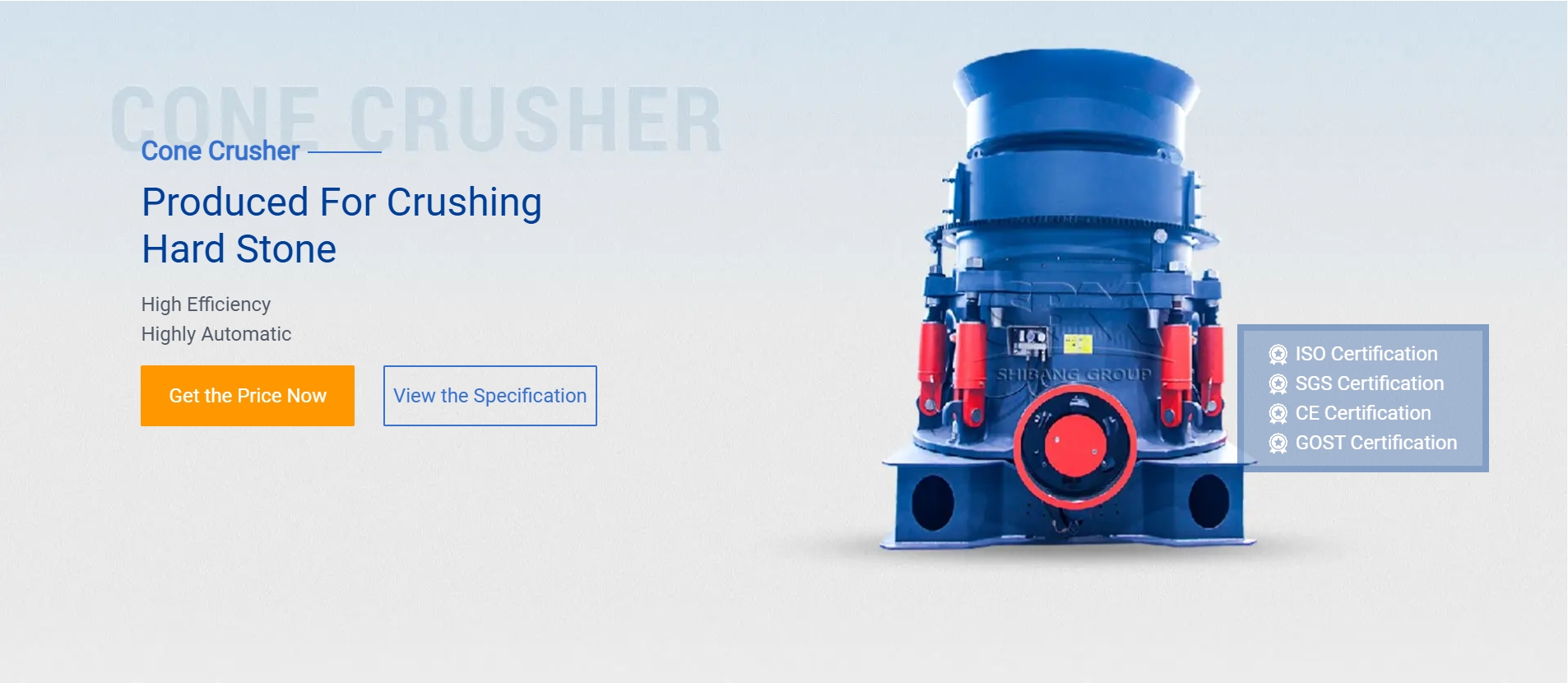
- Equipment: Cone crusher (e.g., HP300, GP300, or CH440) or a secondary impact crusher (if the granite is less abrasive).
- Function: Reduces 150–250 mm rock to 40–80 mm.
- Note: For granite, cone crushers are almost always preferred over impact crushers due to lower wear costs.
2.3 Tertiary & Quaternary Crushing Units
- Equipment: Short-head cone crushers (e.g., HP200, HP400) or VSI (Vertical Shaft Impactor) crushers.
- Function: Produces final aggregates (0–5 mm, 5–10 mm, 10–20 mm, 20–40 mm) with a cubical shape.
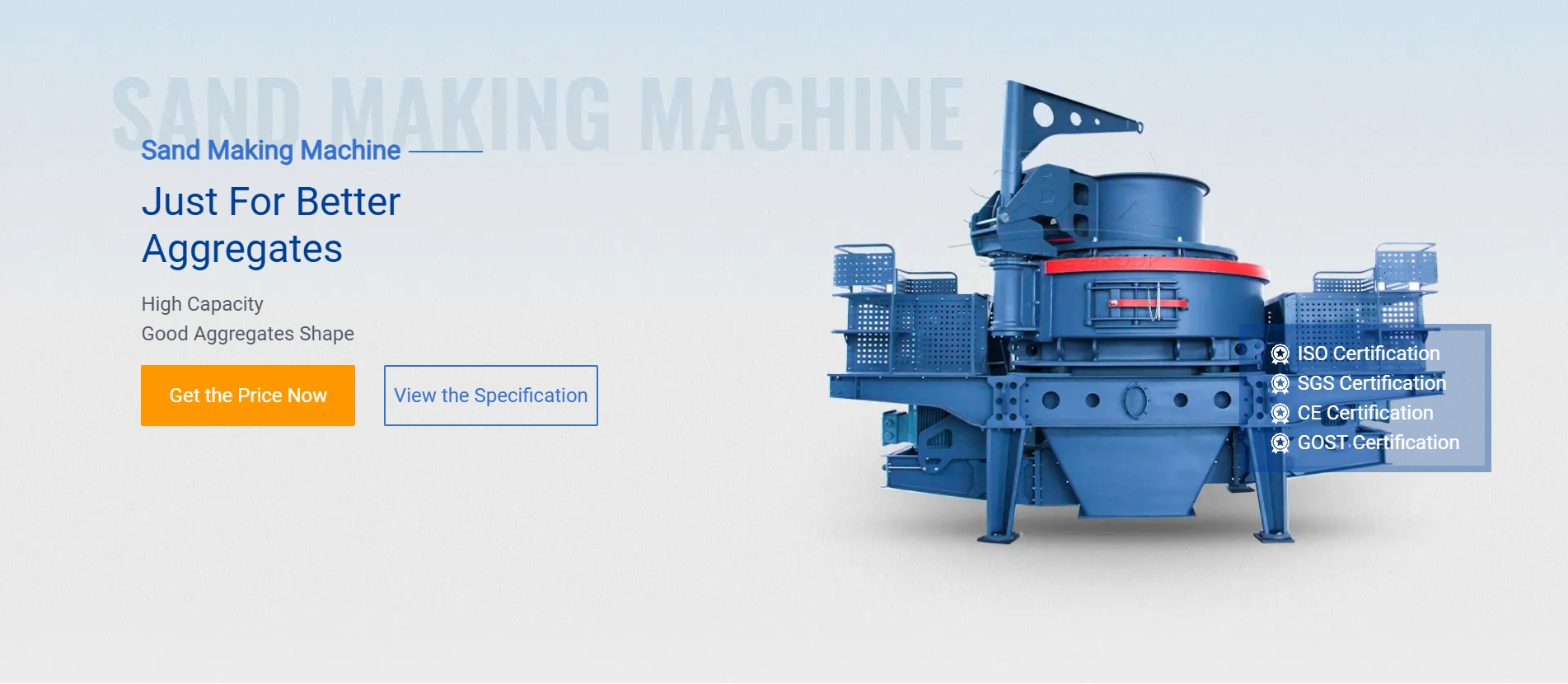
- VSI Usage: A VSI is often added as a sand-making machine or to improve particle shape in the final product.
2.4 Screening System
- Equipment: Inclined vibrating screens (2–4 decks) or horizontal screens.
- Function: Separates crushed material into different size fractions.
- Key Design Point: Screen media must be wear-resistant (polyurethane or rubber) to handle abrasive granite.
2.5 Conveying System
- Equipment: Belt conveyors with heavy-duty idlers and impact beds.
- Function: Transfers material between crushing and screening stages.
- Critical Factor: Belt speed and angle must be optimized to prevent spillage and excessive wear.
2.6 Dust Suppression & Collection System
- Equipment: Water spray nozzles, dust collectors (bag filters), and mist cannons.
- Function: Controls airborne silica dust to meet occupational and environmental regulations.
3. Plant Layout: Stationary vs. Mobile vs. Semi-Mobile
3.1 Stationary Crushing Plants
- Best For: Long-term quarry operations (10+ years) with fixed ore bodies.
- Advantages: Lower cost per ton, higher capacity, easier maintenance access.
- Disadvantages: High initial civil works cost; cannot be relocated.
3.2 Mobile Crushing Plants
- Best For: Short-term projects, multiple quarry faces, or contractors.
- Advantages: Quick setup, no civil foundation required, flexible.
- Disadvantages: Higher operating cost per ton; smaller capacity (typically < 500 tph).
3.3 Semi-Mobile Crushing Plants
- Best For: Quarries that shift mining locations every 2–5 years.
- Advantages: Balance of cost and flexibility; can be moved with modular components.
SEO Tip: When searching for “granite quarry crushing plant,” users often look for both “fixed granite crusher plant” and “mobile granite crushing unit.” Ensure your website content covers both keywords.
4. Key Design Parameters & Calculations
4.1 Throughput (Capacity)
- Formula: Capacity (tph) = (Feed size × Stroke × Speed × Bulk Density) / Reduction Ratio
- Practical Rule: For a jaw crusher, capacity is roughly proportional to the crusher’s width and closed side setting (CSS).
4.2 Reduction Ratio
- Primary: 4:1 to 6:1
- Secondary: 3:1 to 4:1
- Tertiary: 2:1 to 3:1
- Total Reduction: 20:1 to 40:1 for full aggregate production.
4.3 Power Consumption
- Typical Range: 0.5 – 1.5 kWh per ton of granite crushed.
- Optimization: Use variable frequency drives (VFDs) on conveyors and crusher motors to match load.
4.4 Closed Side Setting (CSS) & Product Gradation
- The CSS of the cone crusher determines the top size of the product.
- Smaller CSS = finer product but lower throughput and higher wear.
5. Equipment Selection: Crusher Types Compared
| Crusher Type | Best Application | Wear Cost (USD/ton) | Product Shape | Notes |
|---|---|---|---|---|
| Jaw Crusher | Primary | 0.10 – 0.20 | Fair | High compressive strength tolerance |
| Cone Crusher (Standard) | Secondary | 0.15 – 0.30 | Good | Best for abrasive rock |
| Cone Crusher (Short Head) | Tertiary | 0.20 – 0.40 | Good | Fine crushing |
| VSI Crusher | Quaternary / Sand | 0.30 – 0.60 | Excellent | Cubical shape, high fines |
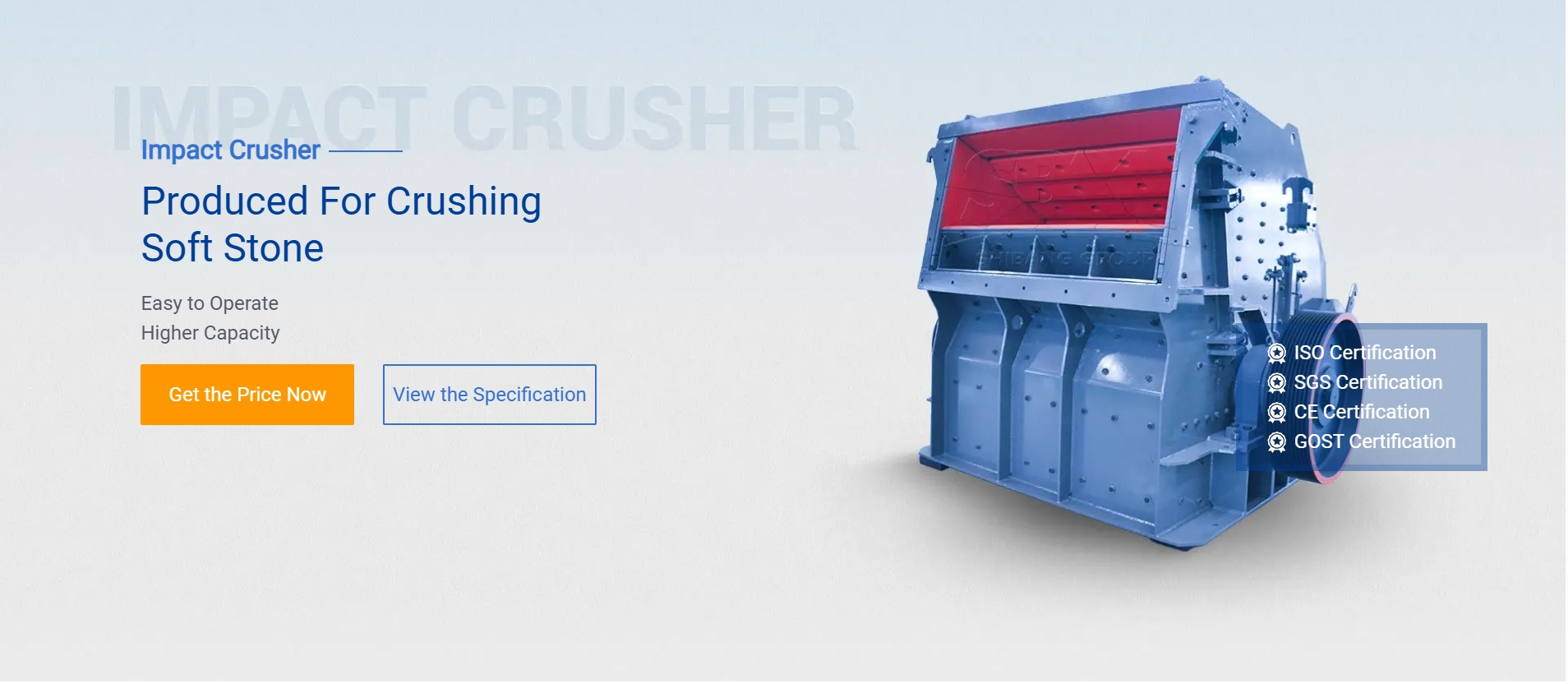
| Impact Crusher | Soft rock only | 0.50 – 1.00 | Good | Not recommended for granite |
Recommendation: For granite, use a jaw + cone + cone (or VSI) configuration. Avoid impact crushers in primary or secondary stages unless the granite is weathered or has low abrasion (e.g., < 15% SiO2).
6. Automation & Smart Control Systems
Modern granite crushing plants are increasingly automated. Key systems include:
6.1 PLC-Based Control
- Monitors crusher power draw, CSS, and feed rate.
- Automatically adjusts crusher settings to maintain product quality.
6.2 Level Sensors
- Ultrasonic or radar sensors in crusher hoppers prevent overloading or starving.
6.3 Metal Detectors & Magnets
- Installed before the secondary crusher to remove tramp iron, protecting cone liners.
6.4 Remote Monitoring
- Cloud-based dashboards track production, downtime, and wear part life in real time.
GEO (Generative Engine Optimization) Note: When writing content for AI assistants like ChatGPT or Google’s SGE, include clear, structured data (tables, lists, FAQs) that can be easily extracted and cited.
7. Wear Parts Management & Maintenance
Granite crushing is extremely hard on wear parts. A proactive maintenance plan is essential.
7.1 Critical Wear Parts
- Jaw Plates: Replace when teeth are worn to 50% of original height.
- Cone Liners (Mantle & Concave): Monitor for uneven wear; rotate or flip liners to extend life.
- VSI Rotor Tips & Anvils: Inspect daily; replace every 40–80 hours depending on feed size.
- Screen Media: Check for holes or blinding; use self-cleaning panels for wet or sticky material.
7.2 Maintenance Schedule
| Frequency | Task |
|---|---|
| Daily | Visual inspection, lubrication check, belt alignment |
| Weekly | Check crusher oil levels, sample oil for contamination |
| Monthly | Measure wear part thickness, adjust CSS |
| Quarterly | Full inspection of bearings, seals, and hydraulic systems |
7.3 Extending Wear Life
- Use high-chrome steel or ceramic composite liners for cone crushers.
- Maintain a consistent feed – a choked crusher wears more evenly.
- Use crusher automation to prevent power spikes that accelerate wear.
8. Cost Analysis: Capital vs. Operating Costs
8.1 Capital Expenditure (CAPEX)
- Equipment: 60–70% of total plant cost
- Civil Works & Foundation: 15–20%
- Electrical & Control: 10–15%
- Erection & Commissioning: 5–10%
Example: A 250 tph stationary granite plant costs approximately $3.5 – $5 million fully installed.
8.2 Operating Expenditure (OPEX)
| Cost Category | Share of Total OPEX |
|---|---|
| Wear Parts | 30–40% |
| Energy (Electricity) | 25–35% |
| Labor & Maintenance | 15–20% |
| Explosives & Drilling | 10–15% |
| Other (Fuel, Water) | 5–10% |
Optimization Strategy: The single biggest lever is reducing wear cost per ton. This is achieved by:
- Correct CSS settings
- Proper feed distribution
- Using premium wear parts
- Avoiding over-crushing (producing more fines than necessary)
9. Environmental & Safety Compliance
9.1 Dust Control
- Water Spray Systems: Use nozzles at transfer points and crusher inlets.
- Baghouse Filters: For crusher discharge points and screen decks.
- Enclosures: Fully enclose crushers and screens to contain dust.
9.2 Noise Control
- Install acoustic enclosures around primary crushers.
- Use rubber liners in chutes and hoppers to dampen impact noise.
9.3 Water Management
- Recycle process water in a settling pond or thickener.
- Use dust suppression water that does not contaminate groundwater.
9.4 Safety Systems
- Emergency stop pull cords along all conveyors.
- Lockout/tagout (LOTO) procedures for maintenance.
- Guarding on all moving parts (flywheels, pulleys, drives).
10. Common Operational Problems & Solutions
| Problem | Cause | Solution |
|---|---|---|
| Low throughput | Feed too large or wet | Adjust grizzly, reduce feed size |
| Excessive fines | CSS too small | Increase CSS, check screen efficiency |
| Elongated particles | Single-stage crushing | Add a VSI or tertiary cone |
| Crusher blockage | Oversize rock or power failure | Install level sensors and metal detectors |
| Rapid liner wear | Incorrect feed angle | Use a feed distributor (rotating hopper) |
| High energy cost | Running at partial load | Use VFDs, optimize shift scheduling |
11. Case Study: 300 TPH Granite Crushing Plant in India
Location: Karnataka, India
Material: Hard granite (compressive strength 180 MPa)
Feed Size: 0 – 700 mm
Final Products: 0–5 mm (manufactured sand), 5–10 mm, 10–20 mm, 20–40 mm.jpg)
Plant Configuration:
- Primary: Jaw Crusher – 900×1200 mm (CSS 100 mm)
- Secondary: Cone Crusher – 2200 mm (CSS 40 mm)
- Tertiary: Two Cone Crushers – 1750 mm (CSS 20 mm)
- Screening: Two 3-deck vibrating screens (20 mm, 10 mm, 5 mm)
- VSI: One 200 tph VSI for sand production
Results:
- Actual Output: 320 tph (above design capacity)
- Wear Cost: $0.28 per ton (below industry average)
- Product Shape: 92% cubical (measured by flakiness index)
- Payback Period: 2.8 years
Key Lesson: The use of a feed distributor on the secondary cone crusher reduced liner wear by 18% and improved product shape significantly.
12. Future Trends in Granite Crushing
12.1 AI-Driven Predictive Maintenance
- Sensors on crusher bearings and motors feed data to AI models that predict failures before they occur.
12.2 Electric & Hybrid Drives
- Fully electric plants reduce diesel consumption and carbon footprint. Hybrid systems (electric + diesel backup) offer flexibility.
12.3 Circular Economy
- Recycling of crusher dust into briquettes or cementitious materials is gaining traction.
12.4 Modular & Containerized Plants
- Pre-fabricated modules reduce installation time by 50% and allow easy relocation.
13. Frequently Asked Questions (FAQ)
Q1: What is the best crusher for granite?
A: For primary crushing, a jaw crusher is best. For secondary and tertiary stages, use cone crushers. A VSI is recommended for final shaping and sand production.
Q2: How much does a granite crushing plant cost?
A: A stationary 200–300 tph plant costs between $2.5 million and $5 million including installation. Mobile plants are cheaper upfront but have higher per-ton operating costs.
Q3: Can I use an impact crusher for granite?
A: Only if the granite is weathered or has low abrasion (silica content < 15%). Otherwise, wear costs will be 3–5 times higher than with a cone crusher.
Q4: How do I reduce dust in a granite crushing plant?
A: Use water spray systems at all transfer points, install baghouse filters on crushers, and enclose the crushing circuit. Also, use a mist cannon for stockpile areas.
Q5: What is the ideal reduction ratio for granite?
A: Total reduction should be 20:1 to 40:1. Exceeding this in a single stage causes excessive fines and high wear.
14. Conclusion
A granite quarry crushing plant is a complex, capital-intensive operation that demands careful planning, the right equipment, and disciplined maintenance. The difference between a profitable plant and a loss-making one often comes down to:
- Correct equipment selection (jaw + cone + VSI, not impact crushers)
- Optimal CSS management to balance throughput and product quality
- Proactive wear part replacement to avoid unscheduled downtime
- Automation to stabilize operations and reduce human error
By following the guidelines in this article, you can design and operate a granite crushing plant that delivers high-quality aggregates at the lowest possible cost per ton.
15. Additional Resources & Next Steps
If you are planning a new granite quarry crushing plant or upgrading an existing one, consider the following next steps:
- Conduct a feasibility study – test your granite’s abrasiveness (Los Angeles Abrasion Test) and compressive strength.
- Work with a reputable plant designer – companies like Metso, Sandvik, and Terex offer complete engineered solutions.
- Simulate your process – use software like Bruno or AggFlow to model your crushing circuit before purchasing equipment.
- Plan for future expansion – leave space for additional crushers or screens if your market grows.
Keywords: granite quarry crushing plant, granite crusher plant, hard rock crushing, cone crusher for granite, jaw crusher primary, VSI sand making, aggregate production, quarry plant design, crushing plant cost, granite crushing equipment.