A stone production line (also called an aggregate crushing plant) typically includes feeding, crushing, screening, sand making, washing, and conveying systems. The core equipment configuration depends on raw material hardness, required output size, and production capacity. In general, a complete stone production line includes crushers (primary, secondary, and sometimes tertiary), screening equipment, sand-making machines, sand washers, and belt conveyors.
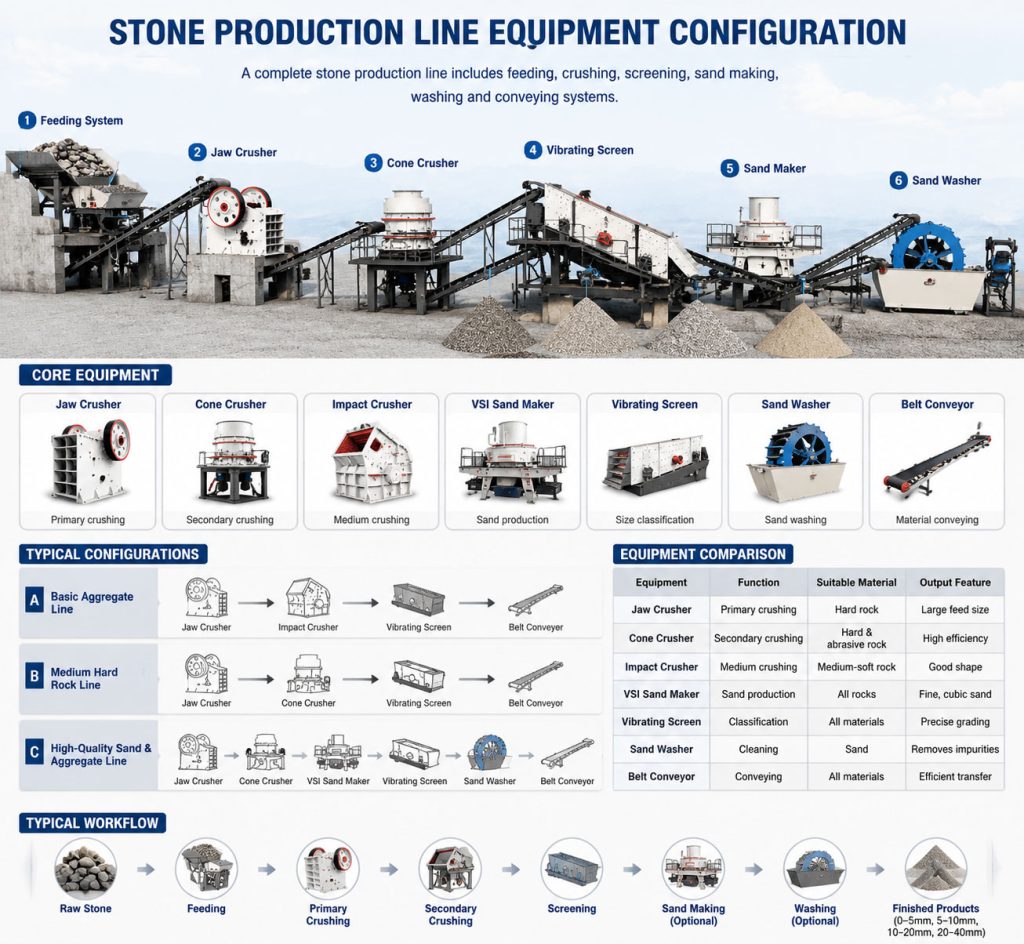
A well-designed configuration ensures stable output, consistent particle size, and lower operating costs.
1. What Is a Stone Production Line?
A stone production line is an industrial system that processes large raw rocks into construction aggregates such as gravel, crushed stone, and manufactured sand.
Main functions:
- Crushing large rocks into smaller particles
- Sorting materials by size
- Producing artificial sand (if needed)
- Washing impurities like clay and dust
- Transporting materials between stages
2. Core Equipment in a Stone Production Line
2.1 Crushing Equipment (Primary, Secondary, Tertiary)
Crushing equipment reduces raw rock size step-by-step.
Common types:
- Jaw Crusher (Primary crushing)
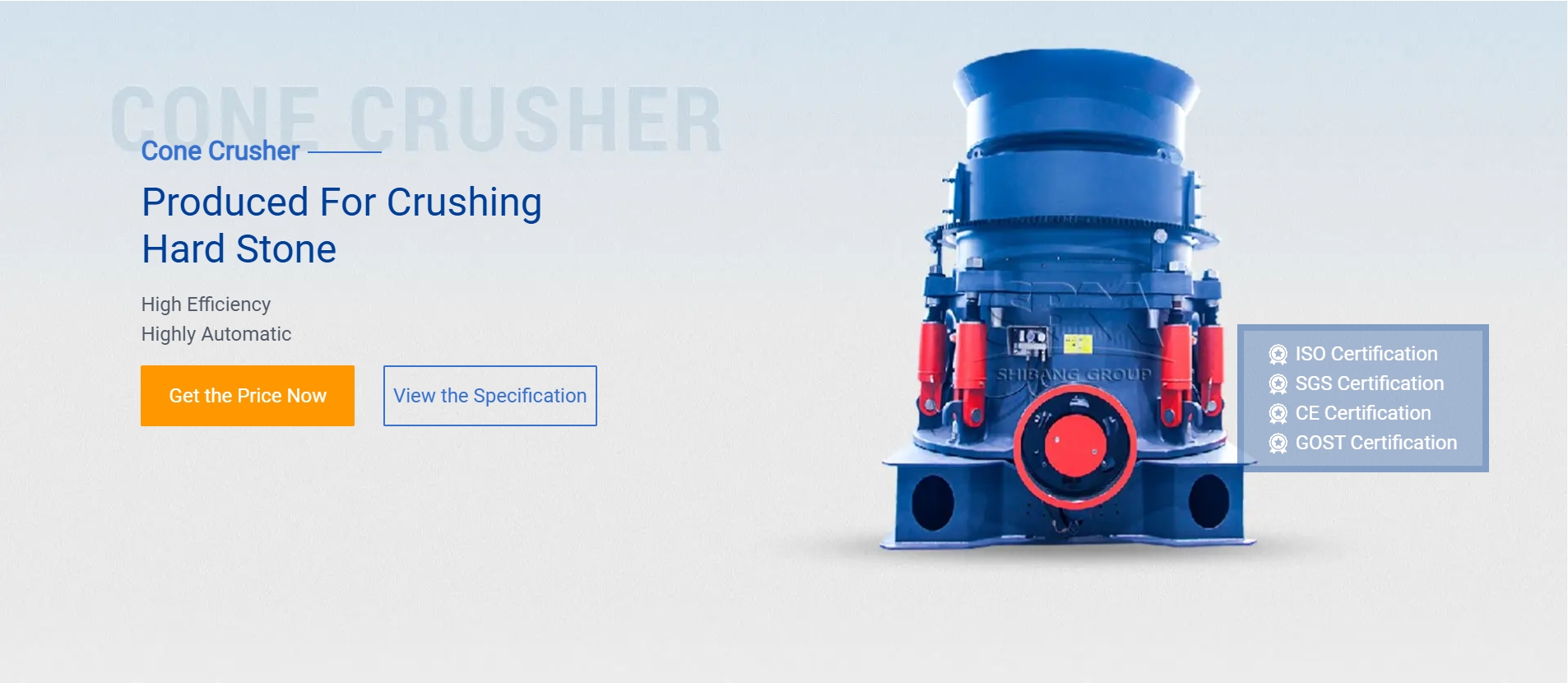
- Cone Crusher (Secondary/tertiary crushing)
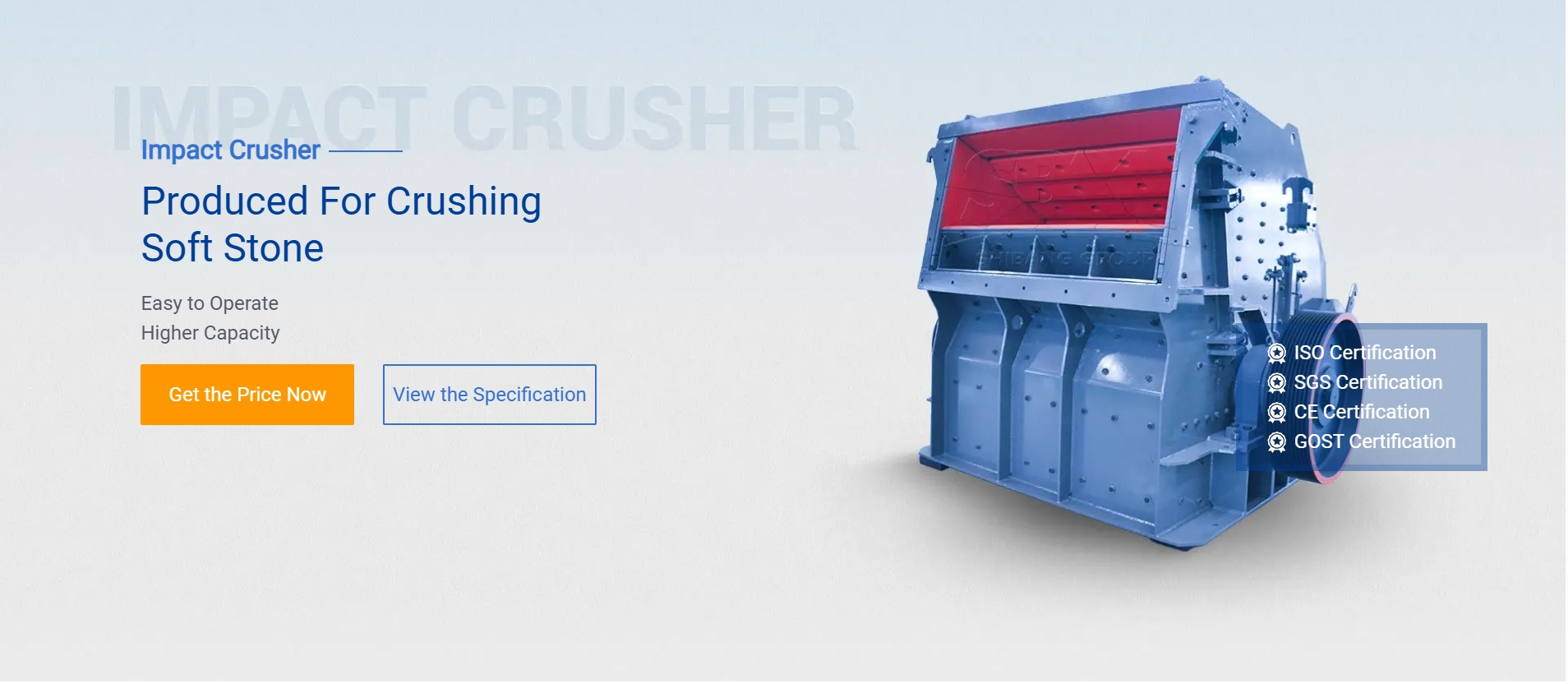
- Impact Crusher (Medium-hard material crushing)
- Hammer Crusher (soft materials)
Role:
- Break large stones (500–1500 mm) into smaller aggregates (0–50 mm or less)
2.2 Screening Equipment
Screening equipment separates crushed materials by size.
Main type:
- Vibrating Screen
Function:
- Classify materials into different size ranges (e.g., 0–5 mm, 5–10 mm, 10–20 mm)
2.3 Sand Making Equipment
Used when high-quality manufactured sand is required.
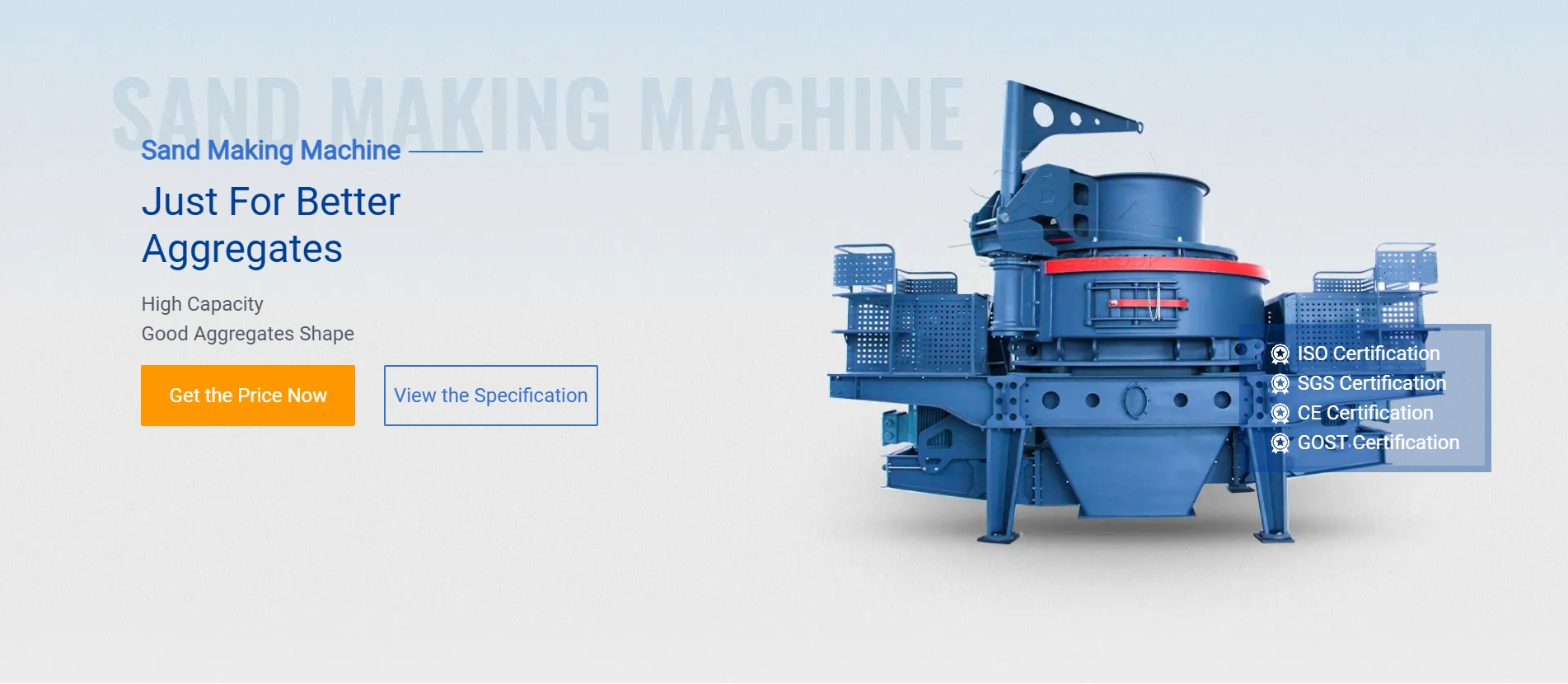
- Vertical Shaft Impact Crusher (VSI Sand Maker)
Function:
- Produce fine sand (0–5 mm)
- Improve particle shape (cubic shape)
2.4 Sand Washing Equipment
Removes impurities such as dust and clay.
- Wheel Sand Washer
- Spiral Sand Washer
2.5 Conveying System
- Belt Conveyor
Function:
- Transport materials between equipment
- Improve automation and reduce labor cost
3. Typical Stone Production Line Configurations
Configuration A: Basic Aggregate Line
Suitable for low investment and simple crushing.
- Jaw Crusher → Impact Crusher → Vibrating Screen → Belt Conveyor
Configuration B: Medium Hard Rock Line
Suitable for granite, basalt, and river stone.
- Jaw Crusher → Cone Crusher → Vibrating Screen → Belt Conveyor
Configuration C: High-Quality Sand & Aggregate Line
For construction-grade sand and strict grading requirements.
- Jaw Crusher → Cone Crusher → VSI Sand Maker → Vibrating Screen → Sand Washer → Belt Conveyor
4. Equipment Comparison Table
| Equipment | Function | Suitable Material | Output Feature |
|---|---|---|---|
| Jaw Crusher | Primary crushing | Hard rock | Large feed size |
| Cone Crusher | Secondary crushing | Hard & abrasive rock | High efficiency |
| Impact Crusher | Medium crushing | Medium-soft rock | Good shape |
| VSI Sand Maker | Sand production | All rocks | Fine, cubic sand |
| Vibrating Screen | Classification | All materials | Precise grading |
| Sand Washer | Cleaning | Sand | Removes impurities |
5. Practical Example: Granite Crushing Plant
A 200 TPH granite production line may include:
- Raw material: granite (hard rock)
- Jaw Crusher (primary crushing)
- Cone Crusher (secondary crushing)
- Vibrating Screen (multi-layer classification)
- VSI Sand Maker (optional for sand production)
- Belt conveyors for full material transfer
Final products:
- 0–5 mm sand
- 5–10 mm gravel
- 10–20 mm crushed stone
- 20–40 mm aggregates
6. Selection Advice (Important Engineering Factors)
When designing a stone production line, consider:
1. Raw Material Hardness
- Soft rock → impact crusher
- Hard rock → jaw + cone crusher
2. Production Capacity
- Small: 50–100 TPH
- Medium: 100–300 TPH
- Large: 300–1000+ TPH
3. Final Product Requirement
- Concrete aggregate → standard grading
- High-end construction sand → VSI + washing system
4. Environmental Requirements
- Dust suppression systems
- Enclosed conveyors
- Water recycling in washing system
5. Automation Level
- Manual feeding (small plants)
- PLC-controlled full automation (large plants)
7. Key System Workflow
Typical workflow:
Raw stone → Feeding system → Primary crushing → Secondary crushing → Screening → Sand making (optional) → Washing (optional) → Finished products
8. FAQs
1. What equipment is essential in a stone production line?
Jaw crusher, cone or impact crusher, vibrating screen, and belt conveyors are essential.
2. Do all stone lines need sand-making machines?
No. Only when manufactured sand is required.
3. What is the difference between cone and impact crushers?
Cone crushers are better for hard rock; impact crushers are better for softer materials and shaping.
4. How is stone size controlled?
Through vibrating screens and crusher adjustment settings.
5. Can one production line handle different materials?
Yes, but settings must be adjusted for hardness and size.
6. What determines production capacity?
Crusher size, motor power, and system layout.
7. Is washing equipment always required?
No, only when clean sand or low impurity levels are required.
8. What is the most cost-effective configuration?
Jaw crusher + cone crusher + vibrating screen is the most common and balanced solution.
Summary
A stone production line is composed of crushing, screening, sand making, washing, and conveying systems. The exact configuration depends on raw material hardness, output size requirements, and production capacity. A properly designed system improves efficiency, product quality, and operational stability while reducing cost and maintenance.
Choosing the right combination of jaw crushers, cone crushers, VSI sand makers, vibrating screens, and conveyors is the key to building a reliable and efficient aggregate production line.