Jaw crushers are versatile machines designed to crush a wide range of hard and abrasive materials. They are suitable for processing granite, river pebbles, iron ore, copper ore, manganese ore, limestone, and other medium-to-hard ores. Depending on the model and feed size, jaw crushers can achieve capacities ranging from 1 to 500 tons per hour, making them ideal for small-scale operations as well as large mining and construction projects.
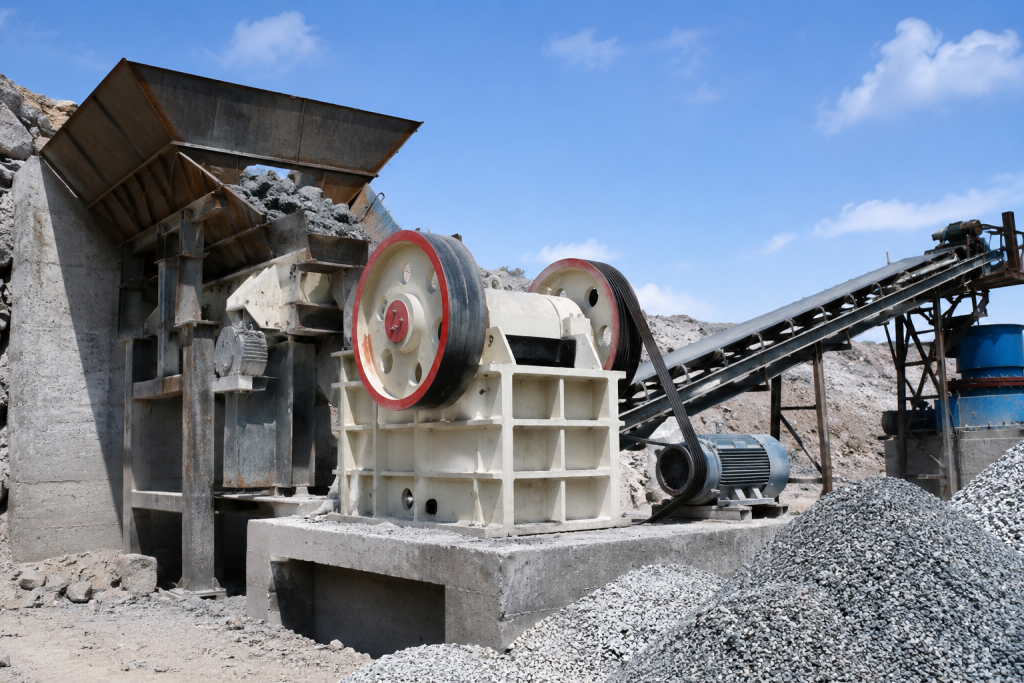
Key Features of Jaw Crushers
- High Crushing Efficiency: Crushes hard materials efficiently with minimal energy consumption.
- Durable Structure: Heavy-duty frame and wear-resistant jaw plates ensure long service life.
- Adjustable Discharge: Allows precise control over the output size.
- Low Maintenance: Simple design reduces downtime and maintenance costs.
Common Materials Processed
| Material Type | Hardness | Typical Jaw Crusher Model | Example Output Size |
|---|---|---|---|
| Granite | Hard | PE/PEX series | 0–40 mm |
| River Pebbles | Medium | PE/PEW series | 5–50 mm |
| Iron Ore | Hard | C series | 10–50 mm |
| Copper Ore | Medium | PE series | 0–30 mm |
| Limestone | Soft | PE/PEX series | 0–50 mm |
| Manganese Ore | Hard | C series | 5–40 mm |
Practical Example:
A construction site processing granite for concrete aggregate might use a PE-500×750 jaw crusher, producing 50–100 tons per hour of 0–40 mm material. Meanwhile, a small river pebble processing plant could choose a PEX-250×1000 model for lower feed volumes and finer output.
How to Choose the Right Jaw Crusher
- Material Hardness: Harder ores require more robust models (e.g., C series).
- Production Capacity: Match crusher size to daily output requirements.
- Feed Size: Check maximum feed size the crusher can handle.
- Final Product Size: Choose a model with adjustable discharge if multiple sizes are needed.
- Budget Considerations: Larger, high-capacity machines have higher upfront costs but lower operational costs per ton.
FAQs
- Can a jaw crusher crush soft stones?
Yes, but softer stones may cause uneven wear if the jaw plates are not adjusted properly. - What is the maximum feed size for jaw crushers?
Typically ranges from 300 mm to 1200 mm depending on the model. - Do jaw crushers require a lot of maintenance?
No, their simple design ensures relatively low maintenance. Regular inspection of jaw plates and bearings is recommended. - Can jaw crushers be used in mining operations?
Yes, they are commonly used in both small-scale and large-scale mining. - What is the difference between PE and PEX series?
PE series is suitable for primary crushing; PEX is better for secondary or fine crushing. - How long do jaw crusher plates last?
Depending on material hardness and usage, jaw plates can last several months to over a year. - Are jaw crushers energy-efficient?
Yes, modern designs optimize power usage while maximizing throughput. - Can jaw crushers process recycled concrete or asphalt?
Yes, they can handle demolition debris for recycling applications.
Summary
Jaw crushers are essential machines for crushing a variety of ores and construction materials. By understanding material types, production needs, and machine characteristics, operators can select the most suitable model. They offer high efficiency, durability, and adjustable output, making them a reliable choice for both mining and construction applications.