Table of Contents
- Optimize Your Aggregate Production with American-Engineered Sand Crushing Solutions
- Built for North American Conditions: Durability That Withstands Harsh Operational Demands
- Advanced Crushing Technology for Superior Sand Gradation and Material Consistency
- Custom-Configured Plants to Match Your Specific Production Requirements and Site Constraints
- Technical Specifications: Engineered Components and Performance Data for Informed Decisions
- Core Crushing Chamber & Wear Components
- Drive & Power Transmission Systems
- Structural Fabrication & Plant Integrity
- Performance Data & Operational Parameters
- Control & Automation Systems
- Certification & Compliance
- Proven Reliability: Case Studies and Support from a Trusted U.S. Manufacturer
- Frequently Asked Questions
- How do you optimize wear parts replacement cycles in high-abrasion sand crushing?
- What engineering ensures adaptability to varying ore hardness (Mohs 5-8)?
- How is structural vibration mitigated to prevent fatigue failure?
- What lubrication system is critical for continuous operation in dusty environments?
- How do you manage hydraulic system reliability for setting adjustments?
- What ensures consistent product gradation with fluctuating feed material?
In the competitive landscape of aggregate production, efficiency and reliability are not just goals—they are imperatives. For operators seeking to maximize both output and return on investment, the strategic advantage of partnering with an American-made sand crushing plant manufacturer is clear. These facilities are more than just machinery; they represent a fusion of robust engineering, innovative technology, and a deep understanding of domestic material specifications and operational challenges. Built to endure the most demanding conditions, they are engineered from the ground up to deliver consistent, high-quality spec sand while optimizing energy consumption and minimizing downtime. By choosing equipment crafted on home soil, producers gain not only superior control over their supply chain but also a powerful asset engineered for peak performance and long-term profitability.
Optimize Your Aggregate Production with American-Engineered Sand Crushing Solutions
American-engineered sand crushing solutions are designed to transform raw feed into high-value, specification aggregates with maximum material-on-material reduction and minimal wear cost per ton. The optimization process hinges on three core engineering principles: advanced metallurgy for wear parts, precision machine design for particle shape control, and intelligent system integration for operational efficiency.
Core Engineering for Superior Particle Shape & Yield
The production of premium concrete sand and asphalt sand requires precise control over the crushing chamber and rotor dynamics. Our vertical shaft impact (VSI) crushers and high-performance cone crushers are engineered to apply optimal impact energy and crushing force, ensuring a high yield of cubical particles while minimizing flat and elongated grains. This is critical for achieving higher compaction rates, reduced binder demand in asphalt, and improved workability in concrete.
- Advanced Chamber Geometry: Computer-modeled crushing chambers and rotors accelerate material at calculated velocities, creating optimal fracture lines within the feed stone.
- Cascade Flow & Dual Feed Systems: Patented designs internally recycle a portion of the feed, ensuring a continuous rock-on-rock crushing action that improves cubicity and reduces wear metal contamination.
- Precise Speed & Power Control: Variable frequency drives (VFDs) allow real-time adjustment of rotor speed and crusher throughput to match feed characteristics and product gradation targets instantly.
Metallurgical Superiority for Abrasive & Hard Rock Applications
The economic viability of a sand plant is directly tied to the service life of its wear components. We utilize proprietary alloy formulations and manufacturing processes to produce wear parts that withstand the extreme abrasion of granite, trap rock, and quartzitic materials.
| Component | Base Material | Key Alloy Elements | Primary Advantage | Typical Application |
|---|---|---|---|---|
| VSI Anvils & Table Liners | High-Chrome White Iron (27%+ Cr) | Chromium, Molybdenum, Nickel | Exceptional abrasion resistance in rock-on-rock crushing. | Granite, Quartzite, Abrasive Gravel |
| VSI Rotor Tips | Tungsten Carbide | Tungsten, Cobalt | Extreme wear resistance for high-velocity rock-on-metal applications. | Highly abrasive feeds, manufactured sand |
| Cone Crusher Mantles/Bowls | Austenitic Manganese Steel (Mn14, Mn18, Mn22) | Manganese, Carbon | Work-hardens under impact, providing durability in high-compression crushing. | Basalt, Trap Rock, Dolerite |
| Feed Tubes & Wear Liners | AR400 / AR500 Steel Plate | Carbon, Boron, Titanium | High surface hardness to resist cutting and gouging from feed material. | Transfer points, feed systems |
Engineered for High-TPH Output & System Uptime
Maximum return on investment is achieved through sustained high-tonnage production. Our plants are built around robust, dynamically balanced crushers and heavy-duty support structures designed for 24/7 operation in demanding mining and aggregate environments.
- Heavy-Duty Bearing Assemblies: Oversized, precision-rated roller bearings are housed in rigid, machined pedestals to handle peak loads and ensure long-term alignment, directly contributing to higher availability.
- Integrated Automation & Monitoring: PLC-based control systems with load management, automatic setting adjustment (ASRi), and remote telemetry provide real-time data on power draw, throughput, and bearing temperature to prevent unscheduled downtime.
| Model Class | Typical Max Feed Size | Recommended Hardness Range (Mohs) | Drive Power Range | Potential TPH (Sand) |
| :— | :— | :— | :— | :— |
| High-Capacity VSI | 2.5″ (65mm) | Up to 7.5 | 400 – 800 hp | 200 – 600 |
| Tertiary Cone Crusher | 4″ (100mm) | Up to 8 | 300 – 500 hp | 150 – 350 |
| Throughput is highly dependent on feed gradation, moisture, and required product size. Values are for general reference.* | - Modular, Pre-Assembled Designs: Key plant sections are constructed as skid-mounted or modular units, reducing field installation time and cost while ensuring factory-level alignment and wiring integrity.
Compliance & Lifecycle Support
Every system is designed and manufactured to meet or exceed relevant ISO and CE standards for structural integrity and safety. Our engineering partnership extends beyond installation, with performance analytics and wear part logistics programs designed to optimize your total cost of ownership and protect your capital investment for the lifecycle of the operation.
Built for North American Conditions: Durability That Withstands Harsh Operational Demands
Our plants are engineered from the ground up for the specific rigors of North American aggregate production, where extreme temperature cycles, abrasive feeds, and continuous high-tonnage operation define the operational environment. Durability is not an added feature; it is the foundational design principle, achieved through advanced material selection, conservative engineering margins, and adherence to the highest global manufacturing standards.
Core Material & Construction Philosophy:
- Critical Wear Components: Primary crushing zones, liners, and impact surfaces are fabricated from premium, high-grade manganese steel (Mn-14% to Mn-22%) and specialized alloys. These materials are selected for their work-hardening properties, becoming tougher under impact, and their exceptional resistance to the abrasion of granite, trap rock, and recycled concrete.
- Structural Integrity: Main frames are constructed from high-tensile, low-carbon steel plate, with stress-relieving and precision machining ensuring alignment is maintained under maximum load. Welds are performed to stringent procedure qualifications, with critical joints subjected to non-destructive testing (NDT).
- Bearing & Drive Systems: Oversized, high-capacity roller bearings are specified for all major rotating assemblies, operating well below their rated thermal and dynamic limits to ensure longevity. Drive guards and components meet or exceed ANSI/CSA safety standards.
Functional Advantages for Harsh Duty:
- Thermal Resilience: Hydraulic and lubrication systems are designed with wide operational fluid temperature windows. Coolers, heaters, and reservoir capacities are sized for the temperature extremes of the Canadian shield and the Southwestern deserts.
- Abrasion & Fatigue Resistance: Liners and wear parts are profiled using predictive wear modeling to ensure even material consumption and maintain optimal crushing geometry throughout their service life, protecting the core machine structure.
- Contaminant Management: Labyrinth seals, positive-pressure systems, and automated greasing circuits protect bearings from the pervasive dust generated in sand crushing, a primary cause of premature failure.
- Operational Adaptability: Crusher cavities, rotor configurations, and screen media are application-engineered for specific material hardness (e.g., CWI < 0.20 for limestone, > 0.35 for abrasive gravel) and desired product shape, maximizing throughput while managing wear.
Technical Specifications & Compliance:
All machinery is designed, manufactured, and tested to international standards that validate structural, safety, and performance claims.
| Component / System | Standard / Certification | Operational Implication |
|---|---|---|
| Structural Welding | ISO 3834, AWS D1.1 | Ensures weld integrity for dynamic, high-cycle fatigue loading. |
| Machine Safety | CE Machinery Directive 2006/42/EC (Full Technical File) | Comprehensive risk assessment, guarding, and interlocks for operator protection. |
| Electrical Systems | UL Listed / CSA Certified Components | Guarantees component reliability and safe integration into North American power grids. |
| Performance Validation | ISO 9001:2015 Quality Management | Audited processes for design control, material traceability, and final inspection. |
This engineered durability translates directly into predictable operational costs and sustained high availability. By minimizing unplanned downtime for component replacement and protecting the plant’s structural core from accelerated wear, the total cost of ownership is optimized over the decades-long lifecycle demanded by North American aggregate producers.
Advanced Crushing Technology for Superior Sand Gradation and Material Consistency
Precise particle size distribution and uniform material consistency are non-negotiable for high-value sand products in concrete, asphalt, and industrial applications. Our American-engineered plants achieve this through a systems-level integration of advanced crushing mechanics, wear-resistant material science, and intelligent process control, directly impacting product spec compliance and operational longevity.
Core Technological Pillars:
-
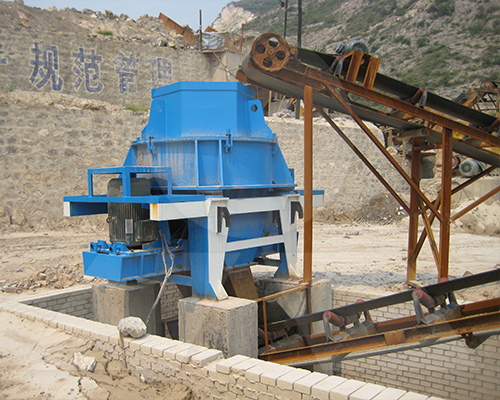
High-Velocity Vertical Shaft Impact (VSI) Crushing: The cornerstone of cubical sand production. Our VSI crushers utilize a rock-on-rock or rock-on-anvil crushing action, where accelerated material impacts a stationary anvil or rock shelf. This method maximizes inter-particle collision for optimal fracturing along natural cleavage planes, producing superior particle shape with minimal elongated or flaky grains. Key to this is precise control of rotor tip speed (up to 85 m/s), which is dynamically adjustable to match feed material hardness and desired fineness modulus.
-
Advanced Chamber Geometry & Wear Part Metallurgy: Crusher performance is defined by its wear components. Our rotors, anvils, and feed tubes are cast from proprietary, high-chrome white iron alloys and air-hardening manganese steels. These materials are selected for specific abrasion and impact regimes, offering a minimum Brinell hardness of 600-700 in high-wear zones. This ensures consistent gradation output over extended campaigns by maintaining critical chamber dimensions far longer than standard materials.
-
Intelligent Automation & Gradation Control: Modern sand production is a closed-loop process. Integrated programmable logic controllers (PLC) continuously monitor crusher load, vibration, and power draw. Coupled with real-time particle size analysis (via optional laser-based or sieve-analysis systems), the plant can automatically adjust feed rates, crusher speed, and cascade flow to maintain target gradation within a ±2% tolerance, even with variable feed stock.
Functional Advantages for Mining & Aggregate Operations:
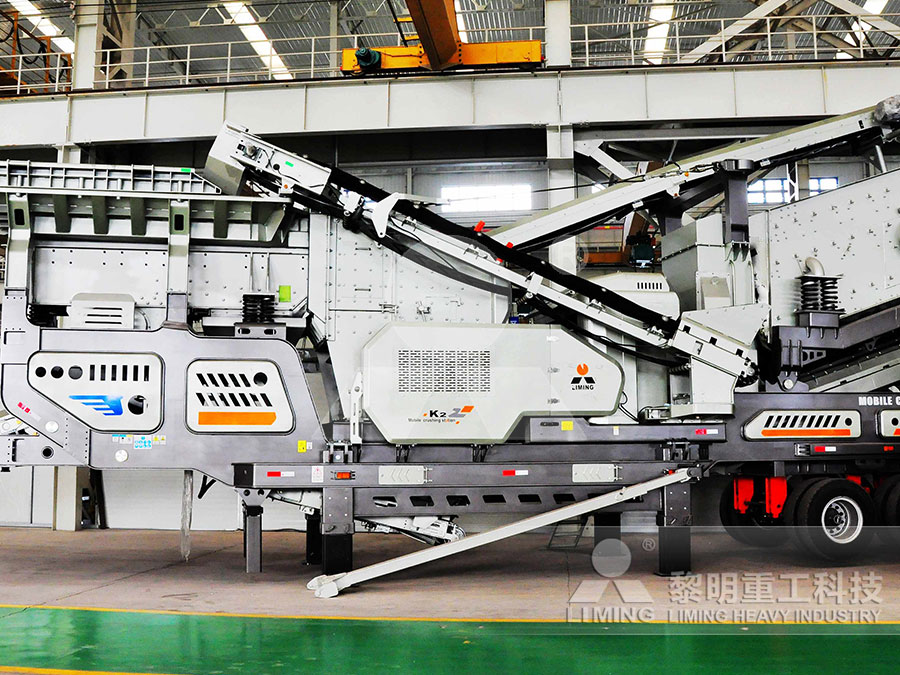
- Precise Gradation Shaping: Ability to produce multiple spec sands (e.g., concrete, masonry, frac) from a single plant by adjusting crusher parameters and screen configurations.
- Enhanced Material Consistency: Stable output reduces product stockpiling segregation and ensures batch-to-batch uniformity for sensitive applications like high-performance concrete.
- Superior Wear Life & Uptime: Application-specific alloy selection for wear parts results in a 30-50% longer service life in abrasive silica and granite applications, directly lowering cost per ton.
- Adaptability to Ore Hardness: Crusher dynamics and metallurgy are tailored to the specific compressive strength (ranging from soft limestone at <120 MPa to hard granite/trap rock >250 MPa) of the deposit.
- Optimized System Throughput (TPH): Engineered for maximum reduction ratios within a single crushing stage, minimizing recirculating load and maximizing net production capacity of in-spec material.
Technical Specifications & Configuration Data:
| Component / System | Key Parameter | Performance Range / Standard |
|---|---|---|
| Primary VSI Crusher | Max Feed Size | Up to 2″ (50mm) |
| Motor Power | 300 – 800 HP | |
| Capacity Range | 100 – 600 TPH (dependent on closed-side setting & material) | |
| Wear Part Metallurgy | Anvil / Rotor Tip Alloy | ASTM A532 Class III Type A (High-Chrome Iron) or Proprietary Mn Steel |
| Expected Tonnage (Abrasive Granite) | 80,000 – 120,000 tons per set | |
| Control & Automation | System Standard | ISO 13849 (Safety), CE compliant controls |
| Monitoring | Bearing temperature, vibration, rotor mass balance, real-time power monitoring | |
| Plant Structural Integrity | Frame Construction | Heavy-duty, welded ASTM A36 steel with integrated vibration isolation mounts. |
| Compliance | Designed to meet or exceed MSHA and OSHA regulations for stationary crushing plants. |
This engineered approach ensures that every plant delivers not just high volume, but high-value, specification-grade sand with the operational reliability and cost control required for a superior return on investment in the competitive aggregate market.
Custom-Configured Plants to Match Your Specific Production Requirements and Site Constraints
Every aggregate operation presents a unique set of variables. A plant that excels in a granite quarry will underperform in a river gravel deposit or a recycled concrete operation. Off-the-shelf solutions introduce compromises that erode throughput, increase wear costs, and limit long-term viability. Our engineering philosophy is rooted in a front-end analysis of your specific feed material, production targets, and physical site to deliver a plant configured as a precision tool for your business.
Core Configuration Variables:
The design process begins with a rigorous assessment of three critical domains:
-
Material Characteristics: We conduct or review comprehensive testing of your feed stock, including:
- Abrasion Index (AI) & Los Angeles (LA) Abrasion Value: Determines the selection of crusher chamber designs, rotor kinematics, and the specific grade of wear liners.
- Silica Content & Moisture Level: Influences the selection between compression crushing (jaw/cone) for abrasive rock and impact crushing (VSI) for less abrasive stone, and dictates material flow and screening solutions to prevent packing and blinding.
- Feed Gradation & Desired Product Shape: Drives the crusher type selection and closed-circuit screen configuration to achieve optimal yield on spec aggregate, particularly critical for manufactured sand meeting ASTM C33 or state DOT specifications.
-
Production & Financial Targets:
- Required TPH (Tons Per Hour): Sizes the entire primary, secondary, and tertiary crushing circuit, including conveyor widths, screen deck areas, and surge capacity.
- Product Mix & Ratio: Defines the number of screening stages, the use of classifying screens, and the potential integration of a vertical shaft impactor (VSI) for sand production and cubical shaping.
- Operational Parameters: Duty cycle (e.g., 10 hrs/day vs. 24/7), desired maintenance windows, and target cost-per-ton directly inform component selection for durability versus initial cost.
-
Site-Specific Constraints:
- Topography & Footprint: Dictates a horizontal, vertical, or hybrid plant layout. Modular designs are engineered for tight spaces, steep grades, or phased expansion.
- Mobility Requirements: For multi-site or contract crushing needs, plants are built on heavy-duty triple-axle chassis with hydraulic set-up and leveling systems.
- Environmental & Regulatory: Configurations include integrated dust suppression (atomized mist systems), noise abatement enclosures, and slurry management systems for wet processing.
Technical Execution & Component Specification:
Configuration is realized through the precise specification of engineered components, not merely their arrangement.
| Configuration Driver | Engineering Response | Technical Specification Example |
|---|---|---|
| High-Abrasion Feed (e.g., Trap Rock) | Optimized for wear life over peak TPH. | Jaw crusher with reinforced frame and 18-22% Mn-steel jaw dies; Cone crusher with heavy-duty head, bowl, and ASTM A128 Grade C concave liners; Slower rotor speeds in tertiary stage. |
| Critical-Spec Sand Production | Focus on particle shape, gradation control, and fines management. | Integration of a high-speed VSI with a dual-port rotor and anvil ring or rock-on-rock chamber; Downstream integration of a fine material washer or hydrocyclone. |
| Limited-Portability Contract Crushing | Maximize set-up speed and roadability. | Unified chassis with all electrics in a single track; Hydraulic folding for conveyors; Crusher jacking legs; Compliant with state DOT bridge laws for width and weight. |
| High-Moisture / Sticky Feed Material | Ensure flow and prevent choke-points. | Grizzly feeders with stepped grizzly bars; Inclined screens with heated screen decks or ball-tray systems; Strategic use of impact crushers which are less prone to packing than compression crushers. |
Functional Advantages of a Custom-Configured Plant:
- Maximized Yield on Target Products: Engineered circuits minimize waste and reprocessing, directly increasing saleable tonnage.
- Predictable Wear Cost & Downtime: Matching wear part metallurgy (e.g., T-400 vs. T-500 steel, ceramic composite liners) to your material’s abrasiveness extends service life and creates maintainable schedules.
- Inherent Operational Efficiency: A plant designed for your site’s footprint and logistics reduces unnecessary material handling, lowering fuel/power consumption per ton.
- Built-in Compliance & Safety: Dust, noise, and runoff systems are engineered-in, not retrofitted, ensuring they perform to specification without hindering production.
- Scalable Foundation: The initial configuration includes documented provisions for future expansion, such as reinforced foundations, oversized electrical feeds, and conveyor junctions for added circuits.
The result is a capital asset with a known performance profile and operating cost, engineered from the ground up to deliver the target return on investment under your specific conditions. This is not a generic product, but a proprietary production system bearing your name.
Technical Specifications: Engineered Components and Performance Data for Informed Decisions
Core Crushing Chamber & Wear Components
The integrity of the crushing chamber is paramount. Our plants utilize wear components cast from proprietary, high-grade manganese steel (Mn18Cr2, Mn22Cr2) with a refined austenitic microstructure. This provides optimal work-hardening, where surface hardness increases from ~220 HB to over 550 HB under impact, dramatically extending service life in highly abrasive silica and granite applications. Jaws, concaves, and mantles are precision-machined to OEM tolerances, ensuring consistent feed opening, crusher setting, and product gradation.
- Material Advantage: Advanced alloy chemistry and controlled heat treatment yield a superior balance of toughness and abrasion resistance, reducing cost-per-ton for wear parts.
- Design Advantage: Chamber profiles are digitally optimized for inter-particle compression, maximizing reduction ratios and minimizing wasteful slabby product.
- Service Advantage: Components are fully interchangeable with OEM benchmarks, providing operational flexibility and supply chain security.
Drive & Power Transmission Systems
Power transmission is engineered for high-inertia load management and peak efficiency. Heavy-duty bearings (SPHERICAL ROLLER, TIMKEN or SKF) are specified with calculated L10 life exceeding 50,000 hours under crusher duty cycles. Direct drive configurations via TEXROPE or equivalent sheaves and multi-vee belts eliminate gearbox losses and provide inherent overload protection.
- Reliability Advantage: Oversized shaft diameters and high-capacity bearing housings dissipate stress, preventing premature failure in continuous 24/7 operations.
- Efficiency Advantage: Direct coupled motors and laser-aligned drives minimize parasitic power loss, directly reducing kW-hr per ton of finished product.
- Maintenance Advantage: Centralized automated lubrication systems ensure optimal bearing conditioning, with remote monitoring capability for predictive maintenance.
Structural Fabrication & Plant Integrity
Primary plant structures are fabricated from ASTM A572 Grade 50 high-strength, low-alloy steel. All critical welds are full-penetration and undergo non-destructive testing (NDT) via ultrasonic or magnetic particle inspection. Modular design follows FEM 1.001 and ISO 8525 standards for dynamic load analysis, ensuring structural stability under maximum vibratory forces.
- Durability Advantage: Rib-reinforced hoppers, impact beds, and conveyor galleries resist material impingement and fatigue over multi-decade service life.
- Precision Advantage: CNC-cut and drilled connection points ensure rapid, accurate field assembly, reducing installation time and cost.
- Safety Advantage: Integrated walkways, guardrails, and service platforms comply with OSHA and MSHA standards, engineered for safe access.
Performance Data & Operational Parameters
Plant performance is defined by measurable throughput and product specification metrics. Key data is derived from controlled in-feed of standard ASTM C33 aggregate feed stock (≤ 8″ / 200mm).
| System Component | Key Parameter | Specification Range | Performance Implication |
|---|---|---|---|
| Primary Jaw Crusher | Feed Opening | 30″ x 42″ to 48″ x 60″ | Maximum feed size capacity |
| CSS Adjustment Range | 4″ – 12″ (100mm – 300mm) | Control of top-size product | |
| Power Rating | 150 – 350 HP | Drives maximum compressive force | |
| Secondary Cone Crusher | Head Diameter | 45″ to 59″ | Determines nominal capacity |
| Recommended CSS | 0.5″ – 2.5″ (13mm – 64mm) | Fine product gradation control | |
| Installed Power | 300 – 600 HP | Enables high reduction ratios | |
| Vertical Shaft Impact (VSI) Crusher | Rotor Diameter & Speed | 40″ – 66″, Up to 1800 RPM | Critical for cubical product shape & fines generation |
| Throughput Capacity | 150 – 800 TPH | Sand production volume | |
| Cascade Flow Ratio | Adjustable 0% – 100% | Optimizes wear vs. product shape | |
| Overall Plant | Total Installed Power | 800 – 2000 HP | Total electrical demand |
| Average Yield (Concrete Sand) | 70 – 85% of feed | Production efficiency of spec material | |
| Nominal Top Capacity (TPH) | 300 – 1200+ TPH | System throughput for hard granite (AIV < 16%) |
Control & Automation Systems
The plant brain is a PLC-based control system with SCADA interface, featuring Allen-Bradley or Siemens components. It provides real-time monitoring of amp draws, bearing temperatures, and bin levels. Automated setting regulation (ASRi) on cone crushers maintains consistent product size by compensating for liner wear and feed variations.
- Optimization Advantage: Closed-loop controls dynamically adjust crusher speed and feed rate to maintain peak power draw, maximizing throughput.
- Diagnostic Advantage: Remote telemetry allows for real-time performance tracking and early fault diagnosis, minimizing unscheduled downtime.
- Data Advantage: Production reports track TPH, tonnage, and idle time, providing actionable data for ROI analysis and operational improvements.
Certification & Compliance
All electrical systems are UL listed and assembled in NEC-compliant enclosures. Plant designs meet or exceed CE marking requirements for machinery safety (2006/42/EC). Critical pressure vessels (if applicable) are ASME stamped. This comprehensive adherence to international standards ensures global operational acceptance and simplifies permitting processes.
Proven Reliability: Case Studies and Support from a Trusted U.S. Manufacturer
Our manufacturing and engineering philosophy is built on a foundation of metallurgical precision and field-proven design. We do not simply assemble components; we engineer integrated systems where every element, from the primary crusher’s jaw plates to the tertiary cone’s mantle, is selected for its specific role in comminution. This results in plants that deliver predictable, high-tonnage output with minimized unscheduled downtime.
Core Engineering Principles for Unmatched Uptime:
- Metallurgical Superiority: Critical wear parts are not generic. We specify proprietary alloy grades of manganese steel (Mn14, Mn18, Mn22) and chromium iron for different abrasion and impact profiles. For instance, jaw plates are cast for high-impact work-hardening, while VSI rotors and anvils use ultra-high-chrome alloys for maximum resistance to abrasive silica.
- Mining-Grade Construction: Structural fabrications utilize high-tensile steel plate with robotic welding and full stress-relieving to prevent fatigue cracking under cyclical loading. Bearing housings are monolithic castings, not fabricated assemblies, ensuring perfect alignment and longevity for heavy-duty vibratory screens and crushers.
- Adaptive Crushing Chambers: Our cone crushers feature hydraulically adjustable settings and multiple cavity profiles, allowing operators to fine-tune the plant in real-time for changes in feed size or desired product gradation without sacrificing reduction ratio or throughput.
- Intelligent Systems Integration: PLC-controlled automation packages monitor amp draw, pressure, and temperature, providing automated load management and fault diagnostics to protect the machinery from catastrophic failure.
Documented Performance in Demanding Applications:
The following case studies illustrate the application of these principles under severe operating conditions.
| Project Location | Material Type & Hardness (Mohs/Abrasive Index) | Plant Configuration | Key Challenge | Engineered Solution & Result |
|---|---|---|---|---|
| Granite Quarry, Southeastern U.S. | Granite (6-7 Mohs), High Abrasiveness | Primary Jaw (3648), Secondary/Tertiary Cones, Vertical Shaft Impactor (VSI) for shaping | Achieving a consistent, cubical #57 stone and manufactured sand meeting DOT specs from highly fractured, variable feed. | Implemented a VSI with a patented rotor & anvil design and cascading rock-on-rock crushing. Result: Product cubicity exceeded 94%; sand FM consistently within 2.6-3.0; plant availability >95% over 18 months. |
| Iron Ore Tailings Reprocessing, Midwest | Taconite Tailings (Extremely Abrasive) | High-Frequency Dewatering Screens, Specialized Slurry Pumps, Tertiary Cone for final sizing | Creating a saleable sand product from waste slurry without blinding screens or destroying pump impellers. | Utilized polyurethane screen panels with precision laser-cut apertures and pumps lined with natural rubber. Cone crusher fitted with extra-heavy mantle/bowl liner. Result: Produced 85 TPH of spec sand; wear life on critical parts increased by 40% versus previous equipment. |
| Limestone & Sandstone Aggregate, Southwestern U.S. | Mixed Feed: Limestone (3-4 Mohs) & Sandstone (6-7 Mohs) | Portable Closed-Circuit Plant with Jaw, Cone, and Screen | Rapid, daily changes in feed material hardness causing wild swings in throughput and premature wear. | Deployed a plant with automated setting regulation (ASRi) on the cone crusher and onboard weighing. System automatically adjusts closed-side setting (CSS) to maintain target TPH. Result: Sustained 550 TPH output regardless of material blend; wear cost per ton reduced by 22%. |
Unmatched Domestic Support & Lifecycle Value:
Reliability extends beyond the machine to the support system. As a U.S.-based manufacturer, we provide a decisive advantage in operational continuity.
- Rapid Parts & Service Response: Our centralized U.S. inventory guarantees availability of critical, wear-resistant parts. Field service engineers, trained in our factory, can be dispatched typically within 24-48 hours for major issues, minimizing production losses.
- Performance Optimization, Not Just Repair: Our support includes periodic throughput audits and wear pattern analysis. We provide data-driven recommendations to adjust feed strategy, crusher settings, or component grade to extend wear life and improve product yield specific to your deposit.
- Certified Build Quality: Every plant is designed and built to meet or exceed relevant ISO 9001 and CE standards for quality management and safety. Structural calculations and dynamic load analyses are part of standard documentation, ensuring integrity and compliance.
Frequently Asked Questions
How do you optimize wear parts replacement cycles in high-abrasion sand crushing?
Use high-manganese steel (e.g., ASTM A128 Grade B3/B4) for liners and jaws, hardened to 500+ BHN. Implement predictive maintenance via laser scanning for liner thickness. Pair with automated lubrication systems to reduce friction. This extends service life by 30-40% versus standard parts.
What engineering ensures adaptability to varying ore hardness (Mohs 5-8)?
Employ a hybrid crushing chamber design with adjustable eccentric throw and hydraulic gap adjustment. Utilize multi-layered jaw plates with tungsten carbide inserts for harder materials. This allows real-time configuration changes to maintain optimal throughput and product shape without overloading.
How is structural vibration mitigated to prevent fatigue failure?
Integrate computer-modeled rib-reinforced frames and isolate crusher bases with proprietary rubber-polyurethane composite pads. Dynamically balance rotors to ISO 1940 G2.5 standard. Use real-time vibration sensors (e.g., SKF or Schenck systems) linked to automatic shutdowns at preset thresholds.
What lubrication system is critical for continuous operation in dusty environments?
A fully sealed, centralized automatic grease system with high-viscosity, extreme-pressure lithium complex grease (NLGI Grade 2). Specify premium bearings (like SKF Explorer series) with labyrinth seals and air purgers. This prevents contaminant ingress and ensures stable bearing temperatures under 80°C.
How do you manage hydraulic system reliability for setting adjustments?
Utilize proportional control valves for precise, stepless CSS adjustment. Implement independent, redundant hydraulic circuits with heat exchangers to maintain oil temperature below 50°C. Specify hoses with SAE 100R17 ratings and burst pressures 4x operating pressure (typically 160 bar).
What ensures consistent product gradation with fluctuating feed material?
Incorporate an intelligent automation system with continuous crusher load monitoring (via power draw and pressure sensors). Pair with a variable frequency drive (VFD) on the feeder to modulate feed rate in real-time, maintaining a choke-fed chamber for optimal inter-particle crushing.