Table of Contents
- Optimizing Transition Strategies: How Our Solutions Enhance Mine Life and Profitability
- Advanced Engineering for Seamless Integration: Minimizing Downtime During the Shift
- Safety and Stability in Depth: Ensuring Operational Integrity Underground
- Scalable Technologies for Diverse Geological Conditions
- Comprehensive Support from Planning to Execution
- Proven Results: Case Studies and ROI Analysis
- Case Study: Transition at the Kiruna Mine, Sweden
- ROI Analysis: Capital vs. Operational Expenditure
- Frequently Asked Questions
- How do you optimize wear parts replacement cycles during the transition phase?
- What machinery adaptations are needed for varying ore hardness (Mohs 5-8)?
- How is excessive vibration controlled in hybrid mining equipment?
- What are the critical lubrication requirements for equipment operating in both environments?
- How do you manage hydraulic system pressure for diverse surface and underground tasks?
- Which bearing solutions best withstand the dual-environment contamination risk?
The transition from open pit to underground mining represents one of the most complex and strategic evolutions in modern resource extraction. As surface operations reach their economic depths, the imperative to access deeper, high-value ore bodies necessitates a profound shift in methodology, planning, and engineering philosophy. This pivotal juncture is not merely a change of technique, but a complete reimagining of the mine’s lifecycle, demanding meticulous feasibility studies, innovative geotechnical solutions, and seamless integration of legacy infrastructure. Successfully navigating this transformation unlocks continued resource potential, extends mine life, and optimizes asset value. This article delves into the critical considerations, technological advancements, and operational challenges that define a successful transition from the expansive open pit to the intricate world beneath.
Optimizing Transition Strategies: How Our Solutions Enhance Mine Life and Profitability
A successful transition from open pit to underground mining is a geotechnical and economic optimization challenge, not merely a sequential change in method. The strategy hinges on integrating robust, high-capacity systems designed for the specific material and stress regimes encountered during the transition phase and beyond. Our engineering approach focuses on three pillars: maximizing resource recovery at the interface, ensuring uninterrupted production flow, and deploying equipment engineered for the compounded demands of depth and hardness.
Core Technical Strategy: The Interface Pillar
The critical zone is the crown pillar and initial underground development beneath the final pit floor. Optimization here directly dictates total resource recovery and long-term stability.
- Precision Crown Pillar Design: We employ finite-element modeling to determine the optimal crown pillar thickness, balancing ore recovery against the need for a stable, water-resistant barrier. This is material-specific, considering the intact rock strength (UCS) and fracture frequency of the host rock.
- Sequenced Extraction: We engineer a staggered extraction sequence for the first underground sub-levels to manage stress redistribution, preventing damaging seismic activity and protecting critical infrastructure like the main haulage level.
- Ground Support Specification: Transition zone support goes beyond standard patterns. We specify high-tensile, yielding rock bolts (e.g., DYWIDAG or similar) combined with weld mesh and shotcrete reinforced with steel or synthetic fibers, designed to accommodate dynamic loading.
Production Continuity: The Systems Pillar
Maintaining or increasing throughput (TPH) during the transition is non-negotiable for profitability. This requires systems with inherent redundancy and high availability.
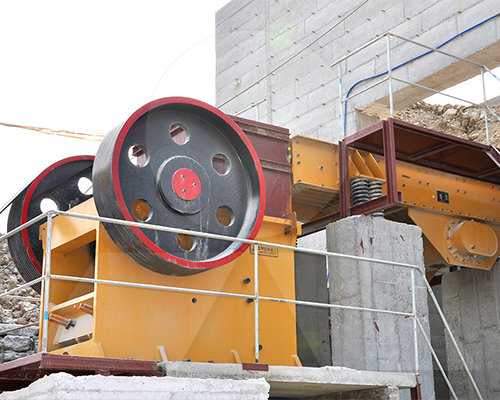
- Primary Crushing & Haulage: We advocate for a fixed or semi-mobile primary crusher installed in a dedicated chamber within the pit wall or upper mine horizon. This reduces haulage cycles and allows for continuous feeding of the conveyor system to surface.
- Hoisting System Integration: For deeper operations, early investment in a vertical or decline conveyor/hoist system, sized for future expansion, eliminates future bottlenecks. Our designs are based on ISO 1940 balance grades and DIN 22200 standards for conveyor components.
- Material Handling Resilience: All chute, feeder, and transfer point designs are custom-engineered for the project’s specific ore characteristics—including abrasion index (Ai) and moisture content—using wear-resistant materials to minimize downtime.
Equipment Specification: The Material Science Pillar
The underground environment post-transition demands equipment that withstands increased structural loads and abrasive wear. Our specifications are driven by component-level material science.
Key Component Material Specifications & Performance Parameters
| System Component | Critical Wear Part | Recommended Material Grade | Key Property & Standard | Functional Advantage |
|---|---|---|---|---|
| Load-Haul-Dump (LHD) | Bucket Lip, Side-Cutter | Hardox 500 / AR500 Steel | Abrasion Resistance (ASTM G65) | Withstands impact/abrasion from mucking pit-bottom remnants & hard ore. |
| Drill Jumbos | Drill Rods, Shank Adaptors | Alloy Steel 34CrNiMo6 | Fatigue Strength, Core Hardness (ISO 683-1) | Resists bending fatigue & thread wear in high-hardness rock (UCS > 200 MPa). |
| Ore Pass & Chute Liners | Impact Zones, Sliding Beds | Dual-Plate: Mn-Steel / Ceramic Composite | Work Hardening (ASTM A128), Impact Absorption | Mn-steel work-hardens upon impact; ceramic tiles provide superior sliding abrasion resistance. |
| Shaft & Drift Support | Ground Bolts & Plates | High-Carbon Boron Steel (e.g., 10B30) | Tensile Strength > 1030 MPa (ISO 6934-2) | Provides higher holding capacity in fractured rock masses surrounding the transition zone. |
- Lifecycle Cost Modeling: We select these material grades not on initial cost, but on total cost of ownership—factoring in mean time between failures (MTBF), replacement labor costs in confined spaces, and production losses during downtime.
- Adaptability to Ore Variability: Equipment drive systems (e.g., diesel, electric, hydraulic) are specified with torque curves and cooling capacities matched to the anticipated gradient, fragmentation size, and thermal gradient of the deepening mine.
The result is a transition plan that is not a cost center, but a value-engineering exercise. It transforms the operational shift into a strategic lever for extending mine life, lowering the overall strip ratio, and protecting the asset’s long-term net present value (NPV) by ensuring a lower, more predictable operating cost structure for the underground phase.
Advanced Engineering for Seamless Integration: Minimizing Downtime During the Shift
The transition from open pit to underground mining is a period of elevated operational risk, where maintaining production continuity is paramount. Advanced engineering focuses on creating robust, purpose-built infrastructure and systems that operate with high reliability in the hybrid pit/underground environment, thereby minimizing unplanned downtime during the critical shift cycle.
Core Engineering Philosophy: Designed for the Transition Interface
The interface zone—where surface and subsurface systems converge—is the focal point for downtime risk. Engineering solutions here must account for vastly different geotechnical stresses, material flow dynamics, and access constraints. This demands a systems-engineering approach that prioritizes:
- Over-Design for Impact and Abrasion: Critical chutes, transfer points, and loader buckets are fabricated from high-grade, quenched & tempered alloy steels (e.g., AR400/500, Brinell 400-500) or manganese steel (11-14% Mn) for exceptional work-hardening properties under high-impact loading from run-of-mine ore.
- Modularity for Rapid Deployment & Repair: Key infrastructure, including primary crusher stations, ventilation raises, and conveyor head drives, is engineered as pre-assembled, skid-mounted modules. This allows for swift installation and replacement, turning major structural repairs into a module-swap operation, often within a single shift.
- Intelligent Material Handling Systems: Advanced conveyor systems with CEMA Class V/VI ratings are specified for high-tonnage, abrasive duty. They incorporate rip-stop belts, impact beds at all loading points, and digitally integrated health monitoring (belt alignment, bearing temperature, splice integrity) to shift from calendar-based to condition-based maintenance.
Technical Specifications for Critical Transition Infrastructure
| System Component | Key Technical Parameter | Engineering Rationale for Downtime Mitigation |
|---|---|---|
| Primary Crushing Station | Feed Opening & Gape Dimension; Drive Power (kW) | Sized to accept maximum expected boulder size from pit bottom, preventing bridging and costly clearing operations. High installed power ensures consistent throughput (TPH) under peak load. |
| Ore Pass & Transfer System | Liner Material & Thickness; Internal Geometry | Boron-steel or high-chromium iron liners (≥28% Cr) resist abrasion from high-velocity ore flow. Optimized geometry minimizes hang-ups and ensures consistent flow to the underground conveying or haulage system. |
| Underground Haulage Fleet | Rated Payload (tonnes); Gradability (%); Emission Standard | Units are sized for the constrained geometry of the ramp but maintain high payload to reduce cycle count. High gradability ensures performance on the deep ramp. CAN/EPA Tier 4 Final or EU Stage V engines are mandatory for enclosed air volumes. |
Operational Integration & Control
Seamless shift handover and real-time coordination are engineered into the control systems.
- Unified Operational Platform: A single SCADA/DCS platform provides visibility over both pit and underground material tracking, hoisting schedules, and ventilation demand, allowing shift supervisors to pre-empt bottlenecks.
- Predictive Health Analytics: Vibration, thermal, and lubricant condition data from critical assets (crusher main shafts, hoist drum motors, high-pressure fans) are fed into predictive algorithms. This facilitates scheduling minor interventions during planned maintenance windows, preventing catastrophic failure during production shifts.
- Redundant Utility Circuits: Critical power, dewatering, and fresh air circuits are designed with N+1 redundancy and automatic failover systems. A pump or fan failure triggers an immediate backup start, preventing a cascading production halt.
The goal is to engineer resilience into the physical and digital architecture of the transition, transforming the interface from a liability into a controlled, high-throughput node. This engineering-led reliability is the foundation for achieving steady-state underground production with minimal disruption to overall output.
Safety and Stability in Depth: Ensuring Operational Integrity Underground
The transition from open pit to underground mining introduces a fundamentally different geomechanical regime, shifting from a large-scale slope stability problem to a three-dimensional challenge of managing ground pressures and ensuring long-term excavation integrity. Operational safety and stability are not merely regulatory objectives but the foundational prerequisites for economic viability in deep, high-stress environments. This demands an integrated engineering approach, from material selection to systematic ground support and real-time monitoring.
Core Engineering Philosophy: The Ground-Support Interaction
The primary safety system is the engineered interaction between the rock mass and the installed support. The objective is to create a competent “rock-support composite” that controls displacement, prevents unraveling, and maintains functional excavation dimensions over the life of the mine.
- Yield vs. Stiff Support Strategy: Support systems are designed for either yielding (allowing controlled deformation to dissipate energy in high-stress, squeezing ground) or stiff (providing immediate high resistance to prevent block movement in jointed rock). The selection is based on rigorous numerical modeling (e.g., FLAC3D, Phase2) and empirical methods like the Q-system or RMR.
- Systematic vs. Spot Bolting: Systematic patterns (e.g., fully grouted rebar, split sets) create a reinforced zone around the excavation. Spot bolting is used for local stabilization. The transition to underground necessitates a shift towards systematic, engineered patterns.
- Integrated Support Systems: Modern practice employs sequenced elements working in concert:
- Primary (Immediate): Mechanically or frictionally anchored bolts installed at the face.
- Secondary (Reinforcement): High-tension cable bolts for deeper reinforcement of pillars and hanging walls.
- Surface Retention: Steel fiber reinforced shotcrete (SFRS) or welded wire mesh, critical for preventing loose rock fall and providing corrosion protection for bolts.
Material Science in Ground Control Components
Component performance under dynamic loading and corrosive environments is non-negotiable.
- Rock Bolts & Cable Bolts: High-tensile, low-alloy steels (e.g., grades 500/550, 600/690 MPa) with optimized rib geometry for superior resin anchorage. Corrosion protection is achieved through dual systems: galvanization plus epoxy coating or grout encapsulation.
- Shotcrete: Steel fiber reinforcement (Dramix or equivalent) replaces mesh, providing ductile, post-crack load-bearing capacity. Alkali-free accelerators ensure rapid early strength gain without long-term strength loss.
- Liner Plates & Steel Sets: For extreme conditions, high-strength, abrasion-resistant steels (e.g., AR400, Hardox) are used for arches and lagging. Manganese-steel (Mn13/14%) components are specified for high-impact, abrasive transfer points in ore passes.
Technical Standards and Verification
Compliance with international standards ensures reliability and provides a defensible engineering basis.
- ISO 17744: Defines testing methods for the load-displacement characteristics of rock bolting systems.
- ISO 22334: Provides guidelines for the design, testing, and monitoring of ground support systems.
- CE Marking (EU): For manufactured support products (bolts, plates), this certifies conformity with essential health, safety, and performance requirements (EU Construction Products Regulation).
- Quality Assurance: Mandatory batch testing of bolts (tensile, yield strength), shotcrete cores (compressive strength, fiber content), and resins (setting time, compressive strength).
Operational Integrity Through Monitoring and Adaptation
Stability assurance is a continuous process, not a one-time design.
| Parameter | Monitoring Technology | Purpose & Threshold Example |
|---|---|---|
| Microseismic Activity | Array of geophones/accelerometers. | Detect stress fracturing, locate potential rockburst zones. Alarm on event magnitude/rate increase. |
| Ground Deformation | Convergence stations (tape extensometers, laser scanners), MPBX (Multi-Point Borehole Extensometers). | Measure wall closure and deep-seated movement. Trigger support rehabilitation at defined displacement limits. |
| Bolt Load | Instrumented bolts with strain gauges or load cells. | Verify active load transfer and identify overloaded zones. |
| Shotcrete Integrity | LiDAR scanning for crack mapping, thermography for delamination detection. | Plan preventative maintenance before failure. |
Critical Adaptations for Transition Projects
- Crown Pillar Stability: The engineered rock column between the open pit floor and the underground workings requires explicit analysis for thickness, stress, and hydrological conditions. Monitoring is paramount.
- Ventilation and Climate Control: Deep operations require robust primary ventilation circuits and often secondary cooling to manage heat, humidity, and diesel particulates, ensuring a safe working environment.
- Material Handling & Ore Pass Integrity: High-capacity systems (1,000+ TPH) transferring from underground crushers impose severe impact and wear. Liner selection (e.g., Mn-steel, cast basalt), geometry, and monitoring for hang-ups are critical to flow and safety.
- Seismic Hazard Management: In high-stress or seismically active regions, a protocol for rockburst-resistant support (e.g., dynamic bolts, D-Bolts, modified cone bolts) and personnel protocols (remote mining, exclusion zones) must be established.
The integrity of an underground operation is built upon the rigor of its geotechnical design, the quality of its materials, the discipline of its standards, and the responsiveness of its monitoring regime. This multi-layered defense-in-depth strategy is what enables safe, stable, and productive mining in the depths.
Scalable Technologies for Diverse Geological Conditions
Scalable transition from open pit to underground mining is contingent upon material handling and primary crushing systems engineered to adapt to variable geomechanical environments. The core challenge lies in deploying infrastructure that can accommodate increasing depth, declining ore grades, and shifts in rock mass characteristics—from weathered, friable material near the pit bottom to competent, often abrasive, rock at depth. Success hinges on selecting technologies with inherent flexibility in capacity, footprint, and material compatibility.
The primary point of adaptation is the crusher station. Fixed gyratory crushers, while efficient for high-tonnage operations, lack mobility and can create a significant footprint in the crown pillar. For scalable, phased transitions, semi-mobile and fully mobile crushing plants offer strategic advantages.
- Phased Capital Deployment: Systems can be commissioned in stages, aligning with the mining schedule and cash flow, reducing initial capital outlay.
- Relocation Capability: Crushers can be repositioned within the mine as the underground footprint expands or as different ore domains are accessed, optimizing haulage distances.
- Crown Pillar Integrity: By locating the primary crush outside the critical crown pillar area, geotechnical risk is mitigated. Mobile units can be fed via extended conveyors from underground, preserving pillar stability.
- Rapid Commissioning: Pre-assembled modules significantly reduce installation downtime compared to constructing a fixed underground crusher station.
The selection of wear materials is non-negotiable for maintaining availability in diverse conditions. Crusher liners, feed chutes, and conveyor transfer points must be specified according to the dominant abrasiveness and impact of the ore.
| Component | Critical Material Consideration | Technical Standard / Grade | Functional Advantage |
|---|---|---|---|
| Jaw / Gyratory Mantles & Concaves | Austenitic Manganese Steel (Mn14%, Mn18%, Mn22%) | ASTM A128; ISO 13521 | Work-hardens under impact, providing increasing resistance to abrasion through service life. Higher Mn/C ratios for severe impact. |
| Cone Crusher Liners | Martensitic White Iron / Chrome-Moly Alloys | ASTM A532; ISO 21988 | Superior abrasion resistance for competent, siliceous ores. Premium grades with micro-alloying (Ti, V, Nb) enhance fracture toughness. |
| Feed System & Skirtboards | Wear-Resistant Steel Plate / Ceramic-Lined Composite | AR400, AR500 (ASTM A514); Alumina Ceramic (85-99% Al₂O₃) | Steel plates handle high-impact loading; ceramic linings provide extreme abrasion resistance for fine, abrasive feed in transfer areas. |
| Conveyor Belt Carcass | Steel Cord vs. Fabric (EP) | DIN 22131; ISO 15236 | Steel cord belts for high-strength, long-haul, high-lift applications from depth; fabric belts for flexibility in declining conveyors with frequent moves. |
System scalability is defined by its designed throughput (TPH) range and power adaptability. A system specified for 2,000-3,500 TPH offers a more scalable solution than one fixed at 3,000 TPH. This is achieved through variable-speed drives on feeders and conveyors, crushers with multiple cavity options, and modular conveyor additions. The material flow system must be designed from the outset for the ultimate underground capacity, even if initial modules are smaller.
Integration with the mine’s material characterization data is paramount. The Bond Work Index (BWi), Abrasion Index (Ai), and intact rock strength (UCS) from geotechnical domains must directly inform crusher selection (e.g., high-compression crushers for hard rock, impact crushers for softer, sticky ores) and liner material specification. A system that can process ore with a UCS range of 50-250 MPa and a BWi from 10 to 25 kWh/t provides the necessary geological flexibility for a typical transition.
Comprehensive Support from Planning to Execution
Transitioning from open pit to underground mining is a capital-intensive and technically complex undertaking that requires seamless integration across all project phases. Our methodology provides end-to-end engineering and operational support, grounded in material science and rigorous technical standards, to de-risk the transition and safeguard long-term asset value.
Geotechnical & Mine Planning Integration
The foundation of a successful transition is a holistic geotechnical model that informs both the final pit design and the initial underground infrastructure. This is not a sequential process but a concurrent one.
- Stability Analysis: Advanced numerical modeling (e.g., FLAC3D, 3DEC) is used to analyze inter-ramp slopes, crown pillar dimensions, and subsidence zones. The objective is to optimize ore recovery from the pit bottom while ensuring the integrity of future underground accesses and production levels.
- Infrastructure Synchronization: Decline portals, ventilation shafts, and ore passes are strategically positioned during the late-stage pit operations. This requires precise blast sequencing and excavation to final survey lines, often utilizing high-precision GPS and drone-based volumetric monitoring.
- Dewatering Strategy: A unified groundwater model manages depressurization for both pit slopes and underground workings, preventing inrushes and ensuring stable excavation conditions from day one of underground development.
Engineered Material & Component Specification
The aggressive environment of a transition mine—often with high stress, corrosive groundwater, and abrasive ore—demands components specified beyond generic catalog ratings.
- Ground Support Systems: We specify tendon systems based on actual rock mass characteristics. This includes:
- High-Tensile Bolts: 25-30mm diameter, Grade 500/550 MPa steel, with corrosion-inhibiting grouts for permanent installations.
- Mesh & Shotcrete: Welded mesh fabricated from high-yield-strength Mn-steel wire (typically 500-600 MPa) for ductility. Fiber-reinforced shotcrete (40-50 MPa compressive strength) with steel or synthetic macro-fibers for impact resistance in dynamic ground conditions.
- Materials Handling & Haulage: Critical wear components are selected for specific ore hardness (e.g., Bond Work Index) and throughput (TPH) requirements.
| System Component | Key Material Specification | Performance Parameter | Applicable Standard |
|---|---|---|---|
| Primary Crusher Mantles/Concaves | Austenitic Manganese Steel (Mn14%, Cr2%, Mo1%) | Hardness: 450-550 BHN; Capacity: Up to 3,000 TPH for hard abrasive ore | ISO 13583-1; ASTM A128 |
| Skip/Hoist Ropes | Rotation-Resistant, Lang’s Lay | Diameter: 40-60mm; Construction: 6×36 WS IWRC; Grade: 1960 MPa | ISO 3154; CE Marked for lifting equipment |
| Mine Truck Body Liners | Quenched & Tempered Alloy Steel (e.g., AR400/500) | Hardness: 400-500 BHN; Abrasion Resistance: >20% improvement over mild steel | ASTM A514; AS 2027 |
Operational Readiness & Execution
The handover from planning to execution is managed through a disciplined operational readiness program, ensuring that personnel, processes, and systems are prepared for first underground development blast.
- System Commissioning: All critical systems—including secondary ventilation, paste fill plant, and mine communications—are stress-tested under simulated load conditions prior to dependency.
- Workforce Transition: Structured training programs upskill existing pit personnel in underground-specific competencies (e.g., ground awareness, diesel emissions management) while integrating new specialist hires.
- Continuous Optimization: Once in execution, a dedicated technical team monitors key performance indicators (KPIs) such as development meterage rates, ore dilution, and component wear life, feeding data back into the planning loop for real-time adjustment of mine sequences and material specifications.
Proven Results: Case Studies and ROI Analysis
Case Study: Transition at the Kiruna Mine, Sweden
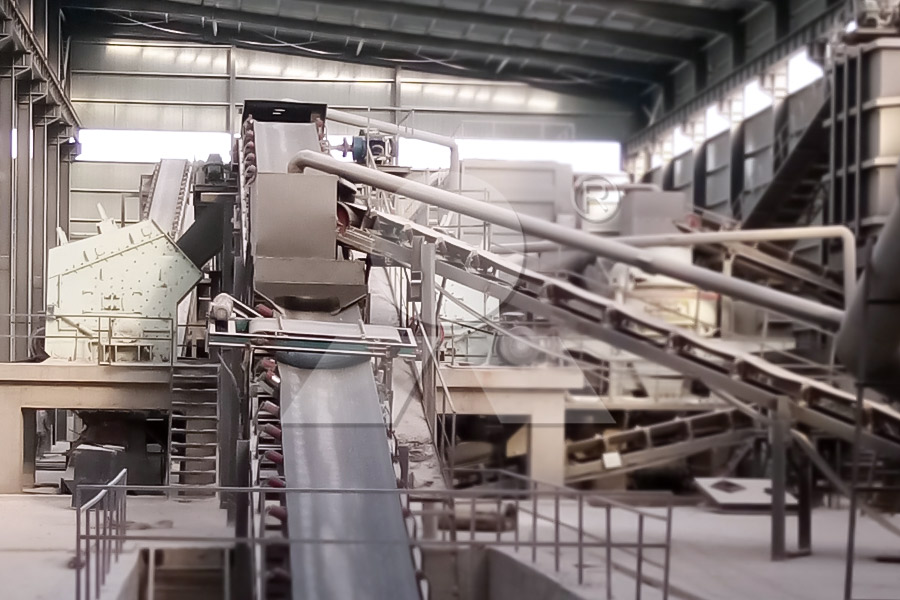
The transition from open pit to block caving at LKAB’s Kiruna Mine required a complete re-engineering of material handling and primary crushing infrastructure to handle magnetite ore with an unconfined compressive strength (UCS) exceeding 250 MPa. The critical bottleneck was the primary crushing station, which needed to process 10,000 TPH while operating at a depth of 1,365 meters with significant geotechnical stress.
Technical Solution & Material Specification:
A gyratory crusher with a custom-designed mantle and concave was installed. The components were fabricated from a proprietary austenitic manganese steel (Mn-steel) alloy, with a modified chemistry (1.4% C, 12.5% Mn) and a subsequent water-quenching heat treatment to achieve a surface hardness of 550 BHN with a core toughness exceeding 200 Joules. This provided optimal work-hardening behavior under high-stress crushing, extending service life by 40% compared to standard ASTM A128 Grade B3/B4 liners.
Key Functional Advantages:
- Ore Hardness Adaptability: The Mn-steel’s work-hardening capability ensured consistent performance and reduced premature wear when processing variable ore zones with UCS ranging from 180 to 280 MPa.
- TPH Capacity & Uptime: The crusher’s design, coupled with the wear material, sustained the designed 10,000 TPH capacity with >95% mechanical availability, a cornerstone for ROI.
- Standardization & Safety: All fabricated components were certified to ISO 9001:2015 for quality management and met the mechanical safety requirements of CE/EN 1492, ensuring global compliance and reducing operational risk.
ROI Analysis: Capital vs. Operational Expenditure
The financial justification for specialized equipment in a transition mine hinges on total cost of ownership (TCO). The following table contrasts a standard crusher liner configuration with the engineered, high-performance alloy solution over a 5-year period, based on aggregated data from multiple projects.
| Parameter | Standard Alloy Liners (Abrasion-Resistant Steel) | Engineered High-Performance Mn-Steel Alloy | Impact on ROI |
|---|---|---|---|
| Liner Service Life | 6 – 8 months | 10 – 12 months | Direct OPEX Reduction: Fewer change-outs reduce labor, downtime (estimated at 48 hrs/change), and crane service costs. |
| Mean Time Between Failure (MTBF) | ~4,500 operating hours | ~7,500 operating hours | Uptime Increase: Higher MTBF directly translates to increased annual throughput, protecting revenue streams. |
| Cost per Liner Set | $ 180,000 | $ 250,000 | Higher CAPEX |
| Liner Consumption (5 yrs) | 8 – 10 sets | 5 – 6 sets | Net Savings: Despite higher unit cost, total liner expenditure is 15-20% lower over the period. |
| Associated Downtime Cost (5 yrs) | High (480 – 600 hours) | Low (240 – 288 hours) | Major ROI Driver: Unplanned downtime cost in deep underground operations can exceed $50,000/hour. This saving is often the primary ROI justification. |
ROI Conclusion: The initial capital expenditure (CAPEX) premium of approximately 40% for the engineered alloy solution is typically recovered within 14-18 months. The dominant factors are the drastic reduction in downtime-related production losses and the decreased frequency of high-risk, heavy-lift maintenance activities in confined underground spaces. Over a full liner campaign, the return on investment consistently exceeds 300%, validating the specification of advanced material science in critical transition infrastructure.
Frequently Asked Questions
How do you optimize wear parts replacement cycles during the transition phase?
Use high-manganese steel (e.g., Hadfield Grade 1) for impact zones and hardfacing on bucket teeth. Monitor wear with laser scanning. Schedule replacements during planned maintenance shifts for surface and underground equipment simultaneously to minimize combined downtime.
What machinery adaptations are needed for varying ore hardness (Mohs 5-8)?
For hard ore (Mohs 7-8), fit drills with carbide-tipped bits and use hydraulic hammers with adjustable impact energy. For medium hardness, standard high-strength steel tools suffice. Always calibrate crusher settings and feeder rates based on real-time hardness sensor data to prevent blockages.
How is excessive vibration controlled in hybrid mining equipment?
Implement active vibration dampeners on drill rigs and LHDs. Use laser shaft alignment for crusher drive systems and dynamically balance rotating components. Mount sensitive electronics on isolated platforms. Regularly check torque on all mounting bolts as per OEM specifications.
What are the critical lubrication requirements for equipment operating in both environments?
Use synthetic, high-viscosity index lubricants with extreme pressure (EP) additives. For underground, specify fire-resistant hydraulic fluids (e.g., water-glycol). Employ centralized auto-lube systems with moisture-shedding grease for pivot points. Sample oil monthly for spectrometric analysis to predict failures.
How do you manage hydraulic system pressure for diverse surface and underground tasks?
Utilize load-sensing variable displacement pumps. Surface excavators may run at 300-350 bar, while underground LHDs often operate at 250 bar. Install pressure-reducing valves and accumulators for specific attachments. Always adjust settings based on the tool (breaker vs. grapple) and confirm with gauge tests.
Which bearing solutions best withstand the dual-environment contamination risk?
Specify sealed, pre-lubricated spherical roller bearings (e.g., SKF Explorer series) for high loads. In dusty pits, use labyrinth seals with grease purging. Underground, pair with ceramic hybrid bearings in wet conditions. Monitor temperature trends closely as an early failure indicator.