Table of Contents
- Unlock On-Site Crushing Efficiency: Maximize Productivity with Our Mobile sandstone crushers
- Engineered for Extreme Loads: The Structural Integrity of Our Mobile sandstone crushers
- Seamless Mobility and Setup: Deploy Rapidly Across Diverse Job Sites
- Optimized for Sandstone Processing: Advanced Crushing Technology for Superior Output
- Built to Endure: Low-Maintenance Design for Long-Term Reliability
- Proven Performance: Real-World Results and Customer Success Stories
- Frequently Asked Questions
- How often should wear parts be replaced on mobile sandstone crushers?
- Can a mobile crusher handle sandstone with varying hardness levels?
- What is the best vibration mitigation strategy for these units?
- What are the critical lubrication requirements for the main bearings?
- How do you optimize fuel efficiency on a diesel-hydraulic mobile crusher?
- What is the key to maintaining consistent product gradation?
In the dynamic world of construction and aggregate production, efficiency and flexibility are paramount. This is where mobile sandstone crushers emerge as a transformative solution, redefining how we process this durable and versatile natural stone. Unlike their stationary counterparts, these self-propelled units travel directly to the quarry face or demolition site, turning raw sandstone into valuable, specification-grade aggregates on location. By eliminating the need for costly material transport to a fixed plant, they dramatically reduce operational expenses and project timelines. Modern mobile crushers combine robust crushing power with advanced screening systems, offering unparalleled versatility for contractors tackling diverse projects—from road construction to landscape design. Their arrival marks a significant leap toward more sustainable, agile, and cost-effective material processing in the modern age.
Unlock On-Site Crushing Efficiency: Maximize Productivity with Our Mobile sandstone crushers
On-site crushing eliminates hauling costs and reduces project timelines by processing material directly at the source. Our mobile sandstone crushers are engineered to maximize productivity in demanding quarry and mining environments through superior mechanical design and material specification.
Core Engineering for Sandstone-Specific Applications
Sandstone presents a unique challenge due to its variable composition (quartz, feldspar, clay) and abrasiveness. Our crushers are built to handle this spectrum, from friable sandstone to highly silicified, abrasive varieties.
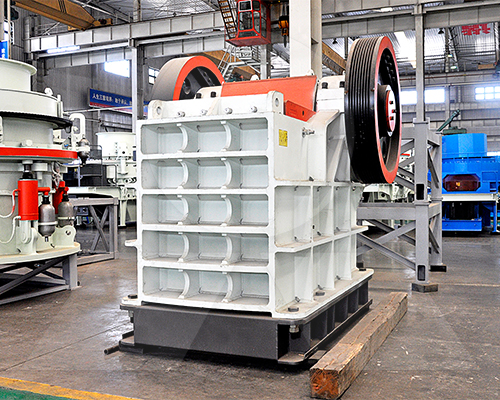
- Advanced Comminution Chamber Design: Computer-modeled geometry optimizes nip angles and crushing stroke to generate inter-particle crushing, increasing yield of in-spec product while reducing wear and power consumption per ton.
- Wear Component Material Science: Critical wear parts (jaws, concaves, blow bars) are cast from proprietary Mn-steel alloys (e.g., 18% Mn, 2% Cr) and high-chrome martensitic irons. These materials work-harden under impact, developing a surface hardness exceeding 550 HB for extended service life against highly abrasive quartz content.
- Adaptive Crushing Intelligence: On-board programmable logic controllers (PLCs) monitor crusher load, feed rate, and power draw. The system automatically adjusts feeder speed and crusher parameters to maintain optimal throughput and protect against tramp metal or uncrushable material.
Technical Specifications & Operational Advantages
| Feature | Technical Implementation | Operational Benefit |
|---|---|---|
| Capacity Range | 150 to 850+ TPH (Tons Per Hour), model-dependent. | Scales to match project scope from aggregate supply to large-scale mining operations. |
| Feed Size | Up to 900mm edge length, depending on primary crusher configuration. | Handles run-of-quarry sandstone directly from the face, minimizing primary breaking. |
| Drive System | Direct hydraulic drive or Tier 4 Final/Stage V diesel-electric hybrid. | Provides high torque at low RPM for efficient crushing and fuel economy; ensures compliance in regulated environments. |
| Mobility & Setup | Hydraulic folding conveyors, track-mounted or wheeled chassis with hydraulic stabilization. | Full plant operational in under 30 minutes. Enables rapid relocation between faces or sites. |
| Product Control | Adjustable crusher settings, integrated pre-screens, and optional post-screen modules. | Produces up to 5 calibrated fractions in a single pass, maximizing saleable product yield. |
Productivity-Enhancing Features
- Integrated Prescreening: Removes fines and natural sand prior to the crushing chamber, reducing unnecessary wear and increasing effective throughput of crushable material.
- Dust Suppression System: High-pressure misting rings at transfer points ensure compliance with environmental and worker safety standards (OSHA, MSHA).
- Universal Compatibility: Designed to accept feed from standard loading equipment (3-8 cu. yd excavators, wheel loaders).
- Full Compliance: Manufactured to ISO 21873-2 for mobile crushers and carry CE marking. Structural designs follow FEM 1.001 and DIN 15085 standards.
Key Mining & Quarry USPs
- Hardness Adaptability: Crusher profiles and alloy grades can be specified for the specific compressive strength (typically 50-250 MPa) and abrasion index of your sandstone deposit.
- High Uptime Design: Easy-access maintenance platforms, centralized grease lines, and hydraulically assisted wear part replacement minimize service intervals and downtime.
- Fuel & Power Efficiency: Advanced engine management and load-sensing hydraulics reduce operating costs by up to 25% compared to conventional setups, with diesel consumption as low as 15-22 liters per hour at average load.
Engineered for Extreme Loads: The Structural Integrity of Our Mobile sandstone crushers
The structural integrity of a mobile sandstone crusher is the non-negotiable foundation of its operational lifespan and economic viability. Our units are engineered from the ground up to withstand the immense cyclical and impact loads generated by processing abrasive sandstone, often with high quartz content, while maintaining mobility and rapid setup.
Core Chassis & Frame Construction
The main frame and chassis are fabricated from high-tensile, low-alloy steel (HTLA), selected for its superior yield strength and fatigue resistance. Critical stress points, such as the crusher mounting pedestals and feeder support structures, are reinforced with additional plate thickness and internal ribbing. This design philosophy ensures the structure remains rigid under maximum load, preventing frame flex that leads to premature bearing failure and misalignment of crushing components.
Wear Part Material Science
The active crushing components are where material specification is paramount. We utilize advanced wear materials for each specific function:
- Jaws & Concaves: Manufactured from modified manganese steel (Mn14Cr2, Mn18Cr2). This austenitic steel work-hardens under impact, creating an increasingly hard surface layer while retaining a tough, shock-absorbing core. This is essential for the compressive crushing of sandstone.
- Blow Bars & Impact Hammers: For impact crusher variants, we employ composite alloys. The core is a high-toughness steel for fracture resistance, while the wear edges are fitted with ceramic inserts or are made from chromium carbide overlay (CCO) steel, offering exceptional abrasion resistance against silica.
- Liners & Wear Plates: All internal liners in hoppers, feeders, and chutes are made from abrasion-resistant (AR) steel plate (Brinell 400-500) or incorporate replaceable rubber/AR steel composite systems to dampen noise and reduce wear.
Engineering Standards & Validation
All structural designs comply with international standards for mechanical safety and structural integrity (ISO 21873, CE marking per Machinery Directive 2006/42/EC). Finite Element Analysis (FEA) is employed during the design phase to simulate and optimize stress distribution under extreme load cases. Critical welded joints are executed using qualified procedures and are subject to non-destructive testing (NDT).
Functional Advantages of the Robust Design
- Sustained High TPH Capacity: Structural rigidity ensures all crushing kinematics operate at designed parameters, maintaining rated tonnage throughout the duty cycle without deration due to frame stress.
- Adaptability to Ore Hardness: The material specifications allow the crusher to handle sandstone with compressive strengths exceeding 250 MPa, typical of quartzitic sandstone, without compromising component integrity.
- Reduced Operational Downtime: A robust structure minimizes vibration-induced failures in ancillary systems (conveyors, screens, electrical panels) and extends the service intervals for all mechanical components.
- Safe Transport & Stability: The integrated, rigid frame allows for safe road transport at legal axle loads and provides a stable platform for operation on uneven terrain, with outrigger systems designed as an integral part of the chassis.
Key Structural Parameters by Model Class
| Model Class | Approx. Operating Weight (tonnes) | Main Frame Steel Grade | Max Recommended Feed Size (mm) | Design Compressive Strength Capacity (MPa) |
|---|---|---|---|---|
| Compact Tracked | 30 – 45 | S355J2G3 | 500 | 200 |
| Medium Duty Wheeled | 45 – 70 | S355J2G3 / S460ML | 650 | 250 |
| Heavy Duty Tracked | 70 – 120+ | S460ML / S690QL | 900+ | 280 |
This engineered approach to structural integrity translates directly into a machine that delivers predictable performance, lower cost-per-ton, and superior availability in the most demanding sandstone quarrying and mining applications.
Seamless Mobility and Setup: Deploy Rapidly Across Diverse Job Sites
Seamless mobility is engineered into the chassis and powertrain, not merely added. These units utilize heavy-duty, multi-axle bogie systems with hydraulic or mechanical steering for precise on-site positioning. High-strength, low-alloy (HSLA) steel frames provide the necessary torsional rigidity to withstand transport stresses while minimizing dead weight. For rapid relocation between sites, the integrated hydraulic system facilitates the folding of conveyors and the lowering of the main crusher body to meet road transport regulations without disassembly.
Rapid setup is a function of intelligent system design. Upon arrival, the plant can be operational within 30-60 minutes using onboard hydraulics and PLC-controlled sequence initiation. Key to this is the self-raising hopper, hydraulically folding stockpile conveyors, and the quick-lock system for crusher feed chutes. The powerpack—typically a Tier 4 Final/Stage V compliant diesel engine or an electric motor drive—features plug-and-play connections for external grid power, enabling silent, zero-emission operation where available.
Functional Advantages of the Mobility & Setup System:
- Minimal Ground Preparation: Integrated outriggers and wide-track crawler options (where applicable) distribute ground pressure evenly, allowing deployment on unprepared terrain and reducing site civil work.
- Road-Legal Configuration: Designed with transport width, height, and axle load limits as a primary constraint, ensuring compliance and eliminating the need for special permits for most moves.
- Single-Operator Control: Centralized control panels, often with remote-control capability, allow one operator to manage the entire setup, teardown, and crushing process safely from an optimal vantage point.
- Integrated Safety: Mobility locks, transport pin indicators, and automatic hydraulic safety valves are standard, preventing accidental movement during operation or setup.
The core crushing module must maintain integrity during these dynamic transitions. Key wear components like jaw plates, cone mantles, and impact hammers are cast from premium 18% Manganese steel (Mn18) or through-hardened alloy steels (e.g., T500/BHN 500) to withstand the abrasive nature of silica-rich sandstone (often 5-7 on the Mohs scale). These are mounted within crushers built to ISO 21873-2 for mobile construction machinery and carry full CE marking, with designs validated per FEM 1.001 standards for structural integrity.
| Parameter | Specification Range | Relevance to Rapid Deployment |
|---|---|---|
| Transport Dimensions (LxWxH) | ~15m x 3m x 3.5m | Optimized for standard heavy haulage without disassembly. |
| Setup/Teardown Time | 30 – 60 minutes | Directly impacts operational uptime and site flexibility. |
| Ground Pressure (Crawler) | 0.6 – 0.9 kg/cm² | Enables work on soft or unstable surfaces without matting. |
| Power Source Switching | Diesel / Electric < 10 mins | Quick changeover to optimal power source for cost/emissions control. |
| Max Feed Size / Capacity | Up to 900mm / 50-800 TPH | Defines the class of operation; high capacity must not compromise mobility. |
True job-site adaptability is proven by the crusher’s ability to maintain specified Total Productive Hour (TPH) capacity and product gradation across varied sandstone hardness and seam stratification. This is achieved through quick-adjust hydraulic systems for crusher gap setting (cones/impactors) and real-time monitoring of key parameters like power draw and pressure, allowing immediate response to changing feed conditions without halting production.
Optimized for Sandstone Processing: Advanced Crushing Technology for Superior Output
Sandstone presents a unique set of challenges for crushing equipment, primarily due to its variable composition and abrasive silica (SiO₂) content. Processing it efficiently requires machinery engineered from the ground up for this specific material. Our mobile crushers integrate advanced crushing technology and material science to deliver unmatched throughput and longevity in sandstone quarrying and mining applications.
Core Engineering for Abrasive Material
The primary defense against sandstone’s wear is the strategic use of advanced metallurgy in critical wear parts.
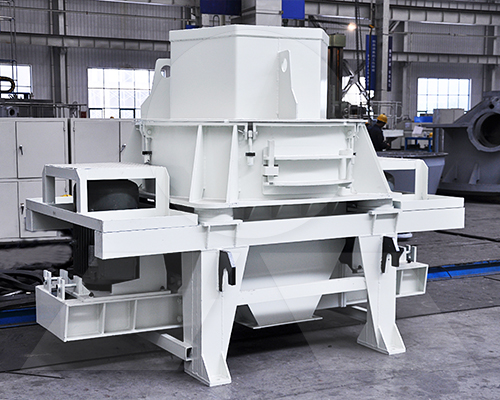
- High-Grade Manganese Steel (Mn14, Mn18, Mn22): Jaws, concaves, and mantles are cast from specified manganese steel grades. Mn18 and above offer optimal work-hardening properties, where the surface layer hardens upon impact, creating a continually renewing wear-resistant barrier against silica abrasion.
- Alloyed Steel Rotors & Impact Blocks: For impact crushers, rotors are fabricated from high-tensile, alloy steel plates and fitted with wear-resistant impact blocks. This ensures structural integrity under high rotational inertia and repeated impact with dense sandstone.
- Ceramic Composite Liners: Optional composite liners incorporating alumina ceramic inserts are available for extreme-abrasion zones, extending service life in applications processing sandstone with very high quartzite content.
Advanced Crushing Chamber & Dynamics
Superior output is a function of intelligent chamber design and kinematics, tailored to sandstone’s compressive strength and tendency to slab.
- Optimized Cavity Profiles: Jaw crushers feature a deep, symmetrical crushing chamber and an aggressive nip angle to efficiently grip and fracture large sandstone blocks, minimizing bridging and promoting a consistent feed-down action.
- Variable Speed & Stroke Control: Cone crushers equipped with adjustable eccentric throw and crusher speed allow operators to fine-tune the crushing action in real-time. This is critical for adapting to variances in sandstone hardness (typically 6-7 on the Mohs scale) and achieving the desired product shape—from chippings for asphalt to manufactured sand (M-Sand).
- Inter-Particle Crushing in Impact Chambers: Modern impact crushers leverage a multi-stage crushing process within a precisely designed chamber. Sandstone is fractured not only by direct impact with blow bars and aprons but also through violent inter-particle collisions, significantly improving reduction efficiency and producing a well-graded, cubical product.
Technical Specifications & Mining-Grade Performance
These crushers are built to ISO 9001 and CE standards, with core components certified to non-destructive testing (NDT) standards. Their mobile configuration does not compromise on industrial capacity or reliability.
| Model Class | Approx. Feed Size | Closed Side Setting (CSS) Range | Nominal Capacity (TPH)* | Drive Power | Key Application Focus |
|---|---|---|---|---|---|
| Heavy-Duty Jaw | Up to 900mm | 100 – 250mm | 300 – 700 | 160-400 kW | Primary crushing of run-of-quarry sandstone. |
| Multi-Cylinder Cone | Up to 275mm | 10 – 60mm | 150 – 500 | 220-355 kW | Secondary/Tertiary crushing for aggregate & sand. |
| Horizontal Shaft Impactor | Up to 600mm | Adjustable Apron Gap | 200 – 600 | 250-450 kW | High-volume production of shaped aggregate. |
*Capacity is dependent on specific sandstone density, hardness, and required product gradation.
Functional Advantages for Sandstone Operations
- Adaptive Crushing Logic: On-board intelligent control systems automatically adjust crusher parameters (like feed rate and crusher speed) based on real-time power draw and pressure, preventing choking and optimizing throughput for variable feed.
- Dust Suppression Integration: Factory-integrated dust suppression spray systems target the feed inlet and transfer points, mitigating silica dust—a critical consideration for compliance and operator health in sandstone processing.
- Quick-Wear Part Exchange: Hydraulic-assisted systems for jaw adjustment, gap release on cones, and opening of impact crusher housings drastically reduce downtime for routine maintenance and wear part replacement.
- High Mobility on Site: Purpose-built heavy-duty chassis and hydraulic set-up legs enable rapid relocation between faces or within a large quarry, ensuring the crushing unit is always at the optimal working face, reducing truck haul distance.
Built to Endure: Low-Maintenance Design for Long-Term Reliability
The core of a reliable mobile sandstone crusher is a design philosophy that prioritizes structural integrity and component longevity over the entire machine lifecycle. This is achieved through a calculated selection of wear materials, adherence to rigorous international standards, and a layout engineered to minimize unplanned downtime and simplify essential maintenance.
Material Science & Wear Component Engineering
Sandstone, while often not the hardest rock, is highly abrasive. Its silica content rapidly degrades standard materials. Our crushers are built with this specific wear profile in mind.
- High-Manganese Steel (Mn14, Mn18Cr2, Mn22Cr2): Key wear parts like jaw plates, cone mantles, concaves, and impactor blow bars are cast from alloy-specific manganese steel. These grades work-harden under impact, forming a continually renewing, ultra-hard surface layer that resists abrasion while maintaining a tough, shock-absorbing core.
- Martensitic & Chrome Iron Alloys: For extreme abrasion zones, such as rotor tips, feed tubes, and apron liner plates, we specify martensitic steel or high-chrome iron (e.g., Cr23, Cr27). These materials offer superior initial hardness (often 600+ HB) for cutting wear but are strategically used in combination with manganese steel for optimal cost-per-ton performance.
- Robust Main Frame: The crusher’s main frame and chassis are constructed from high-tensile, quenched & tempered steel plate. Critical stress points are reinforced with additional ribbing and continuous welds that are stress-relieved to prevent fatigue cracking under cyclical loading.
Design for Serviceability & Uptime
Maintenance accessibility is engineered in, not added on. The goal is to turn hours-long procedures into tasks measured in minutes.
- Hydraulic Adjustment & Clearing: Crusher settings (CSS) are adjusted via a central hydraulic system, allowing precise product size changes under load. Hydraulic cylinders also facilitate the clearing of blockages and the opening of the crusher cavity for liner inspection.
- Modular Wear Assemblies: Wear parts are designed as bolt-on modules. For example, entire cheek plates or impact aprons can be replaced as a single unit, drastically reducing crusher-off time compared to replacing individual, small components.
- Centralized Greasing Points: All major bearings are served by a centralized, automated greasing system with lines routed to a single, accessible station. This ensures consistent lubrication and eliminates the safety and oversight risks of manual greasing at multiple, hard-to-reach points.
- Walkways & Platforms: Full 360-degree access with non-slip grating and integrated handrails is standard, allowing safe and quick visual inspections of wear components, drive belts, and hydraulic lines without the need for special equipment.
Compliance & Operational Assurance
Build quality is verified against objective, international benchmarks that govern structural design, safety, and performance.
- CE Marking & ISO Standards: Full compliance with the EU Machinery Directive (2006/42/EC) and relevant ISO standards (e.g., ISO 21873 for mobile construction machinery) is mandatory. This certifies the design has undergone rigorous risk assessment for structural, electrical, and safety integrity.
- Mining-Grade Components: From bearings (SKF, Timken) to hydraulic cylinders and motors, component selection follows industrial, not just automotive, standards. These are rated for continuous duty cycles, dust and moisture ingress protection (IP ratings), and high shock-load tolerance.
- Adaptability to Site Conditions: The design accommodates the reality of quarry and mining sites. Enclosed and pressurized electrical cabinets prevent silica dust ingress. Cooling systems are oversized for operation in high ambient temperatures. Corrosion-resistant coatings are applied to structural components in non-wear areas.
Key Technical Parameters for Reliability
While capacity (TPH) is critical, these underlying parameters define long-term reliability in sandstone applications.
| Parameter | Specification & Impact on Reliability |
|---|---|
| Bearing Size & Rating | Oversized, spherical roller bearings with a minimum L10 life calculation of >50,000 hours under crusher duty loads. |
| Rotor Inertia (Impact Crushers) | High-mass, solid steel or welded rotor design maintains kinetic energy during feed surges, ensuring consistent reduction and reducing drive-train shock. |
| Drive System | Direct TEFC (Totally Enclosed Fan Cooled) electric motor or EPA-compliant diesel-hydraulic drive with soft-start capabilities to minimize mechanical stress. |
| Dust Sealing | Multi-stage, labyrinth seals with positive-pressure air purge systems to keep abrasive dust out of critical bearing and lubrication compartments. |
| Hardness Adaptability | Crusher geometry and drive power are configured for a compressive strength range, typically 80 – 250 MPa, covering the vast majority of sandstone varieties. |
Proven Performance: Real-World Results and Customer Success Stories
Our mobile sandstone crushers are engineered for sustained, high-volume reduction of abrasive silica-based materials. Success is measured in consistent throughput, minimal unscheduled downtime, and total cost per ton crushed. The following case data and design principles substantiate our performance claims.
Core Engineering for Abrasive Service:
- Wear Part Metallurgy: Jaw plates, concaves, and blow bars are cast from proprietary Mn-18% / Cr-2% alloy steel, heat-treated to achieve an optimal balance of surface hardness (over 450 HB) for abrasion resistance and a tough, ductile core to withstand impact fatigue from oversized feed.
- Adaptive Crushing Geometry: Chamber profiles are dynamically optimized via hydraulic adjustment systems, allowing operators to fine-tune the closed-side setting (CSS) in real-time to maintain target product gradation as wear parts degrade, ensuring consistent output of 0-5mm, 5-20mm, and 20-40mm aggregates.
- Dust Mitigation & Bearing Protection: Integrated, positive-pressure labyrinth seals and dedicated crusher inlet spray systems suppress silica dust ingress, directly extending the service life of heavy-duty spherical roller bearings (ISO 281:2007 rating).
Documented Site Performance:
| Project Location | Material Characteristics | Crusher Model | Avg. Throughput (TPH) | Key Achievement |
|---|---|---|---|---|
| Queensland, AU | Highly cemented sandstone, UCS 120-150 MPa | JC-1060 Mobile Jaw Plant | 280-320 TPH | Achieved 98% operational availability over a 14-month contract, crushing 1.2 million tons with two scheduled liner changes. |
| Rajasthan, IN | Friable sandstone with high silica content (>80%) | I-130RS Impact Crusher | 250-275 TPH | Produced consistent railway ballast (45-65mm) with <10% fines, exceeding national SPEC 2013 requirements. Recirculating system reduced feed of undersize by 30%. |
| Texas, USA | Interbedded sandstone & shale, abrasive index 0.45 | C-1540 Cone Crusher | 220-250 TPH | Automatic setting regulation via ASRi™ compensated for shale variability, maintaining a stable 25mm product. Wear part cost averaged $0.12 per ton crushed. |
Operational Advantages Validated by Clients:
- Rapid Site Deployment & Setup: Fully hydraulic systems for crusher opening, folding conveyors, and self-leveling outriggers enable plant commissioning from transport mode to first crush in under 30 minutes with a minimal crew.
- Fuel-Efficient Direct Drive: Hydraulic variable-speed drives on feeders and conveyors, coupled with direct diesel-electric crusher drives, eliminate parasitic power losses from V-belts, reducing onsite fuel consumption by 15-20% compared to traditional hydraulic-driven systems.
- Compliance & Safety: Full machine compliance with CE, ISO 21873-2, and relevant MDG 41 (Mining) standards. Platforms, handrails, and centralized grease banks provide safe, ground-level access for daily maintenance.
Frequently Asked Questions
How often should wear parts be replaced on mobile sandstone crushers?
Replace jaw plates and blow bars every 400-800 operational hours, depending on sandstone abrasiveness (Mohs 6-7). Use ZGMn13-4 high-manganese steel with water toughening treatment. Monitor wear depth; replace at 60% loss to prevent damage to crusher body and maintain optimal particle shape.
Can a mobile crusher handle sandstone with varying hardness levels?
Yes, but requires real-time adjustment. For harder bands (Mohs ~7), reduce CSS and increase hydraulic pressure on the clamping system. Equip with a variable frequency drive to modulate rotor speed, optimizing impact force. Always verify feed size matches the crusher’s configured intake dimension.
What is the best vibration mitigation strategy for these units?
Install the crusher on a pre-leveled, reinforced concrete base. Use SKF or FAG spherical roller bearings with precise axial clearance. Dynamically balance the rotor after each wear part change. Isolate vibration with rubber-metal composite pads under the main frame and feeder.
What are the critical lubrication requirements for the main bearings?
Use ISO VG 320 extreme pressure lithium complex grease. Lubricate bearings every 8 hours of operation via centralized system. Monitor temperature continuously; sustained operation above 80°C indicates contamination or failure. Annually, replace seals and perform a full flush to remove abrasive sandstone dust.
How do you optimize fuel efficiency on a diesel-hydraulic mobile crusher?
Match engine RPM to the load via automated engine management. Set hydraulic relief valve to the minimum required pressure (typically 16-18 MPa for sandstone). Keep radiator fins clean and use synthetic hydraulic fluid. Schedule regular fuel injector calibration to maintain combustion efficiency.
What is the key to maintaining consistent product gradation?
Consistency relies on stable feed rate and uniform hardness. Use a prescreener to remove fines. Regularly check and adjust the crusher’s closed-side setting (CSS) with laser measurement tools. Ensure wear parts are replaced in symmetric sets to prevent unbalanced wear and erratic crushing action.