Table of Contents
- Maximize Open-Pit Productivity with On-Site Crushing Mobility
- Engineered for Extreme Loads: The Structural Integrity of Our Portable Cone Crusher
- Precision Crushing Technology for Consistent Aggregate Quality
- Rapid Deployment and Setup: Minimize Downtime in Open-Pit Operations
- Technical Specifications: Power, Capacity, and Durability Details
- Power Systems & Drive Configuration
- Crushing Capacity & Performance Parameters
- Durability & Material Science
- Proven Reliability: Case Studies and Industry Trust
- Frequently Asked Questions
- What is the typical wear parts replacement cycle for the mantle and concave in abrasive ore?
- How does the crusher adapt to fluctuations in feed material hardness?
- What specific vibration control measures are implemented for portable units?
- What are the critical lubrication requirements for the main shaft bearing in dusty conditions?
- How is tramp metal protection ensured without causing unscheduled downtime?
- Can the plant’s electrical system handle the high inrush current of the cone crusher motor?
In the dynamic world of open-pit mining and large-scale quarrying, operational efficiency and flexibility are paramount. This is where the open-pit portable cone crusher emerges as a transformative solution, redefining on-site material processing. By combining the high-performance crushing action of a robust cone crusher with the inherent mobility of a portable chassis, this equipment eliminates the fixed-plant bottleneck. It can be rapidly deployed directly at the face, slashing costly truck haulage cycles and reducing fuel consumption. This strategic mobility allows operators to follow the resource, processing material where it lies to create a more continuous, streamlined, and cost-effective production flow. For operations demanding both power and agility, the portable cone crusher represents a pivotal investment in modern, lean material handling.
Maximize Open-Pit Productivity with On-Site Crushing Mobility
On-site mobility fundamentally re-engineers the open-pit material handling workflow by eliminating fixed haulage distances to stationary primary crushers. This strategy directly targets cycle time reduction and fuel cost minimization, with the portable cone crusher acting as the pivotal processing node that moves with the mine face. The engineering imperative is to deliver stationary-plant levels of reliability and throughput in a package capable of frequent, rapid relocation under its own power or with minimal auxiliary equipment.
Core Technical Advantages of a Mobile Crushing Circuit:
- Face-Proximate Processing: Reduces haul truck payload cycles by up to 50%, drastically cutting diesel consumption, tire wear, and manpower requirements per ton of material moved. The crusher is brought to the ore, not the ore to the crusher.
- Adaptive Feedstock Management: Modern portable cones are engineered to handle variable feed from direct shovel loading or from a mobile primary unit. Key to this is the crusher’s adjustable stroke and crushing chamber design, which can be configured for different ore hardness profiles (e.g., from abrasive taconite to hard granite) without changing the core mechanical structure.
- Rapid Site Redeployment: Integrated hydraulic systems enable fast set-up and leveling. Key components like feed hoppers, discharge conveyors, and walkways are hydraulically folded, allowing the entire plant to be transport-ready within hours, not days. This facilitates phased pit development and efficient processing of multiple, segregated ore zones.
- In-Pit Flexibility & Contingency: Provides operational resilience. A portable cone can be deployed to create surge capacity, process stockpiled material, or act as a temporary replacement during maintenance of the primary fixed plant, ensuring continuous ore flow to the mill.
Engineering Specifications for Demanding Environments:
The viability of this approach hinges on the crusher’s built-for-purpose durability and performance metrics, which must meet or exceed stationary counterparts.
| Parameter | Specification Range | Engineering Rationale |
|---|---|---|
| Cone Crusher Type | Secondary/Tertiary, Hydraulic Adjustment & Clearing | Enables real-time CSS adjustment for product gradation control and automatic tramp iron release to prevent catastrophic downtime. |
| Frame Construction | High-tensile, welded steel with integrated chassis | Designed for dynamic loading during transport and operation. Eliminates the need for separate structural foundations, providing rigidity and vibration dampening. |
| Liner Material | Premium Manganese Steel (Mn14% to Mn22%) or Martensitic Alloy | Selected based on abrasiveness and impact of the ore. Mn-steel work-hardens under impact; specific alloy grades (e.g., with chromium additives) are specified for highly abrasive applications. |
| Drive System | Direct diesel-electric or full electric with onboard genset | Provides independent power and optimal torque delivery for the crushing chamber. Electric drive options allow for connection to mine grid when positioned for longer-term campaigns. |
| Throughput (TPH) | 150 to 800+ TPH | Capacity is a function of crusher model, closed-side setting (CSS), and chamber geometry. Selection is based on matched loading equipment and downstream processing requirements. |
| Compliance & Control | ISO 21873-2 for mobile crushers, CE marked. PLC with CANBUS automation. | Standards govern structural integrity, safety, and noise. Advanced automation systems monitor load, power draw, and liner wear, optimizing feed rate and preventing choke conditions. |
Critical Selection Criteria for Open-Pit Application:
- Mobility System: Track-mounted units offer superior ground pressure distribution and maneuverability on bench floors. Trailer-mounted designs may be preferable for less frequent moves between distinct pit sectors.
- Feed System Integration: The unit must accommodate a matched mobile primary crusher or direct feed from large hydraulic shovels/loaders (≥10 cu. yd). An integrated prescreen is often specified to bypass fines, increasing effective capacity and reducing wear.
- Dust Suppression & Noise Abatement: Fully enclosed conveyor transfers and integrated spray systems are non-negotiable for environmental compliance and operator safety in an open-pit setting.
- Maintenance Access: Design must prioritize safe, ground-level access to lubrication points, liner change-out systems, and crusher drive components to facilitate routine servicing in field conditions.
Engineered for Extreme Loads: The Structural Integrity of Our Portable Cone Crusher
The portable cone crusher’s structural integrity is non-negotiable in open-pit mining, where equipment must withstand relentless, high-impact loading from abrasive ores. Our design philosophy prioritizes a holistic structural system, where every component from the main frame to the liners is engineered to manage and distribute extreme forces, ensuring operational longevity and minimizing structural fatigue.
Core Structural Design & Materials:
- Unibody Main Frame & Stress-Relieved Fabrication: The core structure is a single-piece, welded main frame constructed from high-tensile, low-alloy steel plate. All major welds are full-penetration and post-weld heat-treated (PWHT) to relieve internal stresses, preventing crack initiation and propagation under cyclic loading.
- Advanced Material Science in Wear Components: Critical wear parts utilize proprietary alloy grades:
- Mantle & Concave: Manufactured from a high-grade austenitic manganese steel (Mn14Cr2/Mn18Cr2) with a refined microstructure for optimal work-hardening. Upon impact, the surface hardness increases from ~220 HB to over 550 HB, creating an ultra-wear-resistant surface that maintains core toughness.
- Countershaft & Eccentric Assembly: The countershaft is forged from high-strength alloy steel (e.g., 4140/4340), offering superior torsional strength. The eccentric is a high-density cast iron assembly, precision-balanced to minimize vibration and radial loads on the main frame.
- Bearing & Hydraulic System Integration: Oversized, case-carburized spherical roller bearings are housed in a rigid, monolithic bearing cartridge. This design isolates crushing forces from the frame and allows for precise, automated setting adjustment via the hydraulic system, which also provides overload protection by instantly releasing the bowl in the event of tramp iron.
Technical Compliance & Validation:
All structural designs are validated via Finite Element Analysis (FEA) against static, dynamic, and fatigue load cases simulating worst-case mining conditions. Fabrication and final assembly adhere to international standards including ISO 9001 for quality management and carry CE marking, confirming compliance with EU safety, health, and environmental protection directives.
Functional Advantages for Open-Pit Mining:
- Sustained High Capacity: The robust structural foundation allows the crusher to consistently operate at its designed TPH capacity without derating for hard rock applications (up to 350 MPa compressive strength).
- Adaptability to Variable Feed: The system’s inherent strength and hydraulic adjustment enable rapid adaptation to changes in ore hardness and feed size distribution without compromising component life.
- Reduced Structural Maintenance: The integrated design and premium materials dramatically reduce the risk of frame fatigue, bearing seat wear, and unplanned downtime associated with structural repairs.
- Enhanced Portability Safety: A structurally sound frame ensures safe lifting, transport, and set-up on uneven mine benches, maintaining alignment and integrity across multiple relocation cycles.
Key Structural & Performance Parameters
| Component | Specification / Material Grade | Primary Function & Benefit |
|---|---|---|
| Main Frame | Fabricated HSLA Steel (e.g., S355J2), PWHT | Absorbs and distributes global crushing forces; provides a stable platform for all sub-assemblies. |
| Mantle/Concave | High-Grade Austenitic Manganese Steel (Mn18Cr2) | Work-hardens under impact for maximum wear life in abrasive crushing chambers. |
| Countershaft | Forged Alloy Steel (AISI 4340), induction hardened | Transmits high torque from the drive system to the eccentric with minimal deflection. |
| Bearing Cartridge | Monolithic Cast Steel Housing with TIN-coated bearings | Centralizes crushing loads, ensures precise shaft alignment, and extends bearing life. |
| Hydraulic Rams | High-yield-strength steel cylinders with hardened piston rods | Provides the force for clamping, adjustment, and overload release (up to design pressure). |
Precision Crushing Technology for Consistent Aggregate Quality
Precision in aggregate production is defined by the consistent gradation and cubicity of the final product, directly impacting the structural integrity of construction projects and the efficiency of downstream processes. For open-pit operations, this precision must be maintained under variable feed conditions and across diverse material hardness scales. Our portable cone crushers are engineered to deliver this consistency through an integration of advanced material science, intelligent control systems, and robust mechanical design.
Core Mechanical & Material Engineering
The foundation of consistent crushing lies in the wear package and chamber geometry. Our crushers utilize a proprietary manganese steel alloy for mantles and concaves, with a carefully balanced composition of manganese, chromium, and molybdenum. This results in a work-hardening structure that achieves a surface hardness of over 550 BHN under operational stress, providing exceptional resistance to abrasion while maintaining core toughness to withstand impact shocks from uncrushable material.
Chamber profiles are not generic; they are optimized for specific applications:
- Aggregate/Quarry Duty: A steeper head angle and coarser cavity for high reduction ratios and superior product shape in mid-hard to hard stone (e.g., granite, basalt).
- Mining Duty: A flatter profile for high-tonnage output of abrasive, hard rock ores (e.g., taconite, copper porphyry), prioritizing throughput while managing wear life.
Intelligent Control & Automation Systems
Consistent quality is impossible without real-time process control. Our integrated automation system, the ACS (Advanced Crushing System), is the operational brain. It continuously monitors and adjusts crusher parameters to maintain a constant, optimal load.
- ASRi™ (Automatic Setting Regulation): The system uses proprietary algorithms to adjust the crusher’s closed-side setting (CSS) in real-time based on main shaft position and pressure, compensating for liner wear and feed variations to hold product specification.
- Load & Feed Control: Integrated with plant SCADA, the ACS modulates feed via upstream equipment to prevent overload (which causes poor shape and downtime) or underload (which reduces throughput and accelerates uneven wear).
- Predictive Analytics: The system tracks power draw, pressure, and temperature trends, providing actionable data for predictive maintenance and wear part scheduling.
Functional Advantages for Open-Pit Precision
- Adaptive Crushing Dynamics: Automatically adjusts stroke, speed, and CSS to handle fluctuations in feed size distribution and hardness without operator intervention.
- Wear-Compensated Consistency: The real-time CSS adjustment ensures the product gradation curve remains within specification throughout the entire liner life cycle, not just when liners are new.
- Rapid Re-Specification Capability: Portable units can be quickly re-tasked between different pits or product stockpiles. Chamber profiles and crusher settings can be changed to produce different spec aggregates (e.g., road base, concrete aggregate, rail ballast) with minimal downtime.
- Integrated Particle Shape Optimization: The combination of multi-layer crushing in the chamber (inter-particle comminution) and precise pressure control promotes the production of well-shaped, cubicle particles with low flakiness index, essential for high-strength concrete and asphalt.
Technical Parameters for Specification
| Parameter | Aggregate/Quarry Focus | Mining/Ore Focus | Notes |
|---|---|---|---|
| Typical Feed Hardness | 150 – 250 MPa (Granite, Basalt) | 200 – 350 MPa (Abrasive Iron Ore, Porphyry) | Measured by Unconfined Compressive Strength (UCS). |
| Max. Recommended Reduction Ratio | 6:1 to 8:1 | 4:1 to 6:1 | Higher ratios in aggregate duty are enabled by chamber design and multi-layer crushing. |
| TPH Range (Portable Config.) | 200 – 800 TPH | 400 – 1,200+ TPH | Capacity is a function of cavity selection, CSS, and material density. |
| Control Standard | ASRi™ with Feed Control | ASRi™ with High-Power Logic | Mining configuration includes enhanced protection for tramp metal and uncrushable events. |
| Liner Material Standard | Premium Mn-Cr-Mo Alloy | Ultra-Premium Mn-Cr-Mo Alloy with Ceramic Inserts (Optional) | Mining alloy variant has enhanced carbide formation for extreme abrasion resistance. |
This engineered approach ensures that every portable cone crusher unit delivers not just mobility, but a fully capable, quality-focused crushing circuit that meets international standards (ISO 21873, CE) for performance and safety, directly at the face. The result is predictable output, optimized operational cost per ton, and aggregate products that consistently meet the most stringent project specifications.
Rapid Deployment and Setup: Minimize Downtime in Open-Pit Operations
Rapid deployment is a critical operational multiplier in open-pit mining, directly translating to higher asset utilization and reduced lost revenue from bench preparation. Modern portable cone crusher systems are engineered as integrated process plants on chassis, designed for relocation within a single shift. The core objective is to transition from transport configuration to full operational status with minimal heavy lift requirements and crew intervention.
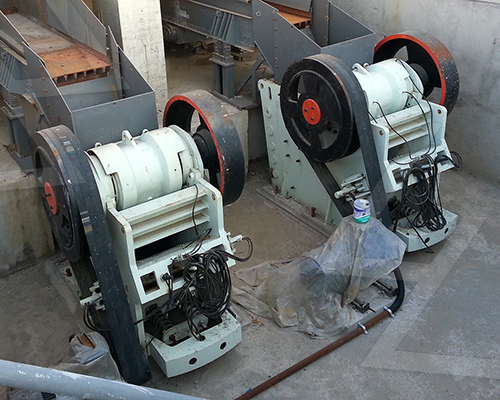
Key Engineering Enablers for Rapid Mobility:
- Unified Tri-Axle Chassis Design: The crusher, feeder, discharge conveyor, and onboard power generation are mounted on a single, high-strength structural steel chassis. This eliminates the need to disconnect and trailer multiple components, allowing the entire system to be permitted as a single load.
- Hydraulic Setting Adjustment (HSA) System: Integral to rapid setup, the HSA allows for CSS (Closed Side Setting) changes and full unblocking of the crushing chamber via push-button controls from a central station. This negates manual shim adjustments, saving hours on recalibration after each move.
- Pre-tensioned Feed Hopper & Conveyor Integration: Feed hoppers and discharge conveyors are hydraulically folded and pinned for travel. They utilize high-tensile locking pins and hydraulic rams for rapid, safe deployment without requiring crane support for these major components.
- Self-Contained Power Pack: Integration of a Tier 4 Final/Stage V compliant diesel generator set, or a high-capacity electrical motor drive, ensures autonomous operation. Quick-disconnect power umbilicals for conveyors and onboard hydraulics simplify connection.
Technical Specifications & Deployment Metrics
The following table outlines typical parameters for a mid-range portable cone crusher system designed for rapid cycle times in hard rock applications.
| Parameter | Specification | Operational Impact |
|---|---|---|
| Typical Relocation Cycle | 4-8 hours (mobilize, set, calibrate) | Enables following the mining face with minimal lag. |
| Crusher Core | High-performance cone (e.g., 300 HP to 500 HP range) with tramp iron relief and automatic reset. | Balanced for high reduction ratios and durability in abrasive feeds. |
| Chassis & Stability | Triple-axle, with hydraulic outriggers or stabilizing jacks. ISO 8528 dynamic stability compliant. | Provides a solid, level base for operation without concrete foundation. |
| Feed Hopper Capacity | 8 – 12 cubic meters | Buffers feed to maintain continuous crushing during loader cycle variations. |
| Discharge Conveyor | Hydraulic fold, 1200mm width, variable speed drive. | Enables precise stockpiling or direct feed to downstream process. |
Material & Design for Sustained Readiness:
Rapid deployment is futile if the system requires immediate maintenance after setup. Reliability is engineered in through material science.
- Cone Liner Metallurgy: Mantle and bowl liners utilize premium Austenitic Manganese Steel (Mn14%, Mn18%, or Mn22%) with controlled micro-alloying (e.g., Chromium, Molybdenum) for work-hardening capabilities exceeding 550 BHN in service. This ensures sustained performance in crushing abrasive ores like granite, basalt, and iron ore between relocations.
- Frame Integrity: The main crusher frame and chassis are constructed from high-yield, low-alloy (HSLA) steel, often meeting ASTM A572 Grade 50 or equivalent. This provides an optimal strength-to-weight ratio for transport legality while resisting fatigue from dynamic loading.
- Bearing & Drive Specification: Oversized spherical roller bearings on the eccentric, coupled with precision-machined alloy steel gears, are selected for L10 life calculations exceeding 50,000 hours under maximum load. This ensures the mechanical heart of the system remains operational across countless deployment cycles.
Operational Protocol for Minimized Downtime:
- Pre-Move Inspection: Verify transport locks, fluid levels, and structural pin security.
- Site Preparation: Requiring only a level, compacted pad. No fixed foundation.
- Deployment Sequence: Lower stabilizers, unfold conveyors via hydraulics, erect feed hopper, tension conveyor belts.
- Commissioning: Initiate power pack, engage crusher lube system circulation to achieve proper temperature and pressure, set CSS via HSA, begin feed.
This engineered approach transforms the portable cone crusher from mobile equipment into a tactical production asset, capable of maintaining continuous ore reduction throughput while keeping pace with the advancing pit.
Technical Specifications: Power, Capacity, and Durability Details
Power Systems & Drive Configuration
Primary drive is provided by a high-torque, Tier 4 Final/Stage V compliant diesel engine, typically in the 400-750 HP (300-560 kW) range, ensuring consistent power in remote locations without grid dependency. This is coupled with a direct hydraulic clutch drive to the crusher, eliminating power-wasting V-belts and providing soft-start capability to reduce mechanical stress. The system features an intelligent, load-sensing hydraulic circuit that automatically adjusts pump flow to match crushing demands, optimizing fuel consumption and component life.
- Functional Advantage: Direct drive transmission maximizes power transfer efficiency (>95%) from engine to mantle, directly translating to higher throughput per gallon of fuel.
- Functional Advantage: Advanced engine management systems provide real-time diagnostics and adaptive performance tuning for varying altitudes and temperatures, ensuring rated power output is maintained.
Crushing Capacity & Performance Parameters
Capacity is defined as metric tonnes per hour (mtph) of processed material and is contingent on crusher cavity selection, eccentric throw, and closed-side setting (CSS). For open-pit applications, portable cone crushers are engineered to handle feed sizes up to 300mm and produce aggregates or ore chips ranging from 25mm to 50mm CSS.
| Model Class | Approx. Power (kW) | Max. Feed Size (mm) | Capacity Range* (mtph) | Recommended Ore Hardness (Wi**) |
|---|---|---|---|---|
| Medium-Duty | 300 – 400 | 200 | 150 – 350 | Up to 18 kWh/t (e.g., Limestone) |
| Heavy-Duty | 400 – 560 | 250 | 350 – 700 | 18 – 22 kWh/t (e.g., Basalt, Iron Ore) |
| Extra Heavy-Duty | 560+ | 300 | 700 – 1000+ | 22+ kWh/t (e.g., Abrasive Taconite) |
Capacity is for material with a bulk density of 1.6 t/m³ at a mid-range CSS. Actual throughput depends on feed gradation, moisture, and crushing chamber geometry.
*Wi: Bond Work Index, a standard measure of ore hardness in comminution.
- Functional Advantage: Patented anti-spin mechanisms prevent uncrushed material from causing costly spin events, protecting the drive train and ensuring consistent product gradation.
- Functional Advantage: Hydraulic adjustment and clearing systems allow for rapid CSS changes and automatic tramp iron release, minimizing downtime during unforeseen feed contamination.
Durability & Material Science
Structural integrity is governed by Finite Element Analysis (FEA)-optimized, high-yield strength steel (minimum 350 MPa) for the chassis and crusher main frame. Critical wear components are defined by their material composition and hardening processes:
- Main Shaft: Forged from high-integrity 34CrNiMo6 or equivalent alloy steel, ultrasonically tested for internal flaws, and heat-treated to a core hardness of 280-320 HB for supreme fatigue resistance.
- Mantle & Concave Liners: Manufactured from modified Austenitic Manganese Steel (AMS) with micro-alloying additions (e.g., Ti, Mo, Cr). Post-casting heat treatment (austenitizing and water quenching) develops a fully austenitic structure with an initial hardness of ~200 HB that work-hardens in service to over 500 HB on the crushing surface, providing exceptional abrasion resistance and impact absorption.
- Spherical Bearing & Eccentric: The bronze eccentric bushing is a leaded tin bronze (SAE 660/ C93200) for embeddability and conformability, while the main shaft bushing is a high-strength aluminum bronze for increased load capacity. The gear and pinion are precision-machined from case-hardened alloy steel (e.g., 20MnCr5) to AGMA 12 quality or better.
All designs comply with ISO 9001 for quality management and carry CE marking, affirming conformity with EU safety, health, and environmental directives. Critical dynamic components are rated for a minimum L10 life of 30,000 hours under designed loading conditions.
Proven Reliability: Case Studies and Industry Trust
The reliability of an openpit portable cone crusher is not a marketing claim but a quantifiable engineering outcome, built upon material integrity, design precision, and field-validated performance. Trust is earned through documented operation under the most punishing conditions, where component failure equates to significant production loss.
Engineering Foundations of Reliability
- Cone Liner & Mantle Material Science: The primary wear components utilize proprietary manganese steel (Mn18Cr2, Mn22Cr2) alloys. The high manganese content provides work-hardening capability, where impact from ore increases surface hardness from ~220 HB to over 500 HB, creating a wear-resistant shell while maintaining a tough, shock-absorbing core. Chromium additions enhance yield strength and resist deformation under high compressive loads.
- Bearing & Drive System Integrity: The crusher’s heart is its oversized spherical roller bearing, designed for combined radial and axial loads exceeding 2.5 million pounds. It operates within a pressurized lubrication system (ISO 4406:2021 cleanliness standards) with continuous filtration and temperature monitoring, ensuring an oil film is maintained even during startup under load.
- Structural Dynamics & Frame Design: The fabricated steel main frame employs Finite Element Analysis (FEA)-optimized ribbing and high-strength, low-alloy (HSLA) steel plates. This design minimizes harmonic vibration and frame deflection during crushing, protecting bearings and ensuring precise liner alignment for consistent product gradation.
Documented Performance: Mining-Specific Case Studies
| Project Location | Ore Type / Hardness (UCS) | Crusher Model / Configuration | Key Metric (Annual Availability) | Operational Note |
|---|---|---|---|---|
| Copper Mine, Chile | Porphyry Copper / 180-220 MPa | 400 HP Portable Plant, Closed-Side Setting (CSS): 38mm | 96.7% over 8,400 hours | Achieved target -50mm product at 550-600 TPH. Liner life averaged 1.2 million tonnes between changes. |
| Iron Ore Operation, Australia | Banded Iron Formation (BIF) / 250-300 MPa | 500 HP Track-Mounted, CSS: 32mm | 95.1% over 7,200 hours | Adapted to highly abrasive, high-density ore (4.8 t/m³). Utilized ultra-fine crushing chamber profile for pellet feed. |
| Aggregate Quarry, Canada | Granitic Gneiss / 250+ MPa | 300 HP Wheeled Portable, CSS: 25mm | 98.2% over 6,000 hours | Operates in -30°C to +35°C ambient range. Hydraulic system heaters and synthetic cold-weather lubricants standard. |
Industry Trust Through Certification & Protocol
Reliability is verified through independent certification. Compliance with ISO 21873-2:2019 (Building construction machinery and equipment – Mobile crushers – Part 2: Safety requirements) and the CE Marking directive (2006/42/EC) provides a baseline. Leading OEMs subject major castings and forgings to non-destructive testing (NDT) per ASTM E709 (magnetic particle) and ASTM E114 (ultrasonic) standards. Final assembly undergoes a 72-hour factory acceptance test (FAT) under simulated full-load conditions, recording vibration spectra, thermal profiles, and hydraulic stability.
Functional Advantages Derived from This Foundation
- Reduced Unscheduled Downtime: The systemic focus on component survivability directly increases mean time between failures (MTBF). The case studies above demonstrate availability consistently above 95%, a critical metric for continuous mining operations.
- Predictable Maintenance Scheduling: Advanced wear monitoring systems (liner position sensors, bearing temperature telemetry) enable condition-based maintenance. This allows for parts replacement during planned shutdowns, not during peak production.
- Adaptability Without Compromise: True reliability includes the ability to maintain performance across variable feed. Automated control systems (like ASRi) adjust the crusher in real-time to ore hardness and feed grade changes, protecting the machine from tramp metal and ensuring consistent throughput (TPH) and product shape.
- Total Cost of Ownership (TCO): The initial capital expenditure is justified over the lifecycle. Proven reliability translates to lower cost per tonne through extended liner life, reduced downtime labor, and maximized asset utilization across multiple pit locations or contract sites.
Frequently Asked Questions
What is the typical wear parts replacement cycle for the mantle and concave in abrasive ore?
For highly abrasive ore (Mohs 7+), high-manganese steel mantles (e.g., ASTM A128 Grade B3) last 80-120k tons. Monitor wear profiles weekly. Use hard-facing weld overlays on critical zones to extend life by 30%. Cycle time is dictated by CSS and throughput; a 5mm increase in liner wear can reduce output by 10%.
How does the crusher adapt to fluctuations in feed material hardness?
Utilize the hydraulic adjustment system to dynamically modify the Closed Side Setting (CSS). For harder ore (Mohs >6), reduce CSS and increase hydraulic pressure to 180-220 bar to maintain crushing force. Concurrently, reduce feed rate to prevent overloading and excessive vibration, ensuring consistent product gradation.
What specific vibration control measures are implemented for portable units?
The base frame integrates high-density rubber shear mounts and tuned mass dampers. Spherical roller bearings (e.g., SKF Explorer series) are pre-loaded to specified axial clearance. Real-time vibration sensors on the main shaft trigger automatic feed cutoff if amplitudes exceed 4mm/s, preventing catastrophic structural fatigue.
What are the critical lubrication requirements for the main shaft bearing in dusty conditions?
Use an automated, closed-loop grease system with lithium complex EP2 grease. Interval injections are pressure-controlled to 120 bar, ensuring purging of contaminants. Bearing labyrinths are paired with positive-pressure air seals. Daily checks of grease purge at the seal are mandatory to prevent ingress of silica dust.
How is tramp metal protection ensured without causing unscheduled downtime?
An advanced metal detection system on the feed conveyor is interlocked with the main hydraulic system. Upon detection, the hydraulic clearing circuit activates in <3 seconds, opening the CSS to 150mm. The system uses non-ferrous detection for bronze/brassy components, protecting the mantle and bowl from irreparable damage.
Can the plant’s electrical system handle the high inrush current of the cone crusher motor?
Yes, with a correctly sized soft starter or VFD. The system must account for a locked-rotor current 6x the FLA. Ensure site generators or transformers have 30% spare capacity. The control panel includes under-voltage protection and phase monitoring to prevent motor damage from unstable grid power.