Table of Contents
- Maximizing Gold Recovery in South Africa’s Challenging Terrains
- Engineered for Extreme Loads: The Structural Integrity of Our Mining Equipment
- Optimizing Operational Efficiency with Advanced Processing Technology
- Technical Specifications: Precision Engineering for High-Yield Gold Extraction
- Proven Performance: Case Studies from South African Gold Mines
- Comprehensive Support and Maintenance for Uninterrupted Mining Operations
- Frequently Asked Questions
- What is the optimal replacement cycle for jaw crusher wear parts in South African gold ore?
- How do I adapt equipment for varying ore hardness within a single mine?
- What are best practices for vibration control on large ball mills?
- Which lubrication specifications are critical for high-load, dusty gold mining environments?
- How can I optimize slurry pump wear life in abrasive gold tailings?
- What hydraulic system adjustments prevent overheating in continuous miners?
Beneath the sun-scorched earth of South Africa lies a legacy forged in gold, a narrative deeply intertwined with the evolution of mining technology. For over a century, the quest for this precious metal has driven innovation, transforming rudimentary tools into sophisticated, high-capacity machinery that defines modern extraction. Today, the industry relies on a formidable arsenal of equipment, from massive haul trucks and powerful drill rigs that conquer deep-level ore bodies, to advanced processing plants employing cyanidation and carbon-in-pulp recovery. This specialized machinery is not merely about moving earth; it is engineered for the unique challenges of South Africa’s deep and often geologically complex mines, prioritizing safety, efficiency, and environmental stewardship. Understanding this equipment is to understand the very engine of a sector that remains a cornerstone of the national economy and a testament to engineering prowess.
Maximizing Gold Recovery in South Africa’s Challenging Terrains
South Africa’s gold-bearing conglomerates, particularly the hard, abrasive ores of the Witwatersrand Basin, present a unique set of challenges: extreme abrasiveness, variability in gold particle size and liberation, and often complex mineralogy. Maximizing recovery in these terrains is not a matter of generic equipment but of engineered solutions built from the ground up for material integrity, process efficiency, and operational resilience. Success hinges on selecting equipment with specific technical attributes designed to withstand the environment and optimize the liberation and concentration of gold.
Core Equipment Considerations for Hard Rock & Deep-Level Operations
The primary technical focus must be on wear resistance, throughput stability, and recovery efficiency across the comminution and concentration circuits.
-
Primary Crushing & Grizzly Feeders: For run-of-mine ore with high compressive strength (>250 MPa).
- Material Science: Heavy-duty grizzlies and jaw crusher jaws fabricated from air-hardening manganese steel (Mn14% to 22%) are non-negotiable. These alloys work-harden under impact, increasing surface hardness in service.
- Functional Advantage: Exceptional shock absorption and sustained wear life in the face of large, uncrushable material, minimizing downtime for liner replacement in primary stations.
-
Grinding Mills (SAG, Ball, Vertical): The most critical and energy-intensive stage for gold liberation.
- Material Science: Mill liners require a graded approach. High-carbon steel or chrome-molybdenum alloys for impact resistance in feed heads, transitioning to high-chrome white iron (HCWI) with 25-30% Cr for abrasion-dominated zones. Forged grinding media should meet ISO 9001 standards for consistency, with alloy composition tailored to ore hardness.
- Technical Standard: Mill design and fabrication should adhere to ISO 13533 (Petroleum and natural gas industries—Drilling and production equipment) or equivalent heavy machinery standards, ensuring structural integrity under cyclical loading.
- Functional Advantage: Optimized liner profiles and material grades reduce specific energy consumption (kWh/t), maintain grinding efficiency over longer campaigns, and prevent premature failure. This directly influences grind size and subsequent recovery rates.
-
Slurry Handling & Pumping (Critical for UG Operations):
- Material Science: Pump casings, impellers, and pipeline elbows lined with natural rubber, polyurethane (PU), or ceramic alumina based on slurry pH, particle size, and solids percentage. ASTM A532 Class III Type A (high-chrome iron) is standard for severe abrasion.
- USP: Pumps must be specified with clear water curves and slurry deration factors accurately calculated for the specific gravity and particle size distribution of the ore. Sealing systems must be designed for both high pressure and abrasive environments.
Concentration & Recovery: Adapting to South African Ore Characteristics
Gold recovery circuits must be selected based on gold grain size, association with other minerals (e.g., pyrite), and the presence of ultrafine (“preg-robbing”) carbon.
| Concentration Method | Optimal Gold Particle Size Range | Key Technical Parameters for SA Ores | Primary Equipment USP |
|---|---|---|---|
| Gravity Concentration | Coarse to medium (>50 µm) | High-density feed capability (e.g., from cyclone underflow); ability to handle high pulp densities. | Batch/Continuous Centrifugal Concentrators: High-G forces (up to 200G) for recovering fine gold from grinding circuits, improving overall recovery and reducing downstream load. |
| Flotation | Medium to fine (10-150 µm) | Reagent regime tailored for refractory gold in pyrite; cell design for optimal retention time and air dispersion. | Forced-Air or Self-Aspirating Mechanical Cells: Robust rotor-stator assemblies with wear-resistant alloys; modular launder design for circuit flexibility. |
| Intensive Cyanidation (CIP/CIL) | Fine to ultrafine (<20 µm) | Agitation efficiency for high solids content; carbon transfer systems designed for minimal attrition. | High-Slip Impellers in Leach Tanks: Ensure uniform suspension and oxygen transfer; ISO 9001 certified activated carbon with tailored pore structure for Au(CN)₂⁻ adsorption. |
Engineering for Reliability and Throughput
- Structural Design: All static structures (feed chutes, conveyor supports, mill foundations) must be designed for dynamic loads exceeding 1.5x operational weight, accounting for both impact forces and seismic activity in mining regions.
- Automation & Control: Integration of PLC-based control systems with real-time sensors (for density, particle size, pH, and pressure) is essential for maintaining optimal circuit stability. This allows for adaptive control in response to ore variability, protecting recovery margins.
- Modular & Scalable Designs: For remote or constrained sites, containerized or skid-mounted processing modules fabricated to CE or SANS (South African National Standard) specifications ensure rapid deployment and compliance, while maintaining design integrity.
Ultimately, maximizing recovery in this context is a systems engineering challenge. It requires specifying equipment where every component—from the metallurgy of a liner to the control logic of a pump—is selected and integrated to combat the specific abrasion, pressure, and variability of South Africa’s goldfields. The goal is not just mechanical operation, but the sustained, efficient liberation and capture of value.
Engineered for Extreme Loads: The Structural Integrity of Our Mining Equipment
The unforgiving nature of South African gold mining—from the abrasive Witwatersrand conglomerate to immense depths and continuous operation—demands equipment whose structural integrity is non-negotiable. Our engineering philosophy is built on a foundation of advanced material science and rigorous validation, ensuring every component is architected to withstand extreme static, dynamic, and fatigue loads over its operational lifespan.
Core Material & Fabrication Philosophy
Structural resilience begins at the molecular level. Critical load-bearing frames, chassis, and impact zones are fabricated from high-grade, low-alloy steels with specified yield strengths exceeding 355 MPa. For components subject to severe abrasion and impact, such as liner plates, chutes, and crusher jaws, we utilize quenched and tempered Manganese Steel (Hadfield Steel – 11-14% Mn) and proprietary chromium carbide overlay steels. These materials are selected for their unique work-hardening properties and exceptional resistance to gouging abrasion, a primary wear mechanism in hard rock gold mining.
All welding procedures are certified to ISO 3834 and EN 15085 standards, with welders qualified for specific material grades and joint configurations. Post-weld heat treatment (PWHT) is applied to critical welds to relieve residual stresses and restore the material’s microstructure, eliminating potential points of failure.
Validated Through Analysis & Testing
Design integrity is proven before fabrication begins. We employ Finite Element Analysis (FEA) to simulate worst-case operational loads, including shock loads from tramp metal and asymmetric loading scenarios. This digital validation is complemented by physical testing:
- Non-Destructive Testing (NDT): 100% of critical welds undergo ultrasonic (UT) or radiographic (RT) inspection.
- Fatigue Analysis: Components subject to cyclic loading are designed with an infinite life criterion, considering the South African mining cycle of 24/7 operation.
Functional Advantages of the Design
- Optimized Stress Distribution: Frames are designed with continuous load paths, eliminating stress concentrators at sharp corners or sudden section changes.
- Modular, Field-Replaceable Sections: High-wear structural modules can be replaced without compromising the primary frame, drastically reducing downtime and lifecycle cost.
- Corrosion Mitigation: All structural steel is shot-blasted and coated with a multi-layer, high-build epoxy system resistant to chemical attack from mine water and atmospheric conditions.
- Adaptive Capacity: Structures are engineered with inherent design margins to allow for future upgrades in motor power or throughput (TPH) without requiring a full chassis replacement.
Key Structural Parameters by Equipment Class
| Equipment Class | Primary Frame Steel Grade (Typical) | Key Structural Design Focus | Designed Maximum Operational Load (Factor of Safety) |
|---|---|---|---|
| Primary Jaw/Gyratory Crushers | S355J2 / ASTM A572 Gr. 50 | Shock load absorption from uncrushed ore & tramp metal. | 2.5x rated dynamic load |
| Ball/Rod Mills | S275JR / S355J0 | Torsional rigidity & fatigue resistance from rotational forces. | 3.0x full charge mass + media |
| Heavy-Duty Feeders & Conveyors | S355J2 | Resistance to constant vibration & point-loaded impacts. | 2.0x maximum material surge load |
| Process Plant Support Structures | S235JR / S355J0 | Long-span stability & compliance with SANS 10160 loading codes. | 1.8x combined dead, live, and seismic load |
This meticulous approach to structural engineering ensures our equipment provides the ultimate safeguard for your operation: relentless availability. It is the bedrock upon which profitable tonnage, especially in the deep-level and high-abrasion contexts of South Africa, is consistently achieved.
Optimizing Operational Efficiency with Advanced Processing Technology
Operational efficiency in gold processing is fundamentally governed by the interplay between material integrity, throughput design, and process control. Modern South African operations, facing complex ore bodies with variable hardness and declining grades, require equipment engineered to maximize availability and minimize specific energy consumption per ton milled. This is achieved not through incremental upgrades, but through a systemic integration of advanced materials, precision engineering, and intelligent automation.
The core of this optimization lies in the application of specialized materials to critical wear components. The selection is dictated by the specific comminution or separation duty.
- Primary Crushing & High-Impact Zones: Austenitic Manganese Steel (Mn14%, Mn18%, Mn22%) remains the standard for jaw crusher liners and cone crusher mantles/concaves in primary and secondary stages. Its unique work-hardening capability, where surface hardness increases from ~220HB to over 550HB under impact, provides exceptional resistance to the high-stress grinding prevalent in South Africa’s hard rock mines (e.g., Witwatersrand Basin ore).
- Tertiary/Fine Grinding & Abrasive Slurries: For ball/SAG mill liners, hydrocyclones, and pump volutes subject to sustained abrasion, chromium-rich alloy white irons (e.g., High-Chrome Iron with 15-27% Cr) offer superior performance. Their microstructure of hard chromium carbides embedded in a martensitic matrix provides a Vickers hardness exceeding 600 HV, drastically reducing wear rates in fine grinding circuits.
- Structural & Load-Bearing Fabrications: Mainframes, chassis, and trommel supports utilize high-tensile, abrasion-resistant steel plates (e.g., AR400, AR500) to withstand dynamic loads and incidental abrasion without compromising structural integrity over a 20+ year lifecycle.
Beyond materials, efficiency is engineered into the equipment’s core geometry and drive systems. High-precision, balanced rotor designs in vertical shaft impactors (VSIs) for tertiary crushing ensure optimal particle-on-particle breakage, yielding a more cubical product that enhances downstream grinding efficiency. Variable Frequency Drives (VFDs) on conveyors, pumps, and mills allow for soft-start capability, reducing mechanical stress and electrical demand charges, while enabling real-time speed adjustment to match feed variations.
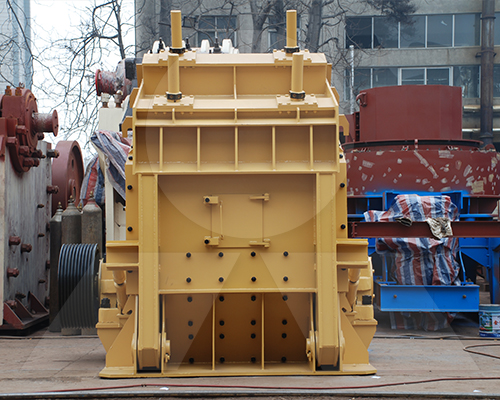
Intelligent process control systems are the force multiplier, transforming robust mechanical platforms into adaptive processing plants. Sensor networks monitoring bearing temperature, vibration, power draw, and ore density feed data into a centralized SCADA (Supervisory Control and Data Acquisition) system. Advanced algorithms can then automate adjustments, such as regulating feed rates to maintain optimal crusher cavity levels or adjusting mill water addition to achieve target slurry density.
Functional Advantages of an Integrated Technology Approach:
- Increased Throughput (TPH): Reduced downtime for liner changes and maintenance, coupled with optimized process parameters, directly increases annualized tonnage.
- Enhanced Recovery: Consistent particle size distribution from advanced comminution circuits and stable slurry conditions in separation units (like flotation or gravity concentrators) improve liberation and recovery rates.
- Predictive Maintenance: Vibration and thermal analytics allow for component replacement during planned shutdowns, preventing catastrophic failures and unplanned stoppages.
- Reduced Total Operating Cost: Lower specific wear rates decrease consumables cost per ton, while energy-efficient drives and optimized processes cut power consumption, the single largest operational expense.
For critical sizing and selection, the following parameters must be reconciled with the mine’s ore characteristics and plant design capacity:
| Equipment Class | Key Efficiency Parameter | Typical Range for SA Hard Rock Ore | Impact on Operational Efficiency |
|---|---|---|---|
| Primary Jaw Crusher | Closed Side Setting (CSS) | 150 – 250 mm | Defines top plant feed size and primary throughput bottleneck. |
| Secondary Cone Crusher | Stroke & Eccentric Speed | Varies by cavity design | Determines product shape, reduction ratio, and power efficiency. |
| High-Pressure Grinding Rolls (HPGR) | Specific Pressing Force | 3.5 – 5.0 N/mm² | Key for energy-efficient comminution, generating micro-cracks for downstream liberation. |
| SAG/Ball Mill | Specific Energy (kWh/t) | 12 – 25 kWh/t (varies by ore) | Direct driver of comminution circuit energy costs; optimized by liner design and ball charge. |
| Centrifugal Concentrator | G-Force & Fluidization Water | 60 – 200 G | Critical for fine gold recovery from heavy mineral concentrates; must be tunable to feed grade. |
Ultimately, optimizing efficiency is a continuous engineering discipline. It mandates selecting equipment manufactured to international standards (ISO 9001, CE) for quality assurance, but more importantly, designed with intrinsic adaptability to the specific abrasion index, work index, and mineralogy of the deposit. The goal is a synchronized circuit where advanced technology delivers predictable, lower-cost ounces.
Technical Specifications: Precision Engineering for High-Yield Gold Extraction
Precision engineering in gold mining equipment is defined by the rigorous application of material science, adherence to international standards, and design optimization for the specific challenges of South African ore bodies. The primary objective is to maximize recovery rates while ensuring operational durability and cost-efficiency over the lifecycle of the equipment.
Core Material Specifications & Construction
- Wear Components (Jaws, Concaves, Impactor Bars): Fabricated from modified high-grade manganese steel (Mn14% to 22%) with trace elements like Chromium and Molybdenum. This ensures optimal work-hardening under impact, creating a continually hardening surface that resists the extreme abrasion of quartz-rich gold ore while maintaining a tough, shock-absorbing core.
- Structural Frames and Chassis: Utilize high-tensile, low-alloy steel (e.g., ASTM A572 Grade 50 or equivalent) for critical load-bearing sections. This provides an exceptional strength-to-weight ratio, resisting fatigue from constant vibration and dynamic loading in pit or plant environments.
- Slurry Handling Components (Pump Casings, Impellers, Pipelines): Employ abrasion-resistant alloys (ARA) or polyurethane linings with a minimum hardness of 55-60 HRC. This is critical for managing the highly erosive nature of cyclone feed and CIP/CIL circuit slurries, directly reducing maintenance downtime and metal contamination.
Compliance & Design Standards
All equipment must be engineered and manufactured to relevant international standards, which serve as a baseline for safety, interoperability, and performance predictability.
- Structural Integrity: ISO 8524 (Continuous handling equipment), ISO 13333 (Design of mine winders).
- Safety & Electrical: IEC/EN 60204 (Safety of machinery), ATEX directives for equipment operating in potentially explosive atmospheres (e.g., milling areas).
- Quality Management: CE Marking (where applicable for export/import) and ISO 9001-certified manufacturing processes are non-negotiable for ensuring component traceability and consistent quality.
Mining-Specific Functional Advantages
- Ore Hardness & Feed Size Adaptability: Crushers and mills are configured with variable speed drives and hydraulic adjustment systems to dynamically respond to changes in ore competency (e.g., from soft weathered ore to hard conglomerate “reef”) without compromising throughput or product size distribution.
- High-Capacity Throughput with Precision Recovery: Equipment is sized and sequenced for optimal Tons Per Hour (TPH) flow, with design focus on minimizing “dead zones” where gold-bearing material can settle. Gravity concentrators (e.g., centrifugal concentrators) feature precise fluidized bed control for maximum free gold capture ahead of leaching circuits.
- Modularity & In-Situ Maintenance: Key assemblies are designed as modular units (e.g., crusher cartridges, entire pump wet-ends) to facilitate rapid replacement. This is engineered to drastically reduce Mean Time To Repair (MTTR) in remote locations, a critical factor for overall plant availability.
- Process Integration & Control Readiness: Equipment is designed with integrated sensor mounts and actuator interfaces for seamless integration into Plant Process Control (PPC) and SCADA systems. This allows for real-time adjustment of parameters like crusher gap, mill load, and slurry density for optimized recovery.
Key Equipment Parameter Benchmarks
| Equipment Category | Critical Parameter | Typical Range for SA Operations | Engineering Rationale |
|---|---|---|---|
| Primary Jaw Crusher | Feed Opening / Capacity | 1200mm x 1500mm / 400-800 TPH | To handle run-of-mine ore with large top-size, ensuring consistent feed to downstream milling. |
| Ball / SAG Mill | Power / Liner Material | 3,000 – 10,000 kW / High-Cr Steel or Rubber | Power dictates grind size and throughput. Liner selection balances wear life (high-Cr) against impact noise and corrosion (rubber). |
| CIL/CIP Agitation Tanks | Tank Diameter / Impeller Tip Speed | Ø10m – Ø15m / 5-7 m/s | Ensures complete suspension of solids and optimal cyanide-oxygen contact for leaching efficiency. |
| Slurry Pumps (Vertical Sump) | Head / Lining Material | Up to 60m / ARA or Polyurethane | Provides necessary lift from deep sumps; abrasion-resistant materials are essential for 24/7 operation. |
| Centrifugal Concentrator | Bowl Speed / Fluidization Water | 40-80 Hz / 5-15 L/min | Creates enhanced gravitational force (G’s) for fine gold recovery; precise water control is key to bed stability. |
Proven Performance: Case Studies from South African Gold Mines
Case Study 1: Deep-Level Hard Rock Application, Witwatersrand Basin
A major operation faced declining throughput in its primary crushing circuit due to extreme abrasion from quartzitic conglomerate ore (UCS 250-300 MPa). The existing jaw crusher liners were failing prematurely at 120,000 tons, causing unscheduled downtime.
- Solution: Deployment of a primary jaw crusher equipped with liners fabricated from a proprietary air-hardening manganese steel (ASTM A128 Gr E-2, modified). The design incorporated a Z-shaped profile to increase material-on-material wear and a bolted, modular liner system for safer, faster replacement.
- Technical Outcome: Liner life increased to 180,000 tons, a 50% improvement. Crusher availability rose by 8%, and the specific wear rate (kg/ton crushed) decreased by 35%. The equipment’s ISO 21873-2:2009 compliance for mobile crushers ensured structural integrity under dynamic loading at depth.
Case Study 2: High-Capacity CIP Plant Screening & Classification
A processing plant upgrading its carbon-in-pulp (CIP) circuit required a scalping screen to handle 720 TPH of milled product (-10mm) ahead of leaching tanks. The critical need was reliability and precise separation in a highly corrosive, alkaline slurry environment.
- Solution: Installation of a heavy-duty, double-deck vibrating screen featuring:
- Polyurethane modular screen panels (ISO 9001-certified manufacturing) with a unique tensioning system to eliminate premature panel movement and blinding.
- High-stress coil spring assemblies with corrosion-resistant coatings, designed for a minimum L10 life of 30,000 hours under continuous operation.
- Dust-sealed, high-temperature bearings (rated per ISO 281) with integrated condition monitoring ports.
- Operational Result: Achieved consistent 99.2% screening efficiency on the primary deck. The polyurethane panels demonstrated a 40% longer operational life compared to traditional rubber panels, reducing annual spare parts inventory costs by an estimated 18%.
Case Study 3: Underground Material Handling in Narrow Reef Mining
A deep-level mine with narrow tabular ore bodies needed to optimize stope loading and primary haulage. The challenge was equipment maneuverability in confined spaces (2.5m stope height) while maintaining high load capacity and component durability against impact from large, broken rock.
- Solution: Implementation of a fleet of low-profile, articulated dump trucks (LHDs) specifically engineered for South African conditions.
- Key Engineering Specifications & Performance:
| Component/System | Specification | Mining-Specific Advantage |
|---|---|---|
| Bucket & Wear Parts | Fabricated from HB500 Brinell hardness, low-alloy abrasion-resistant steel with ceramic wear liners in high-impact zones. | Withstands direct loading from rock falls and continuous scraping against hanging wall. Reduces structural fatigue cracking. |
| Hydraulic System | ISO 4406:2021 cleanliness standard (18/16/13), with oil-cooling capacity rated for ambient rock temperatures of 45°C. | Maintains optimal performance and component life in high-heat working faces, minimizing hydraulic failure downtime. |
| Powertrain | Failsafe secondary braking system certified per CAN/CSA-M424.3-14 (Braking Performance – Rubber-Tired Underground Machines). | Ensures operator safety on steep, wet declines (exceeding 1:4 gradients) common in deep-level access ramps. |
| Operational Data | Average payload: 18 tons | Achieved a 22% increase in tons hauled per shift compared to the previous fleet, directly increasing stope advance rates. |
Summary of Proven Technical Advantages:
- Material Science Integration: Selection of grade-specific alloys (Mn-steel for impact, AR plate for pure abrasion, polyurethane for corrosion/wear) is not generic but is based on precise ore body geomechanics.
- Standards-Based Design: Equipment engineered to ISO, CE, and SANS standards provides a verifiable baseline for safety, interoperability, and performance predictability in the most demanding environments.
- Capacity & Adaptability: Proven throughput (TPH) and availability metrics are achieved through over-engineered core components (bearings, hydraulics, structures) that account for South Africa’s unique combination of hard rock, depth, and temperature.
Comprehensive Support and Maintenance for Uninterrupted Mining Operations
The operational integrity of gold mining equipment is non-negotiable. In the demanding South African context—characterized by deep-level hard rock, abrasive ore bodies, and continuous production pressures—a reactive maintenance strategy is a direct threat to profitability. True operational continuity is engineered through a lifecycle partnership, integrating predictive maintenance protocols, strategic spares management, and deep technical expertise directly into your operational plan.
Core Technical Support Framework
- Predictive Diagnostics & Remote Monitoring: Modern equipment is fitted with integrated sensor suites monitoring vibration, pressure, temperature, and torque. Real-time data analytics shift maintenance from scheduled to condition-based, predicting failures in critical components like crusher bearings or hydraulic systems before they cause unplanned downtime.
- Material Science & Wear Part Optimization: Not all wear parts are equal. We specify and supply components engineered for specific ore characteristics:
- Primary Crusher Jaws & Liners: Fabricated from modified Hadfield Mn-steel (11-14% Manganese) for ultimate work-hardening capability against high-impact loading in ROM ore reduction.
- Mill Liners & Grinding Media: Alloy selection is critical. For SAG/ball mills, we specify high-carbon chrome-molybdenum steel or chrome-white iron liners, balancing exceptional abrasion resistance with necessary impact toughness for optimal grinding efficiency and liner life.
- On-Site Technical Audits & Training: Our field engineers conduct systematic audits of equipment health, alignment, and operational parameters. Concurrent, hands-on training for your maintenance crews ensures correct procedures for wear part replacement, lubrication regimes, and troubleshooting, embedding best practices directly into your team.
Strategic Maintenance & Spares Management
A robust spares strategy is as critical as the machinery itself. It must be tailored to equipment criticality, lead times, and local logistics.
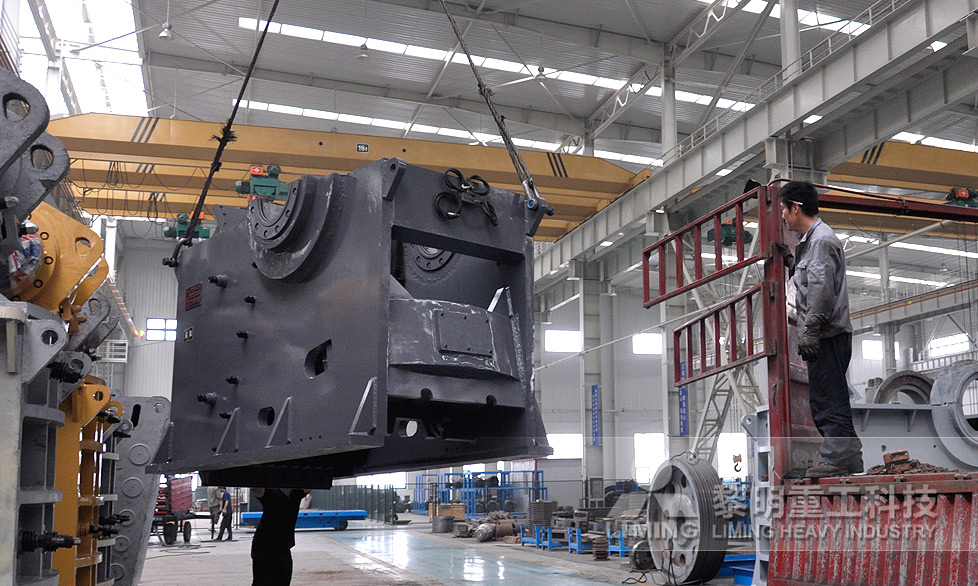
| Component Category | Criticality Tier | Recommended Strategy | Key Technical Considerations |
|---|---|---|---|
| Wear Parts (Liners, Screen Cloths, Pump Impellers) | High | Localized Buffer Stock | Maintain a calculated buffer based on historical wear rates (e.g., mm/tonne processed) and shipment lead times. Material grade must match OEM specification. |
| Critical Rotating Assemblies (Crusher Eccentrics, Pump Shafts, Gear Sets) | Very High | Planned Holding or On-Site | Long-lead, high-cost items. A strategic spare on-site or under a guaranteed consignment stock agreement is often justified by the cost of extended downtime. |
| Hydraulic & Electrical Systems (Valve Banks, PLCs, Drive Motors) | Medium-High | Certified Vendor Partnership | Utilize certified local partners with OEM-approved components and diagnostic tools to ensure system integrity and warranty compliance. |
| Structural & Fabricated Items | Low-Medium | Local Fabrication with OEM Drawings | For non-critical structures, local fabrication using OEM-supplied CAD drawings and specified material grades (e.g., A514 or AR400 steel) can optimize cost and speed. |
Engineering-Led Lifecycle Support
- Performance Optimization: Support extends beyond repair. We analyze throughput (TPH), product size distribution, and power draw to recommend adjustments—such as crusher cavity profiling, screen deck configuration, or cyclone cluster tuning—to maximize recovery and efficiency.
- Rebuild & Refurbishment Programs: For major assets like jaw crushers, cone crushers, and high-pressure grinding rolls, we offer certified rebuild services. This includes ultrasonic crack testing, shaft re-machining to original tolerances, and the integration of latest-generation component upgrades, effectively renewing equipment at a fraction of capital cost.
- Compliance & Documentation: Full traceability for replaced components and adherence to South African Mine Health and Safety Act (MHSA) standards, ISO 9001 quality protocols, and OEM CE-certified repair procedures are documented and provided, ensuring regulatory compliance and asset integrity.
Frequently Asked Questions
What is the optimal replacement cycle for jaw crusher wear parts in South African gold ore?
Replacement depends on ore abrasiveness (often 6-7 Mohs). Monitor jaw plate wear to 20-30% of original thickness. Use ZGMn13-4 high-manganese steel liners, which work-harden under impact. For highly abrasive ore, consider bimetal composite liners to extend cycles to 6-8 months, reducing downtime and total cost per ton.
How do I adapt equipment for varying ore hardness within a single mine?
Implement a modular crusher design with adjustable eccentric throw and hydraulic setting adjustment. For hard ore (Mohs >6), increase hydraulic pressure and reduce closed-side setting. Use onboard hardness sensors to auto-adjust crusher speed and feed rate, optimizing throughput and preventing damage from uncrushable material.
What are best practices for vibration control on large ball mills?
Ensure precise mechanical alignment and use high-stiffness, machined sole plates. Install specialized isolators like GERB vibration control springs. Continuously monitor with wireless accelerometers on bearing housings. Imbalance often originates from uneven wear; implement predictive maintenance by tracking liner profiles and mill charge levels.
Which lubrication specifications are critical for high-load, dusty gold mining environments?
Use synthetic, extreme-pressure (EP) greases with ISO VG 320 viscosity for gearboxes. For bearings (prefer SKF or FAG), specify lithium complex grease with Moly (MoS2) additives. Implement automated, centralized lubrication systems with real-time pressure monitoring to ensure consistent delivery and flush out contaminant ingress.
How can I optimize slurry pump wear life in abrasive gold tailings?
Select high-chrome white iron (27% Cr) impellers and liners with ceramic coatings for critical areas. Optimize pump speed to maintain slurry velocity above settling but below erosive thresholds. Implement condition monitoring via vibration and thermal analysis on bearing frames to schedule replacements predictively, avoiding catastrophic failure.
What hydraulic system adjustments prevent overheating in continuous miners?
Maintain oil temperature below 60°C using high-efficiency air-oil coolers. Adjust system pressure to the minimum required for the cutting head’s current rock hardness. Use anti-wear hydraulic oil (ISO 46) with excellent thermal stability. Regularly clean heat exchangers and monitor fluid contamination to prevent valve spool sticking and efficiency loss.