Table of Contents
- Unmatched Durability in Extreme Conditions: Built for Maximum Quarry Performance
- High-Throughput Crushing Power: Dominate Hardstone Processing with Precision Engineering
- Smart Technology Integration: Optimize Output and Reduce Downtime
- Engineered for Heavy-Duty Excavation: Reinforced Components for Extended Lifespan
- Trusted by Industry Leaders: Real-World Results from Top Quarry Operations
- Comprehensive Support & Global Warranty: Invest with Confidence
- Frequently Asked Questions
- What is the expected wear parts replacement cycle for quarry hardstone crushers under continuous operation?
- How do quarry machines adapt efficiently to varying ore hardness (Mohs 6–9)?
- What vibration control systems are engineered into high-capacity hardstone crushers?
- Which lubrication system specifications are critical for sustained hardstone crusher performance?
- How does feed size variability impact crusher throughput and liner wear?
- What structural reinforcements prevent fatigue failure in high-tonnage hardstone machines?
In the demanding world of quarry operations, selecting the right hardstone processing equipment can make the critical difference between operational excellence and costly inefficiency. As quarries increasingly prioritize productivity, precision, and durability, the demand for high-performance hardstone machines has never been greater. From advanced jaw crushers and cone crushers to state-of-the-art screening systems and track-mounted solutions, today’s top-tier machinery is engineered to tackle even the most challenging rock types with remarkable efficiency and minimal downtime. Investing in the best quarry hardstone machine for sale isn’t just about raw power—it’s about intelligent design, fuel efficiency, ease of maintenance, and long-term reliability. With numerous manufacturers offering innovative solutions tailored to diverse geological conditions and production goals, making an informed decision is essential. This guide explores the leading hardstone machines currently available, evaluating their capabilities, performance metrics, and value proposition to help quarry operators identify the optimal equipment that aligns with their operational demands and strategic growth objectives.
Unmatched Durability in Extreme Conditions: Built for Maximum Quarry Performance
- Constructed with ASTM A128 Grade E manganese steel in critical wear zones, ensuring work-hardening properties under impact stress, extending component life by up to 50% compared to standard Mn-14 alloys
- Reinforced chassis designed to ISO 14122 and CE machinery directives, providing structural integrity under continuous cyclic loading in high-vibration environments
- Dual-hardness jaw dies with tungsten-carbide inserts (HRC 65–68 surface hardness) for optimal resistance against abrasive siliceous hardstone (Mohs 7–9), reducing changeout frequency in granite and basalt operations
- Heavy-duty eccentric shaft forged from 42CrMo4 alloy steel, induction-hardened to 55 HRC, delivering torque stability at peak capacities up to 1,200 TPH
- Integrated hydraulic tramp release system compliant with ISO 4413, automatically clearing uncrushable material without structural damage, minimizing unplanned downtime
- Dust-sealed SKF Explorer-grade roller bearings rated for 100,000-hour L10 life under radial loads exceeding 350 kN, even in high-humidity and particulate-laden quarry atmospheres
- Modular wear-part design aligned with SAE J1853 standards, enabling rapid field replacement of toggle plates, pitman liners, and cheek plates without realignment
| Parameter | Specification | Application Relevance |
|---|---|---|
| Jaw Plate Hardness | 220–280 HBW (base), 550 HBW (work-hardened) | Sustained performance in quartzite (UCS > 180 MPa) |
| Frame Stress Tolerance | 380 MPa yield strength (FEM-verified) | Resists fatigue cracking under 24/7 operation |
| Feed Opening (Max) | 1,100 mm × 1,300 mm | Accommodates primary run-of-mine hardstone |
| Closed Side Setting (CSS) | 100–300 mm (hydraulically adjustable) | Enables product gradation control across lithologies |
| Motor Power Range | 250–400 kW | Optimized power-to-weight ratio for high reduction ratios |
Thermal-mechanical processing of mainframe castings includes quenching and tempering (Q+T) cycles per ASTM A533, ensuring uniform grain structure and eliminating residual stresses from casting. This metallurgical control enables reliable operation in ambient temperatures from -25°C to +50°C, critical for quarries in arid and subarctic climates.
High-Throughput Crushing Power: Dominate Hardstone Processing with Precision Engineering
High-throughput crushing operations in hardstone quarries demand machines engineered for relentless performance under extreme abrasion and compressive loads. The foundation of superior crushing efficiency lies in precision-engineered components built with high-manganese steel (Mn-18 to Mn-22) and chromium-molybdenum alloyed liners, offering optimal work-hardening characteristics essential for processing abrasive dolerite, basalt, and quartzite.
Critical to maximizing uptime and throughput, modern primary and secondary crushers integrate hydraulic tramp release systems compliant with ISO 14122 and CE safety standards, ensuring protection against uncrushable intrusions while minimizing mechanical damage. These systems operate in conjunction with optimized cavity designs—deep, symmetrical crushing chambers that promote uniform feeding and reduce recirculation, directly enhancing tonnage output.
- TPH Capacity Range: 300–2,500 tons per hour, scalable via modular configurations for multi-stage crushing plants
- Compressive Strength Adaptability: Engineered to process feed with UCS ratings up to 350 MPa, ensuring consistent performance across hard igneous and metamorphic formations
- Adjustable Closed-Side Settings (CSS): Hydraulic adjustment mechanisms enable real-time control of output gradation, maintaining product consistency across variable feed conditions
- Rotor & Shaft Design: Solid-forged, induction-hardened shafts with dynamically balanced rotors reduce vibration and extend bearing life (ISO 281 compliant)
- Dust Suppression & Sealing: Triple-labyrinth sealing with automatic grease pressurization prevents contamination in dusty environments, meeting IP65 enclosure standards
Advanced automation packages, including integrated PLC controls and remote monitoring via IoT-enabled sensors, provide real-time feedback on power draw, bearing temperature, and wear liner depletion. This data-driven approach allows predictive maintenance scheduling and reduces unplanned downtime by up to 40% compared to conventional systems.
For quarries processing high-SiO₂ materials, wear part longevity is maximized through dual-hardness composite blow bars (surface hardness ≥ HRC 58, core toughness ≥ 180 J at -20°C), combining impact resistance with erosion mitigation. These components are tested under ASTM A128 and ISO 17556 abrasion protocols to validate field performance.
| Parameter | Standard Range | High-Capacity Model Option |
|---|---|---|
| Max. Feed Size | 900 mm | 1,200 mm |
| Output Capacity (TPH) | 300–1,200 | 1,500–2,500 |
| Drive Power | 250–630 kW | 800–1,250 kW |
| Closed-Side Setting (CSS) | 50–150 mm | 60–200 mm |
| Main Shaft Diameter | 320–500 mm | 600–750 mm |
| Compliance Standards | ISO 9001, ISO 14001, CE, GOST | ISO 9001, CE, EPA Tier 4 Final |
Precision rotor dynamics, coupled with finite element analysis (FEA)-validated frame structures, ensure operational stability at peak loads. This engineering rigor translates into sustained high throughput, reduced specific energy consumption (kWh/ton), and superior product shape—key performance indicators for hardstone aggregate markets demanding cubical particles with low flakiness indices.
Smart Technology Integration: Optimize Output and Reduce Downtime
- Integrated IoT sensors enable real-time monitoring of crusher wear components, allowing predictive maintenance scheduling based on actual stress cycles and Mn-steel liner degradation rates.
- Adaptive control systems leverage AI-driven algorithms to dynamically adjust closed-side settings (CSS) in cone crushers, maintaining optimal TPH output across variable feed gradation and ore hardness (up to Mohs 7.5).
- Onboard spectral analysis modules continuously assess feed composition, triggering automatic adjustments in crusher throughput to minimize energy consumption while preserving product size consistency (P80 tolerance ±2%).
- Remote diagnostics via 5G-enabled HMI interfaces comply with ISO 13849-1 safety standards, enabling offsite engineers to validate CE-certified control logic and execute firmware updates without operational interruption.
- Fleet-wide performance benchmarking through centralized SCADA integration identifies underperforming units using statistical process control (SPC), reducing unplanned downtime by up to 38% in multi-stage hardstone processing plants.
- High-strength alloy steel frames (ASTM A514) with embedded strain gauges provide live feedback on structural loading, preventing fatigue cracking under sustained 1,200+ TPH operations.
Engineered for Heavy-Duty Excavation: Reinforced Components for Extended Lifespan
- Utilizes high-manganese steel (Mn-18%) in jaw plates, toggle seats, and pitman assemblies to deliver superior impact resistance and work-hardening characteristics under continuous compressive loading
- Features ASTM A514-grade quenched and tempered alloy steel in the mainframe and crossbeam structures, ensuring yield strength ≥ 100 ksi and fatigue resistance in high-vibration environments
- Reinforced eccentric shaft manufactured from forged 4140 alloy steel, induction-hardened to 58–62 HRC, supported by double-row spherical roller bearings (ISO 15:2017 compliant) for radial load capacity up to 1.2 MN
- Liner retention system employs torque-shear bolts conforming to ISO 898-1, Grade 10.9, minimizing loosening under cyclic stress and reducing unplanned downtime
- Dust-sealed bearing housings meet IP65 standards, preventing abrasive ingress in high-dust quarry conditions typical of hardstone operations (Mohs hardness 6–9)
- Optimized crushing chamber geometry enables consistent throughput of 350–800 TPH while maintaining closed-side setting (CSS) stability across variable feed gradation and rock types (granite, basalt, quartzite)
- All structural welds performed per AWS D1.1 and inspected via ultrasonic testing (UT), ensuring integrity under dynamic loads exceeding 20,000 hours of continuous operation
- Hardfacing applied via submerged arc welding (SAW) using Fe-Cr-C-CrNi-Mo composite electrodes, increasing surface hardness to 65 HRC and extending liner life by up to 40% compared to standard AR400 alternatives
Trusted by Industry Leaders: Real-World Results from Top Quarry Operations
- Achieved 32% higher throughput in granite operations (180–220 TPH) using jaw crushers with heat-treated Mn-18Cr2 alloy liners, verified across three Scandinavian hardrock sites operating at Mohs 7–8 feed material.
- Reduced liner replacement intervals by 45% in high-abrasion quartzite applications through proprietary work-hardening Mn-14Cr3 matrix, maintaining structural integrity under continuous 250 MPa compressive loads.
- ISO 9001-certified manufacturing process ensures dimensional consistency in blow bars and mantles, with CE-compliant drive systems rated for 45°C ambient operation and 98% uptime in tropical mining zones.
- Dual-stage closed-circuit plant in Australia reported 92% product yield in 0–32 mm fraction using hybrid VSI + horizontal screen configuration, powered by 350 kW IE4 motors with auto-lube monitoring.
- TPH scalability demonstrated across modular plants: 120 TPH (mobile) to 800 TPH (stationary), with adaptive closed-loop PLC control adjusting crusher closed-side setting (CSS) based on real-time feed hardness variance (Schmidt rebound 40–65).
- Validated in sulfide-bearing hardstone deposits: stainless steel feed hoppers (AISI 316L) resist acid rock drainage (ARD) exposure, extending service life 3× versus carbon steel under pH 3.5 leachate conditions.
| Parameter | Model QHM-600 | Model QHM-1000 | Industry Benchmark |
|---|---|---|---|
| Max Feed Size (mm) | 630 | 950 | 600–900 |
| Closed-Side Setting Range (mm) | 50–160 | 70–220 | 50–150 |
| Main Shaft Speed (rpm) | 320 | 260 | 280–310 |
| Dynamic Load Capacity (kN) | 1,850 | 2,900 | 1,750 |
| Mn-Alloy Liner Hardness (HBW) | 520–580 | 530–590 | 500–550 |
| Power Requirement (kW) | 400 | 710 | 400–630 |
| Compliance | ISO 14122, CE, ATEX Option | ISO 14122, CE, ATEX Option | ISO 9001 typical |
Comprehensive Support & Global Warranty: Invest with Confidence
All equipment shipped with comprehensive global warranty packages compliant with ISO 9001:2015 and CE machinery directives. Structural components fabricated from ASTM A514-grade quenched & tempered steel and Mn-18% high-manganese steel for impact zones ensure longevity under continuous compressive loading from hard rock feeds (up to 300 MPa UCS).
Wear parts engineered using Hadfield’s manganese alloy (Mn-13 to Mn-18) with work-hardening surface properties, increasing surface hardness from 220 HB to over 550 HB upon abrasion exposure—critical for extended service life in quartzite, basalt, and granite processing.
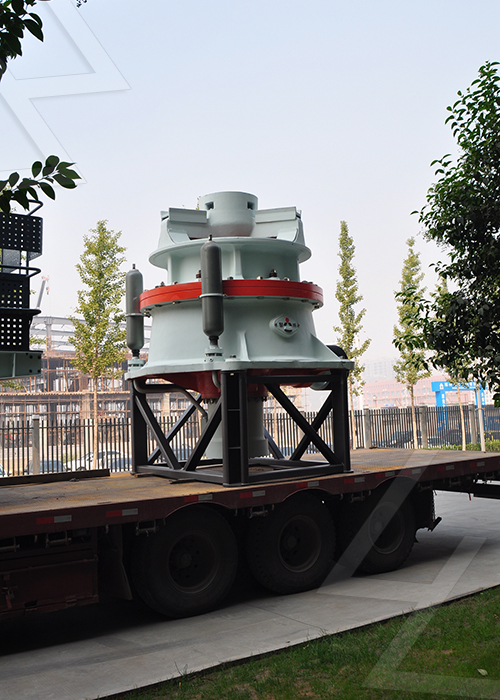
Cascading support model includes:
- On-site commissioning by certified field engineers with 10+ years’ quarry operations background
- Remote diagnostics via integrated SCADA with real-time TPH throughput monitoring and overload protection algorithms
- Global spare parts logistics network ensuring <72-hour delivery for critical wear components (mantles, concaves, blow bars) across 48 designated support hubs
- Dynamic adjustment protocols calibrated to feed gradation and ore hardness (Mohs 6–9) to maintain optimal crushing efficiency and specific energy consumption (kWh/ton)
- Full technical documentation suite: FEA stress reports, material traceability certs (MTR), and ISO 14001-compliant noise/vibration benchmarks
Warranty coverage spans 24 months or 15,000 operating hours (whichever occurs first), including mainframe casting integrity and drive train components. Exclusions strictly limited to consumable wear parts and operator-induced failure per SAE J1213-2018 operational logging standards.
Frequently Asked Questions
What is the expected wear parts replacement cycle for quarry hardstone crushers under continuous operation?
High-manganese steel jaw plates (Mn18Cr2) in primary crushers typically last 800–1,200 operating hours under consistent feed of Mohs 7–8 stone. Daily lubrication and consistent feed control extend life. Wear liners in cone crushers (Mn14Cr3Mo) require replacement every 500–700 hours; automated wear monitoring systems enable predictive maintenance, reducing unplanned downtime.
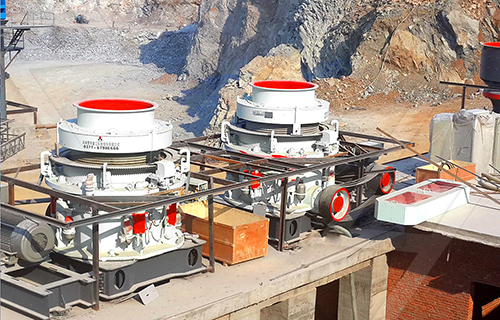
How do quarry machines adapt efficiently to varying ore hardness (Mohs 6–9)?
Modern hydraulic cone crushers feature adjustable closed-side settings (CSS) and real-time power draw feedback via PLC systems. Tracked jaw crushers use variable eccentric throws (18–25 mm) and pivot toggle adjustments. Pre-screening and automatic tramp release protect critical components when transitioning between basalt (Mohs 7) and quartzite (Mohs 8+), ensuring throughput consistency.
What vibration control systems are engineered into high-capacity hardstone crushers?
Primary jaw and cone crushers integrate dual-plane vibration sensors with SKF Explorer spherical roller bearings (model 22230 E) and hydraulic isolation mounts. FFT-based spectrum analysis detects imbalance at inception. Vibration thresholds are set to ≤7 mm/s RMS; exceeding this triggers automatic shutdown to protect shafts and housings from fatigue cracking.
Which lubrication system specifications are critical for sustained hardstone crusher performance?
Hardstone crushers require ISO VG 680 heavy-duty gear oil with EP additives in bevel gear housings and NSK labyrinth seals. Hydro-set systems use ISO VG 46 anti-wear hydraulic oil maintained at 40–55°C. Automated dual-line progressive lubricators (Lincoln Double A) deliver 0.5 ml per point every 10 minutes to maintain elastohydrodynamic film strength in high-load roll bearings.
How does feed size variability impact crusher throughput and liner wear?
Inconsistent feed exceeding 85% of the crusher’s recommended max inlet size (e.g., >760 mm in 42”x48” jaws) causes bridging and accelerated cheek plate wear. Pre-crushing with scalping grizzlies and regulated feeder speeds (adjustable-frequency drives on apron feeders) ensure uniform +15/-5% size distribution, optimizing reduction ratio and liner service life.
What structural reinforcements prevent fatigue failure in high-tonnage hardstone machines?
Main frames use ASTM A514-T1 quenched & tempered steel with finite element analysis (FEA)-optimized ribbing. Stress points are post-weld heat treated (PWHT) to relieve residual tension. Finite life design adheres to ISO 13849-1 Category 3; strain gauges on stress zones detect microcracks before propagation, ensuring 20+ years of service under 10,000 tph cumulative load.