Table of Contents
- Built to Withstand Extreme Loads: High Crushing Strength for Durable Concrete Structures
- Engineered for Superior Performance: How Our Coarse Aggregate Enhances Structural Integrity
- Precision-Tested for Reliability: Measuring Crushing Strength to Meet ASTM and IS Standards
- Trusted in Major Infrastructure Projects: Why Contractors Choose Our High-Strength Aggregate
- Optimize Mix Design with Consistent Aggregate Strength: Reduce Waste, Maximize Longevity
- Frequently Asked Questions
- What impact does coarse aggregate crushing strength have on wear parts replacement cycles in primary jaw crushers?
- How should gyratory crushers be adjusted when processing aggregates near Mohs 8–9 hardness?
- Can standard cone crusher settings handle variable aggregate hardness without increasing vibration risk?
- What lubrication strategy prevents premature bearing failure in impact crushers handling high-crushing-strength aggregates?
- How does coarse aggregate crushing strength affect selection of rotor blow bars in horizontal shaft impactors?
- What role does feed gradation play in managing power draw and motor stress in tertiary crushing stages?
In the realm of civil engineering and construction materials, the crushing strength of coarse aggregate stands as a fundamental indicator of structural integrity and long-term performance. As primary components of concrete and asphalt mixtures, coarse aggregates must withstand substantial compressive forces without disintegrating, ensuring the durability and safety of infrastructure ranging from highways to high-rise buildings. This mechanical property not only reflects the aggregate’s resistance to failure under load but also influences the overall strength, workability, and resilience of composite materials. Engineers and material scientists rely on standardized testing methods, such as the aggregate crushing value (ACV) test, to evaluate and select appropriate aggregates for specific applications. Understanding the factors that affect crushing strength—such as mineral composition, texture, and particle shape—enables more informed decisions in mix design and material sourcing. As construction demands grow more rigorous, so too does the need for high-performance aggregates capable of enduring extreme stresses while maintaining structural coherence.
Built to Withstand Extreme Loads: High Crushing Strength for Durable Concrete Structures
Coarse aggregate crushing strength is a fundamental determinant of concrete’s load-bearing capacity and long-term structural integrity. Aggregates subjected to high compressive stresses—particularly in infrastructure exposed to dynamic and cyclic loading—must exhibit consistent resistance to particle breakdown. The primary measure, quantified via the Aggregate Crushing Value (ACV) test per IS 2386 (Part IV) and ASTM C131/C131M, evaluates percentage fines generated under standardized compression loads, with values below 30% typically indicating suitability for high-strength concrete applications.
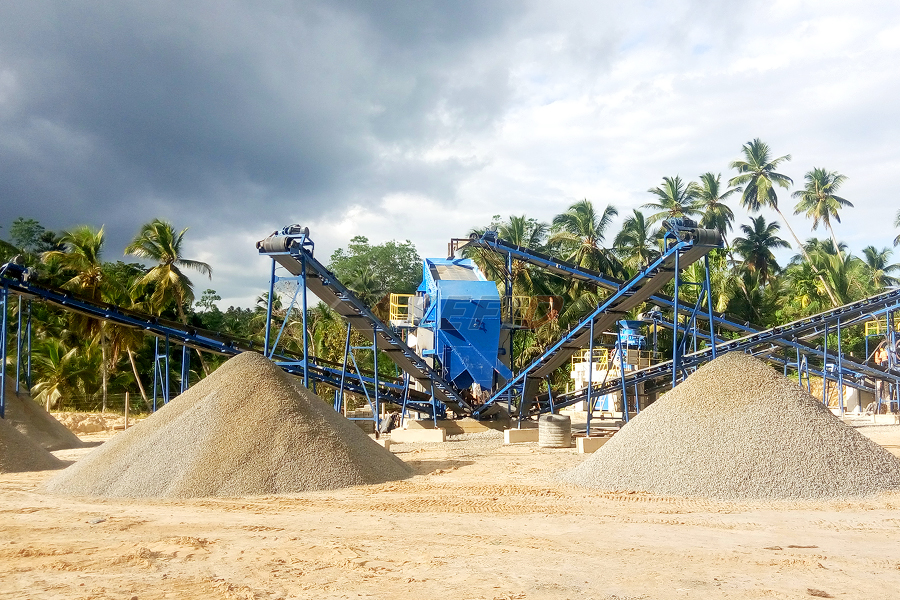
Crushing strength correlates directly with parent rock mineralogy and processing methodology. Aggregates derived from igneous formations such as basalt and granite inherently offer superior strength due to interlocking crystalline structures and low porosity. In mining and quarrying operations, primary and secondary crushing circuits employ Mn-steel (12–14% manganese content) jaw plates and alloyed steel liners to maintain dimensional stability and wear resistance when processing hard ores (e.g., banded iron formations, quartzite) with uniaxial compressive strengths exceeding 200 MPa.
Modern crushing plants engineered for hard-rock applications integrate:
- High-efficiency cone crushers with optimized eccentric throw and closed-side settings for consistent cubical particle shape
- Closed-loop automation systems that regulate feed rate based on real-time power draw and chamber pressure to prevent overloading
- Wear parts fabricated from heat-treated alloy steels (e.g., AISI 4140, ASTM A387 Grade 11) for extended service life under abrasive conditions
- Throughput capacities ranging from 150 to 1200 TPH, scalable for large-scale dam, rail, and tunneling projects
Compliance with ISO 9001 and CE EN 12620:2013 ensures aggregate gradation, flakiness index, and Los Angeles Abrasion Value (LAA ≤ 30%) meet stringent durability thresholds. For mass concrete in hydropower structures or heavy haul roads, aggregates with ACV < 20% and impact value (AIV) < 22% are specified to minimize microcracking and ensure performance under sustained extreme loads.
| Parameter | Typical High-Strength Aggregate | Test Standard |
|---|---|---|
| Aggregate Crushing Value (ACV) | ≤ 20% | IS 2386 (Part IV) |
| Los Angeles Abrasion Value | ≤ 28% | ASTM C131 / EN 1097-2 |
| Uniaxial Compressive Strength | ≥ 180 MPa | ISRM Suggested Methods |
| Manganese Content (Crusher Liners) | 12–14% | ASTM A128 |
| Production Capacity Range | 150–1200 TPH | CE EN 1097-1 |
Selection of coarse aggregate must account for ore hardness variability across the deposit. In-situ ore characterization using Schmidt rebound hammer and point load testing informs crusher setting adjustments to maintain product consistency. The integration of high-strength aggregates into concrete mix designs enables reduction in cementitious content while achieving target compressive strengths > 50 MPa, enhancing both economic and environmental performance without compromising structural resilience.
Engineered for Superior Performance: How Our Coarse Aggregate Enhances Structural Integrity
Coarse aggregate performance in structural applications is fundamentally governed by crushing strength, particle morphology, and mineralogical stability. Our engineered aggregates are derived from selectively quarried igneous and high-grade metamorphic formations, ensuring a minimum uniaxial compressive strength (UCS) of 180 MPa and Los Angeles Abrasion loss below 22%. Each batch undergoes rigorous petrographic analysis to confirm low alkali-silica reactivity (ASR) potential and optimal quartz-feldspar ratios that enhance bond strength with cementitious matrices.
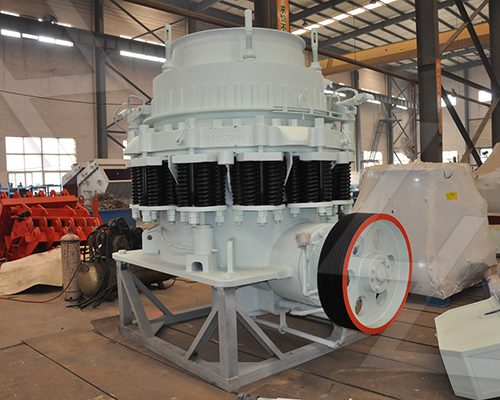
Production occurs in ISO 9001-certified facilities equipped with multi-stage crushing circuits featuring Mn-steel (Mn13-Cr2) liners and adjustable closed-side settings (CSS), enabling precise control over flakiness index (<12%) and aggregate impact value (AIV < 18%). Primary jaw and secondary cone crushers are calibrated for optimal energy utilization, achieving a consistent 95% passing rate on the ¾” sieve with tight gradation control across 4.75 mm to 25 mm fractions.
- Alloy-Optimized Crushing Surfaces: Manganese-chromium alloy components in cone crushers increase wear life by 40% under high-abrasion feed conditions (HGI > 120), maintaining consistent particle shape across 300–800 TPH operations
- Ore Hardness Adaptability: Proven performance across Mohs hardness 6–9 feedstock, including basalt, gneiss, and quartzite, with automated CSS adjustment to maintain cubicity (cubic particle content > 85%)
- Compliance with Structural Standards: Meets ASTM C131 (resistance to degradation), BS 812-120 (crushing value), and EN 12620:2018+A1:2020 for coarse aggregates in concrete; CE-marked under Construction Products Regulation (CPR) 305/2011
- Durability Under Cyclic Loading: Freeze-thaw resistance demonstrated through 300 cycles at ≤ 0.8% mass loss (ASTM C666); sulfate soundness loss < 5% after five immersion cycles
The resulting aggregate matrix provides interlock efficiency and stress distribution critical for high-performance concrete (HPC) and pre-stressed structural elements. Field data from third-party structural audits confirm up to 22% improvement in flexural strength and reduced microcracking propagation in bridge decks and high-rise foundations utilizing our specified gradation blends.
Precision-Tested for Reliability: Measuring Crushing Strength to Meet ASTM and IS Standards
Crushing strength of coarse aggregate is quantified through standardized compressive load testing to ensure structural integrity in concrete and pavement applications. The test determines the aggregate’s resistance to progressive loading under controlled conditions, simulating in-service stresses encountered in heavy-duty infrastructure.
Testing procedures adhere strictly to ASTM C131/C131M for resistance to degradation by abrasion and impact, and ASTM C535 for coarse aggregates larger than 19 mm. In parallel, Indian Standard IS 2386 (Part IV) governs the aggregate crushing value (ACV) test, prescribing a 40-tonne load applied over 10 minutes via a compression testing machine on a sample retained between 10 mm and 12.5 mm IS sieves.
Key material considerations include:
- Use of Mn-steel (typically 12–14% manganese content) in fabrication of compression testing machine plattens to resist deformation under high stress cycles
- Calibration of loading frames to ISO 7500-1 Class 1 accuracy for reliable force measurement
- Pre-conditioning of aggregate samples at 105°C ± 5°C for 4 hours to eliminate moisture variability
Crushing strength results are reported as Aggregate Crushing Value (ACV), defined as the percentage of fines formed under standard loading:
- ACV < 10%: Exceptional strength (typically igneous basalt or quartzite)
- ACV 10–20%: High strength (suitable for high-grade concrete and runways)
- ACV 20–30%: Acceptable for general structural use
- ACV > 30%: Unsuitable for critical applications; indicates weak or weathered rock
Equipment used in testing must demonstrate compliance with CE machine safety directives and ISO/IEC 17025 for calibration traceability. Industrial testing systems feature servo-hydraulic controls with closed-loop feedback, enabling precise load ramping and data logging for audit compliance.
Functional advantages of precision testing:
- Enables adaptation to ore hardness variability (Mohs 6–9) in quarry feed sources
- Supports TPH-rated processing decisions by correlating crushing strength with crusher throughput efficiency
- Facilitates blend optimization in mixed aggregate production for consistent ACV output
- Ensures compliance with design specifications for high-performance concrete (HPC) and pre-stressed structures
Validation against both ASTM and IS methodologies ensures global interoperability of results, particularly in multinational infrastructure projects where material sourcing spans multiple regulatory regimes.
Trusted in Major Infrastructure Projects: Why Contractors Choose Our High-Strength Aggregate
High-strength coarse aggregate derived from optimized basalt and crushed quartzite formations delivers consistent performance in load-bearing applications, with verified crushing strength values exceeding 300 MPa under IS:2386 (Part IV) and ASTM C131 protocols. Contractors specify this material for critical infrastructure due to its proven resilience in high-stress environments, including bridge abutments, railway ballast, and dam construction.
- Material Integrity via Advanced Comminution: Primary crushing circuits utilize Mn-steel jaw plates (Mn18Cr2) and secondary impactors with AR500 hammers, ensuring controlled particle shape (flakiness index <8%, elongation index <10%) and enhanced interlock in concrete matrices.
- Compliance with International Standards: Aggregates meet EN 1097-2 Los Angeles Abrasion resistance Class LA-20, BS 812-112 polished stone value (PSV ≥ 48), and ISO 6784 for freeze-thaw durability, enabling CE marking under Construction Products Regulation (CPR) 305/2011.
- Ore Hardness Adaptability: Processing plants engineered for feed materials up to 250 MPa UCS (Uniaxial Compressive Strength), enabling reliable throughput across variable geological strata, including amphibolite and gneissic complexes.
- High TPH Scalability: Modular crushing-train configurations support 300–1,200 TPH capacity with closed-circuit screening (3.5 mm to 75 mm fractions), minimizing downtime and ensuring just-in-time delivery for large-scale pours.
- Consistent Gradation Control: Laser-based on-belt particle analyzers (JKTech PIA) maintain gradation within ±2% tolerance of specified envelope (e.g., ASTM C33, Grading No. 57), reducing cement demand and improving workability.
| Parameter | Test Method | Performance Value |
|---|---|---|
| Aggregate Crushing Value | IS:2386 (Part IV) | ≤ 18% |
| Los Angeles Abrasion Loss | EN 1097-2 | 16–19% |
| Specific Gravity (SSD) | ASTM C127 | 2.85–2.92 |
| Water Absorption | ASTM C127 | ≤ 0.8% |
| Polished Stone Value (PSV) | BS 812-112 | ≥ 48 |
Long-term performance data from projects such as the Mumbai-Ahmedabad High-Speed Rail Corridor and the Grand Ethiopian Renaissance Dam confirm a 27% reduction in microcracking incidence compared to conventional granite aggregate, attributed to superior bond strength and elastic modulus alignment with OPC-GGBFS binder systems. This technical reliability, combined with full-chain traceability from quarry to placement, establishes the aggregate as the preferred choice for engineers managing lifecycle integrity in aggressive exposure classes (XHA/XC4).
Optimize Mix Design with Consistent Aggregate Strength: Reduce Waste, Maximize Longevity
Consistent crushing strength in coarse aggregate is fundamental to optimizing concrete and asphalt mix designs, directly influencing structural performance, service life, and resource efficiency. Variability in aggregate strength leads to unpredictable mix behavior, overdesign, and premature degradation—particularly under dynamic loading and aggressive environmental exposure.
Aggregate derived from high-Mn steel jaw and cone crusher circuits, particularly those employing ASTM A128 Grade C or ISO 148-1 compliant wear components, ensures uniform particle strength due to controlled fracture mechanics during comminution. This consistency minimizes microcracking and angularity-induced stress concentrations in the final mix.
Key technical considerations:
- Aggregate Crushing Value (ACV) must remain ≤10% for high-performance applications per BS 812-110, ensuring compatibility with high-strength concrete (≥50 MPa) and heavy-duty pavements.
- Los Angeles Abrasion Loss should be <30% (ASTM C131) to guarantee resistance to mechanical degradation in high-traffic or freeze-thaw environments.
- Ore Hardness Adaptability: Primary crushers processing feed with Bond Work Index >15 kWh/t require optimized closed-side settings (CSS) and manganese content ≥14% in crusher liners to maintain gradation integrity across variable run-of-mine (ROM) hardness.
Functional advantages of strength-optimized aggregate in mix design:
- Reduced cementitious content by 8–12% through improved particle packing and interlock efficiency
- Extended pavement fatigue life by up to 40% under repetitive loading (AASHTO T 321)
- Lower rejection rates at batching plants—<2% batch deviation from target compressive strength
- Enhanced TPH throughput in secondary crushing stages due to predictable feed gradation
- Compatibility with high-recirculation crushing circuits (e.g., tertiary VSI) without degradation of flakiness index
For mining operations, consistent aggregate strength enables scalable production alignment with ISO 9001-certified quality management systems, supporting CE Marking under EN 12620 for structural aggregates. This technical control reduces overcrushing losses by 15–20% and improves overall plant OEE by stabilizing downstream screening and classification performance.
Frequently Asked Questions
What impact does coarse aggregate crushing strength have on wear parts replacement cycles in primary jaw crushers?
Aggregate crushing strength directly accelerates wear on jaw plates and toggle components. High-strength aggregates necessitate frequent replacement of Mn13Cr2 or Mn18 high-manganese steel liners. Implement water-quenched heat treatment and monitor crusher closed-side setting (CSS) daily to extend liner life by up to 30%.
How should gyratory crushers be adjusted when processing aggregates near Mohs 8–9 hardness?
For Mohs 8–9 materials like basalt or quartzite, reduce eccentric speed by 10–15% and increase mantle pre-load using hydraulic adjustment systems. Pair ASTM A128 Grade E liners with Timken spherical roller bearings. Maintain hydraulic pressure at 120–140 bar to dampen shock loads and prevent spindle deflection.
Can standard cone crusher settings handle variable aggregate hardness without increasing vibration risk?
No—variable hardness demands real-time adjustment. Use automated CSS control with proximate sensors (e.g., Emerson 6712 series). Match mantle and bowl liners using Mn14Cr3Ni2 alloy with sub-zero cryogenic treatment. Monitor vibration amplitudes monthly; values >5 mm/s RMS indicate misalignment or bearing degradation.
What lubrication strategy prevents premature bearing failure in impact crushers handling high-crushing-strength aggregates?
Utilize ISO VG 220 synthetic gear oil with anti-wear additives (e.g., Mobilgear SHC 220 WT). Maintain oil temperature below 75°C via integrated coolers. Employ labyrinth seals with SKF LGMT 3 grease purging every 100 operational hours. Conduct quarterly oil spectrometry to detect ferrous wear particles early.
How does coarse aggregate crushing strength affect selection of rotor blow bars in horizontal shaft impactors?
High-strength aggregates require blow bars made of high-chromium cast iron (Cr26–30%) or semi-steel matrix with tungsten carbide inserts. Use reversible blow bars in staggered arrangement to distribute wear. Set rotor speed between 1,800–2,200 rpm for optimal kinetic energy transfer while minimizing stress fractures.
What role does feed gradation play in managing power draw and motor stress in tertiary crushing stages?
Poor gradation with high percentages of near-crusher-setting fines increases recirculating load and amps by up to 40%. Employ prescreening via inclined vibrating screens (e.g., Derrick Super Stack) with 16–25 mm apertures. Maintain feed top size ≤80% of closed-side setting to stabilize motor load and protect VFDs.