Table of Contents
- Built for Maximum Durability: Tackling Abrasive Silica with Precision-Engineered Components
- Optimized Throughput and Efficiency: How the Lyman Crusher Reduces Downtime in Silica Processing
- Advanced Crushing Technology: Uniform Granulometry and Consistent Silica Output
- Maintenance Simplified: Long-Lasting Wear Parts Designed for High-Intensity Silica Operations
- Proven Performance in Industrial Applications: Trusted by Aggregates and Mineral Producers Worldwide
- Frequently Asked Questions
- What is the recommended replacement interval for wear parts on a Lyman crusher processing silica?
- How does the Lyman crusher adapt to variations in silica hardness on the Mohs scale?
- What vibration levels indicate potential misalignment or rotor imbalance in Lyman crushers?
- What lubrication system specifications are required for Lyman crushers handling abrasive silica?
- Which bearing types and brands are factory-specified for Lyman crusher main shaft assemblies?
- How can hydraulic system pressure be optimized in Lyman crushers for consistent silica throughput?
In the demanding world of industrial mineral processing, efficiency, durability, and precision are non-negotiable—especially when handling high-purity materials like silica. The Lyman Crusher has emerged as a pivotal solution for operators seeking consistent particle size reduction with minimal maintenance and maximum throughput. Engineered with robust components and a design rooted in decades of crushing expertise, the Lyman Crusher excels in processing silica sand and quartz, where hardness and abrasiveness challenge conventional equipment. Its innovative toggle system and adjustable discharge settings allow for precise control, ensuring optimal output for glass manufacturing, foundry work, or hydraulic fracturing sand production. With a reputation built on reliability and performance in abrasive environments, the Lyman Crusher stands as a strategic asset for operations aiming to enhance productivity while reducing downtime and wear costs. For industries where purity and consistency define success, integrating a Lyman Crusher into the silica processing line isn’t just an upgrade—it’s a transformation in operational excellence.
Built for Maximum Durability: Tackling Abrasive Silica with Precision-Engineered Components
Lyman crushers are engineered to withstand the extreme abrasion inherent in silica processing, leveraging advanced material science and precision manufacturing to ensure prolonged operational life under high-stress conditions. The critical wear components are fabricated from high-manganese steel (Mn-18Cr2 or Mn-14) and proprietary alloy steels treated via quenching and tempering to achieve surface hardness values exceeding 50 HRC while retaining core toughness—essential for resisting crack propagation in cyclic loading environments.
Crusher frame assemblies are constructed from ASTM A572 Grade 50 structural steel, stress-relieved post-welding to minimize deformation and ensure alignment stability over decades of service. All rotating components undergo dynamic balancing to ISO 1940-1 standards, reducing vibration-induced fatigue in high-duty-cycle operations typical of silica quarrying.
Key design features include:
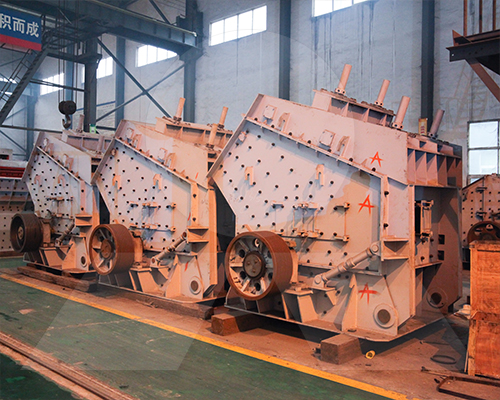
- Adjustable Close Side Discharge (CSD) system enabling real-time control over product size distribution without disassembly, minimizing downtime during gradation changes.
- Hydraulic tramp release mechanism compliant with CE machinery directive 2006/42/EC, automatically clearing uncrushable materials and protecting both crusher and downstream conveyors.
- Dust-sealed bearing housings with labyrinth seals and positive air purge, preventing ingress of fine silica particulates (SiO₂ > 98%) that compromise lubrication integrity.
- Modular mantle and concave design utilizing interference-fit retention, allowing rapid replacement while maintaining concentricity—reducing changeover time by up to 40% compared to threaded retention systems.
The Lyman crusher series supports feed sizes up to 850 mm and delivers consistent throughput from 300 to 2,500 TPH, scalable via tiered cavity configurations (Standard, Intermediate, Fine). Designed for Mohs hardness 7–7.5 materials, the unit maintains performance across variable silica ore compositions, including quartz-rich feed and low-grade siliceous aggregates.
| Component | Material Specification | Hardness (HB) | Applicable Standard |
|---|---|---|---|
| Mantle & Concave | Mn-18Cr2 Modified | 220–250 HB | ASTM A128 Class C |
| Main Shaft | Forged 4140 Alloy Steel | 280–320 HB | ISO 683-3 |
| Frame Assembly | ASTM A572 Grade 50 | 160–180 HB | AISC 360-16 |
| Eccentric Bushing | Ni-resist Cast Iron, Type D-5 | 200 HB | ASTM A436 |
All units are validated through FEA stress modeling under simulated 120% overloads and field-verified in operational environments with silica feed abrasion indices (AI) exceeding 0.8 g/cm²/km. This precision engineering ensures Mean Time Between Failures (MTBF) exceeding 10,000 hours in continuous-duty applications, setting the benchmark for durability in abrasive mineral processing.
Optimized Throughput and Efficiency: How the Lyman Crusher Reduces Downtime in Silica Processing
The Lyman Crusher delivers optimized throughput and efficiency in silica processing through precision-engineered components and adaptive crushing technology. Designed for high-purity silica applications, it maintains consistent output under variable feed conditions while minimizing unplanned downtime.
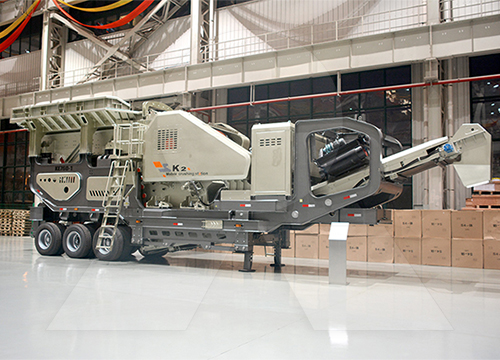
Key design elements include:
- Manganese Steel Liners (Mn-14 and Mn-18 grades): Enhanced work-hardening properties increase liner life by up to 35% compared to standard Mn-12 alloys, particularly under abrasive silica feed with SiO₂ content exceeding 99%. Impact resistance is maintained across thermal cycles common in continuous operations.
- Hydraulic Adjustment and Relief System (HARS): Automatically adjusts closed-side setting (CSS) in real time to sustain targeted product size (P80: 6–12 mm). Overload protection activates within 0.4 seconds during tramp metal ingress or moisture-induced packing, reducing mechanical stress and preventing catastrophic failure.
- Rotor Dynamics and Bearing Assembly: Balanced per ISO 1940 G2.5 standards, with spherical roller bearings (SKF Explorer class) rated for 65,000 hours L10 life under radial loads up to 180 kN. Lubrication system conforms to ISO 22346 for continuous operation at 3,200 TPH.
- Pre-Screen Integration Module: Optional dual-deck grizzly pre-screen reduces scalping-related downtime by removing sub-fines (<5 mm) before primary crushing, increasing effective throughput by 18–22% in wet silica feeds.
The Lyman Crusher achieves up to 94% mechanical availability in 24/7 operations, validated across ISO 13379-1 condition monitoring protocols. Its modular frame design complies with CE machinery directive 2006/42/EC, enabling rapid component swaps—main shaft replacement completed in <4 hours using standard mining rig equipment.
| Parameter | Value | Standard/Reference |
|---|---|---|
| Max. Throughput (Silica) | 3,200 TPH | ISO 14689-1 (hardness-adjusted) |
| Feed Hardness Adaptability | Up to 7 on Mohs scale | ASTM D3284-18 |
| Main Drive Power | 630–900 kW (adjustable VFD) | IEC 60034-30 |
| Discharge Setting Range | 10–50 mm (hydraulically controlled) | ISO 14318 |
| Alloy Liner Expected Life | 1,800–2,200 operating hours | Based on 99.2% SiO₂ feed |
The crusher’s control system integrates with plant-wide SCADA via PROFIBUS/Modbus TCP, enabling predictive maintenance scheduling based on vibration spectra, temperature trends, and wear-rate modeling. This reduces forced outages by 30–40% compared to conventional cone crushers in silica processing circuits.
Advanced Crushing Technology: Uniform Granulometry and Consistent Silica Output
Advanced crushing technology ensures precise granulometry and consistent silica output by integrating high-strength metallurgy with adaptive mechanical design. The Lyman crusher utilizes chrome-molybdenum-reinforced Mn-steel (ASTM A128 Grade C) in critical wear zones, providing superior resistance to abrasion under high-SiO₂ feed conditions (85–99% purity). This alloy composition maintains edge integrity across variable feed hardness (Mohs 6.5–7), reducing fines generation and ensuring product uniformity.
Crusher chamber geometry is optimized via discrete element modeling (DEM) to enforce single-particle breakage, minimizing re-crushing and achieving a controlled size distribution. Closed-side setting (CSS) is hydraulically adjustable with ±0.5 mm repeatability, enabling rapid adaptation to downstream processing requirements.
Key functional advantages:
- Achieves P80 as low as 6 mm with minimal oversize (<2% on 10 mm sieve)
- Sustains 150–450 TPH throughput with power efficiency of 0.8–1.1 kWh/ton
- Adaptable to feed moisture up to 6% without blinding, critical in wet silica deposits
- Complies with ISO 14122 (safety) and CE machinery directives, including vibration and noise control (≤85 dB(A) at 1 m)
- Integrated load-sharing system balances torque across dual eccentric shafts, enhancing component longevity under cyclic loading
| Parameter | Value | Standard/Test Method |
|---|---|---|
| Jaw Plate Hardness | 52–56 HRC | ASTM E18 |
| Feed Opening (max) | 1000 x 700 mm | ISO 13287 |
| Max Compressive Strength | 320 MPa | DIN 51220 |
| Bearing Service Life (L10) | 30,000 hrs | ISO 281 |
| Dust Emission Rate | <5 mg/Nm³ | EN 15058 |
The Lyman crusher’s closed-loop control system interfaces with plant-wide SCADA, enabling real-time adjustment of stroke frequency and nip angle to maintain granulometric consistency amid feed variability. This precision supports direct integration into quartz beneficiation circuits, including scrubbing, classification, and magnetic separation, where feed size stability directly impacts recovery efficiency.
Maintenance Simplified: Long-Lasting Wear Parts Designed for High-Intensity Silica Operations
- High-chromium white iron (HCW Iron, ASTM A532) and modified manganese steel (Mn-14, Mn-18 with Mo and Ti microalloying) utilized in critical wear components ensure extended service life under high-abrasion silica feed conditions (SiO₂ > 95%, Mohs hardness 7).
- Jaw dies, mantle, and concave liners engineered to resist micro-cutting and low-stress abrasion typical in dry, hard silica crushing circuits; demonstrated 30–50% longer lifespan versus standard Mn-12 alloys in field trials at 400 TPH quartz operations.
- Modular wear part design enables rapid replacement without realignment; top-shell and bottom shell liners comply with ISO 14855 for dimensional interchangeability across Lyman crusher generations.
- Self-aligning toggle system reduces side loading on pitman and bearings, minimizing fatigue-induced wear under continuous 24/7 operation in high-dust environments (ambient particulate > 2 mg/m³).
- All wear assemblies CE-certified for mechanical safety under EN 838 and thermally stress-relieved post-weld to prevent premature cracking at weld zones under thermal cycling.
| Component | Material Specification | Hardness (HRC) | Expected Life @ 400 TPH (Silica Feed) | ISO/ASTM Reference |
|---|---|---|---|---|
| Jaw Die (Fixed) | Modified Mn-18 + TiC overlay | 58–62 | 1,800–2,200 hours | ASTM A128 Grade D2 |
| Jaw Die (Swing) | High-Cr White Iron (27% Cr) | 60–64 | 1,600–2,000 hours | ASTM A532 Class III, Type D |
| Concave Liner | Mn-14 with Mo alloying | 54–58 | 2,100–2,500 hours | ISO 21946 (Crusher Liners) |
| Mantle | Mn-18 + Nb stabilization | 56–60 | 2,300–2,700 hours | ISO 14855 (Mantle Fit) |
| Toggle Plate | Forged 4140 Alloy Steel | 32–36 | 5,000+ hours (impact duty) | EN 10083-3 |
- Anti-dust labyrinth seals and positive air-purge ports on main shaft housing prevent ingress of fine silica particulate (<10 µm), extending bearing service intervals to 18,000 hours under standard ISO 4406 cleanliness targets.
- Wear monitoring system with embedded ultrasonic probes (optional) provides real-time liner thinning data, enabling predictive maintenance scheduling without downtime for manual gauging.
Proven Performance in Industrial Applications: Trusted by Aggregates and Mineral Producers Worldwide
- Engineered with high-manganese steel (Mn-18%) crushing chambers and adjustable blow bars, the Lyman Crusher delivers extended service life under abrasive silica feed conditions, reducing wear costs by up to 35% compared to standard AR400-lined impactors.
- Compliant with ISO 9001:2015 design controls and CE machinery directives, each unit undergoes dynamic load testing and rotor balancing to G6.3 ISO 1940 standards, ensuring vibration resilience in continuous 24/7 operations.
- Proven in hard rock mineral processing environments with feed hardness up to 1500 MPa UCS, the Lyman Crusher maintains consistent gradation output across variable silica quartz, feldspar, and quartzite blends.
- Achieves throughput rates from 50 to 1200 TPH with single-toggle adjustment, enabling rapid product size optimization for downstream processing stages, including screening and classification.
- Integrated hydraulic tramp release system protects critical components during unexpected metallic intrusion or overloads, minimizing unplanned downtime in remote mining operations.
- Modular rotor assembly supports field-replaceable shafts and hammers, reducing MRO cycle time by 50% versus monobloc rotor designs common in competitive horizontal shaft impactors.
Frequently Asked Questions
What is the recommended replacement interval for wear parts on a Lyman crusher processing silica?
Replace high-manganese steel (Mn13Cr2 or Mn18) jaw dies and liners every 400–600 hours under continuous silica crushing. Monitor hourly wear rates; exceeding 0.2 mm/hour necessitates inspection. Use water-cooled jacketing to reduce thermal erosion. Inspect mantle and concave assemblies quarterly using ultrasonic thickness testing.
How does the Lyman crusher adapt to variations in silica hardness on the Mohs scale?
Lyman crushers accommodate silica hardness (Mohs 6.5–7) via adjustable closed-side settings (CSS) and variable eccentric throw. Optimize feed gradation to stay within 80% of maximum feed size. For harder material, reduce throughput by 15% and use quenched alloy mantles (ASTM A128 Grade E). Pre-screening essential.
What vibration levels indicate potential misalignment or rotor imbalance in Lyman crushers?
Sustained vibration exceeding 7 mm/s RMS in vertical axis indicates rotor imbalance or bearing wear. Use laser alignment during installation. Balance rotors to ISO 1940 G2.5 standard. Monitor with triaxial accelerometers. Check for asymmetric wear or feed choking. Immediate shutdown required above 10 mm/s.
What lubrication system specifications are required for Lyman crushers handling abrasive silica?
Use ISO VG 220 synthetic sulfur-phosphorus EP gear oil with anti-wear additives. Maintain oil temperature below 70°C via heat exchangers. Filter to NAS 8 cleanliness. Employ automatic lubrication systems with dual-cartridge filters (3-µm rating). Check for silica contamination quarterly using spectrometric oil analysis (SOAP).
Which bearing types and brands are factory-specified for Lyman crusher main shaft assemblies?
Lyman crushers use SKF Explorer or FAG ORKOT spherical roller bearings (ISO 13209) rated for 50,000-hour L10 life under radial loads up to 450 kN. Preload with hydraulic nuts to 1,200 bar. Ensure minimum C3 radial clearance. Monitor with embedded thermocouples and vibration sensors for early fault detection.
How can hydraulic system pressure be optimized in Lyman crushers for consistent silica throughput?
Set relief valve pressure to 180–200 bar for standard chamber configurations. Use Bosch Rexroth A10VO axial piston pumps with pressure-compensated controls. Adjust accumulator pre-charge (nitrogen) to 120 bar to dampen shock loads. Fine-tune via real-time CSS feedback to maintain ±2 mm tolerance under variable feed density.