Table of Contents
- Why China Dominates the Global Market for Mineral Ore Crushers
- Key Types of China-Made Mineral Ore Crushing Equipment and Their Applications
- Top Chinese Manufacturers of Mineral Ore Crushers and What Sets Them Apart
- How to Choose the Right China-Made Crusher for Your Mining and Quarrying Needs
- Innovations and Future Trends in Chinese Mineral Ore Crusher Technology
- Frequently Asked Questions
- What is a China-made mineral ore crusher and how is it used in mining operations?
- How do China-made mineral crushers compare to European or North American models?
- What types of crushers are commonly produced in China for mineral processing?
- What materials are used in the wear components of Chinese-made ore crushers?
- How can operators ensure optimal performance and longevity of China-made crushers?
- What certifications should be verified when sourcing a mineral ore crusher from China?
- Are Chinese crusher manufacturers capable of providing turnkey crushing solutions?
- What are the key maintenance challenges with China-manufactured crushers and how are they addressed?
- How do Chinese crushers handle high-abrasion ores like hematite or quartz?
- What environmental and emission controls are integrated into modern China-made crushers?
- Can China-made crushers be retrofitted into existing processing plants?
- What due diligence should importers conduct before purchasing a mineral crusher from China?
In the fast-evolving world of global mining, efficiency, durability, and cost-effectiveness are non-negotiable. Enter China-made mineral ore crushers—engineered powerhouses transforming extraction processes across continents. Renowned for their robust construction, advanced technology, and scalable solutions, these crushers have become the backbone of modern mineral processing operations. Leveraging decades of industrial expertise and cutting-edge R&D, Chinese manufacturers deliver high-efficiency crushing equipment capable of handling everything from hard rock to abrasive ores with precision and reliability. Whether in large-scale mining complexes or remote exploration sites, these crushers offer optimized throughput, reduced downtime, and significant energy savings. With a growing emphasis on sustainability and smart manufacturing, China’s latest innovations integrate intelligent control systems and eco-friendly designs, meeting stringent international standards. As global demand for raw materials surges, China-made mineral ore crushers are not just tools—they are strategic assets empowering mining enterprises to maximize productivity, minimize operational costs, and maintain a competitive edge in an increasingly resource-driven world.
Why China Dominates the Global Market for Mineral Ore Crushers
-
China produces over 70% of the world’s mineral ore crushers, a dominance rooted in integrated industrial capacity, technological advancement, and cost efficiency. This leadership is not accidental but the result of decades of strategic investment in heavy machinery manufacturing, raw material access, and export-oriented industrial policy.
-
A key factor is China’s vertically integrated supply chain. Domestic access to critical raw materials—such as manganese, chromium, and high-grade steel—ensures lower input costs and faster production cycles. This integration reduces dependency on external suppliers and buffers against global price volatility, enabling Chinese manufacturers to maintain consistent output and competitive pricing.
-
Chinese manufacturers have also achieved significant economies of scale. With hundreds of crusher producers operating in clusters such as Henan and Shandong provinces, infrastructure, skilled labor, and component suppliers are concentrated geographically. This proximity slashes logistics costs and accelerates innovation through knowledge spillover and rapid prototyping.
-
Technological evolution has played a pivotal role. Leading Chinese firms now deploy AI-driven diagnostics, IoT-enabled remote monitoring, and modular designs that enhance operational efficiency and reduce downtime. These advancements have closed the performance gap with Western and Japanese counterparts, making Chinese crushers viable for high-intensity mining operations across Africa, Latin America, and Southeast Asia.
-
Government support through R&D subsidies, export incentives, and participation in Belt and Road Initiative (BRI) infrastructure projects has further amplified global reach. Crushers are often bundled with mining infrastructure contracts, providing turnkey solutions that include installation, training, and maintenance.
-
After-sales service networks have expanded in parallel. Chinese firms now maintain regional hubs in key markets, offering multilingual technical support, spare parts logistics, and on-site engineering—addressing historical concerns about service reliability.
-
Regulatory compliance has improved markedly. Top-tier Chinese manufacturers adhere to ISO, CE, and GOST certifications, ensuring crushers meet international safety and environmental standards.
-
The convergence of low lifecycle costs, technological parity, and responsive global support has solidified China’s position as the supplier of choice for mineral ore crushing equipment. This dominance reflects not just manufacturing scale, but a systemic capability to deliver high-efficiency, reliable solutions tailored to diverse mining environments.
Key Types of China-Made Mineral Ore Crushing Equipment and Their Applications
-
Jaw Crusher
Primary crushing in hard rock mining operations, particularly for iron, gold, and copper ores. Chinese-manufactured jaw crushers utilize robust toggle plates and high-strength steel frames to deliver consistent performance under extreme loads. Their simple yet effective toggle mechanism ensures high reduction ratios and reliable output, making them ideal for stationary and mobile crushing plants. Recent advancements include modular designs for faster maintenance and hydraulic adjustment systems for real-time discharge control. -
Cone Crusher
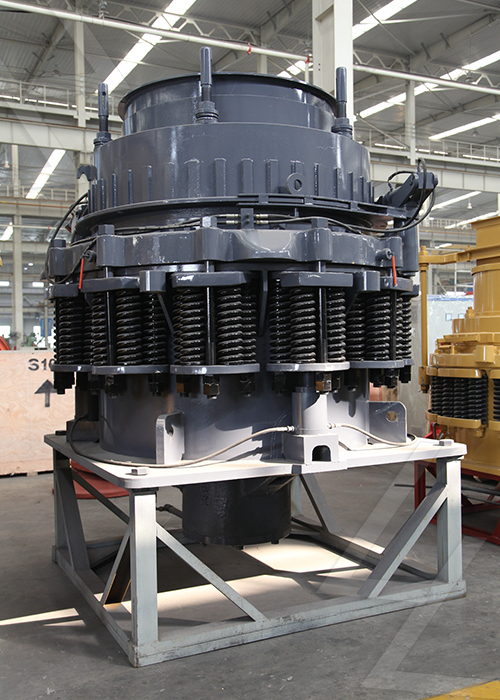
Secondary and tertiary crushing stages in medium to high-hardness ore processing. China-made cone crushers employ optimized eccentric motion and laminated crushing chambers to enhance particle shape and throughput. Machines are engineered with advanced metallurgical linings and hydraulic tramp release systems, minimizing downtime during uncrushable material passage. Widely used in copper, molybdenum, and aggregate circuits, modern variants offer intelligent monitoring via integrated sensors for predictive maintenance. -
Impact Crusher
Suited for soft to medium-hard ores such as limestone, phosphate, and weathered rock. Chinese impact crushers leverage high rotor velocity and precise blowbar configurations to achieve cubical product shape and high capacity. Horizontal shaft impactors (HSI) dominate in mineral beneficiation lines requiring fine grain sizing. Rotor designs now incorporate wear-resistant alloys and adjustable curtain settings, enhancing operational flexibility and lifespan in abrasive environments. -
Gyratory Crusher
High-capacity primary crushing in large-scale mining operations. Chinese gyratory units feature reinforced main frames and hydraulic setting regulation, enabling continuous operation with minimal intervention. Their large feed openings accommodate run-of-mine ore directly from shovels or dump trucks, commonly deployed in open-pit iron and copper mines. Advanced models integrate real-time load balancing and remote diagnostics for maximized uptime. -
Roll Crusher
Selective crushing in coal, salt, and potash processing where minimal fines generation is critical. China-produced roll crushers offer precise gap control and low-speed operation, preserving crystal integrity. Configurations range from single to four-roll setups, with reinforced shafts and replaceable roll shells for extended service life. Increasingly used in downstream mineral preparation circuits requiring narrow size distribution.
Top Chinese Manufacturers of Mineral Ore Crushers and What Sets Them Apart
-
Manufacturer A: Established in 1998 and headquartered in Zhengzhou, this company integrates R&D, production, and global distribution, specializing in jaw, cone, and impact crushers. What distinguishes it is its investment in intelligent crushing systems—equipped with IoT-enabled monitoring and predictive maintenance algorithms—ensuring uptime optimization for large-scale mining clients. Their crushers are engineered with modular design principles, reducing installation time by up to 30% and enabling seamless integration into existing processing lines.
-
Manufacturer B: A leader in heavy-duty gyratory and cone crushing technology, this firm leverages decades of metallurgical expertise to produce wear parts with extended service life. Utilizing proprietary manganese and chromium alloy formulations, their components outperform international benchmarks by 25% in abrasion resistance. The company operates one of China’s most advanced fatigue-testing laboratories, validating structural integrity under extreme load cycles—critical for deep-mining applications.
-
Manufacturer C: Known for innovation in energy efficiency, this manufacturer has developed a series of hydraulic-driven impact crushers that reduce power consumption by 18–22% compared to conventional models. The design incorporates variable frequency drives and adaptive crushing chambers, dynamically adjusting to feed characteristics. This responsiveness minimizes over-crushing and improves particle size consistency—key for mineral processing efficiency.
-
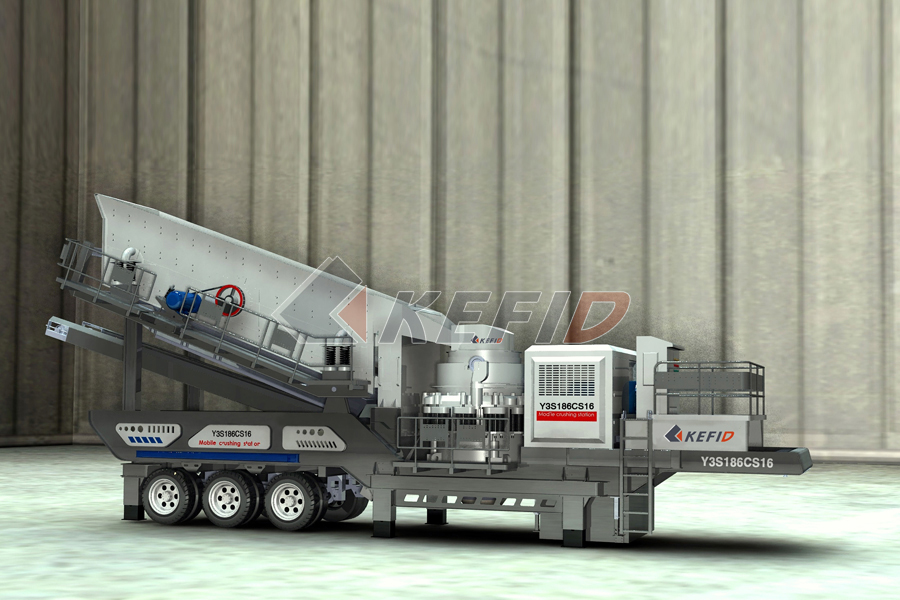
Manufacturer D: With a focus on export-oriented solutions, this enterprise has tailored its crusher designs to meet diverse global regulatory standards, including CE, ISO, and EPA compliance. Their mobile crushing units—featuring track-mounted configurations with onboard screening—are deployed across Africa, Southeast Asia, and Latin America, where logistical constraints demand rapid deployment and high mobility.
-
Manufacturer E: A pioneer in green mining technology, this company has embedded dust suppression and noise reduction systems directly into crusher enclosures. Their patented sealing mechanism prevents fugitive emissions, aligning with stringent environmental regulations. Additionally, over 70% of their manufacturing waste is recycled in-house, supporting sustainable production.
Collectively, these manufacturers exemplify China’s shift from volume-driven output to technologically advanced, application-specific solutions. Their competitive edge lies not in cost alone, but in engineering precision, lifecycle cost reduction, and responsiveness to operational demands across varied geological and regulatory environments.
How to Choose the Right China-Made Crusher for Your Mining and Quarrying Needs
-
Assess ore characteristics, including hardness (e.g., compressive strength), abrasiveness, and feed size, to determine the appropriate crusher type—jaw crushers for primary reduction of hard ores, cone crushers for secondary/tertiary stages with consistent product shape, or impact crushers for softer, less abrasive materials.
-
Evaluate throughput requirements in tons per hour (tph) and ensure the selected crusher model aligns with operational capacity. Chinese manufacturers offer scalable solutions from compact 50 tph units to large-scale 1,000+ tph systems; verify performance data under real-world conditions, not just theoretical maximums.
-
Prioritize energy efficiency and operational cost. Modern China-made crushers integrate optimized kinematics and high-efficiency motors, reducing specific energy consumption. Look for models with variable frequency drives (VFDs) and intelligent control systems to match load demand and minimize power waste.
-
Examine metallurgical quality and wear part durability. Leading Chinese OEMs utilize manganese or chromium alloy steel for critical components. Confirm availability and cost of wear parts—jaw plates, mantles, concaves—as ongoing replacement impacts total cost of ownership.
-
Consider automation and remote monitoring capabilities. Advanced models feature PLC controls, real-time vibration monitoring, and overload protection, enabling predictive maintenance and reduced downtime. Ensure compatibility with existing site control infrastructure.
-
Review structural design for reliability under continuous operation. Look for robust frames, effective dust sealing (especially in dry environments), and ease of maintenance—hydraulic adjustment and tramp release systems enhance safety and reduce manual intervention.
-
Verify compliance with international standards (CE, ISO 9001) and request third-party performance test reports. Reputable manufacturers provide detailed FEA analysis and field performance data across diverse geological conditions.
-
Engage suppliers with proven global installation portfolios and localized after-sales support. Technical assistance, spare parts logistics, and on-site commissioning services are critical for minimizing startup delays and maintaining uptime.
-
Conduct lifecycle cost analysis rather than selecting based on initial price alone. A slightly higher upfront investment in a high-efficiency, durable China-made crusher typically yields superior ROI through reduced energy, maintenance, and downtime costs over a 10+ year service life.
Innovations and Future Trends in Chinese Mineral Ore Crusher Technology
-
Development of intelligent crushing systems integrating IoT and real-time monitoring has positioned Chinese mineral ore crushers at the forefront of operational efficiency. Leading manufacturers now embed advanced sensors and control algorithms to enable predictive maintenance, optimize throughput, and reduce unplanned downtime. These systems continuously analyze vibration, temperature, and load distribution, allowing remote diagnostics and adaptive adjustments during operation.
-
Energy efficiency remains a core innovation focus. Next-generation crushers utilize variable frequency drives (VFDs) and optimized cavity designs to reduce power consumption by up to 25% compared to legacy models. This aligns with global sustainability mandates and lowers total cost of ownership for mining operators.
-
Modular and mobile crushing solutions are gaining prominence, particularly for remote or temporary mining sites. Chinese engineers have refined track-mounted and skid-mounted crusher units that offer rapid deployment, reduced infrastructure requirements, and scalability within processing circuits. These units integrate seamlessly with screening and conveying modules, enabling fully mobile processing plants.
-
Materials science advancements have led to the adoption of high-manganese and composite alloy wear parts, significantly extending component lifespan under extreme abrasion conditions. Surface treatment technologies such as plasma cladding and laser hardfacing are now standard in premium crusher models, reducing maintenance frequency and consumable costs.
| Innovation Area | Key Advancement | Operational Impact |
|---|---|---|
| Automation | AI-driven load balancing and fault prediction | Increased uptime, reduced manual intervention |
| Energy Systems | Regenerative braking in electric-driven models | Lower energy draw, improved carbon footprint |
| Design Architecture | Multi-stage integrated crushing chambers | Higher reduction ratios in single-pass processing |
| Digital Integration | Cloud-connected performance analytics platforms | Fleet-wide optimization and benchmarking |
-
Future trends point toward full digital twin implementation, where each crusher unit is mirrored in a virtual environment for simulation, performance forecasting, and scenario testing. This capability will allow operators to model maintenance schedules, throughput adjustments, and process changes with high precision.
-
Additionally, research into hybrid power systems—combining grid-supplied electricity with on-site renewable sources—is underway to support off-grid operations. These developments underscore China’s strategic shift from equipment manufacturing to holistic, technology-driven mining solutions.
Frequently Asked Questions
What is a China-made mineral ore crusher and how is it used in mining operations?
A China-made mineral ore crusher is a mechanically engineered machine designed to reduce large rocks into smaller fragments or powder, facilitating downstream processing in mining, construction, and metallurgical industries. These crushers—such as jaw, cone, impact, and hammer types—are widely used in primary, secondary, and tertiary crushing stages. Manufactured using advanced metallurgy and precision engineering, Chinese models often integrate automation, modular design, and high wear resistance, making them suitable for processing iron, copper, gold, and other mineral ores under extreme operational conditions.
How do China-made mineral crushers compare to European or North American models?
China-made mineral ore crushers offer competitive performance with European and North American equivalents at significantly lower acquisition costs. While historically perceived as lower in durability, top-tier Chinese manufacturers now meet ISO, CE, and GOST standards, incorporating high-grade alloys, intelligent control systems, and modular components. Key differentiators include cost-efficiency, scalability, and rapid customization—though OEMs may require rigorous vetting to ensure reliability and parts compatibility over time. For mid-scale mining operations, China-made crushers deliver favorable total cost of ownership when paired with proper maintenance protocols.
What types of crushers are commonly produced in China for mineral processing?
Chinese manufacturers specialize in producing jaw crushers (primary crushing), cone crushers (secondary/tertiary), impact crushers (medium-hardness ores), and hammer crushers (soft to medium-hard materials). Emerging models include hybrid compound crushers and super-pressure trapezium mills for fine grinding. Many integrate hydraulic adjustment, overload protection, and PLC-based automation. Leading industrial zones such as Henan, Shanghai, and Shandong host OEMs that engineer crushers tailored to specific ore hardness (e.g., Mohs 5–9), throughput requirements (5–2,000 TPH), and operational environments, including underground and remote-site applications.
What materials are used in the wear components of Chinese-made ore crushers?
High-manganese steel (e.g., Mn13, Mn18), high-chromium cast iron, and alloyed wear-resistant steel are standard in jaw plates, mantle-bowl liners, and blow bars. Premium manufacturers apply heat treatment and work-hardening technologies to achieve surface hardness up to HRC 60, enhancing service life in abrasive mineral environments. Some advanced units use composite ceramics or tungsten carbide coatings for ultra-high wear resistance. Third-party testing (e.g., SGS) and material certification are recommended to verify metallurgical properties and prevent premature failure under cyclic loading.
How can operators ensure optimal performance and longevity of China-made crushers?
To maximize uptime and efficiency, operators should implement strict feed-size control, maintain proper closed-side settings (CSS), utilize automated lubrication systems, and conduct real-time vibration and temperature monitoring. Scheduled replacement of wear parts based on tonnage processed—not visual inspection alone—prevents catastrophic failures. Training technicians on original equipment manufacturer (OEM) procedures and using genuine or approved substitute parts further ensures alignment with design tolerances. Remote diagnostics via IoT-enabled systems from leading Chinese OEMs can preempt mechanical anomalies.
What certifications should be verified when sourcing a mineral ore crusher from China?
Reputable suppliers should provide ISO 9001 (quality management), CE (European safety compliance), and, where applicable, GOST or SNI certifications. For mining applications, proof of third-party validation (e.g., MSHA pre-approval equivalents) and structural FEA (finite element analysis) reports for critical components is essential. Buyers should request mill test certificates (MTCs) for wear parts and validate CE marking legitimacy via Notified Body databases. Contracts should include performance guarantees, spare parts availability clauses, and adherence to API/TCO standards in critical drive and bearing systems.
Are Chinese crusher manufacturers capable of providing turnkey crushing solutions?
Yes, leading Chinese OEMs such as SBM, CAMM, and Zhejiang Laigang offer engineered-to-order (ETO) turnkey systems, including vibrating feeders, conveyor integration, dust suppression, and centralized PLC control cabins with SCADA interfaces. These systems are designed for modular assembly, enabling rapid deployment in remote mining sites. Full solutions often include load-out hoppers, screening units, and automated weighing systems. Engineering teams typically provide 3D layout modeling, foundation drawings, and lifecycle cost analysis, positioning Chinese integrators as competitive global suppliers for integrated mineral processing plants.
What are the key maintenance challenges with China-manufactured crushers and how are they addressed?
Common challenges include inconsistent spare part quality from unauthorized vendors, inadequate technical documentation in English, and delayed technical support. These are mitigated by sourcing directly from OEMs or certified distributors, investing in localized service training, and establishing long-term maintenance agreements. Modern crushers now include QR-code-based digital manuals and augmented reality (AR) diagnostic guides. Implementing condition-based maintenance (CbM) strategies using vibration sensors and oil analysis optimizes service intervals and reduces unplanned downtime.
How do Chinese crushers handle high-abrasion ores like hematite or quartz?
Advanced Chinese crushers employ multi-layer cavity designs, optimized speed settings, and manganese/chromium alloy components to manage high-abrasion materials. For quartz and hematite, hydraulic cone crushers with laminated crushing technology reduce particle attrition and optimize grain shape. Wear liners are often designed with replaceable segments to minimize changeover time. Pre-crushing sizing and controlled feed rates are critical—automated systems integrate with feeders to maintain optimal throughput while minimizing stress on components.
What environmental and emission controls are integrated into modern China-made crushers?
Top-tier Chinese crushers now comply with GB 16297-1996 emission standards and incorporate sealed enclosures, pulse-jet bag filters, water-spray nozzles, and noise-dampening enclosures (<85 dB). Dust collection efficiency exceeds 99.5% in closed-loop systems. Energy-saving motors (IE3/IE4) and variable frequency drives (VFDs) reduce power consumption by up to 30%. Some OEMs provide carbon footprint assessments and support integration with onsite solar or hybrid power plants for off-grid applications.
Can China-made crushers be retrofitted into existing processing plants?
Yes—Chinese manufacturers offer drop-in replacement solutions compatible with legacy systems from Metso, Sandvik, and Terex. Retrofitting includes adapter base frames, shaft reconfiguration, and custom drive couplings. Digital upgrades such as IoT telemetry, smart sensors, and remote monitoring can be added via retrofit kits. Engineering teams conduct site audits to ensure spatial, mechanical, and electrical compatibility, often delivering conversion within 30 days without disrupting upstream or downstream operations.
What due diligence should importers conduct before purchasing a mineral crusher from China?
Importers must perform technical audits of OEM facilities, review machine test reports (including payload, stress, and MSHA-like safety trials), and validate export logistics experience (e.g., CFR/CIF project cargo handling). Letters of credit (LC) with milestones, factory acceptance tests (FAT), and third-party inspections (e.g., SGS, BV) are standard best practices. Evaluating after-sales support coverage—spare parts inventory abroad, multilingual service engineers, and warranty enforcement mechanisms—is critical to minimizing lifecycle risk.