Table of Contents
- Understanding the Basics of Stone Jaw Crushers in Modern Crushing Operations
- How Jaw Crushers Work: Mechanism and Key Components Explained
- Types of Jaw Crushers: From Primary to Portable Crushing Solutions
- Applications Across Industries: Mining, Construction, and Quarrying
- Designing an Effective Seminar Presentation on Stone Jaw Crushers
- Frequently Asked Questions
- What is a stone jaw crusher and how does it function in aggregate production?
- Why is a jaw crusher commonly used as a primary crusher in stone processing?
- What are the key components of a stone jaw crusher presented in technical seminars?
- How does the nip angle affect the performance of a jaw crusher?
- What are the common operational challenges with stone jaw crushers and their expert solutions?
- How do you select the right stone jaw crusher for a specific application?
- What safety and maintenance protocols are recommended for stone jaw crushers in industrial use?
- How is efficiency measured in a stone jaw crusher and how can it be optimized?
- What advancements have been made in smart jaw crusher technology for stone crushing?
- How does material hardness impact the design and operation of a stone jaw crusher?
- What role does the eccentric shaft play in a stone jaw crusher’s mechanism?
- How can a seminar presentation on stone jaw crushers demonstrate economic and environmental sustainability?
Imagine harnessing the raw power to reduce massive boulders into manageable fragments with precision and efficiency—this is the remarkable capability of a stone jaw crusher, a cornerstone of modern crushing operations. At the heart of countless mining, quarrying, and construction projects, this robust machine transforms rugged stone into valuable aggregate through a meticulously engineered process. Designed for durability and high performance, the jaw crusher operates on a simple yet ingenious principle: applying compressive force via a moving jaw plate against a fixed counterpart, effectively breaking material down in a controlled, continuous cycle. From primary to secondary crushing stages, various types—including toggle, single-toggle, and hydraulic models—offer tailored solutions for diverse applications. Whether you’re an engineering student preparing a seminar presentation or a professional seeking technical clarity, understanding the working principles, classifications, and real-world applications of stone jaw crushers is essential. This comprehensive exploration dives into the mechanics behind these industrial powerhouses, offering clear insights ideal for a compelling PowerPoint seminar.
Understanding the Basics of Stone Jaw Crushers in Modern Crushing Operations
-
Stone jaw crushers are fundamental components in modern crushing operations, serving as primary crushers for reducing large rock masses into smaller, manageable aggregates. Their operational efficiency, robustness, and adaptability to diverse geological conditions make them indispensable in quarrying, mining, and construction industries.
-
The working principle of a stone jaw crusher is based on mechanical compression. It consists of two vertical jaws: one fixed (the fixed jaw) and one reciprocating (the swing jaw). The swing jaw is mounted on an eccentric shaft, which, when rotated, creates a compressive force between the two jaws. As material enters the feed opening, it is progressively crushed between the jaws as they close, then discharged at the bottom once the desired particle size is achieved.
-
Key components include the main frame, toggle mechanism, eccentric shaft, pitman, and adjustable discharge settings. The toggle plate serves both as a safety device—failing under excessive load—and as a means to maintain consistent pressing force. Modern designs incorporate high-strength steel alloys and optimized kinematics to enhance throughput and reduce wear.
-
Jaw crushers are categorized primarily by their feed opening size and design configuration. Common types include:
- Single-toggle jaw crushers: Known for higher efficiency and lower power consumption, typically used in medium to large-scale operations.
- Double-toggle jaw crushers: Offer more rigid structure and uniform particle size but are less energy-efficient; often used in heavy-duty applications.
-
Operating parameters such as closed-side setting (CSS), stroke, and nip angle directly influence output gradation and capacity. The nip angle—typically between 18° and 24°—must be optimized to prevent material slippage and ensure effective grip and crushing.
-
Applications span across primary crushing in hard rock quarries, recycling of construction debris, and processing of abrasive materials like granite and basalt. Their ability to handle feed sizes up to 1.5 meters and deliver consistent product sizing makes them ideal for integration into multi-stage crushing circuits.
-
Maintenance considerations include regular lubrication, inspection of wear parts (e.g., jaw plates, toggle plates), and alignment checks. Advances in automation now allow real-time monitoring of load, temperature, and vibration, enabling predictive maintenance and minimizing unplanned downtime.
How Jaw Crushers Work: Mechanism and Key Components Explained
- Jaw crushers operate on the fundamental principle of compressive force to reduce large rocks into smaller, manageable fragments.
- The primary mechanism involves two vertical jaws: one fixed and one reciprocating, commonly referred to as the swing jaw.
- The movable jaw exerts mechanical pressure on the feed material against the stationary jaw, causing fracture along natural fissures and grain boundaries.
The crushing cycle consists of two phases:
- Compression phase: As the swing jaw moves toward the fixed jaw, material is crushed.
- Discharge phase: When the swing jaw retracts, broken material falls further into the crushing chamber until it exits through the discharge opening.
Key components include:
| Component | Function |
|---|---|
| Fixed Jaw (Fixed Jaw Plate) | Serves as the stationary surface against which material is crushed. Typically lined with replaceable manganese steel plates for wear resistance. |
| Swing Jaw (Movable Jaw Plate) | Executed in an elliptical motion via an eccentric shaft to compress material. Also fitted with replaceable liners. |
| Eccentric Shaft | Provides the driving motion to the swing jaw. Powered by an electric motor through a belt and pulley system. |
| Toggle Plate | Acts as a safety mechanism; absorbs excessive load and prevents damage to critical components during uncrushable object entry. |
| Adjustment System | Regulates the discharge opening size, controlling the final product size and throughput capacity. |
| Tension Rods and Springs | Maintain consistent jaw alignment and provide return force to reposition the swing jaw after compression. |
The crushing chamber, or nip angle, is designed to guide material downward while ensuring efficient compression. An optimal nip angle (typically between 19° and 23°) ensures material grips the jaws without slipping, maximizing throughput and minimizing wear.
Jaw crushers are designed for high reduction ratios and reliable performance in primary crushing applications. Their robust construction allows processing of abrasive and hard rock materials such as granite, basalt, and quartzite. Due to their simple yet effective mechanism, they remain the cornerstone of aggregate and mining operations worldwide.
Types of Jaw Crushers: From Primary to Portable Crushing Solutions
-
Primary Jaw Crushers
These are the foundational units in aggregate processing circuits, designed to handle large feed sizes from quarries or mines. Typically stationary and engineered for high reduction ratios, primary jaw crushers feature robust toggle mechanisms and heavy-duty frames to withstand continuous operation under extreme loads. They are commonly used to reduce run-of-mine material to a size suitable for secondary crushing. Modern designs incorporate optimized cavity profiles and adjustable discharge settings to enhance throughput and product consistency. -
Secondary Jaw Crushers
Positioned downstream of primary units, secondary jaw crushers further reduce material to meet tighter size specifications. While structurally similar to primary models, they often operate with finer closed-side settings and higher toggle frequencies. Their role is critical in achieving uniform feed for tertiary processing stages, such as cone or impact crushing. Advanced automation systems allow real-time monitoring of chamber load and wear, improving efficiency and minimizing downtime. -
Portable Jaw Crushers
Engineered for mobility and rapid deployment, portable jaw crushers integrate a primary or secondary jaw unit with conveyors and screening components on a tracked or wheeled chassis. These systems are ideal for contractors, demolition projects, or remote sites where transportation costs or site access limit fixed plant installations. Modern portable units feature hybrid power options, remote control operation, and compact designs without sacrificing throughput. -
Crawler and Tracked Jaw Crushers
A subset of portable solutions, tracked jaw crushers offer superior maneuverability on uneven terrain. Self-propelled and often radio-remote operated, they are widely used in recycling, quarrying, and infrastructure projects. Their integrated design reduces setup time and auxiliary equipment needs, providing a turnkey crushing solution in dynamic environments.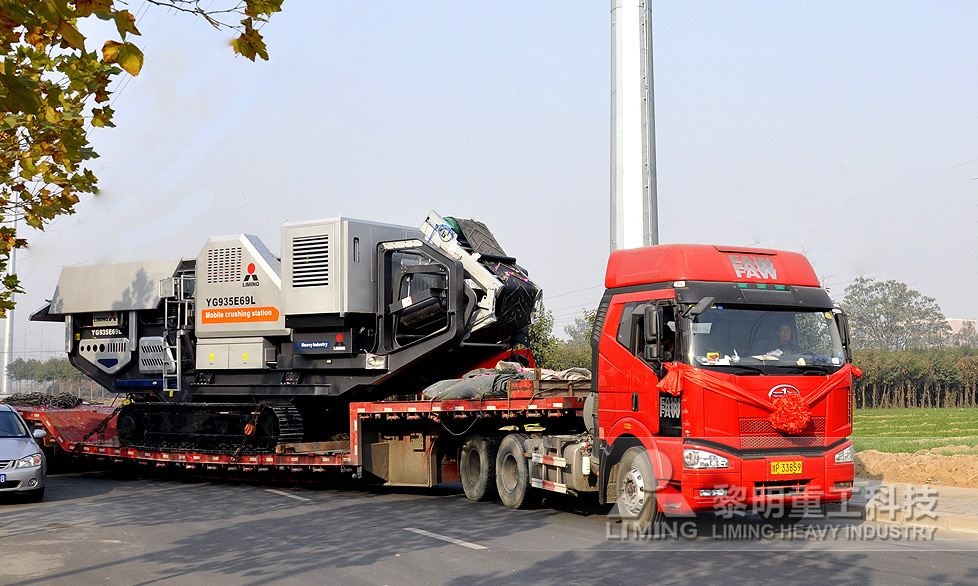
-
Modular and Mobile Stationary Units
Bridging the gap between fixed plants and fully portable systems, these crushers are mounted on skids or containers for quick relocation. While not self-propelled, they offer faster reassembly than traditional fixed installations, making them suitable for multi-site operations or temporary contracts.
Each type serves distinct operational requirements, from high-capacity primary reduction to agile on-site processing. Selection depends on feed size, desired output, mobility needs, and project duration, underscoring the importance of aligning crusher type with process objectives and site logistics.
Applications Across Industries: Mining, Construction, and Quarrying
-
Primary crushing in mining operations utilizes stone jaw crushers to reduce run-of-mine ore into manageable sizes for downstream processing. Their robust construction and high reduction ratio make them ideal for handling abrasive and hard rock materials such as granite, basalt, and iron ore. In open-pit and underground mining, jaw crushers serve as the first stage of size reduction, enabling efficient transport and further grinding in mineral processing circuits. Their reliability under continuous operation and ability to accept large feed sizes ensure consistent throughput in demanding environments.
-
In the construction industry, stone jaw crushers are instrumental in producing aggregates for infrastructure projects, including roads, bridges, and buildings. They process natural stone and recycled concrete, delivering uniformly sized materials that meet strict engineering specifications. Mobile jaw crushing units are particularly valuable on urban construction sites, where space is limited and material must be processed on-site to reduce hauling costs and environmental impact. Their ease of setup and operation supports rapid deployment in dynamic project timelines.
-
Quarrying operations rely on jaw crushers to transform extracted rock into commercial-grade aggregates and dimension stone feedstock. Equipped with fixed and movable jaws driven by an eccentric shaft, these machines deliver controlled compression forces that fracture rock along natural fissures, preserving particle integrity. Modern quarry installations integrate jaw crushers with screening and conveying systems to form complete, high-efficiency processing lines. The scalability of jaw crusher configurations—from stationary plants to modular units—allows adaptation to varying production volumes and geological conditions.
| Industry | Primary Function | Key Material Processed | Operational Advantage |
|---|---|---|---|
| Mining | Run-of-mine ore reduction | Hard rock, metallic ores | High throughput, durability in abrasion |
| Construction | Aggregate and recycled material processing | Concrete, natural stone | Mobility, on-site processing capability |
| Quarrying | Primary size reduction of extracted rock | Limestone, granite, basalt | Consistent product gradation, scalability |
Integration with automation and condition monitoring systems has enhanced operational safety and maintenance predictability across all three sectors. As sustainability pressures increase, the role of jaw crushers in processing construction and demolition waste further underscores their strategic value in resource-efficient material recovery.
Designing an Effective Seminar Presentation on Stone Jaw Crushers
-
Begin with a clear structural framework: introduction, working principle, classification, operational parameters, applications, and concluding insights. This ensures logical flow and audience comprehension.
-
Open with context: define the role of stone jaw crushers in primary crushing within aggregate production and mining. Emphasize their significance in size reduction of hard, abrasive feed materials.
-
Illustrate the working principle using a concise mechanical explanation: compression between a fixed and a movable jaw plate, driven by an eccentric shaft. Highlight the reciprocal motion creating cyclic compression and release, enabling material breakdown and discharge.
-
Use annotated diagrams sparingly but effectively—only where they clarify complex mechanisms, such as toggle system operation or particle trajectory within the crushing chamber.
-
Classify jaw crushers by design features: Blake (outer pivot), Dodge (inner pivot), and Universal (double-toggle). Present key differentiators in feed orientation, motion characteristics, and application suitability in a comparative table:
| Type | Pivot Position | Feed Direction | Throughput | Ideal Use Case |
|---|---|---|---|---|
| Blake | Top | Fixed side | High | Large-scale primary crushing |
| Dodge | Bottom | Moving side | Low | Lab/small batch processing |
| Universal | Double toggle | Central | Moderate | Balanced performance needs |
-
Address critical operational parameters: feed size, closed-side setting (CSS), nip angle, and throughput capacity. Stress that optimal performance depends on alignment of these factors with material properties (e.g., compressive strength, abrasiveness).
-
Discuss material flow dynamics and chamber design. Emphasize the importance of maintaining an adequately filled crushing chamber to prevent excessive wear and ensure uniform particle size distribution.
-
Highlight application domains: quarrying, mining, recycling, and infrastructure development. Include real-world examples such as use in road base production or copper ore processing.
-
Conclude with performance optimization strategies: regular maintenance, liner plate inspection, proper lubrication, and alignment checks. Recommend data-driven monitoring using vibration analysis and wear measurement for predictive maintenance.
-
Ensure all technical terms are defined upon first use. Avoid promotional language; maintain objectivity with data-supported assertions.
-
Integrate safety considerations: lockout-tagout procedures during maintenance, guarding of moving parts, and dust control measures in operational environments.
-
Close with forward-looking insights: trends toward modular designs, integration with automation systems, and energy-efficient configurations enhancing sustainability in aggregate processing.
Frequently Asked Questions
What is a stone jaw crusher and how does it function in aggregate production?
A stone jaw crusher is a primary crushing machine used to reduce large rocks into smaller, manageable sizes for further processing in aggregate production. It operates on the principle of compressive force: a fixed jaw and a moving jaw (oscillated by an eccentric shaft) crush the material fed into the crushing chamber. As material enters the top, it’s progressively reduced in size through repeated compression until it exits through the discharge opening at the bottom. This makes jaw crushers ideal for the initial stage of crushing in quarries and mining operations.
Why is a jaw crusher commonly used as a primary crusher in stone processing?
Jaw crushers are favored as primary crushers due to their robust construction, high reduction ratio, and ability to handle very hard, abrasive materials. Their simple yet effective design ensures reliable performance under extreme conditions. Additionally, they offer deep crushing chambers, high throughput capacity, and low maintenance needs compared to other primary crushers, making them efficient for continuous operation in large-scale stone processing plants.
What are the key components of a stone jaw crusher presented in technical seminars?
In technical seminars, the key components highlighted include the fixed and movable jaw plates, eccentric shaft, toggle plate, pitman, swing jaw, tension rod, and motor-driven pulley system. Expert analysis focuses on material selection—such as manganese steel for jaw plates—and kinematic design that optimizes stroke and nip angle for efficient material flow. Presentations often include engineering schematics and stress analysis to illustrate component durability and force distribution.
How does the nip angle affect the performance of a jaw crusher?
The nip angle—the angle between the fixed and moving jaw—significantly impacts crusher efficiency and material flow. An optimal nip angle (typically 18°–20°) ensures proper grip on the material, promoting effective crushing without causing blockages or excessive wear. A larger angle may lead to material slipping, reducing throughput, while a smaller angle can restrict feed size. Advanced PPTs use dynamic simulations to model nip angle effects under varying feed conditions.
What are the common operational challenges with stone jaw crushers and their expert solutions?
Common challenges include uneven wear of jaw plates, choking, reduced throughput, and overheating bearings. Expert solutions involve regular inspection and adjustment of the closed-side setting (CSS), use of laminated liners to balance wear, pre-screening feed material to remove fines, and implementing automated lubrication systems to prevent bearing failure. Predictive maintenance strategies supported by vibration analysis and thermal imaging are also recommended in advanced seminar presentations.
How do you select the right stone jaw crusher for a specific application?
Selection depends on feed size, required output capacity, material hardness (measured by compressive strength and abrasiveness), desired product gradation, and plant layout. Experts use capacity calculation formulas based on RPM, stroke, and nip angle. Technical presentations emphasize matching crusher specifications—such as chamber depth and motor power—to operational requirements, often supported by simulation software like METSO or ANSYS for performance prediction.
What safety and maintenance protocols are recommended for stone jaw crushers in industrial use?
Critical safety protocols include lockout-tagout (LOTO) during maintenance, use of protective guards, emergency stop systems, and PPE compliance. Maintenance involves routine checks of toggle plates, lubrication of bearings every 8–10 hours, tension rod inspection, and jaw plate alignment. Modern PPTs include maintenance schedules, failure mode analysis (FMEA), and integration with CMMS (Computerized Maintenance Management Systems) for optimal uptime.
How is efficiency measured in a stone jaw crusher and how can it be optimized?
Efficiency is measured by throughput (tons per hour), reduction ratio, energy consumption per ton, and product quality (size distribution). Optimization techniques include adjusting the CSS, ensuring uniform feeding via a vibrating grizzly feeder, minimizing fines in feed, and maintaining optimal eccentric speed. Expert seminars often feature energy audit charts and real-world case studies showing up to 20% improvement in efficiency through operational tuning.
What advancements have been made in smart jaw crusher technology for stone crushing?
Recent innovations include integrated sensors for real-time monitoring of temperature, vibration, and load; automated CSS adjustment; and remote diagnostics via IoT platforms. Smart crushers use AI-driven analytics to predict wear and optimize settings dynamically. Seminar PPTs highlight digital twin technology, enabling simulation-based performance forecasting and predictive maintenance, reducing unplanned downtime by up to 35%.
How does material hardness impact the design and operation of a stone jaw crusher?
Material hardness directly affects wear rate, power consumption, and crusher lifespan. Harder rocks (e.g., basalt, granite) require crushers with heavier frames, upgraded manganese or alloyed jaw plates, and controlled feed rates. Experts design crushing circuits with additional screening or pre-crushing stages for abrasive feed. PPTs often include jaw plate wear charts and lifecycle cost analysis to guide equipment selection based on abrasion index (AI).
What role does the eccentric shaft play in a stone jaw crusher’s mechanism?
The eccentric shaft is the heart of the jaw crusher, converting rotary motion from the motor into reciprocating motion of the movable jaw. Its eccentric design creates the crushing stroke, determining amplitude and frequency. High-strength alloy steel shafts are heat-treated for durability. Expert presentations analyze stress distribution using FEA (Finite Element Analysis) and discuss balancing techniques to minimize vibration and extend bearing life.
How can a seminar presentation on stone jaw crushers demonstrate economic and environmental sustainability?
A high-impact seminar should include lifecycle cost analysis, energy efficiency data, and noise/dust mitigation strategies. Presentations can compare traditional vs. modern crushers in CO₂ emissions per ton crushed, showcase closed-loop water recycling systems, and highlight recyclable wear parts. Including ESG (Environmental, Social, Governance) metrics and compliance with ISO 14001 standards strengthens the sustainability narrative with data-driven authority.